A Britisher in Amritsar

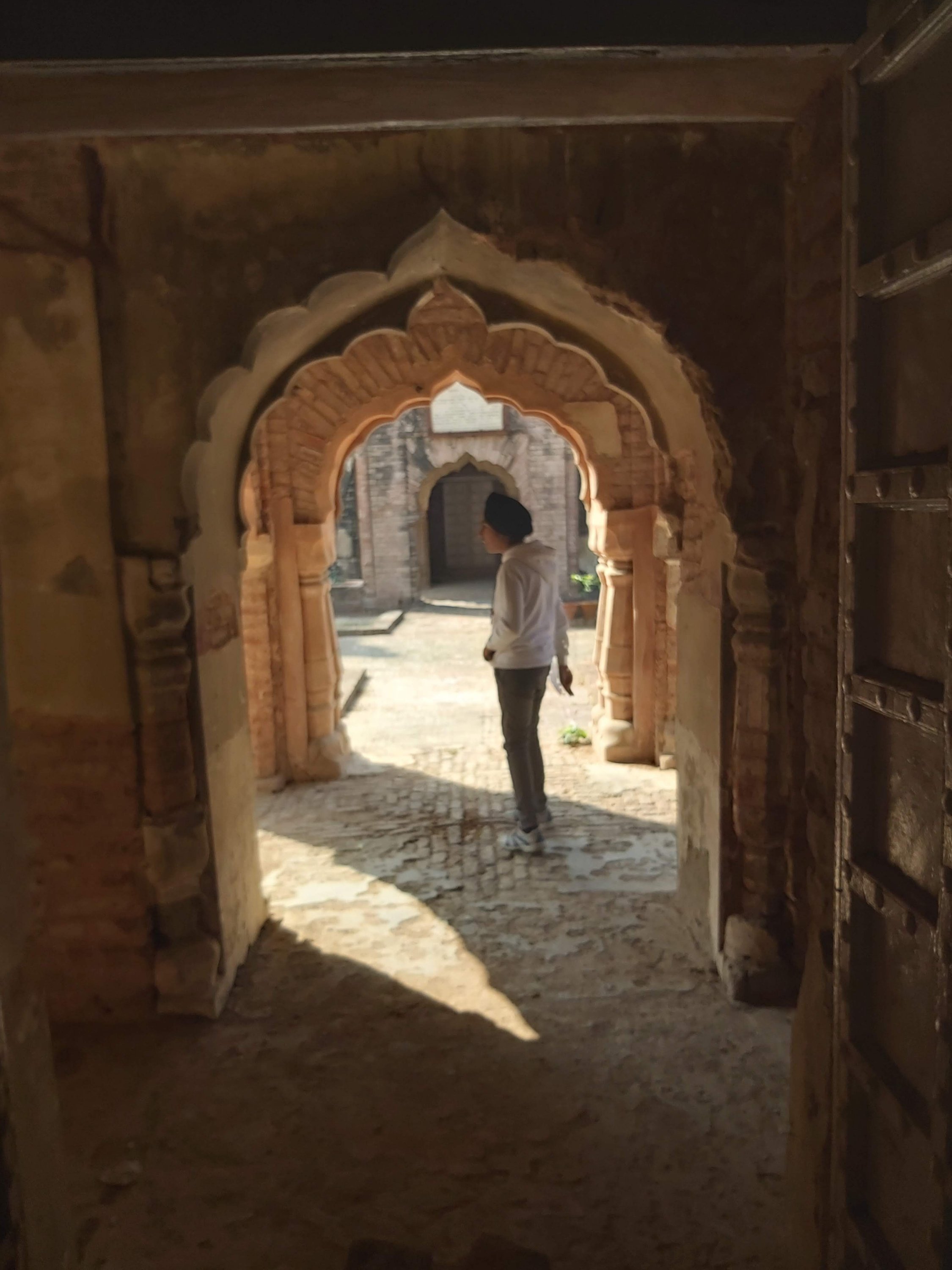
This is the only photograph with which I illustrate this blogpost for reasons which will become apparent below

It wasn’t so much the bullet holes. It was their position. One line of raking fire would have been enough, but there were two of them, there on the battered segment of mud brick wall at Jallianwala Bagh.

One line cuts across at the height of a human heart. The lower one, almost at ground level, marks where the second sweep hit the victims again as they fell. Brigadier-General Reginald Dyer wanted to make sure the ‘natives’ were good and dead.

You may not know the name Jallianwala Bagh. Perhaps you will recognise it as The Massacre at Amritsar. Be wary. This is colonial spin. There is a lot of that in Amritsar. Using the ‘Massacre’ title rather than the former local name makes it sound as though this was a wholly military action between two foes (c.f. The Massacre at the Khyber Pass).

It was not.

Our history lessons are censored in Britain, the unpalatable truths of colonial rule omitted. This event at Jallianwala Bagh happened in 1919 – so just misses the popular Great War area of the curriculum. We love teaching our kids about wars we have won, but we almost never consider the aftermath (c.f. the Battle of Culloden). In these murky shadows lurk the worst excesses of colonial history.

So please, please, learn how to say Jallianwala Bagh. It is no more complicated a placename than Achiltibuie or Cirencester. And it is the least we can do, after what happened here, at a peaceful political gathering in a public park on a religious festival in the sacred golden city of Amritsar.

On 13 April 1919, those gathered in the park were debating the arrest of two pro-independence figures. Many onlookers had just attended for the spectacle and as part of the harvest festival celebrations rather than being actively involved. Some women and children were present too. At this point in time the British had not yet accepted that India would become independent. Martial law had been declared but few realised the implication, if they knew at all.

Ordered to dispel the rally, Dyer’s soldiers opened fire on the unarmed population with their Lee Enfield rifles. These Indian Army troops (let that sink in) were ordered to continue to fire into the people trapped within the park walls until ammunition had all but run out. The carnage could have been even worse had Dyer’s armoured cars been able to access the park via its alleys.

These narrow exits soon became blocked by the bodies of panicked civilians, which effectively sealed off the park. This technique of isolating a battleground, learned from Culloden (the battle which ended the last Rising in my native Scotland) and countless other colonial bloodbaths, saves wasting valuable ammunition on those injured, who then slowly and conveniently die of blood loss and shock.

The following day General Dyer wrote: “I hear that between 200 and 300 of the crowd were killed. My party fired 1,650 rounds…” He might as well have been reporting the ‘bag’ after an afternoon’s partridge shooting in Hampshire.

Estimates of the dead that day vary between 379 and 1000, the lower figure, naturally, being that provided by the British. The dead included over 40 children and a 6 week old baby. These little ones must have been clearly visible to Dyer, who saw only troublesome savages who needed to be dealt with.

There is a good deal of Dyer in my character Lochdubh in Major Tom’s War. To understand how a mindset such as this takes shape from childhood onwards in a man of this era, I urge you to read the chapter which covers Lochdubh’s early years. I have known people like this. They are damaged by their upbringing and their education, leaving them with a deluded self belief in their superiority because of their parentage and upbringing or their wealth and influence.

The monument to this breathtaking atrocity is a towering sandstone shard. Yesterday, when I visited, everything around it was a desolation of broken concrete as major renovations take place. This damaged landscape felt appropriate as I picked my way across to the base, watching where I trod. And through the thick dust and shattered blocks skipped children, hundreds of them, sparkling in their festival finery. One of them was tugging on a kite string and I stood and watched the white paper triangle flit and whirl against an innocent sky.

Jallianwala Bagh is tucked around the corner from the Pool of Nectar and Sri Harmandir Sahib, the Sikh Holy of Holies, which compounds Dyer’s crime. Many families visit both sites on the same day in an atmosphere of festival fun. Many would have been doing just that on 13 April 1919 as they paused to listen to the speakers.

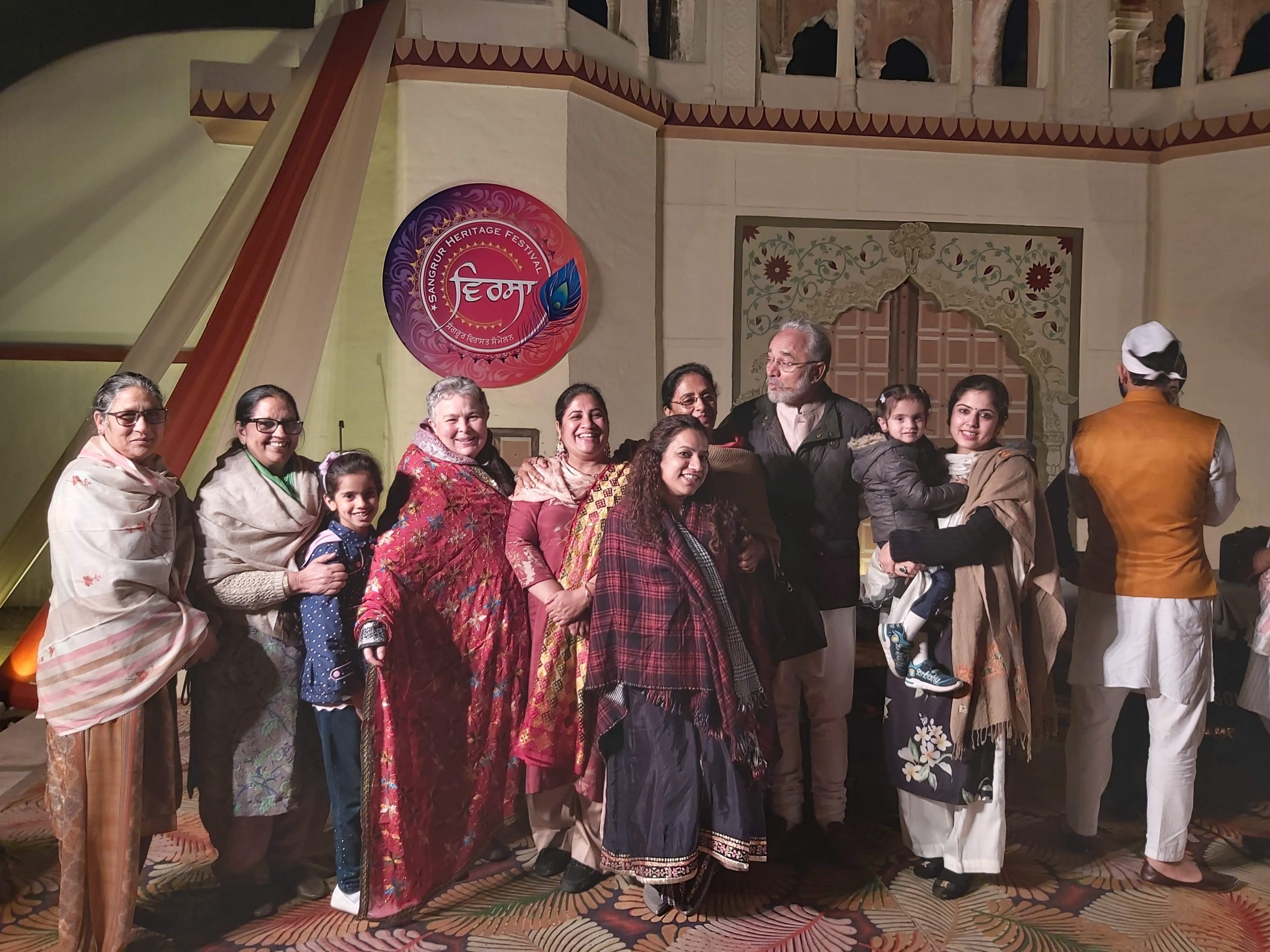
Curious about the solitary, solemn, female Britisher, happy smiling Indian families asked me to pose with them for a selfie in front of that pitted wall. Do they fully understand its significance? I stood and smiled for them in that hellish place, then fled, feeling sick.

A large statue towers over the grim exit alleyway, that of the man who tracked down and executed Michael O’Dwyer, Governor of Punjab, who imposed martial law – but then failed to publicise it – for those three brief and bloody months in 1919.

Udham Singh stalked O’Dwyer right into the Second World War, assassinating him in 1940: all history connects, but we only study the ‘best bits’ which put Britain in the best light, disconnected history in sanitised bubbles. At his trial Udham Singh took on the name Ram Mohammad Singh Azad, which protested the colonial mistreatment of the Sikh, Hindu and Moslem faiths of Punjab. He had had many years with which to plan the execution and his trial.

They still hanged him, of course.

I had to smile and smile for selfies in front of Udham Singh’s statue too.

There is only one possible way to interpret the kind of carnage which occurred at Jallianwala Bagh and that is to use (sparingly) only the accounts of eyewitnesses to the event, both survivors and the Indian Army troops and their officers. I hope this is what they will do there. Anything else risks being spun in one political direction or another and Amritsar has had enough of spin.

The Partition Museum next door makes a sobering pair to Jallianwala Bagh. The two are intimately connected, as Dyer’s actions that day caused the independence movement to consolidate and gain momentum. Quite rightly, no photographs are permitted inside.

I am a storyteller, not a historian. When I try to understand the Partition of India (i.e. the division of India into a smaller India and a new Muslim state, Pakistan, which would later itself divide into Pakistan and Bangladesh) all I can see is evidence of yet more ghastly colonial blundering in a country we despoiled and then abandoned.

My Indian friends, army people in the main, try to be kind when I bring up the subject of Partition. They cite all the benefits of colonisation: education, infrastructure, democracy etc. And all these are real. Let us be clear on this, however: India would have had a future without being colonised by Britain (just as Scotland could have a future independent of her southern neighbour). Impossible now to predict what that future for India would have been, but it was a future nonetheless stolen by Britain, along with the last Maharajah of Punjab, the child Duleep Singh, and his sacred Koh-i-noor diamond.

All the leaders involved in the negotiations – Jinnah, Nehru, Gandhi and Mountbatten – knew that carnage would ensue in the chaotic aftermath of Partition – and yet they did nothing to prevent it. Eager to ‘get Partition done’ (which has uncomfortable resonance for British politics today) the task was rushed and the impact of the poor decisions made was catastrophic. Rather than allowing time to draw the Partition boundary carefully, Cyril Radcliffe, a lawyer, was given inadequate, outdated maps and just five weeks to complete the task. He knew it would be a botched job and afterwards refused his fee, the only honourable act in the whole sorry tale. He fled to England to avoid being murdered in the bloodbath which he, and all of them, knew would follow Partition.

What happened next amounted to the most breathtaking piece of spin of all. Mountbatten and the other leaders opted to delay the announcement of the exact line of the border until after the Independence Day celebrations on 15 August 1947 (so two years too late to be taught alongside WWII – that murky underbelly of war again). This act sought to reduce the very clear responsibility Britain had and for what was to come – and to a degree succeeds to this day.

A few days later after the joy of celebrating freedom has subsided, the border route was announced. Among other brutal political decisions taken, it divided the most powerful Indian state of Punjab into two and separated it from its capital Lahore. This started a mass migration unparalleled in human history for its horror, as Sikhs and Hindus fled south and Muslims, north. People were raped and mutilated and murdered as each heaped blame on the other. Millions died or were displaced. And what do we know about this through the history taught in British schools? Nothing.

One story haunts me still. An exhausted woman walking south handed her heavy toddler to another woman to carry and took her baby in exchange for a moment or two instead. That stranger then vanished, abandoning the precious toddler somewhere. The mother noticed too late and could not find her child but kept the stranger’s baby safe. She survived – but hunted for her own little girl until the day she died.

Governments have a poor track record in terms of apology for atrocity. There can be no more ‘Great’ in Britain as far as I am concerned. Not after this enlightening, sobering and heartbreaking day in Amritsar. We are just another country. And this Britisher, for what it is worth, is deeply sorry.

This overwhelming museum uses powerful eyewitness accounts like this one to good effect. I have walked around Holocaust museums horrified yet dry-eyed. In this museum, where I spent three hours listening to the witnesses, I sobbed. Why the difference? My grandfather Tom’s genes, perhaps. He loved India, was born there. I can feel his hands clenched on The Times as he reads its watered-down accounts of the barbarism unleashed, knowing full well what the reality would be. It is no coincidence, I believe, that Tom died just a few years after Partition. It would have broken his heart.

Vee Walker is a heritage consultant and author based in the Scottish Highlands. Her grandfather Tom was born in India in 1876. She toured Punjab and Delhi 29 November – 17 December 2019 with her unusual fact-based novel Major Tom’s War, now out in Kindle (launched on 13 December 2019 at the Chandigarh Military Literature Festival) and in paperback. Major Tom’s War commemorates the role of the Indian Cavalry in the Great War. www.majortomswar.com
Homespun ambition for Sangrur’s craft heritage

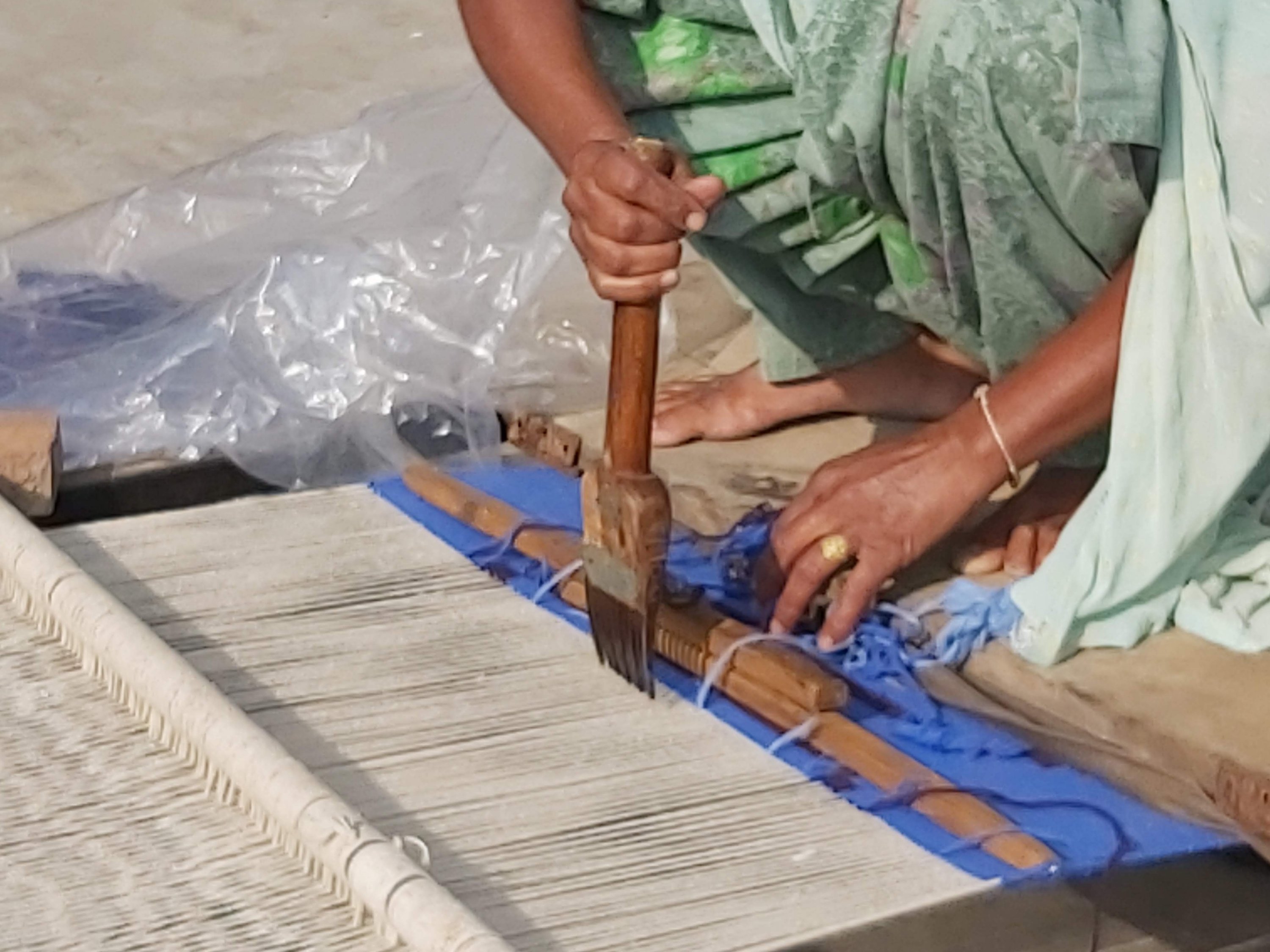
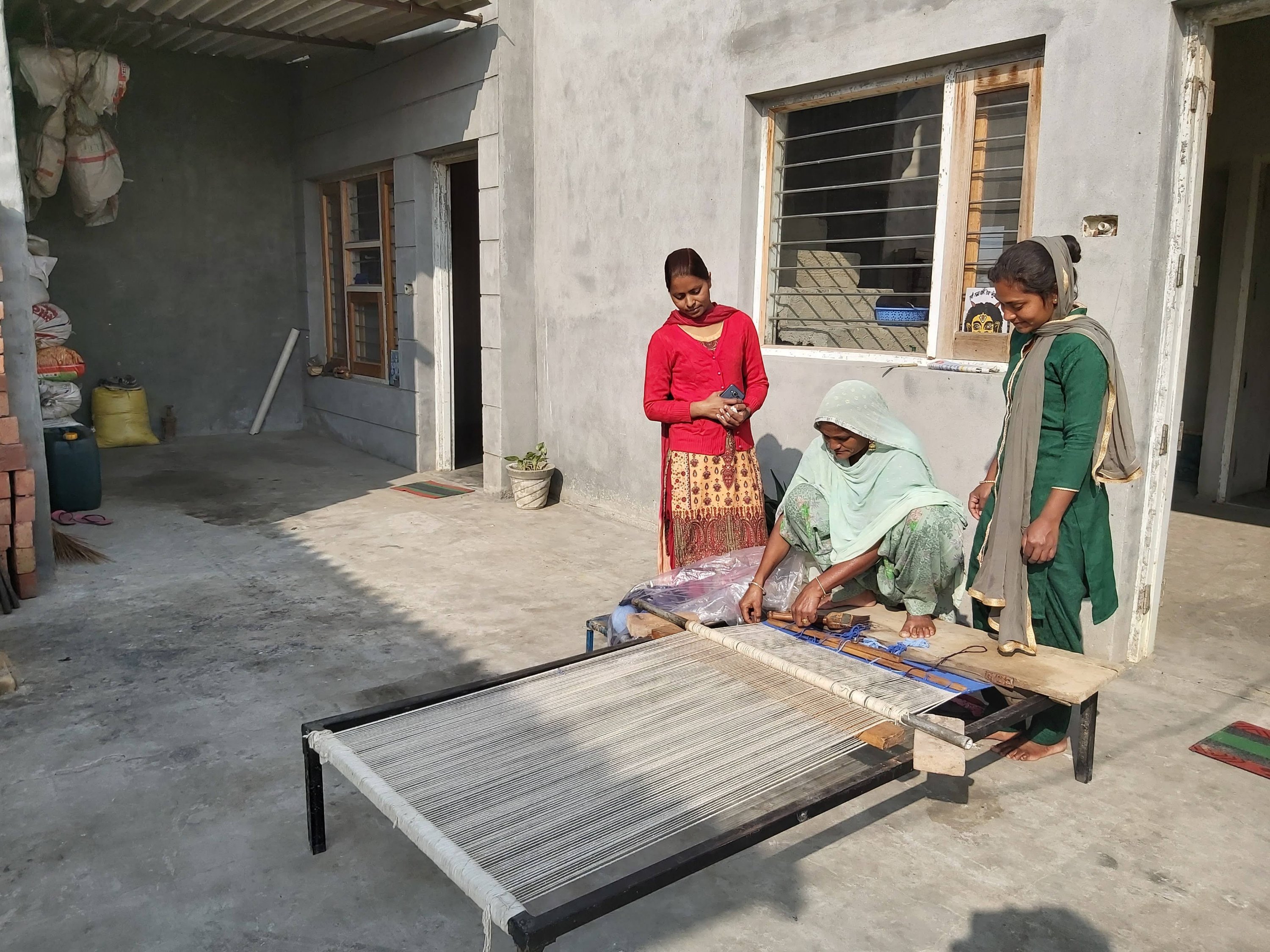
Weaving a patterned dhurry rug on a bedframe loom

Ever since Mahatma Gandhi renounced western dress in favour of simple handloom-woven cloth, making a political point as he did so of course – and in fact long before that, weaving has been a central part of the culture of India.

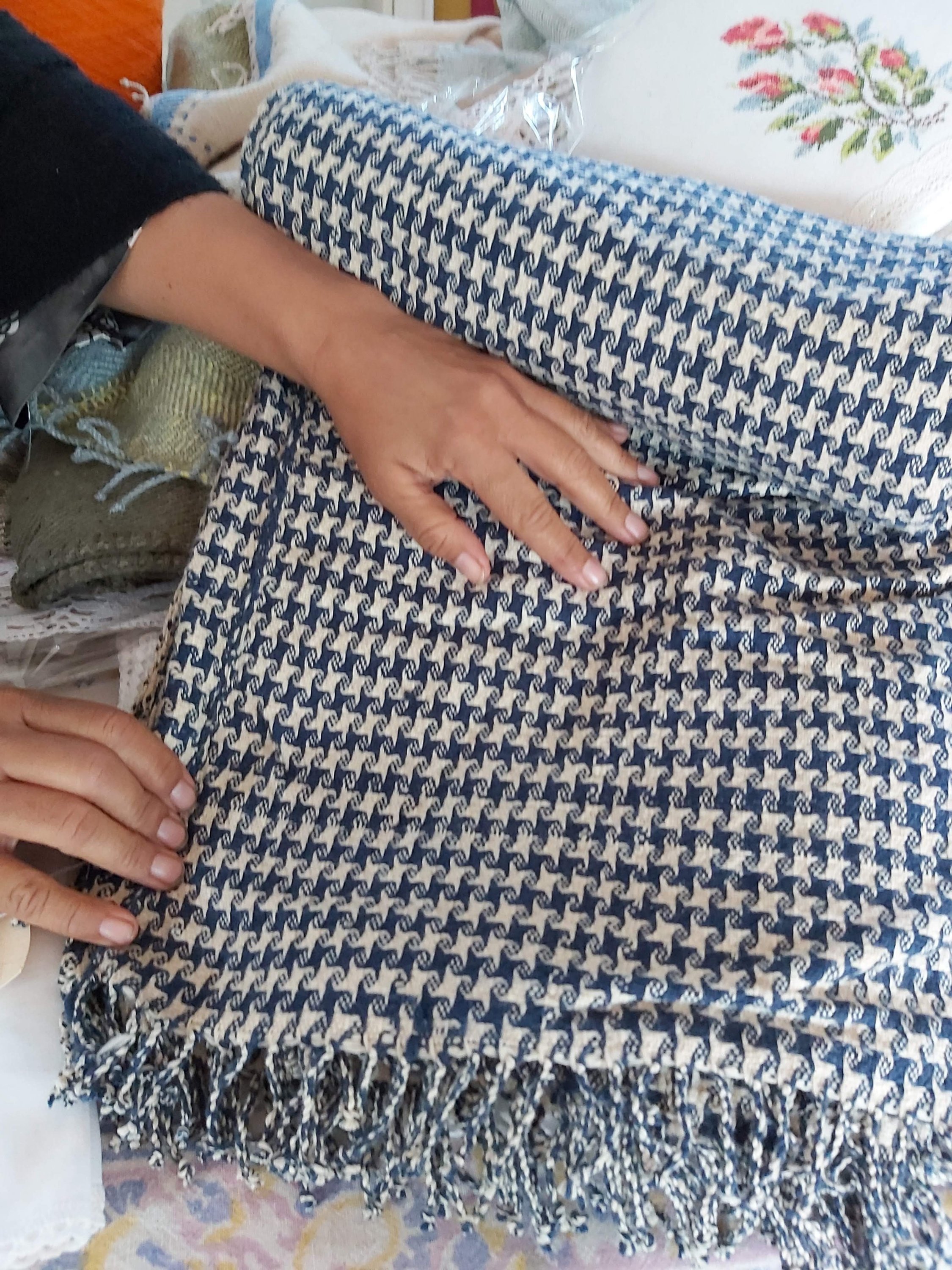
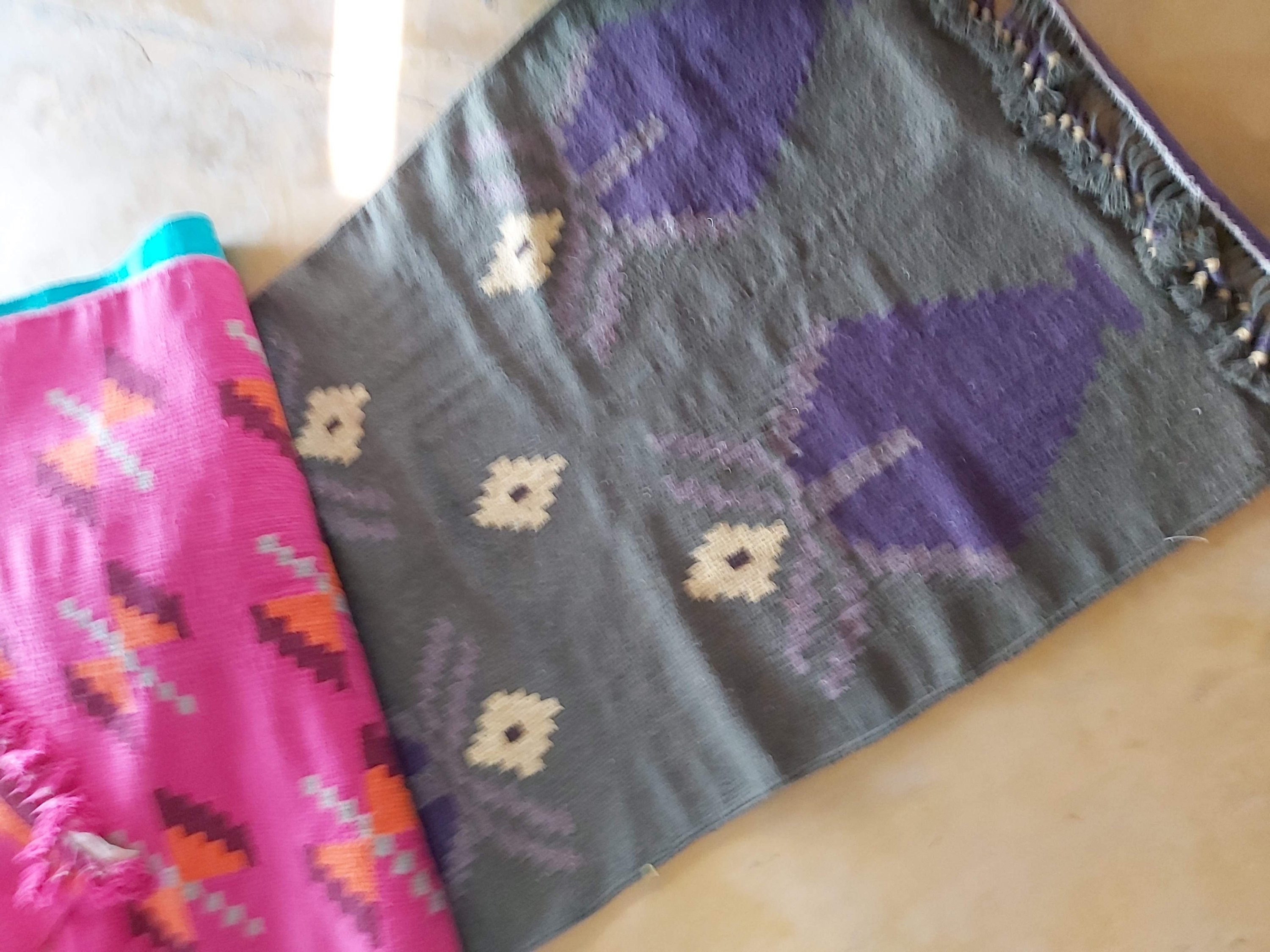
These stylised flower vase and butterfly patterns were designed in the village

In Punjab today these ancient crafts – weaving, knitting, embroidery – are at risk of dying out. The reason for this is twofold: firstly such labour-intensive goods can still only command very low prices, in part because of the volume of production from elsewhere (including China) and in part because of the lack of belief in the value of craft as work.

Handloom weaving can mean a woman can earn additional income of her own while still maintaining a traditional family role as wife and mother

Secondly, weaving is perceived as something your Mum does at home. Girls want a better life than that of their Mum – and Mum quite understandably encourages her daughter to be ambitious. While traditional dance, for example, is flourishing and still perceived as a hugely desirable skill, craftwork is in decline, seen as unskilled and unrewarding work.

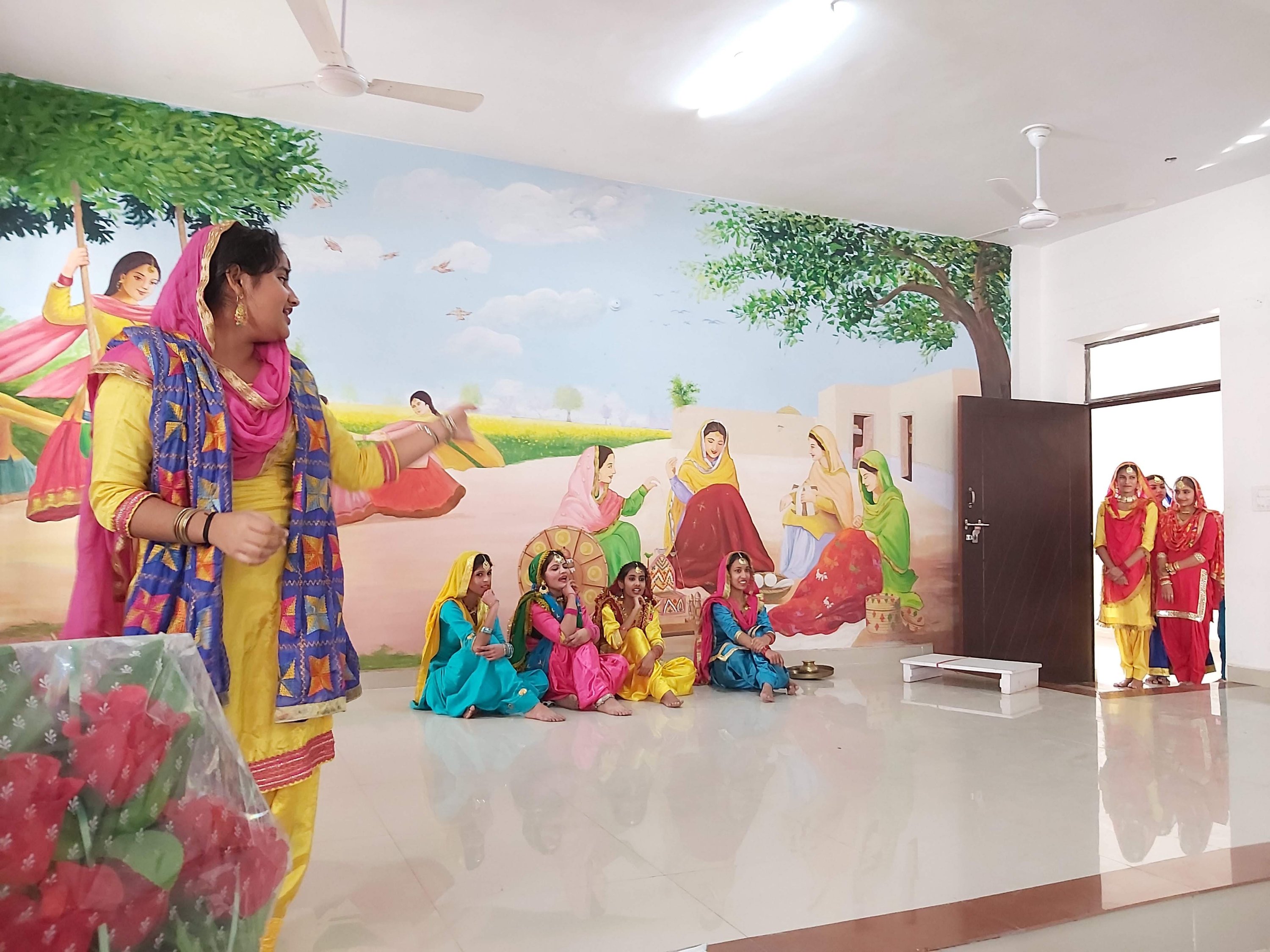
I was honoured to be entertained at a local school where I gave a lecture by these skilled dancers

Young Indian women like these do not often aspire to be craftworkers. They want to be doctors and lawyers and managers – and that is of course quite right. But they cannot all enter these high-flying professions. There are still many youngsters better suited to craftwork in supporting a more traditional household role.

Marriage is still most girls’ dream here, driven by Bollywood ideals and cultural expectations. In order to support these particular young women, who may marry and then find themselves without an income stream of their own, a new workshop has been launched in a rural village outside Sangrur by Kiran and Rana Grewal.

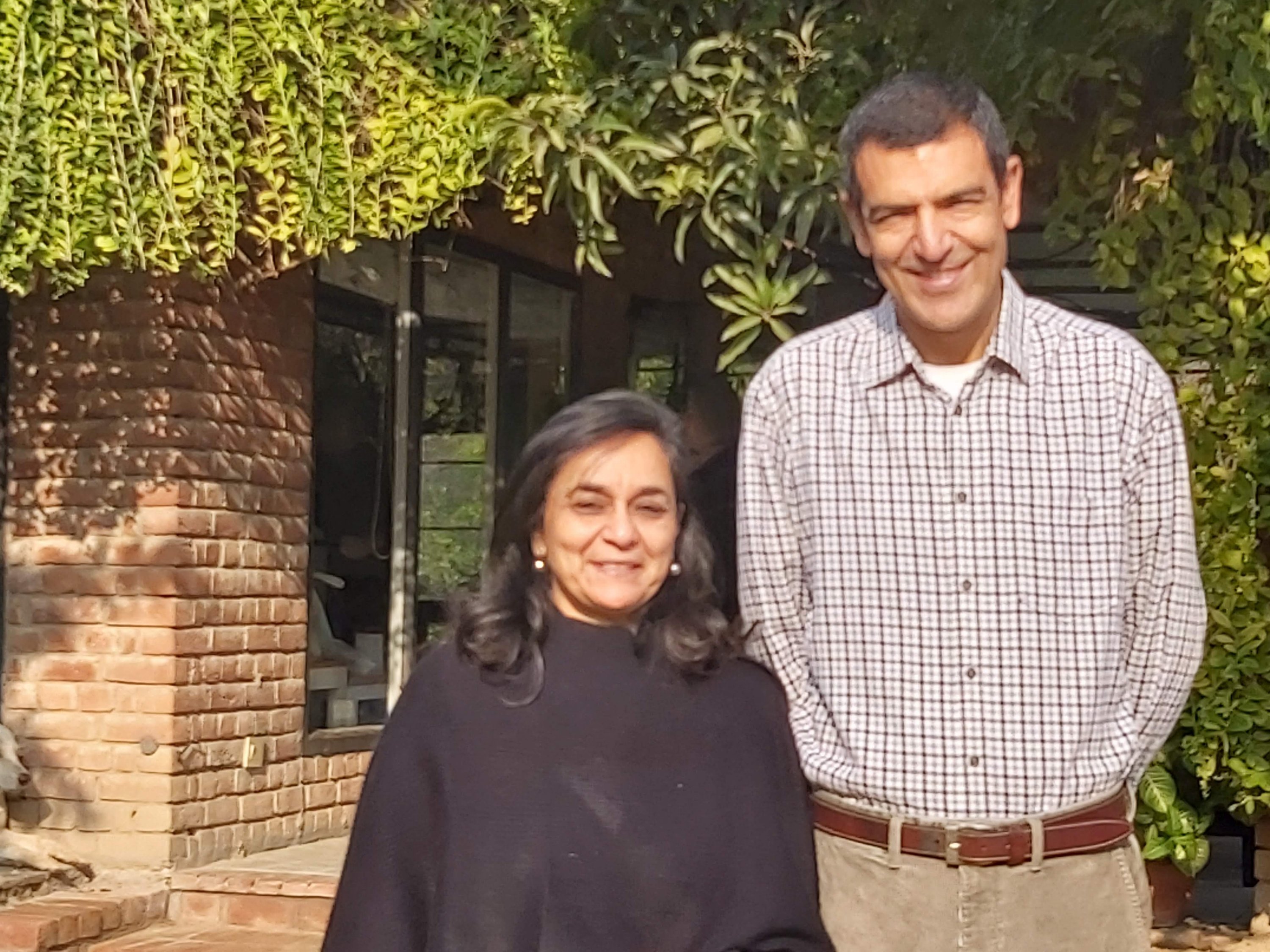
This intrepid couple took stock of their city life a few years ago and found it wanting. They returned to run Rana’s family farm, much to the consternation of their families (it is more traditional to hire a farm manager and live off the profits in town). Rana now relishes the satisfaction of seeing things done to a higher standard under his own supervision.

Cattle are a huge part of rural life in India

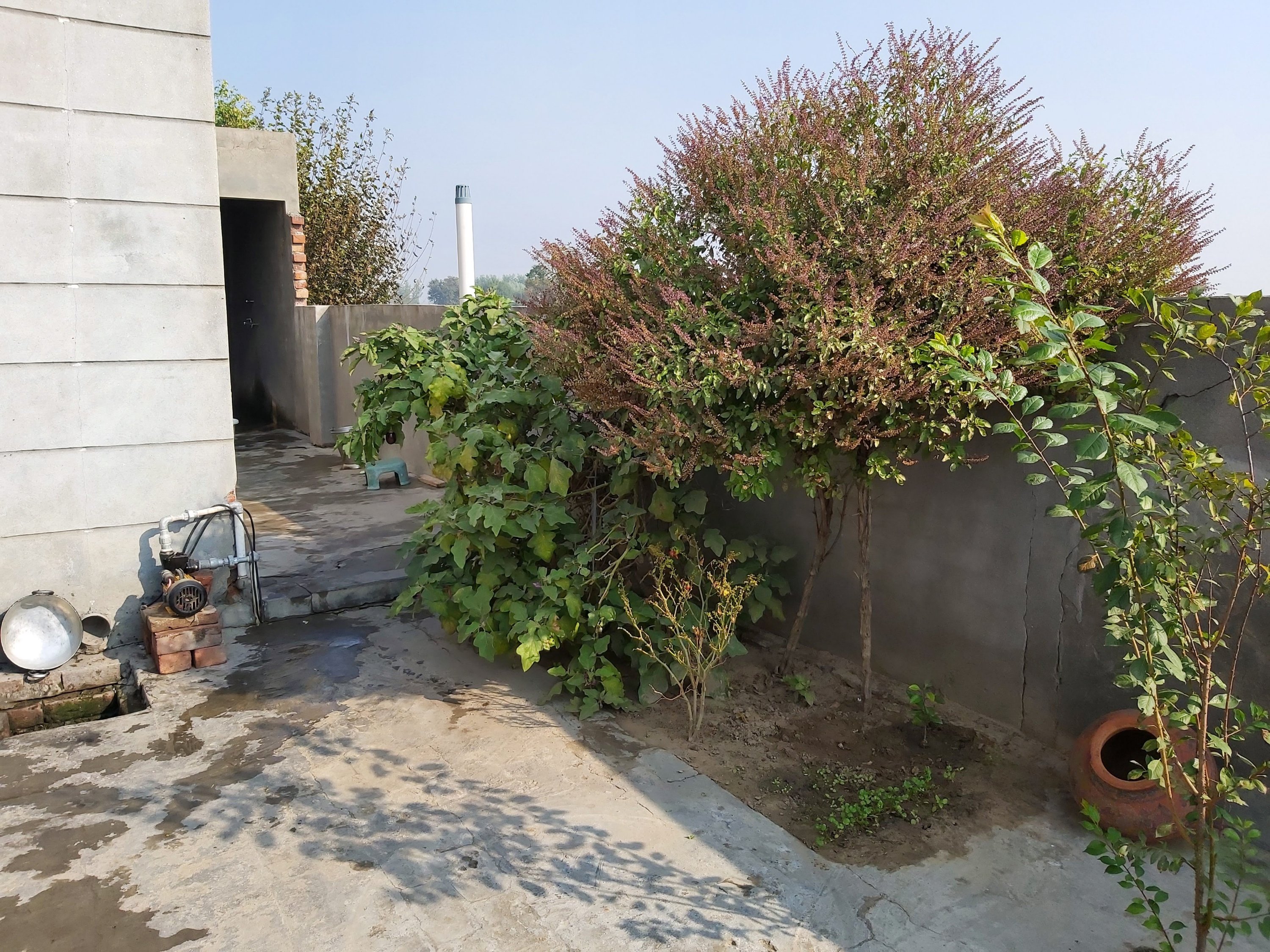
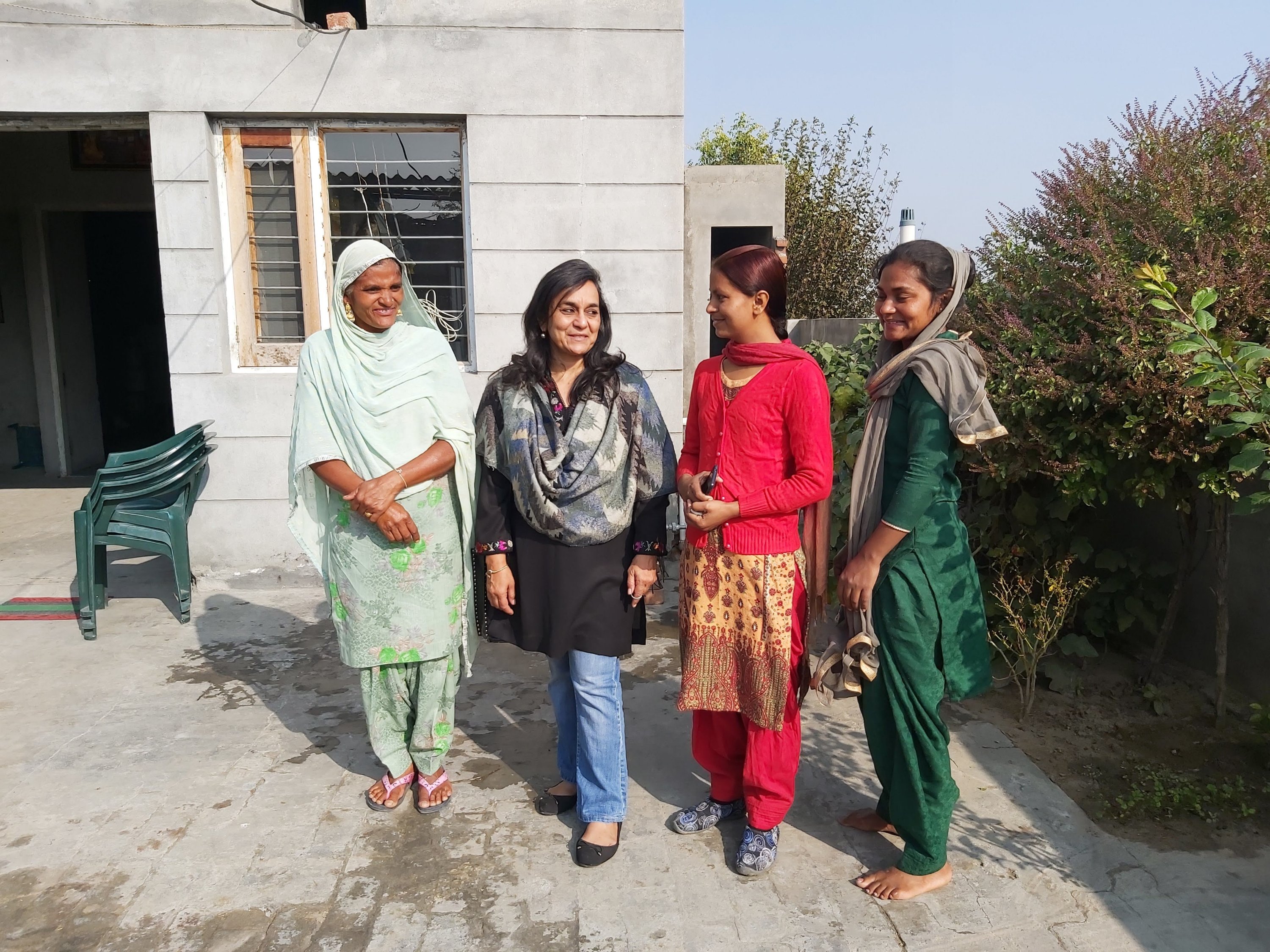
After a while artist Kiran realised, to her distress, that traditional craftwork was all but dead in the village. Just a few older mothers could remember how to do any of it. Kiran and Rana took action, planting the seeds of an enterprise which they have tended as tenderly as the villagers tend their sacred tulsi trees.

Tulsi is a fragrant tree which symbolises a happy and prosperous home

They have researched traditional tools (such as the traditional iron bedframe loom, which Kiran supplies), techniques and patterns with some spectacular results. Equally importantly, the villagers have grown to like and trust Kiran and Rana.

Kiran soon realised that it was not enough to encourage local craftworkers like this family to renew craft activity in their own homes. She saw how badly young women want a job – and that means they must be able to leave the family home and travel to a place of work.

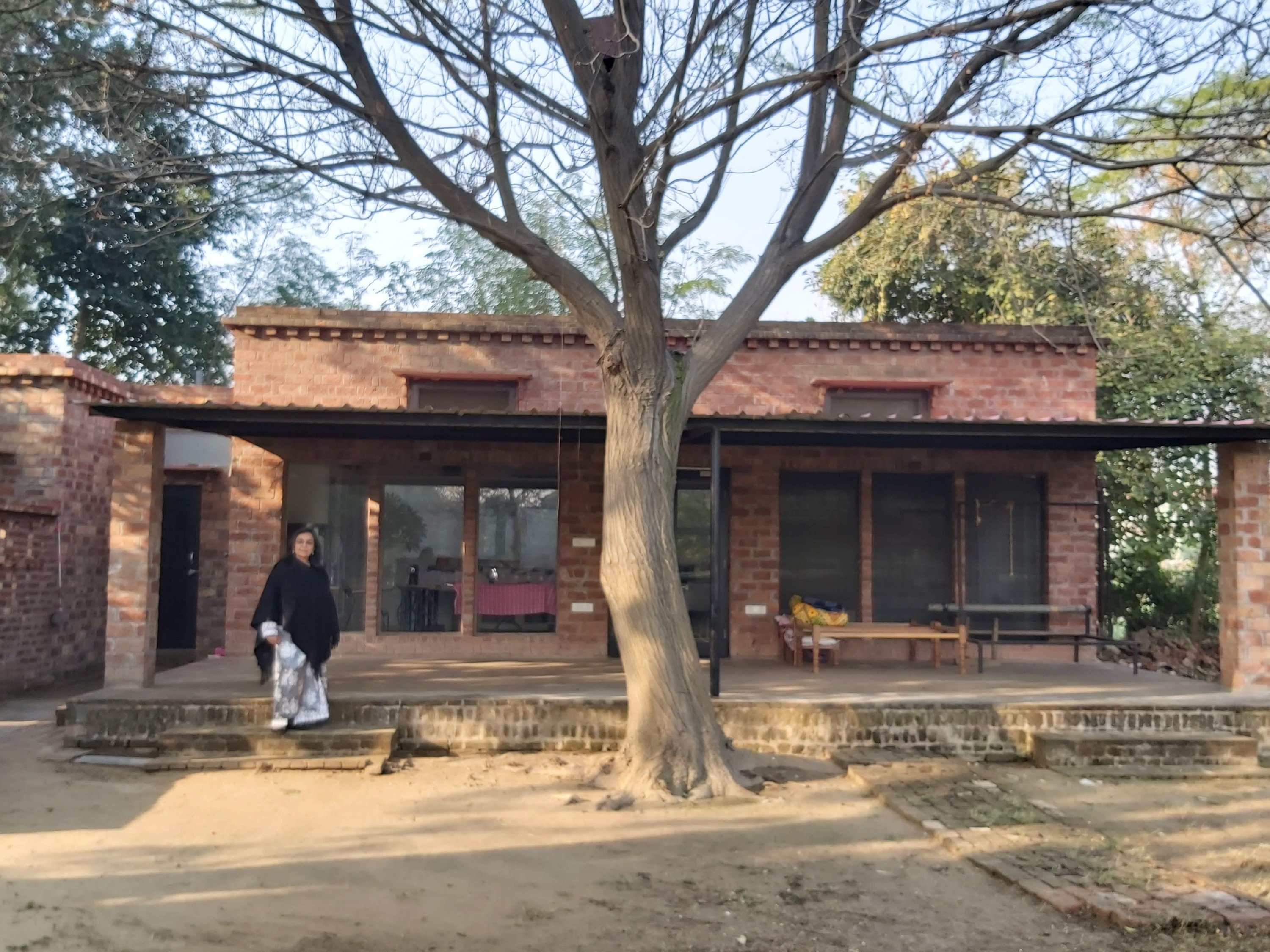
And so she and Rana decided to build one.

Coming together like this to work there has many benefits: skills can be shared in a virtuous upward circle, and new skills learned. They embroider, knit and sew here too.

A traditional crocheted joining seam

It is also a convivial place for the women to meet and chat, combatting social isolation and enabling domestic issues to be discussed and resolved.

Kiran feels the workshop is now ready for its ‘next step’. When I stayed with Kiran on my #MajorTomsWar book tour we agreed that seeing their skills valued by the outside world would mean a lot to the ladies engaged in craftwork. It would also provide an opportunity to share skills in both directions, initially perhaps by Skype tutorials and possibly, in future, with residential workshops based around Kiran’s lovely home.

I have begun to put out feelers on this among craftworkers in Scotland and have already had a very positive response.

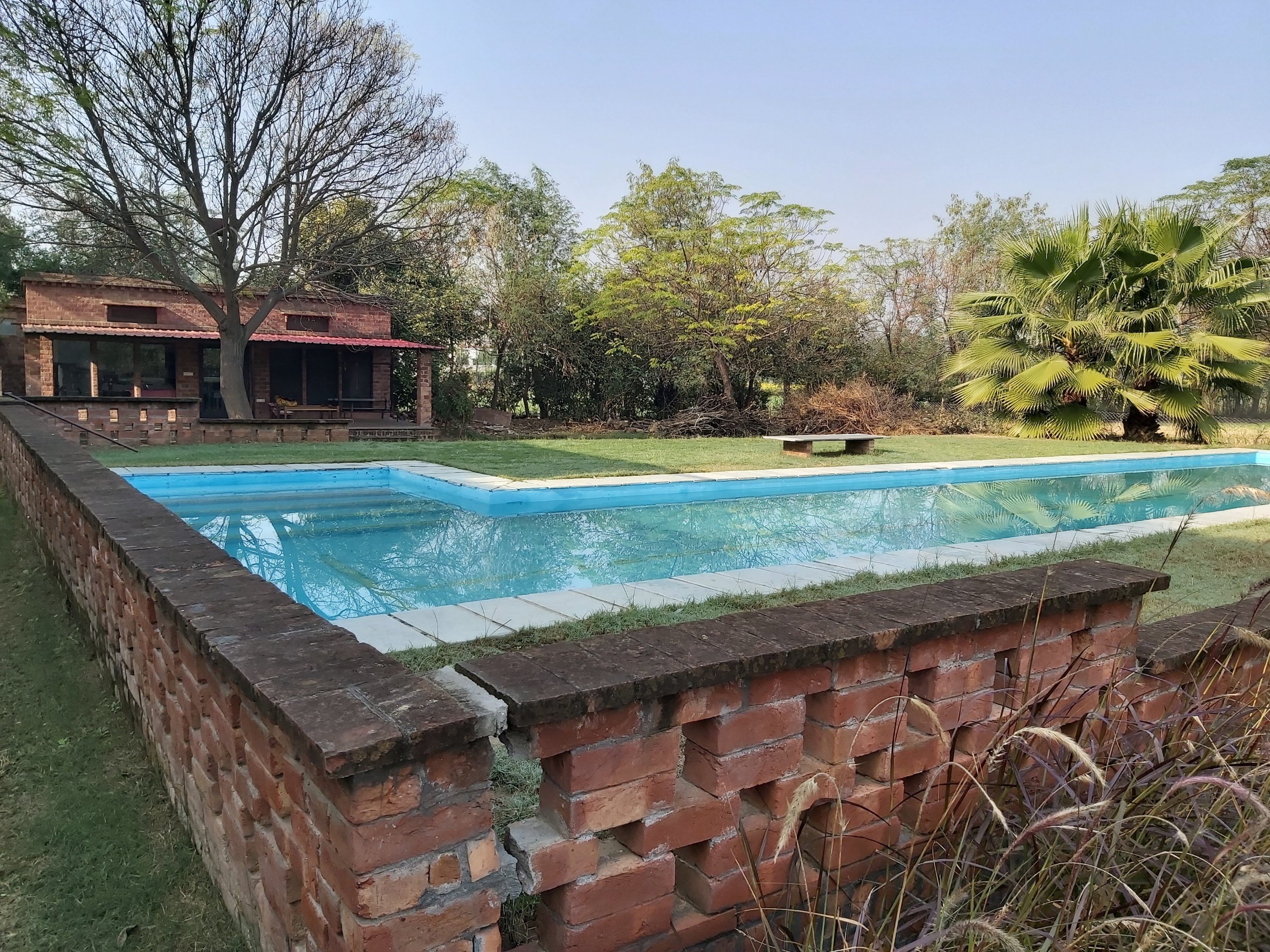
The workshop sits in the delightful farmhouse gardens

If you or your craft group (SWRI, Embroiderers Guild, Knitting Circle etc) would be interested in a meaningful and sustainable holiday involving a practical exchange of craft skills with a rural Punjabi community, do please get in touch with me via www.majortomswar.com

Signature rose cross-stitch embroidery

Vee (Verity) Walker is a heritage consultant and author based in the Scottish Highlands. Her award-winning consultancy Interpretaction was founded in 1999 and has a client list which includes most British and many European heritage agencies. www.interpretaction.com

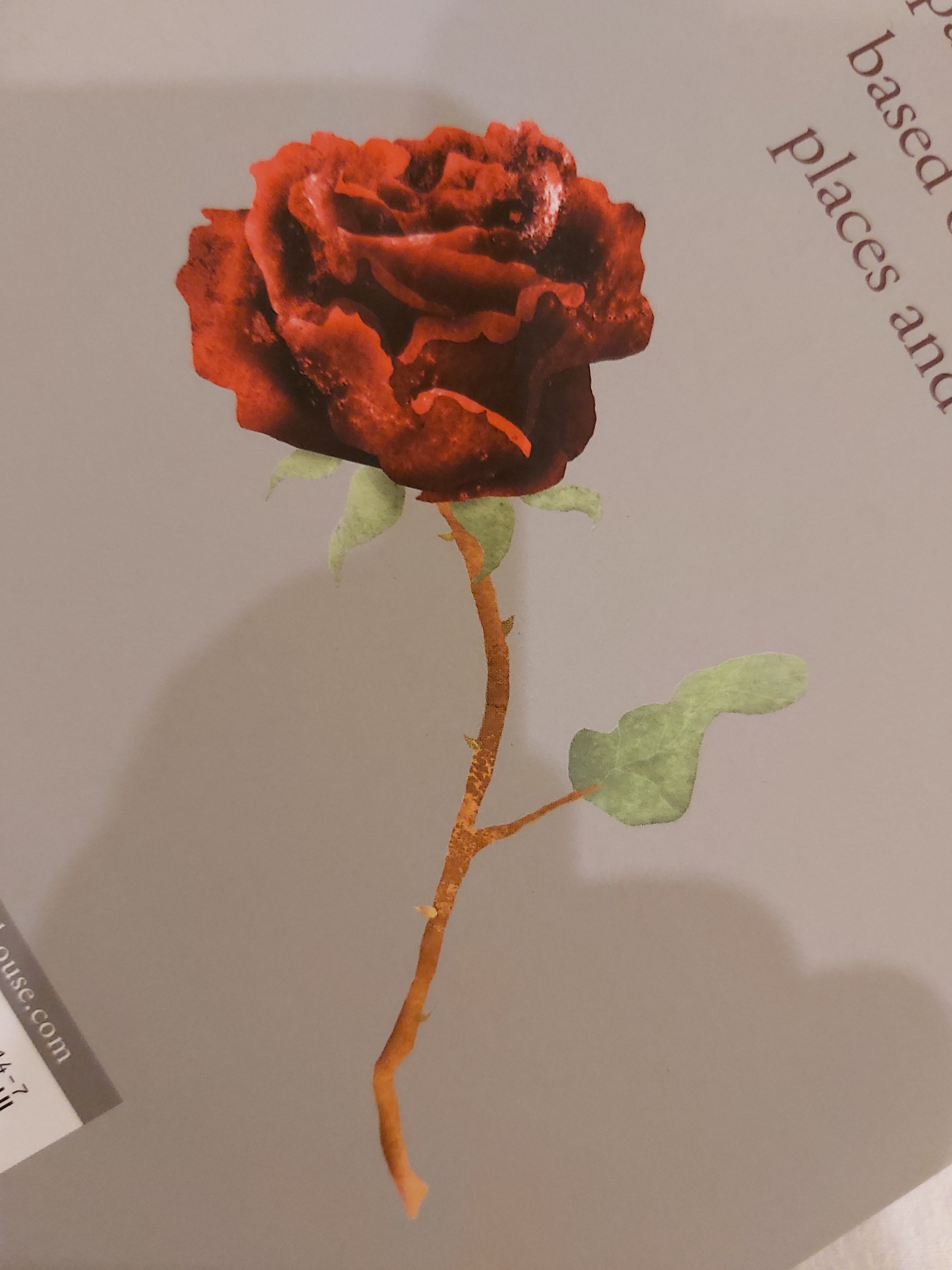
The signature rose on the back of Major Tom’s War. No, I don’t believe in coincidence either!

She is touring Punjab and Delhi 29 November – 17 December 2019 with her novel #MajorTomsWar, which is out in Kindle on December 13 (launching on 13 December at the Chandigarh Military Literature Festival) and in paperback in February 2020. She is also speaking at the USI in Delhi at 11am on 9th December. #MajorTomsWar commemorates the role of the Indian Cavalry in the Great War. www.majortomswar.com

Meet the conservation lions of Sangrur

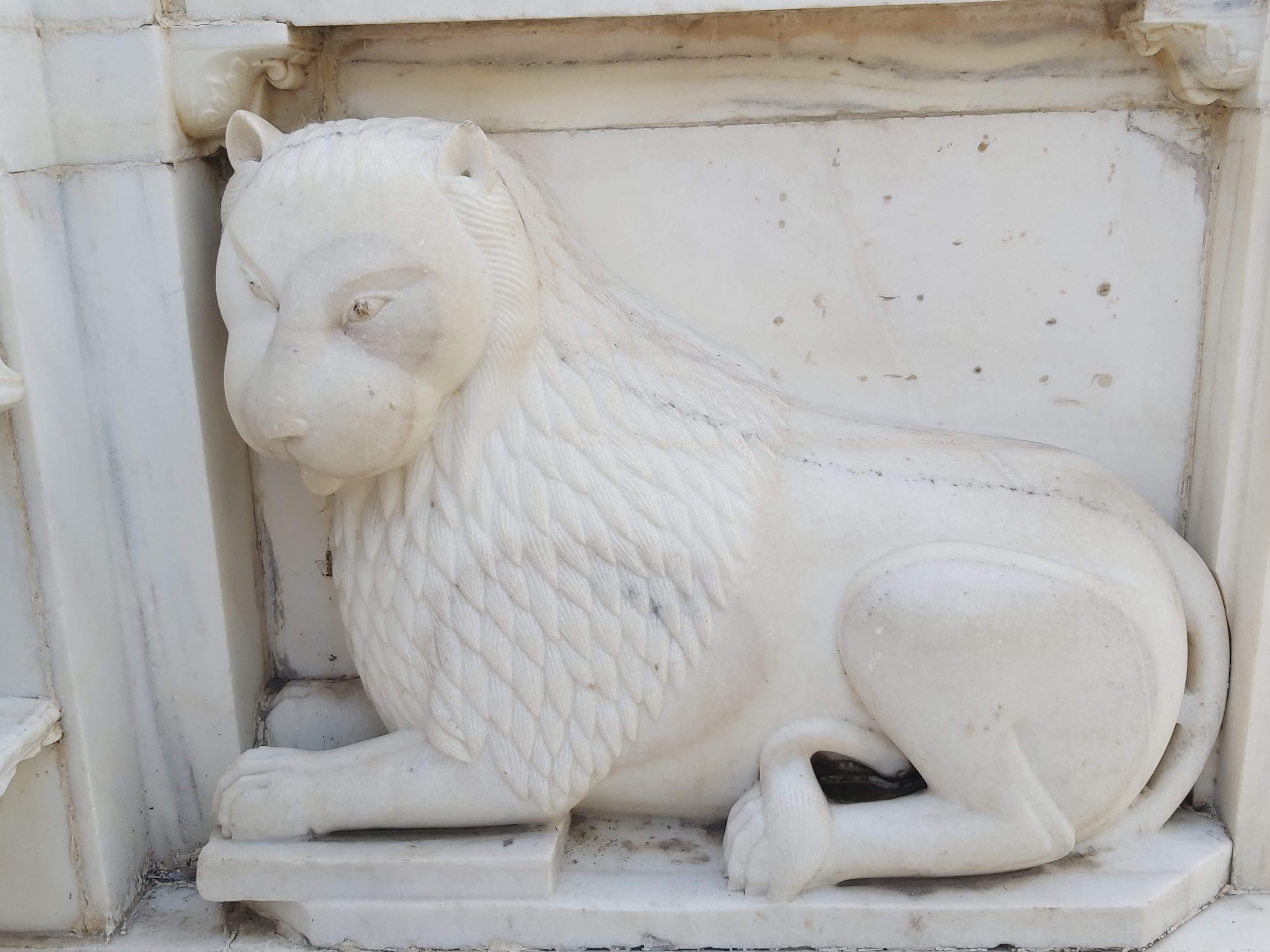
Lions are a frequent decorative symbol of the power of the Maharajahs of Jind

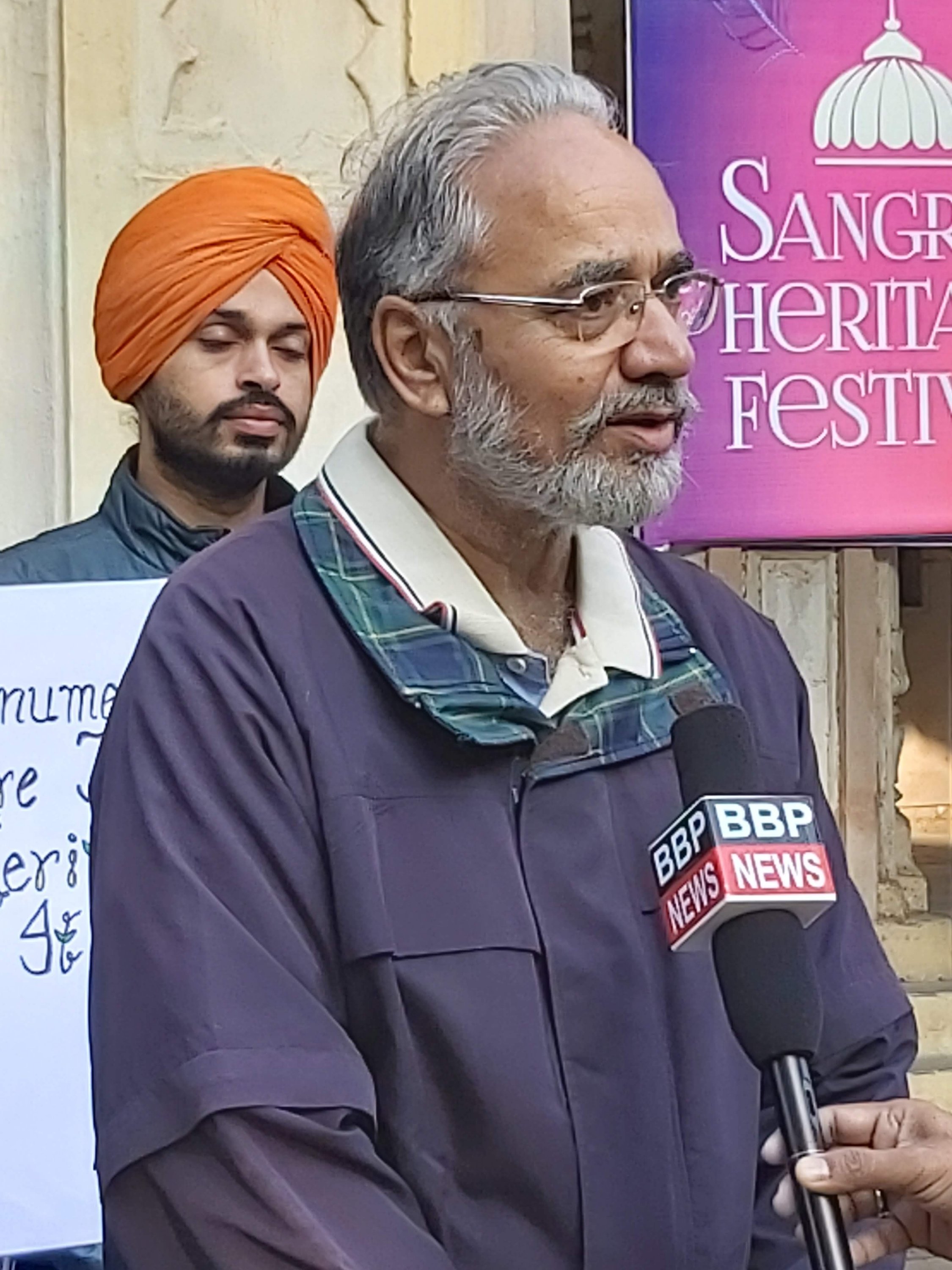
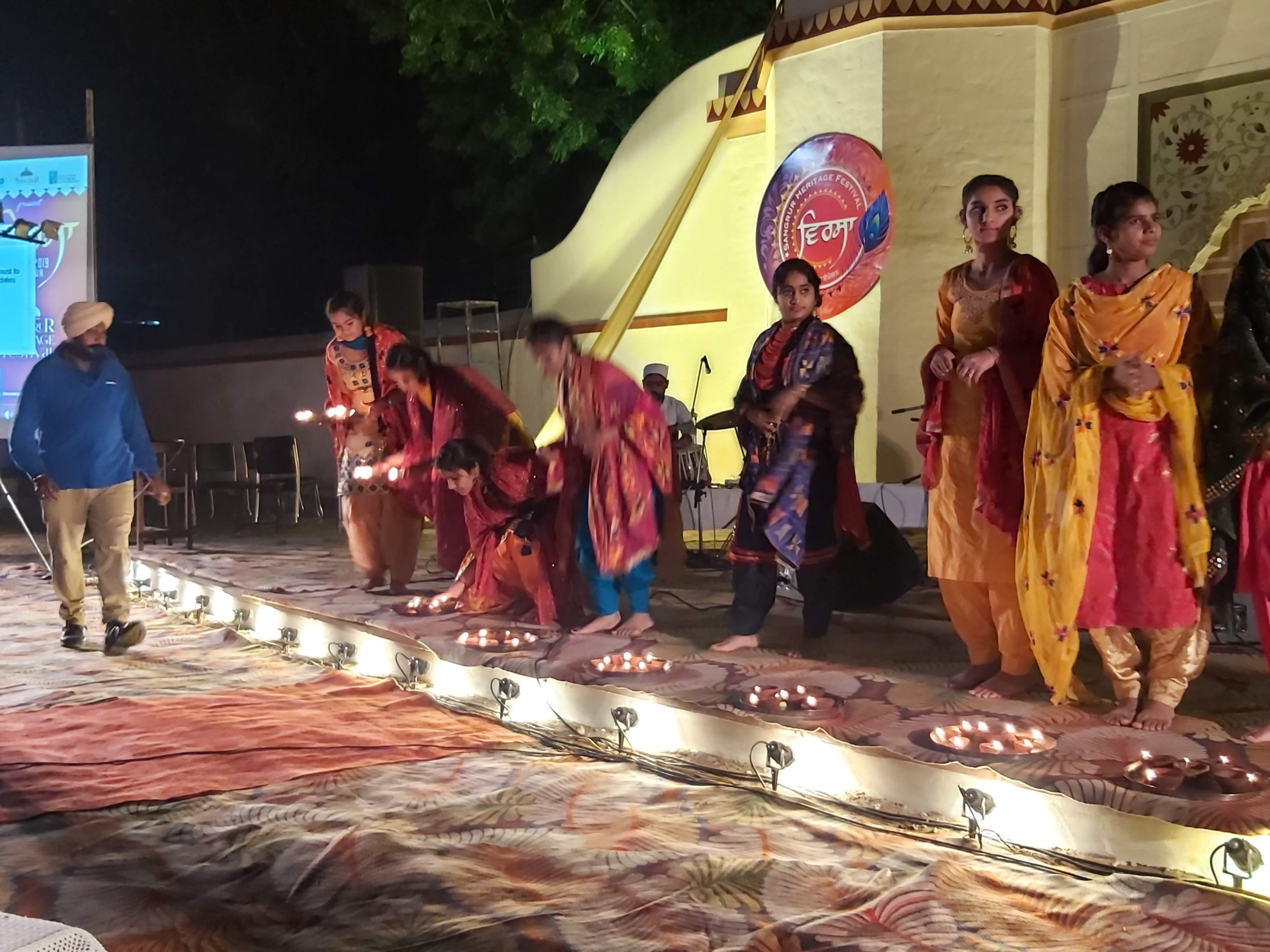
A privilege to be a guest of the recent 2019 Heritage Festival in the ancient and historic city of Sangrur (emphasis on the –rur, in case you were wondering) established by this visionary individual, Karanvir Singh Sibia and his equally dedicated group of friends. This was both an arts and heritage festival – with poetry, dance and music as well as tours of jaw-dropping heritage sites – and a call to arms for the heritage conservation of Punjab. Perhaps, like me, you had never heard of Sangrur until my visit was arranged. Perhaps, if so, you should read on.

Maybe you have never been to India because of the prejudiced preconceptions listed in an earlier blog. Or maybe you think you have already ‘done’ India. Millions of Western visitors are duped into this belief annually, after a comfort-zone package tour around the ‘Golden Triangle’ of Delhi, Jaipur and Agra. They take photographs of the Taj Mahal and the Red Fort etc and then leave, probably complaining about queues and crowds and pushy guides. Have they experienced the real India? Not really. They have eaten a cake which consists only of icing. And too much sugar rots the teeth.

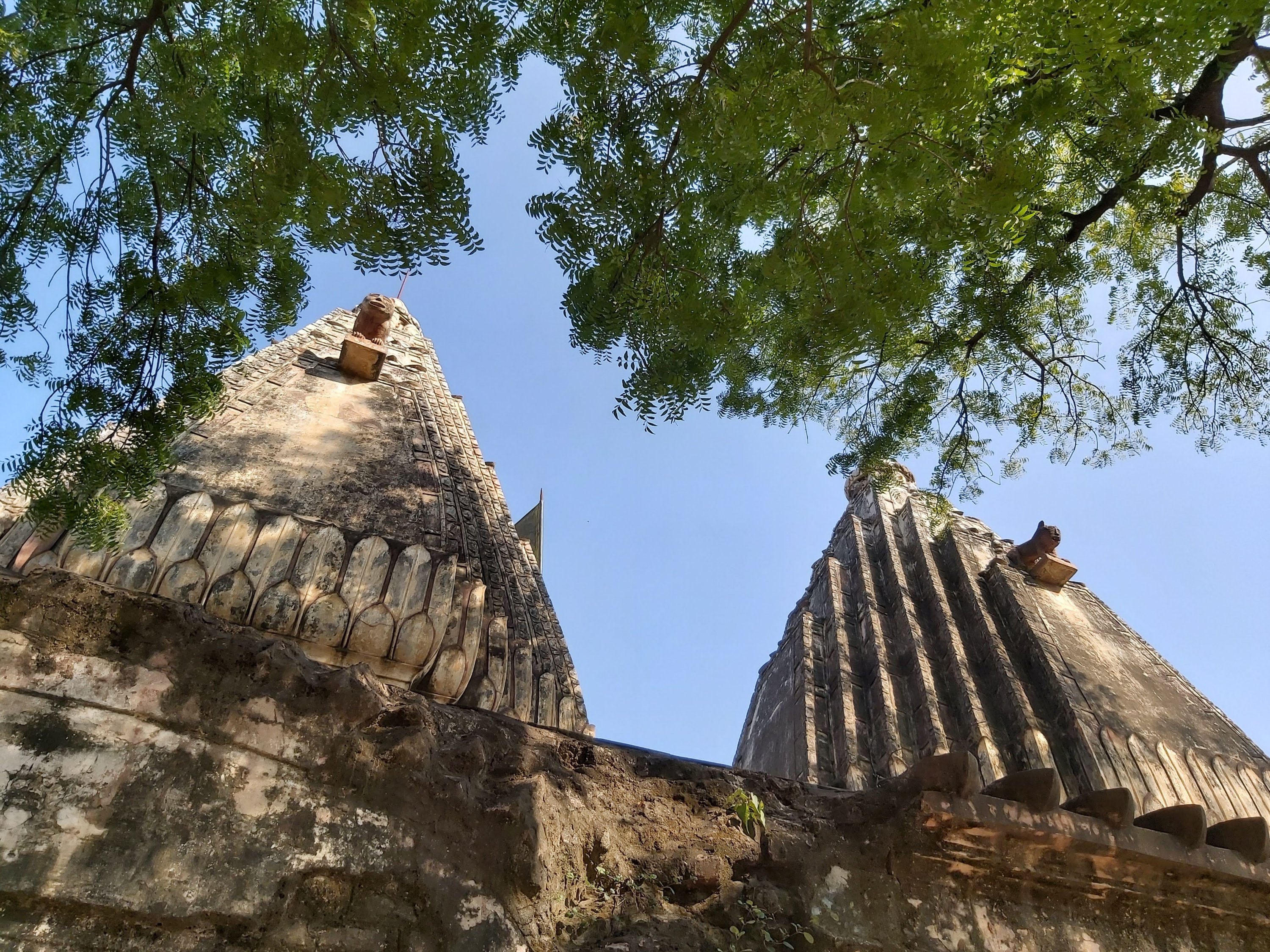
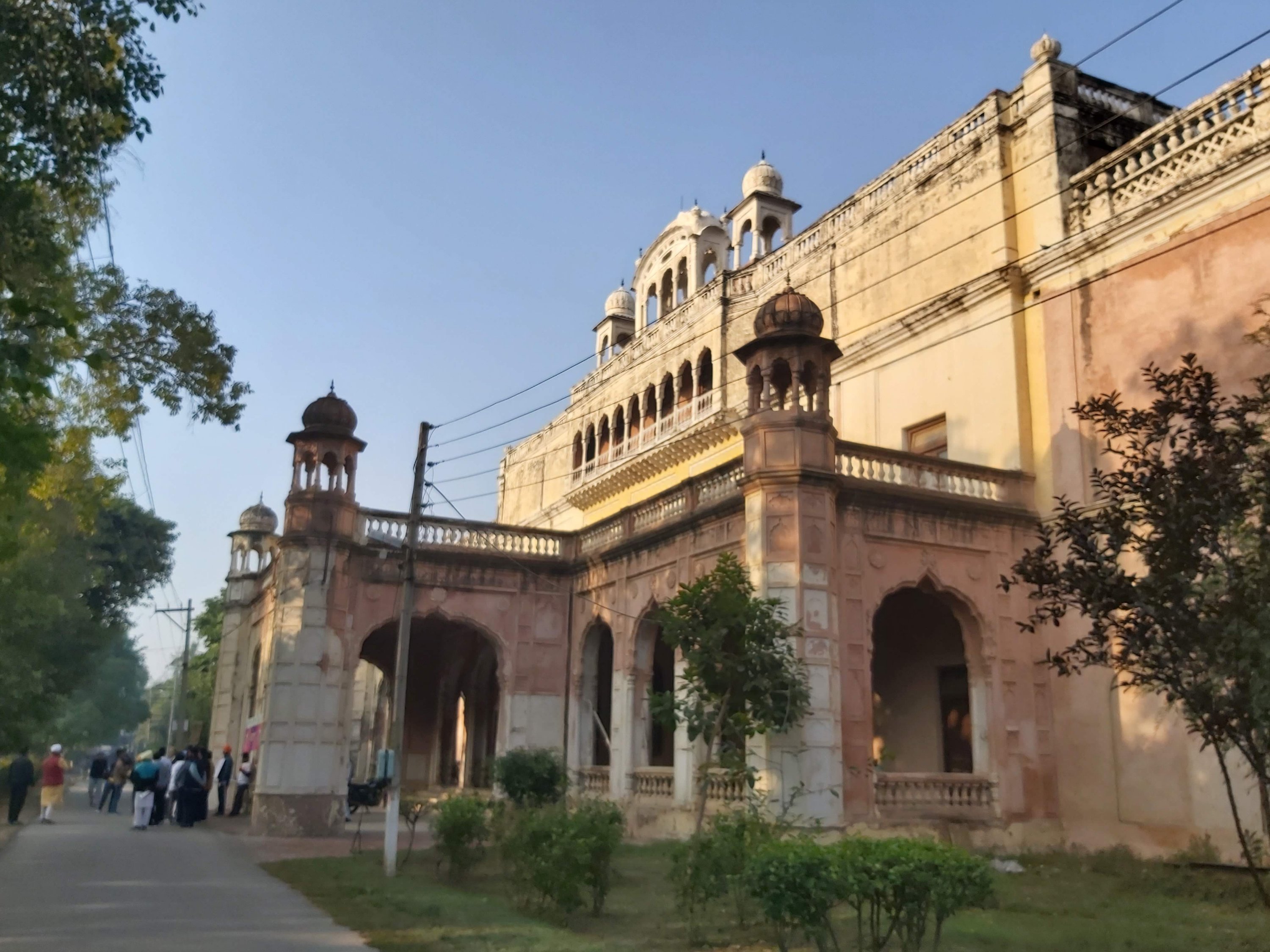
The memorial mausolea of the Maharajahs of Jind – strong echoes of southern India

There is a clear desire, especially among the young, for more meaningful forms of visiting and engagement which can be summed up as a desire to give something back. They pay to help in orphanages, muck out elephants and teach in schools. Some of these activities are not exploitative, but many are, and often they can be overpriced and underwhelming.

This young gentleman – aged about 14 – already has a creditable knowledge of his doorstep heritage – I hope he will grow up to become a great heritage project director

Not so here in Punjab, where there is a vast amount to appeal to British tourists in particular, given our country’s disastrous propensity for meddling here (all the more reason to ‘give something back’ by visiting). Its astonishing Royal Heritage remains largely undiscovered by western tourists. I have been in Punjab for six days now and have encountered no other westerners at all. I have also only paid one admission charge for any of the heritage sites visited. The rest have all been free. Travel and food are very inexpensive indeed too. It is a fantastic, friendly and safe place to visit.

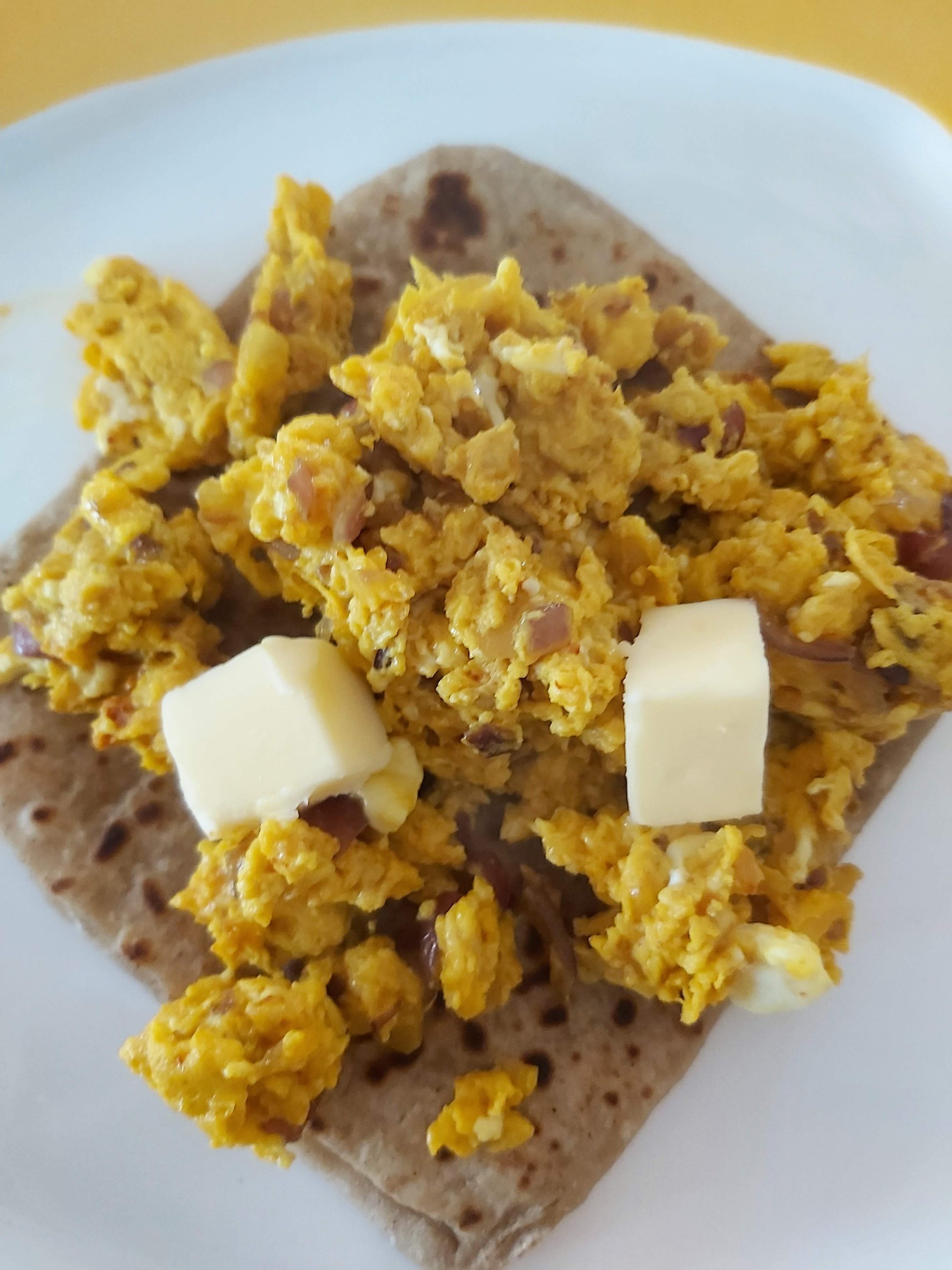
A local breakfast of hot scrambled eggs spiced with turmeric and chilli served on a paratha with cubed iced butter

In Sangrur I could see the potential for something quite different from a ‘normal’ tour based holiday approach, one which could be developed both on a much larger/more organised but also on a more personal scale. Why not offer a menu of visitor activity within heritage conservation for those with interest or skills to share? People today are increasingly interested in holiday experiences which are authentic, meaningful, immersive, sustainable and personal. Slow tourism where you visit one state in depth instead of attempting to see many has huge appeal among intelligent western visitors today.

Alabaster fountain base with monkeys

Those who volunteered to work here could be accommodated within people’s homes and welcomed for longer periods than the normal holiday, perhaps a month at a time. It would suit the student, the teacher and the vigorous retired. Staff at individual organisations such as Historic Environment Scotland or the National Trust could also be approached with a view to annual placements here as part of continuing professional development. Crucially this could be a two way skills exchange, with wesyerners receiving training in traditional conservation techniques during their stay.

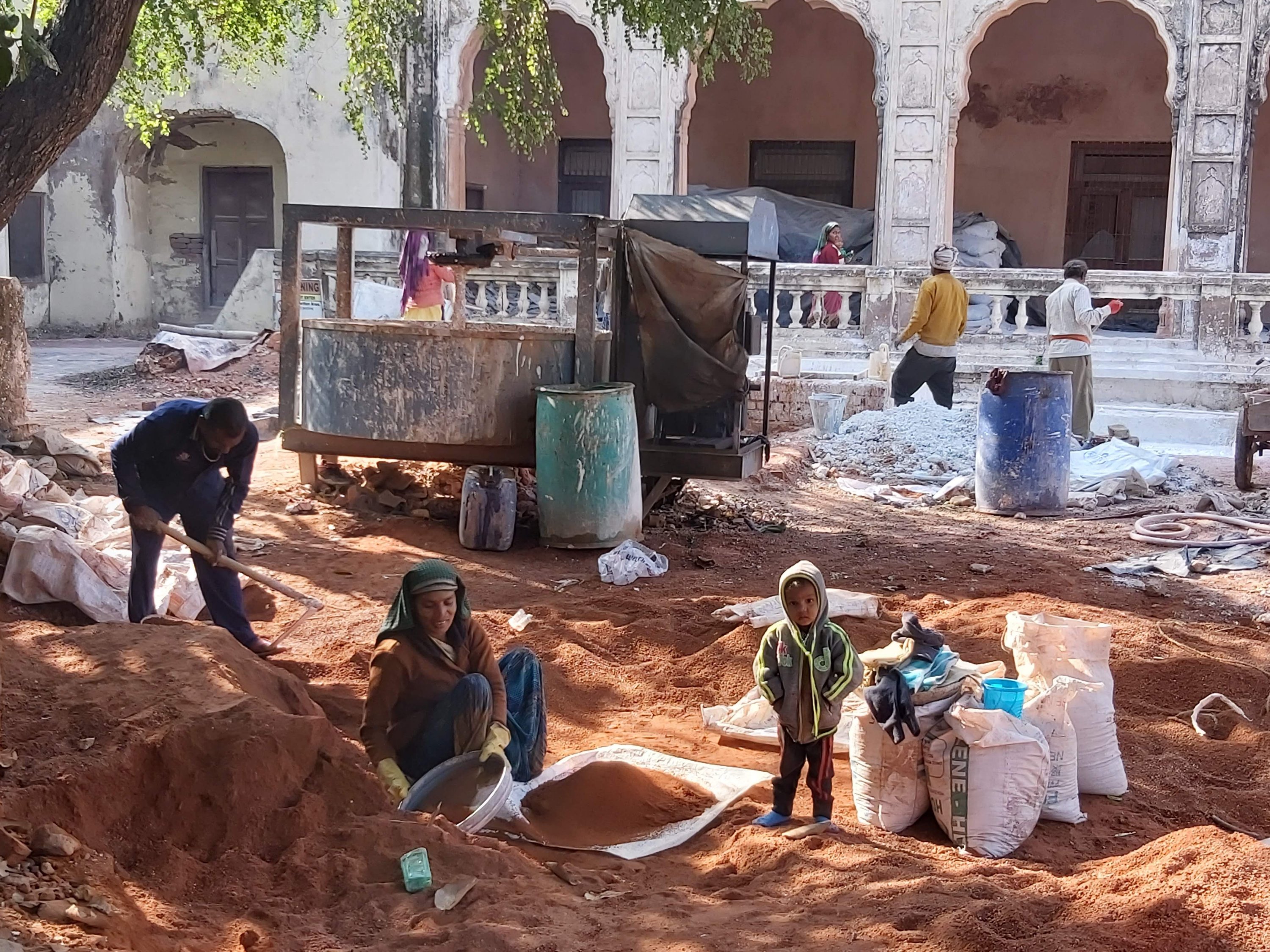
Local people are using traditional techniques to restore their heritage buildings but need external input to encourage internal buy-in

The aim here would not to be offering a one-off tour based holiday but for Sangrur to become embedded in people’s lives longer term. Connections could be sustained through individual friendships using communication technologies which shrink the world. Those who came would share their skills but also, and crucially, learn new skills of their own within risk-assessed training programmes.

Health and safety protocols would need need to be established to allow western volunteers to work in Sangrur

A long-lasting connection with a UK or American university would be a good thing to target; and it would be important to discuss the logistics of travel and insurance with an ethical travel company too.

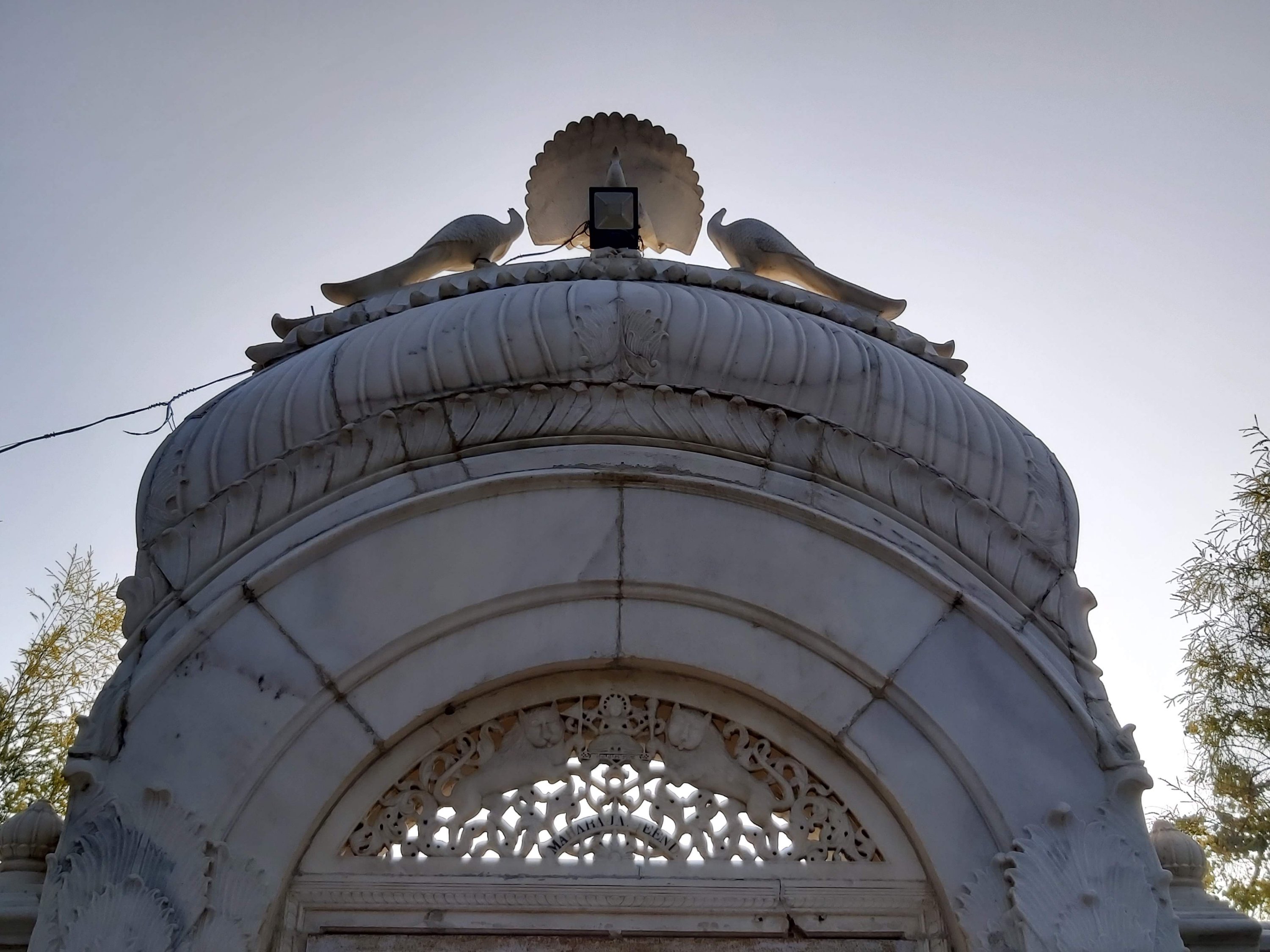
Alabaster peacocks top a ceremonial gateway in Sangrur

In my view, Sangrur should set its sights on achieving World Heritage Site status, based jointly on its fine built architecture but also on its food/craft/music/cultural heritage too. Listening to ragas echoing around the gardens of the maharajahs is far more interpretive of any amount of dull guide books or interpretive panels. For more on Sangrur’s potential as a centre for Punjabi craft conservation and development please see my next blog.

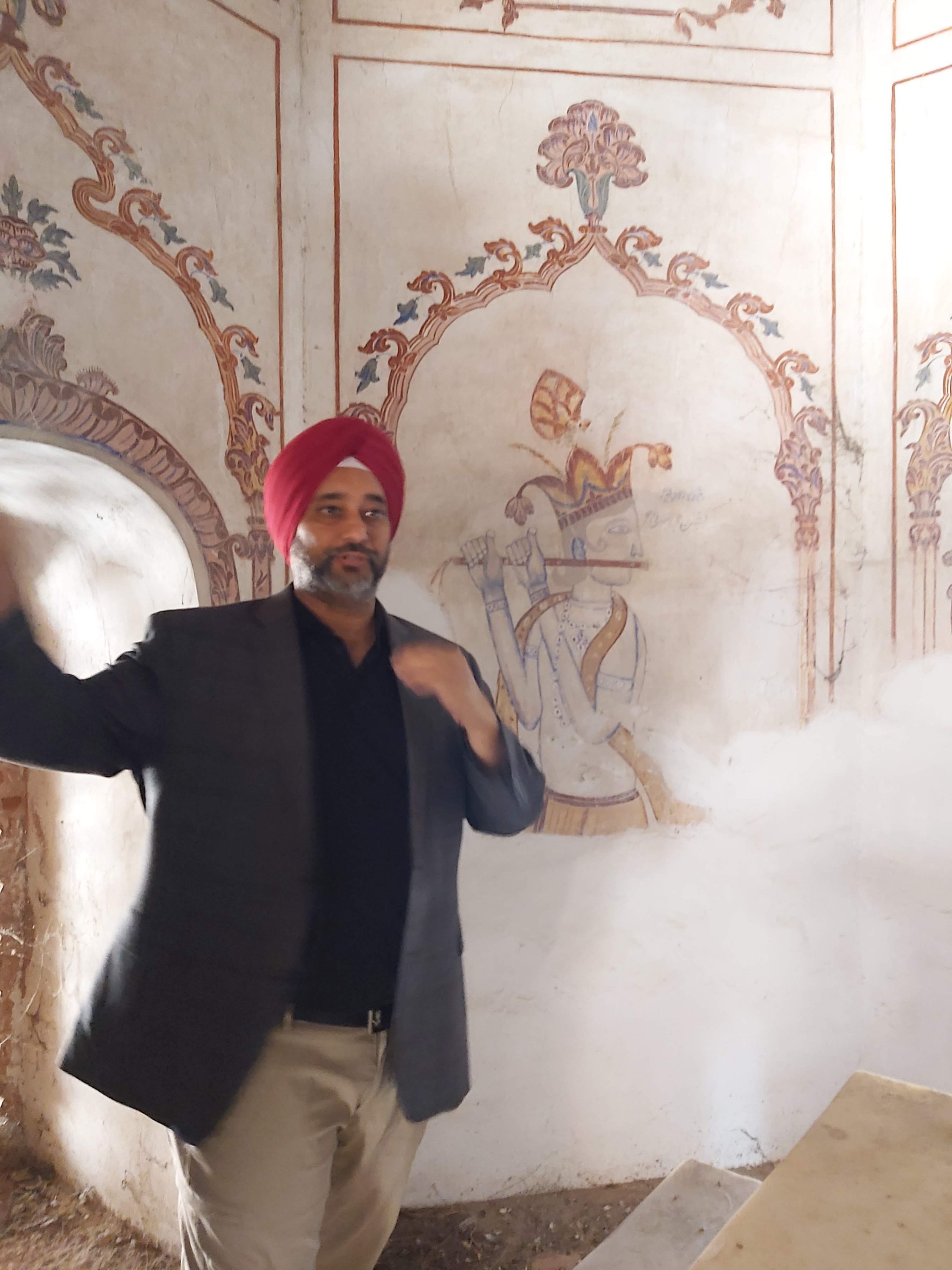
Duelling Sikhs inside a mausoleum – these murals and many others badly need conservation

Karanvir Singh Sibia knows that sometimes one will have a battle on one’s hands to achieve a great vision. He strikes me as someone who relishes this kind of fight. In a project of this kind there always comes a tipping point when the local sceptics realise they are missing out on something extraordinary and jump aboard. The sooner this moment comes, the better for Sangrur.

Vee (Verity) Walker is a heritage consultant and author based in the Scottish Highlands. Her award-winning consultancy Interpretaction was founded in 1999 and has a client list which includes most British and many European heritage agencies. www.interpretaction.com

She is touring Punjab and Delhi 29 November – 17 December 2019 with her novel Major Tom’s War, which is out in Kindle on December 13 (launching on 13 December at the Chandigarh Military Literature Festival) and in paperback in February 2020. She is also speaking at the USI in Delhi at 11am on 9th December. Major Tom’s War commemorates the role of the Indian Cavalry in the Great War. www.majortomswar.com
Travelling through time and space…

An unremarkable journey (albeit one of 5000 miles) to a remarkable city, where my #Indiabooktour for #MajorTomsWar will both begin and end.

Chandigarh is quite a modern state capital, replacing Lahore which was severed from the rest of Punjab in 1947 during Partition. The new city was planned by the French (notably by the architect Le Corbusier) in numerical sectors (think arrondissements in Paris) and this is clear from its central spacious tree-lined boulevards and generous public gardens. I have come as a guest of its prestigious military history book festival.

The past is very much present in this part of India but standard military history does not tend to relate how people thought or felt at the time of the Great War. I have the impression of travelling back in time as well as thousands of miles from home. So little is left in the way of personal family memories of these times here. I will be returning knowledge of the Indian Army’s actions in #WWI to a generation which will now cherish them as I have. I think/hope Tom would approve of my actions.

Preet, Shivjit and Farid their charming son

I am staying with Major Shivjit Singh Shergill, retired from the Central India Horse regiment and his wife Preet and their son Farid in a comfortable house with a lovely garden and terrace.


Their home just bulges with erudition and heritage – family portraits of military forebears, fearsome weapons on the wall, books filling the shelves. It is very good to have a base while I am here and Shiv and Preet are treating me as one of the family.

My twin interests in food and heritage readily combine in their home as we swap family stories over the dinner table. Here is Farid trying on some WWI era specs like Tom’s to see how it might have felt to wear them.

Preet cooked an English lunch just to break me in gently but last night was my first taste of authentic Indian cooking. We had a dark lentil dal, dal makhani, paneer cheese cooked with onion and red chillies and my favourite, Preet’s pea curry. This was made with a reduced sauce made of ginger, onion, tomato and chilli to which the gently stewed peas are added, separately cooked until soft. Mental note: be braver with ginger in the kitchen!

These tasty dishes were served with small round breads called pulka made by one of the maids. Like a fool I was too bug-eyed to photograph these wonders but I did come to my senses enough to record this sumptuous creme caramel, steamed on the hob, not baked in the oven, which changes its texture from firm to silky. Something about its shape and wobble made me think of those lionsmane jellyfish which occasionally get stranded on Rosemarkie Beach at home. A good deal more appetising however!

Very close to the handsome city centre lie what Preet referred to as the ‘villages’. She drove me gallantly, along a hair-raisinglyly bumpy and rutted road, past much more crowded living areas.

Buffalo in the villages outside central Chandigarh

Lines of bright washing festoon houses and trees like tinsel on last year’s Christmas tree. Dogs and cattle – sometimes buffalo – amble about everywhere, which can be quite dangerous, according to Shiv.

We went to my first Indian bookshop where I met Ajay, its proprietor. It had a fantastic selection of books and I bought this one, which will keep me entertained while on the move. I love the phrase rude food!

My next blog will be a retrospective view my visit to the heritage festival in the ancient city of Sangrur. Do join me and share this post with others, the more the merrier!

Preconceptions of India…

My long-awaited book tour journey has begun with a dawn flight from Inverness. The plane cruised over a thick grey blanket which covered the UK and as I looked down I would catch an occasional glimpse of lights in the darkness. Not a bad metaphor for my knowledge of India! My head and heart are so full of a country I have never visited – but how real is it? What has influenced my limited understanding of this great nation?

There are the family stories which evolved to become Major Tom’s War, of course, plus the family ‘treasures’ and the family idiolect. I used the word baksheesh before I realised it came from India and I have known what tent-pegging and pig-sticking were since infancy. We still say horses and, later, cars, ‘turn on sixpence’, also a polo term I suspect.

I love curry to the point of obsession, perhaps because two generations of my immediate family spent their lives in the south of India:  Tom’s father Vesey didn’t fancy the priesthood so escaped his father’s dull vicarage at Chastleton in Oxfordshire to practise law in Calcutta. Tom and Dick his sons were born there and became respected lawyers too, playing at soldiering in the reserve regiment the Calcutta Light Horse for the social side as much as anything. Tom’s little tiger and elephant, toys from childhood, still prowl and growl and trumpet and stamp along my bookshelves. It was in part their beady stares which nudged me into writing Major Tom’s War all those years ago.

I had never looked at a detailed map of India until planning this trip – and yet the first chapter of Major Tom’s War is set in a fictional India of my grandfather’s childhood. I could taste Calcutta dust at the back of my throat as I was writing it but it is invented dust. I will first set foot on Indian soil early tomorrow morning. So before I get there, as a starting-point, it is worth sone digging on how these impressions have formed.

Books came first, oh best beloved: a heady mix of Kipling, EM Forster and MM Kaye, and, later, Salman Rushdie and Arundhati Roy. And some books spilled into film and television: Ben Cross as a tanned Ashok in the Far Pavilions, Dame Peggy Ashcroft terminally failing to respond to the plaintive summons as ‘Mrs Moore!’. Ben Kingsley as Gandhi. Beneath this lurk the less honourable shadows of the 1970s comedy programme ‘It Ain’t Arf Ot Mum’ – based on an innuendo-ridden concert-party somewhere in India or the unidentified ‘Tropics’. In the 1970s it was prime time family entertainment on TV, but no longer. Lofty is most unlikely ever to ‘sing it again’, thank God. We have moved on.

Even so, its impact still lingers in the recesses of the minds of people of my age. The usual ‘lucky you’ response to news of this book tour has been muted from some quarters; negativity, born, in the main, of unwitting prejudice. ‘You’re not going alone?’ one or two have gasped. India, say these experts who have never been, is chaotic, hot, polluted and dirty. I will lose my luggage and possibly worse. I am also likely to have all my worldly goods stolen, be devoured by mosquitos, chewed by rabid dogs or felled by ‘Delhi Belly’ within minutes of arrival.

I have learned to travel hopefully through life so will report back on the accuracy or otherwise of these misconceptions at the end of the tour!

Balancing such ill-judged comments from the uninformed is the extraordinary tidal wave of courtesy I have encountered, even before my arrival. My publisher Kashi House has been the advance guard as far as this is concerned. From the moment I signed my contract, commissioning editor Parmjit Singh has treated me with a kindness and courtesy not always present in the cut-throat world of publishing. The Kashi House back catalogue www.kashihouse.com is well worth a browse. As well as sublime books on art and culture, it also unflinchingly documents the darker history of India too, including the horrors of the Jallianwala Bagh massacre (at Amritsar) and the 1984 genocide. The Kashi House team are great ambassadors for India and for Punjab especially.

Many of my hosts on my three week, nine-stop (and therefore almost non-stop) tour are regimental contacts. Some are modern army families, fellow members of the Central India Horse Association, living in the cities. The CIH has now evolved into a modern Indian Army regiment.

Other hosts are out in more rural villages, kind people who contacted me after reading the features on Major Tom’s War which appeared in the Chandigarh Tribune to thank me for shining light on their half-forgotten forebears. Will you come and see us, Madam Vee, they asked.

Thanks to Kashi House and to the team at Chandigarh Military Literature Festival (at which I will be speaking on 13th December) Madam Vee was able to board the plane today.

More (much more) to come…

Inverness Museum and Art Gallery/Netley Centre/Ness Book Fest Family Treasures Workshop October 2019 – tutored by Vee Walker

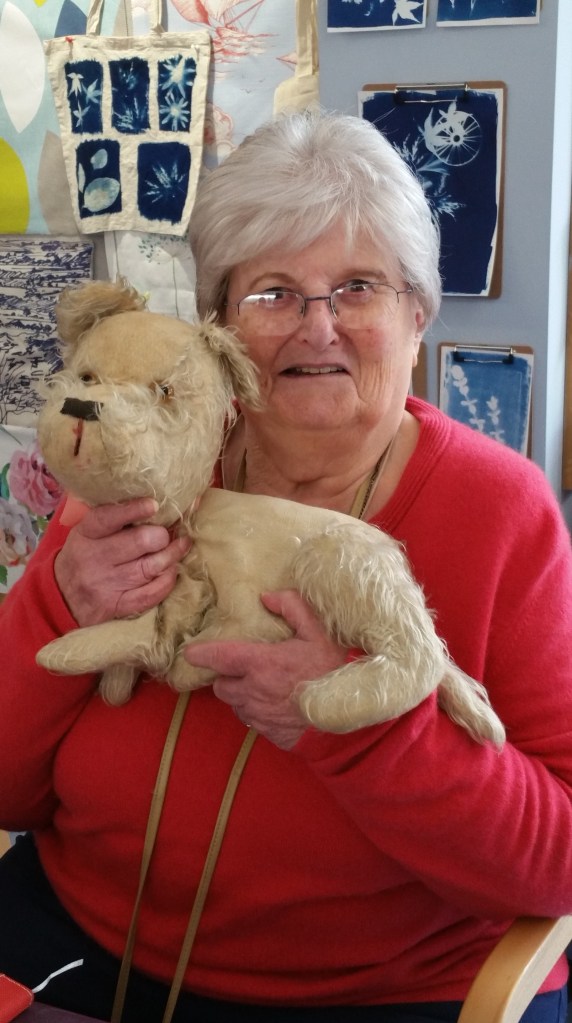
This gorgeous ‘goonie doggie’ was brought along to the Netley Centre by its proud owner

My privilege to tutor a group of very able writers with varying degrees of experience this week.

Our aim was to allow ‘family treasures’ – not necessarily objects of great value’ – find a voice. We spent two hours working hard on different techniques: exploring the known lives and stories of the objects and dipping our toes into the fiction just beyond that.

The result is some fine pieces of work. My pleasure to post them for you here (without comments, just for the joy of reading them). If others come through I will add them too.

Thank you Margaret, Alex, Alastair, Janie, Carol, Glennis, Sheena, Helen, Rachel, Rebecca and Hazel-Ann for your hard work and enthusiastic response at the morning workshop and to the Ness Book Fest team for inviting me to host it.

Thank you too to the Netley Centre folks who took part in such an enjoyable workshop in the afternoon, too.

If anyone would like to attend a similar workshop (some techniques repeated) which will be focusing more on characterisation I will be taking part in Word on the Street Festival in Dingwall at 6pm on Friday 18th October in HighFlight bookshop – first come, first served, I am told!

All copyright remains with the author of each piece.

Over to you and again, well done.

**********

Pedalling to Victory

A fictional account of how my grandfather, Peter Coupar, became Scottish Cycling Champion in 1926

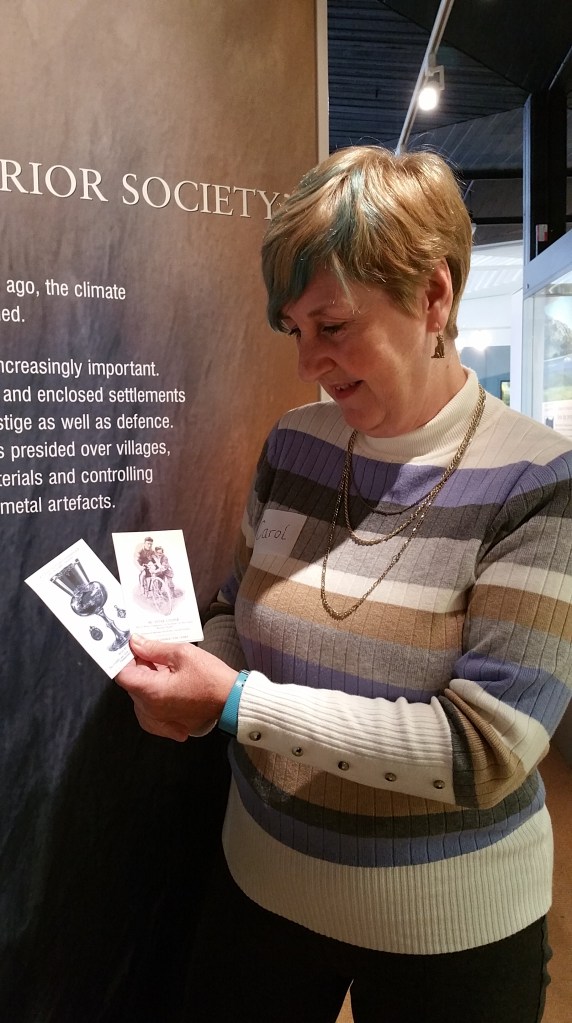
 by Carol I Walker

Peter and Joe Coupar never showed the slightest interest in becoming blacksmiths like their father and older brother.  They were inclined to the view that horses were a drain on time and resources.   Why, the brutes needed feeding, grooming, watering and cosseting in return for a fast gallop.  Their bicycles, however, demanded no such attention, sitting ever ready, ever compliant and willing to eat up the miles of Forfarshire’s rural highways, giving few arguments and requiring little maintenance. 

            When the spoked rubber shod steeds had been hosed down and oiled, the young men pored over linen- backed maps and plotted their next adventure – the carses and glens of their homeland lay at their fingertips and even Dundee and beyond beckoned.  Crossing the River Tay on the ‘Fifie’ ferry from Broughty Ferry to Tayport took them into the Kingdom of Fife.
            The brothers were scunnered.

            “Nae a’ it’s cracked up tae be”. 

            “Aye, nae King in sight.” 

            Some days they hurtled through Glamis, Meigle and on to Coupar Angus and down into Dundee.  The bicycles birled to the click of gear and chain with little brake employed, such was the joy in speed.  Yet when the Powrie Brae out of Dundee loured over them, steep and relentless, they ate up its challenge, urging each other to climb and pedal and climb.

            “Come on ya big jessie,” Peter would shout at Joe.

            And Joe would reply, “I’m on yer back wheel ya tattie heid.  Canna leave me behind.”

            And so a fierce rivalry blossomed with each brother vying to be the first – to be the first at the bottom of the hill, to be first at the top of the hill, to be the first to reach the next village, to be the first to arrive home.  Each brother claimed he was the fastest cyclist, and their outings became more competitive.  Friends and family assured each brother that they were surely the fastest, but the brothers were shrewd enough to know that familial peace in Coupar household lay behind such assurances.  

            One day, on returning from a sortie into Glen Clova, the brothers passed through the well set up town of Kirriemuir when Peter, a wheel in front of Joe, yelled and pulled on the brakes. In a flurry of dust and confusion Joe, red faced and spluttering, skidded to a halt beside him.

            “Are ye wise man?” Joe demanded. “You nearly couped me o’er.”

            Peter had stopped by Charles Lyon the Ironmongers’ shop and was pointing at a notice in the widow that read: “The Kirriemuir Agricultural Show” and further down amongst attractions such as ploughing matches and champion Clydesdale horse classes, Peter had read “Bicycle Races”.  

            “I’ll race you at the Kirrie Show.” he said pointing. “Then we’ll see wha’s the best!”

            “You’re on!” Joe shouted back as he peddled off. “Beat ya home, dunderheid!”

Note: both Peter and Joe became champion cyclists in the years around 1926

**********

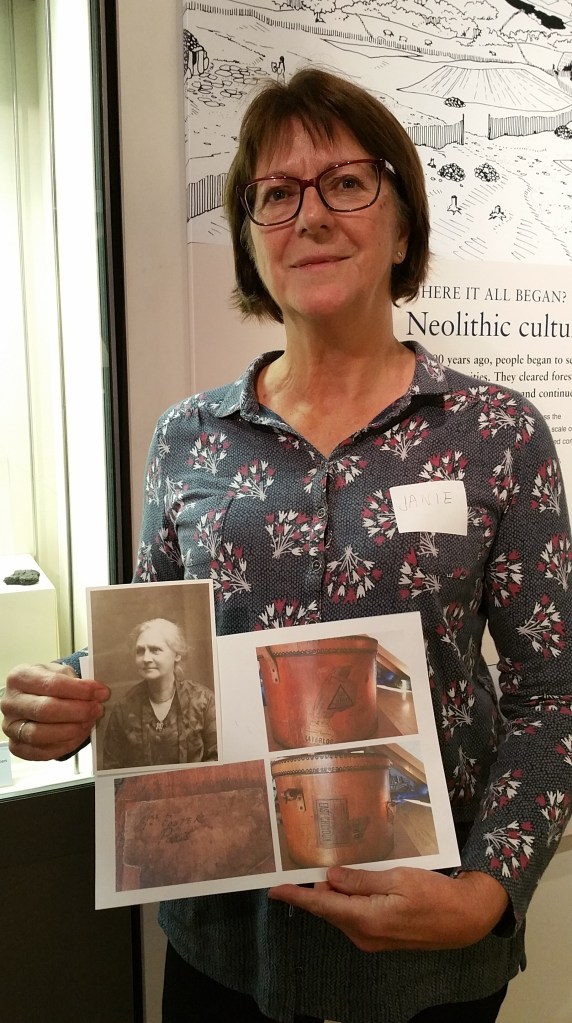
THE HATBOX BELONGING TO LUCY ELLEN FOSTER

by Janie Thorburn

The misty reek of the railway station fills my nostrils.  Coal smoke and creosote.  The rain-streaked, smudgy window.  I peer anxiously amongst the grey crowds and see the porter carelessly loading the motley collection of leather, canvas and wooden luggage aboard the train which will carry me to… I know not.

Take care!  The familiar wooden hatbox, proudly burnished to a chestnut sheen, the lid modestly adorned with metal trim, contains precious snapshots of my life, at least as it was.  It now announces its new destination.  Paris. 

The train heaves from the platform and I reflect on what I have left behind as the thoughts come spilling through my mind.  The fresh, scented fields of barley and corn; the land stretching for acres providing both income and employment; the workhorses, Beauty and Sergeant.  Farm Hall.  The children, Thomas, Lucas, Margaret, Michael.  Nanny for the younger two, the elder boys ploughing their own furrow.  A comfortable, orderly, country life.  Lucas Foster an educated man, a fine judge of hunters. Respectable and respected.  Kind.  Too kind perhaps.

The mingling thoughts of home are a gentle contrast to the puzzling, bustling scene in which I now am placed.  ButI must put these thoughts aside and gather the fortitude to face my new ‘home’, meet my employer. 

Safe from the grime of the journey my fingers close on the white, laundered gloves waiting in my pocket as, with apprehension, I ponder what challenges lie ahead for me.

Farmer’s wife, widow, soon to be Housekeeper.  All that is familiar and secure lost through the kindness of my husband and the betrayal of a friend.  We have known misfortune through the vagaries of weather and harvest but this is beyond that which I have faced alone. 

Lucy Ellen Foster shall master the task with quiet dignity and courage, knowing that the bonnet, the lead soldier, the Bible, the child’s bracelet held within the sturdy hatbox provide the thread to all that is precious.  A thread that will not be broken.

**********

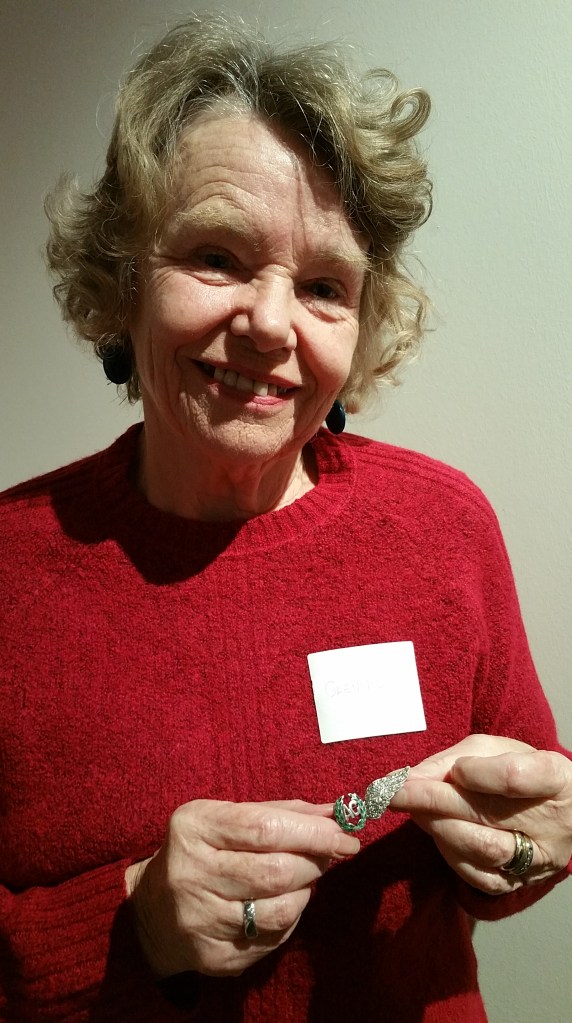
Sweetheart Brooch

by Glennis McClemont

A ‘diamond’ wing sparkles, caught by the light, unfurls from a laurel wreath promising victory in a world at war… an almost unbelievable reprise from the one in the not too distant past.

The garland encloses the letters AG – Air Gunner. Count the ‘diamond’ feathers. Thirty, perhaps? A twinkle for every sortie made by a ‘Tail end Charlie’ in a Lancaster Bomber roaring over the North Sea enfolded in a blackness stabbed by trails of orange flak out to destroy. Ping! Ping! The fuselage is strafed. Forty years later the sound brings the Tail Gunner out of a deep sleep, sweating and trembling. The bedroom radiator makes the same sound. Ping! Ping!

It’s a lonely position, lying aft, separated from the rest of the crew in a claustrophobic, freezing space with only a covering of Perspex between now and eternity.

The Lancaster drops its lethal load and turns for the English coast, the crew inwardly willing the tower of Lincoln cathedral to appear.

Breakfast in the Mess. Bacon and eggs. The Gunner evades, cannot afford to engage the thought that Jimmy, his fellow Jock from Rutherglen was an empty place at the table this morning.

He thinks instead of Margaret. The sweetheart brooch is his pledge to her. She’s in Lanark with her family, she’s listening to every Radio News broadcast, knitting, knitting, smoking, drinking ersatz coffee, more knitting, more smoking, most of all she’s waiting, waiting….

**********

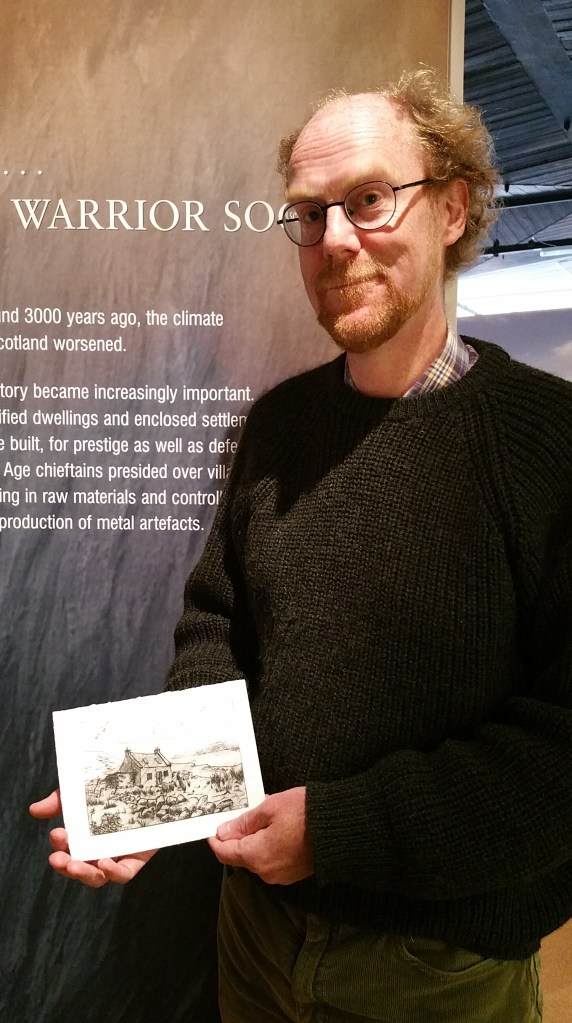
CROFT HOUSE ETCHING

by Alastair Cunningham

This etching is a representation of a bothy on Scotland’s north west coast.  The bothy is part of a hamlet of three once-homes that look over the sea towards the village of Lochinver.  It is just a short and cruel gaze back across the bay to those richer lands on which these crofts’ inhabitants had been permitted to live until the time of their eviction during Sutherland’s clearances.  It has always been an empty place, where ravens outnumber humans and sea eagles sometimes fly.  There is nothing here to interrupt the milky way from its shining.  The land is called Camas Coille, which translates  as ‘bay of the wood’ – though until my time there had been no trees here for generations.

The etching is not a representation of what is there now.  Since the copper plate was scratched in the early 1960s, the bothy has been repaired, the drystone wall rebuilt and a copse of trees planted.  The etching shows a place in need of a loving that has since been lavished.

It is not a perfect representation of what was there when it was drawn.  The hill behind has never been that steep.  In reality, it is a whaleback hump of boulders left by receding ice.            

I am not sure of the coastline across the sea either – though I have spent less time tramping those hills and so cannot be so definitive about their true profile.  It is, however, a family treasure for what it purports to show.

It shows a building that had been vacated about twenty years previously, at the start of the 1940s: abandoned when life in this place with neither road nor boat access had become too hard and the last widow had left home for a new life in Lairg.  As a mark of tough times, her husband had died from an infected boil and left her with four children and no income beyond the few vegetables grown on the croft.  The land looks pretty barren to me but could apparently support strawberries in a good year.  Good years were too rare, so she left.  By the late 1950s the roof was caving and the floor a swamp of dead sheep.  My father bought it and worked to stabilise the ruin.  I spent a childhood of summers here: drinking of the vast skies, keeping the fires burning and playing my part in keeping the roof attached to the gables.

It is also treasured by me because of how it was made.  My dad produced this work during an evening class printing: he was always annoyingly good with his hands.  He died a decade ago and now his ashes are incorporated in the trees we planted.  I think of his alder as the biggest most gnarled tree of the copse.  But that is a son’s imagination more than a measurement.

**********

ALEX CHOSE TO WRITE ABOUT A SCULPTED UPTURNED MARBLE FOOT WHICH WE USED IN AN EXERCISE. THIS IS A REMARKABLE PIECE OF WORK AS ENGLISH IS NOT ALEX’S MOTHER TONGUE.

The Foot

by Alexandra Dold

I can almost feel how sore the foot was. After all, she must have been kneeling in an uncomfortable position for a long time. A position women nowadays would gladly sit in, as long as it’s called yoga and fits with their wannabe healthy lifestyle.

However, she didn’t do it gladly. She had been sitting on her knees with her foot outstretched like this for over five hours now. The floor had felt cold beneath her naked feet initially, but not any more.

She had no idea how it all would turn out; she was only a slave girl. All she knew was that the artist would not picture the crusty bits on her smelly feet, she was only the model.

The rich looking at the finished piece of art would never connect her to it.

********* 

Time travelling in Tarradale…

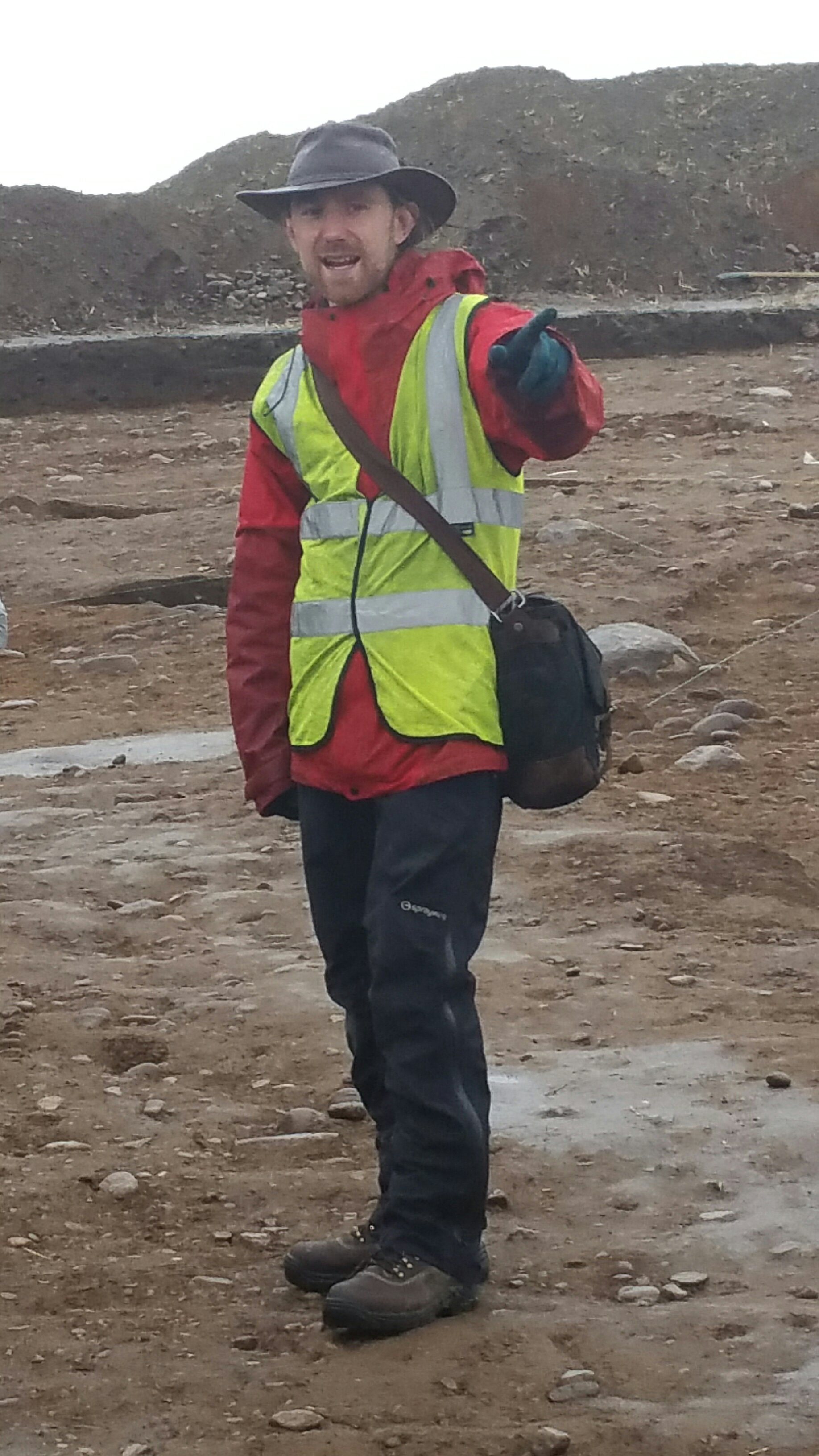
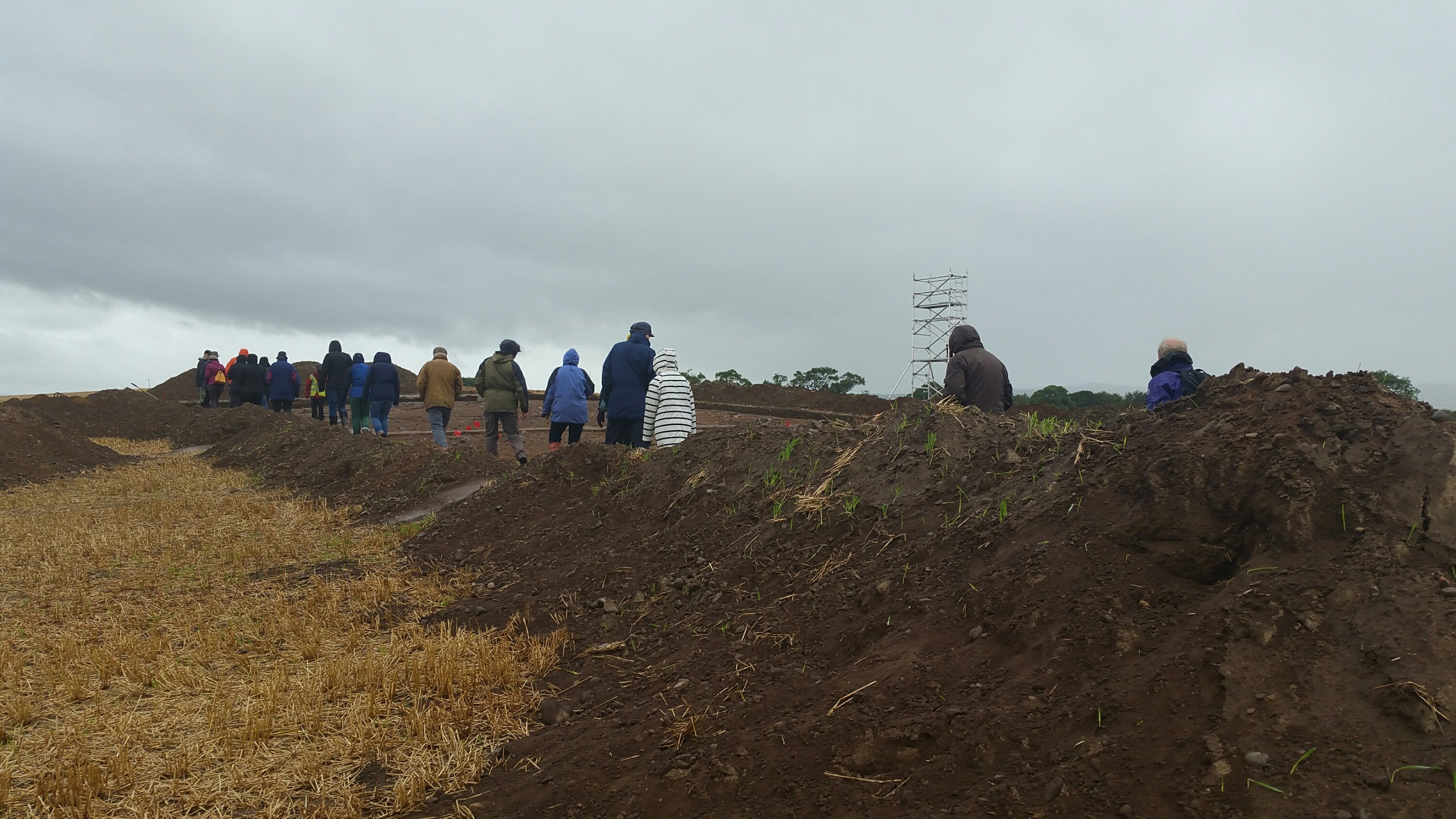
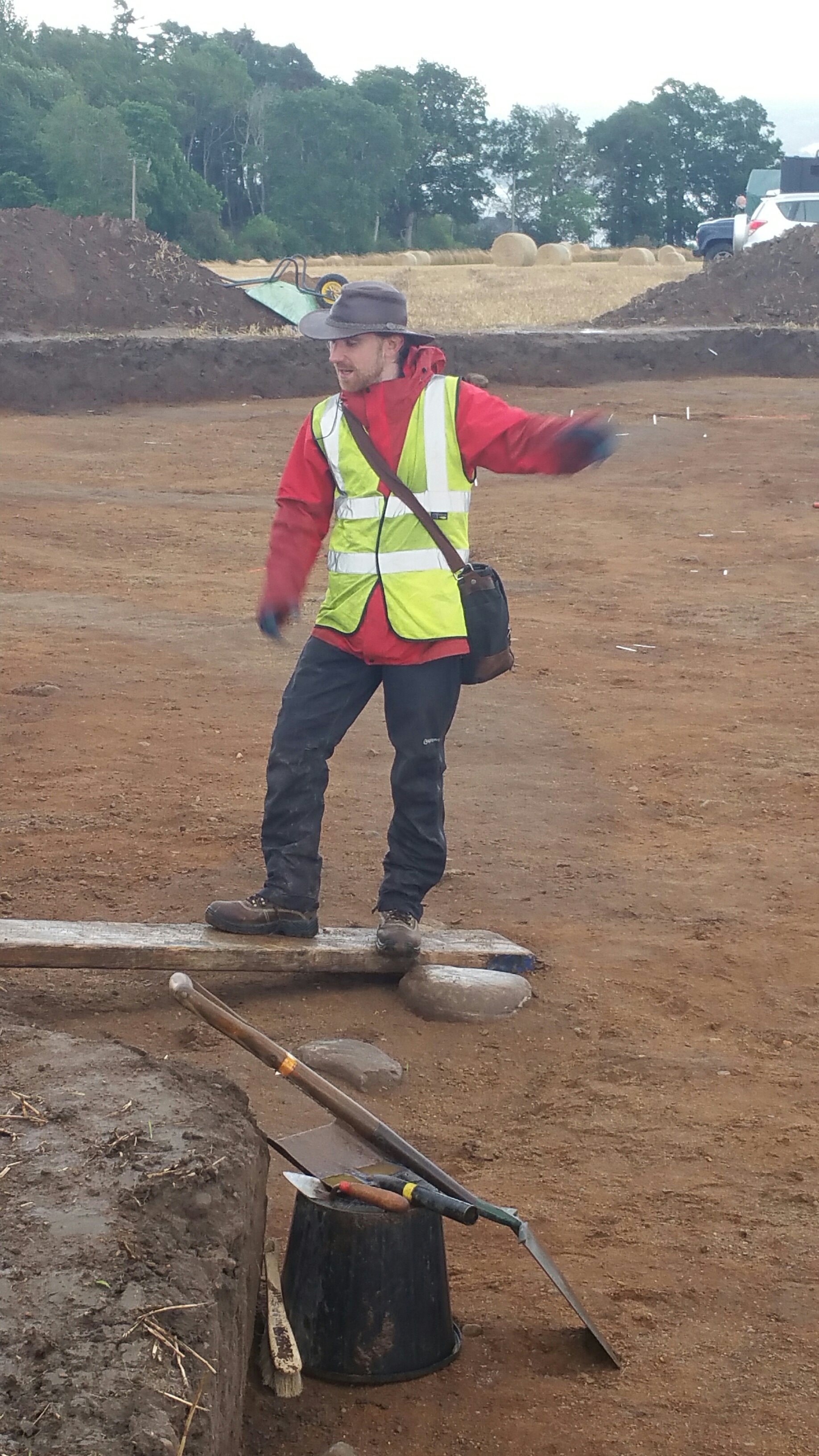
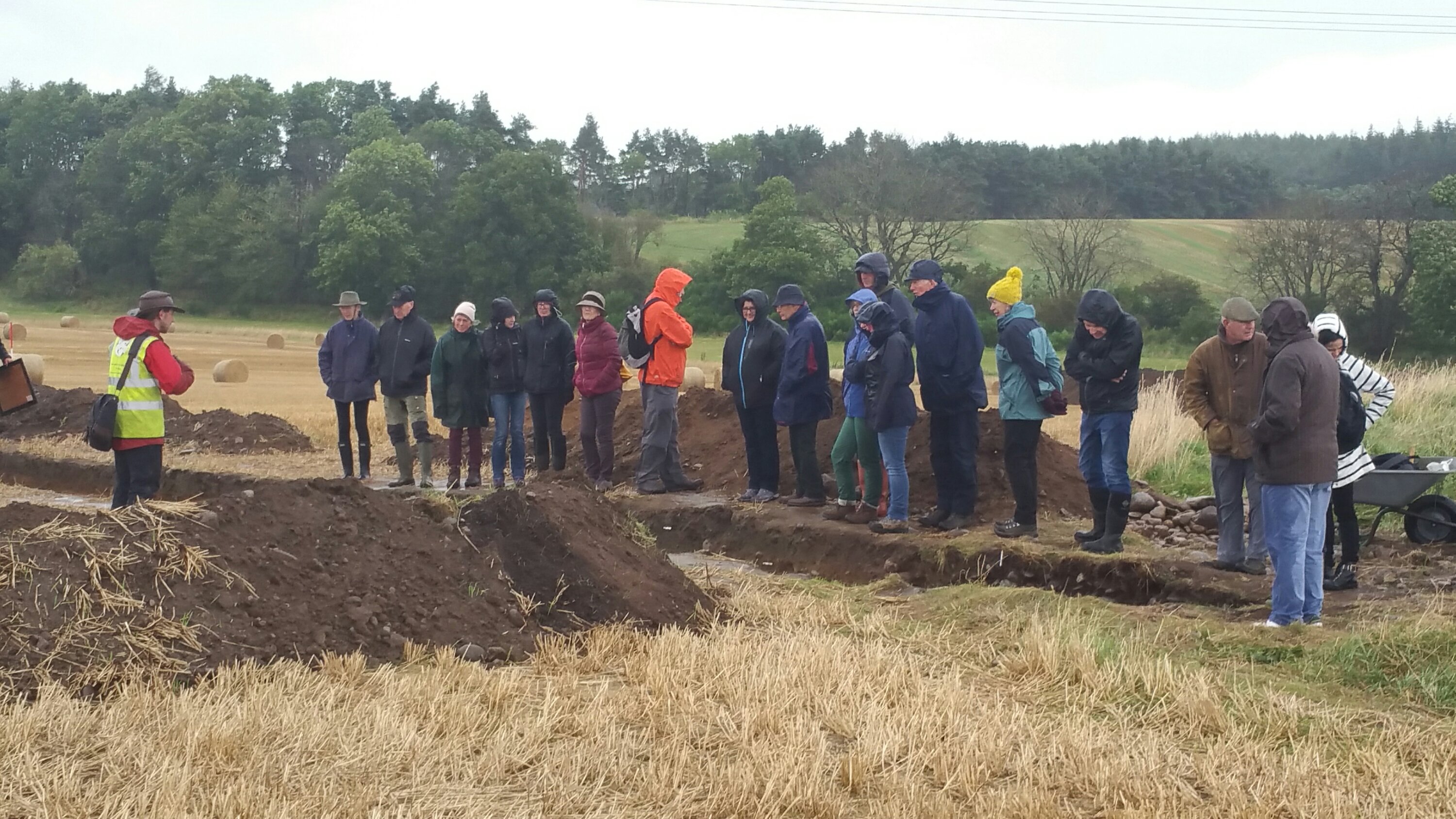
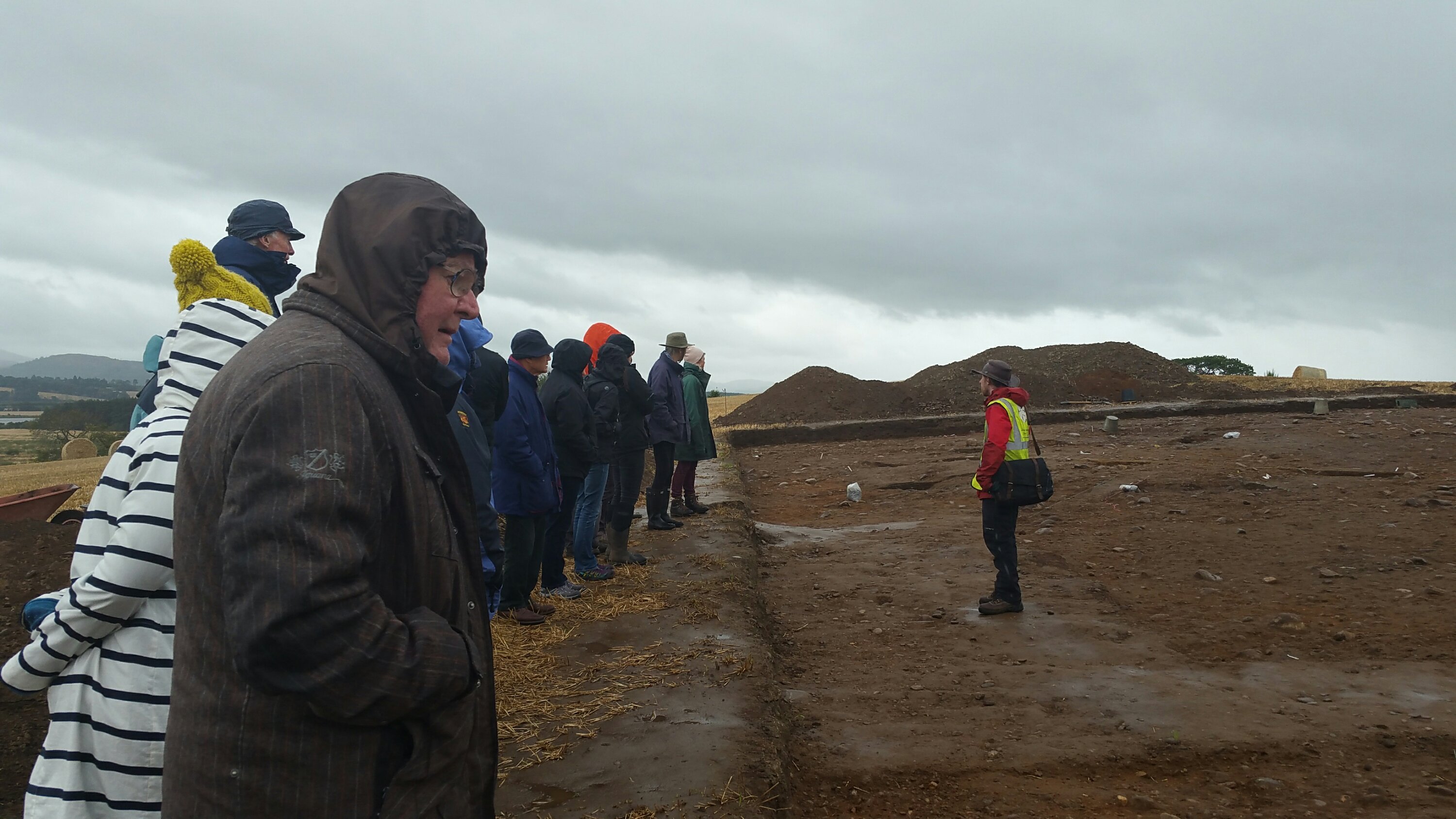
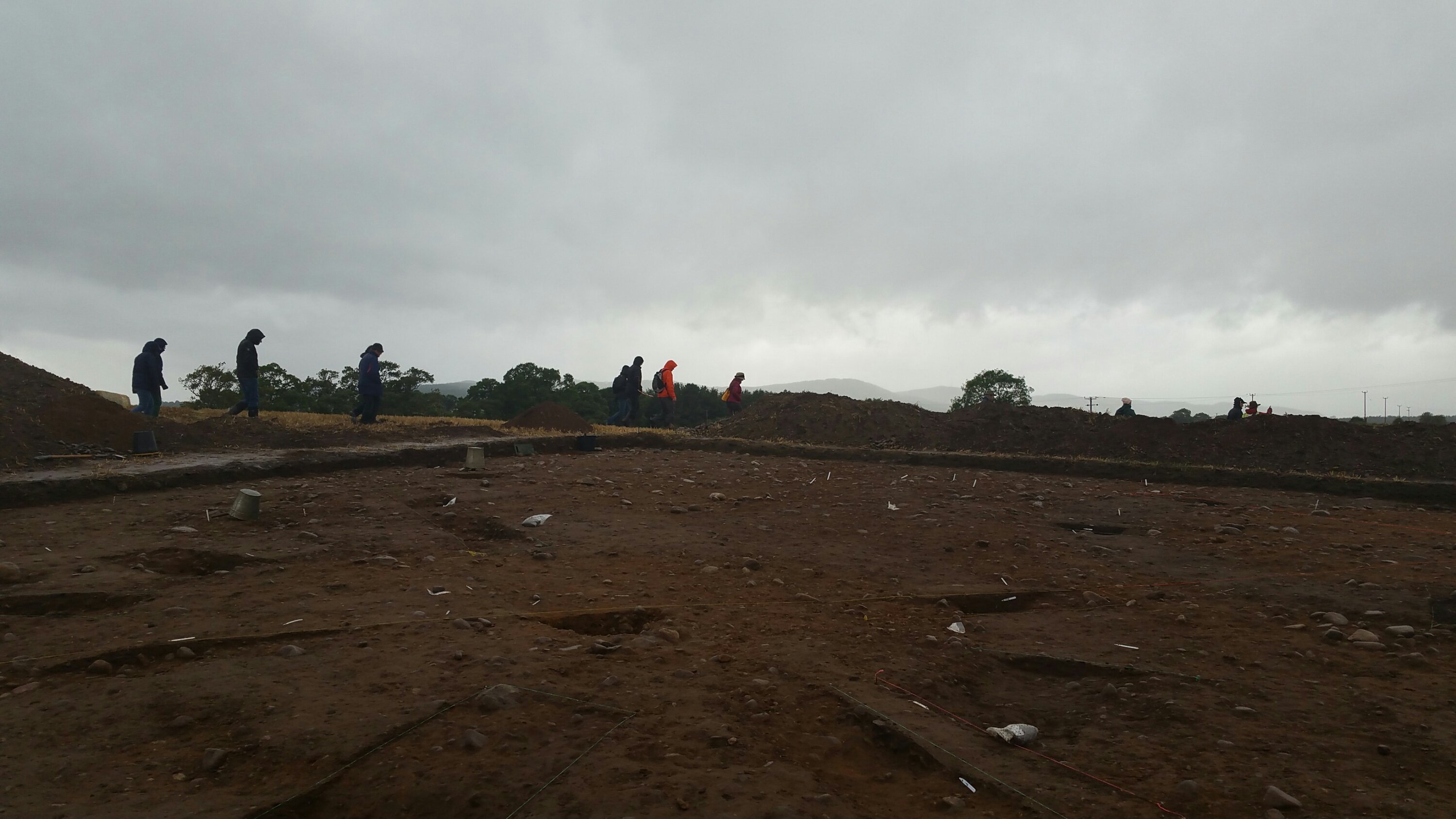
Archaeologist Lachlan McKeggie of Highland Archaeology Services is irrepressibly enthusiastic, even in the face of a driving deluge (hence the rather dark photos).

I should first explain that while fascinated by the past I am not an archaeologist, or even a historian. I am also slightly dyscalculic (like dyslexia but with numbers) so don’t expect many dates or measurements in this blog.The words I have retained from Lachlan’s empassioned if soggy guided tour today are ‘big’ and ‘massive’ and ‘important’. Oh, and ‘old’. Very old. That will do for now.

This major three-year Heritage Lottery Funded archaeological dig led by NOSAS (North of Scotland Archaeology Society) has peeled back the skin of a stubble field not far from Muir of Ord to reveal a tantalising glimpse of the Black Isle’s distant past.

It all began with the crop circles. Where soil is disturbed, even millennia ago, it can change what grows above it. Where ditches were dug around long-vanished structures, when seen from above they can still show in barley growing above today.The site was a massive place of burial, they think. Round ditches, square ditches, some smaller, some vast, most dug with a respectful distance between them and any other. Dug over centuries, perhaps over millennia, neolithic, mesolithic, Pictish. Above them would have risen burial mounds – ‘barrows’.

Each, according to experts, containing just one body? I found this unlikely for the size of ‘enclosure’ revealed (confusing term, as this is very much a 2D landscape today after centuries under the plough). Who knows though how a tribe might have wished to commemorate the memory of a great leader? The protective ditches, the great mounds above, are all gone today. Just an elusive echo of them remains in the subsoil.

Mention of the word ‘body’ above will instantly trigger thoughts of the Pictish Man discovery in Rosemarkie in recent years. Cave conditions are very different from an open, cultivated field. It was not to be at Tarradale, where the acidic soil has eaten through every bone, every tooth, rendering the bodies, quite literally, as dust to dust.The later Pictish burials (which may or may not be the square ones, some with curious open corners) are likely to have been early Christian. No bodies and no grave goods – did belief in a heavenly afterlife supplant the need to ‘pack for the journey’?

So does this lack of ‘finds’ reduce the achievement of this epic dig? Not in the slightest. These shadows of past structures here allow us to wander in our minds, ghostlike, between the barrow burials of Tarradale. We can do this with the conviction that the evolving succession of cultures – the ancestors of some of us – who chose to bury their dead at this site were real, with mighty men and women among them. They desired to cherish their memory, just as we do our dead today. Clear evidence of a belief in an afterlife.

Most poignantly, no digging has as yet been carried out at the very centre of the largest enclosure to be discovered. ‘Good practice’, said Lachlan as the rain dripped off his nose. Something has to be left to future generations, perhaps with new technological techniques allowing better analysis.This dig will continue to reveal its mysteries through investigation of samples as the comfortable soil settles again over this ancient burial site and time rolls forward in Tarradale.

http://www.tarradalethroughtime.co.uk/excavations2019.asp

The end of the road, or almost…

Goodbye my friend. You have kept us safe on Highland roads for over a decade…I acquired you very much second hand from a garage on the Carse.
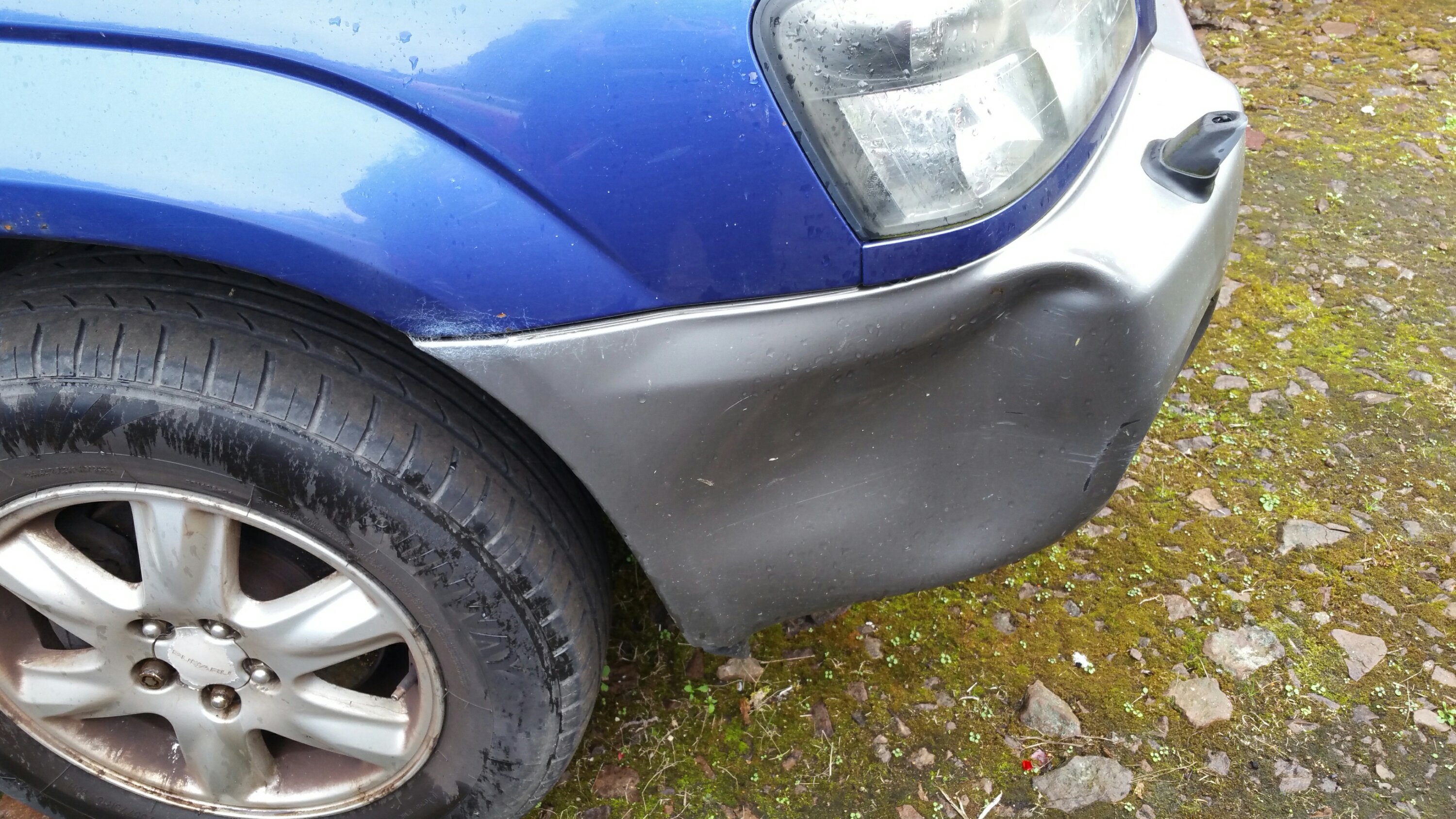
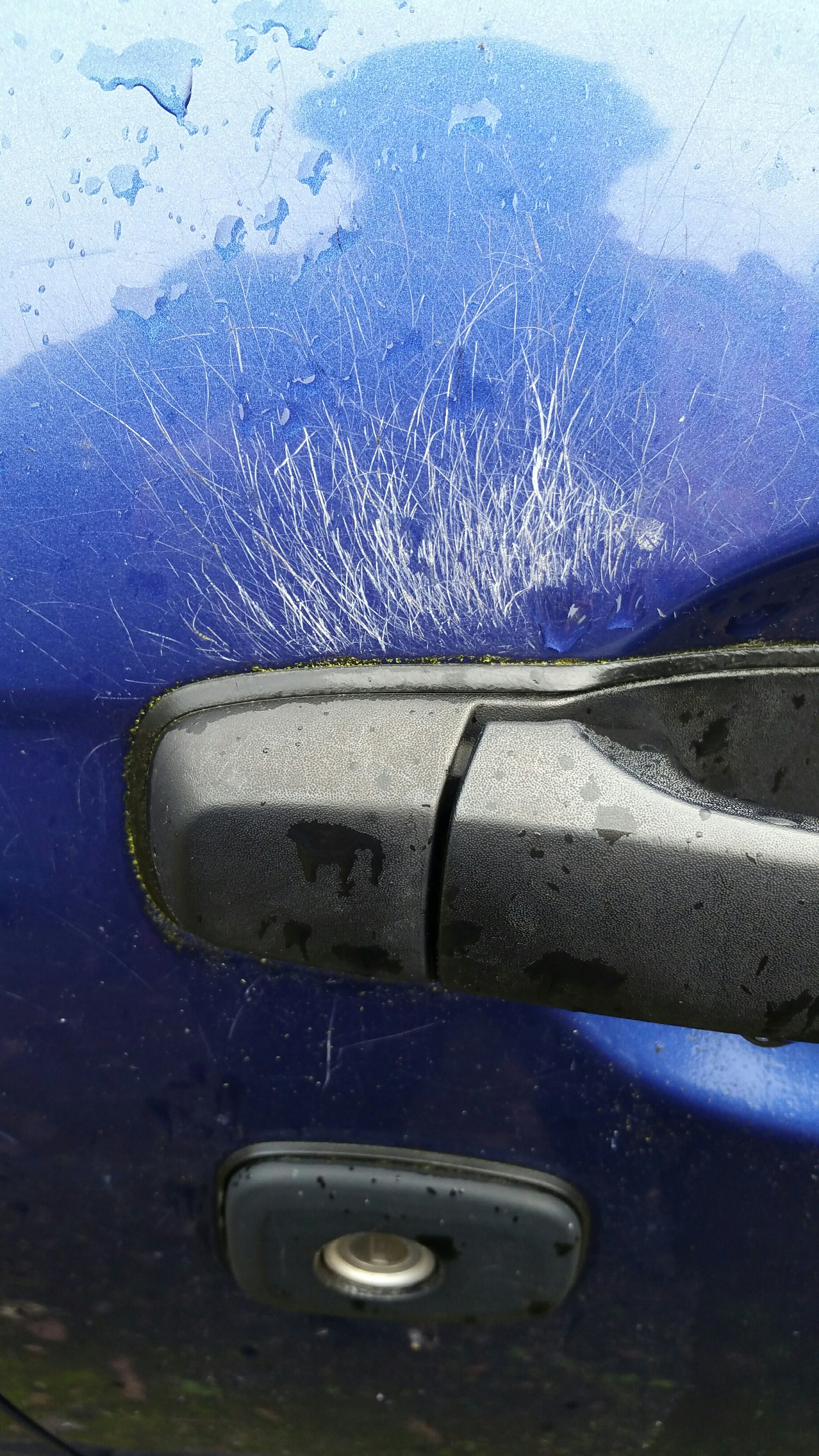
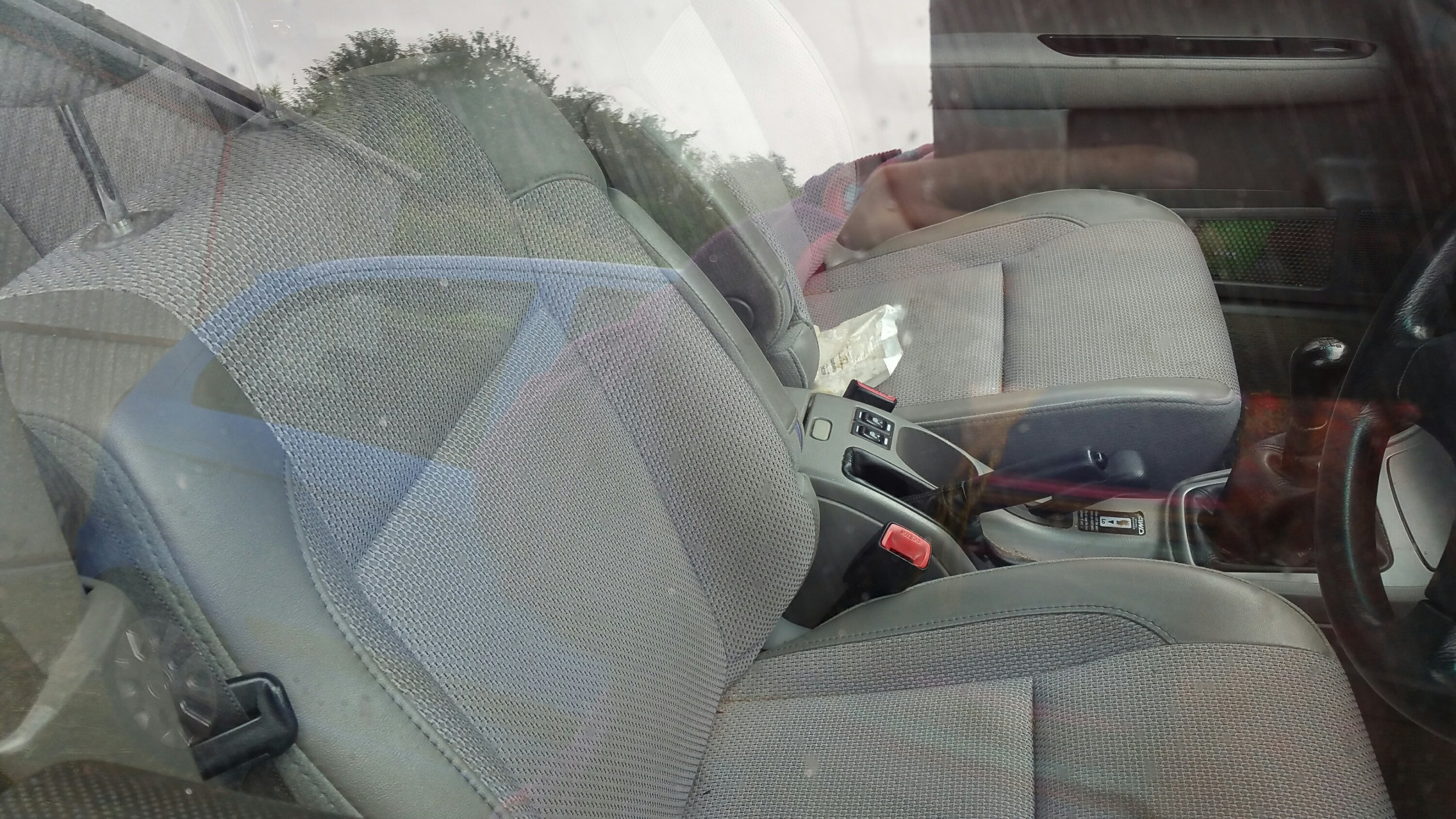
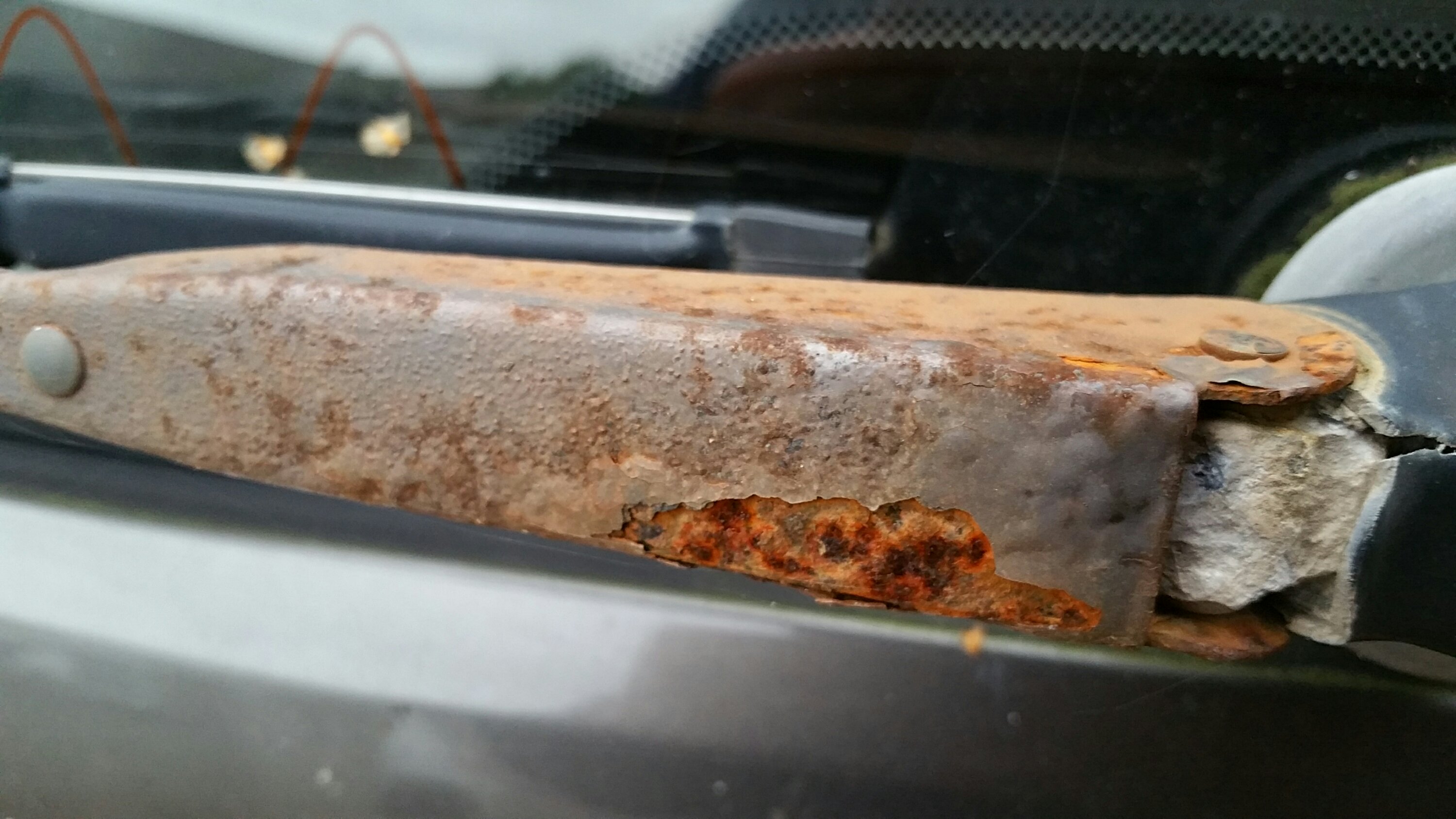
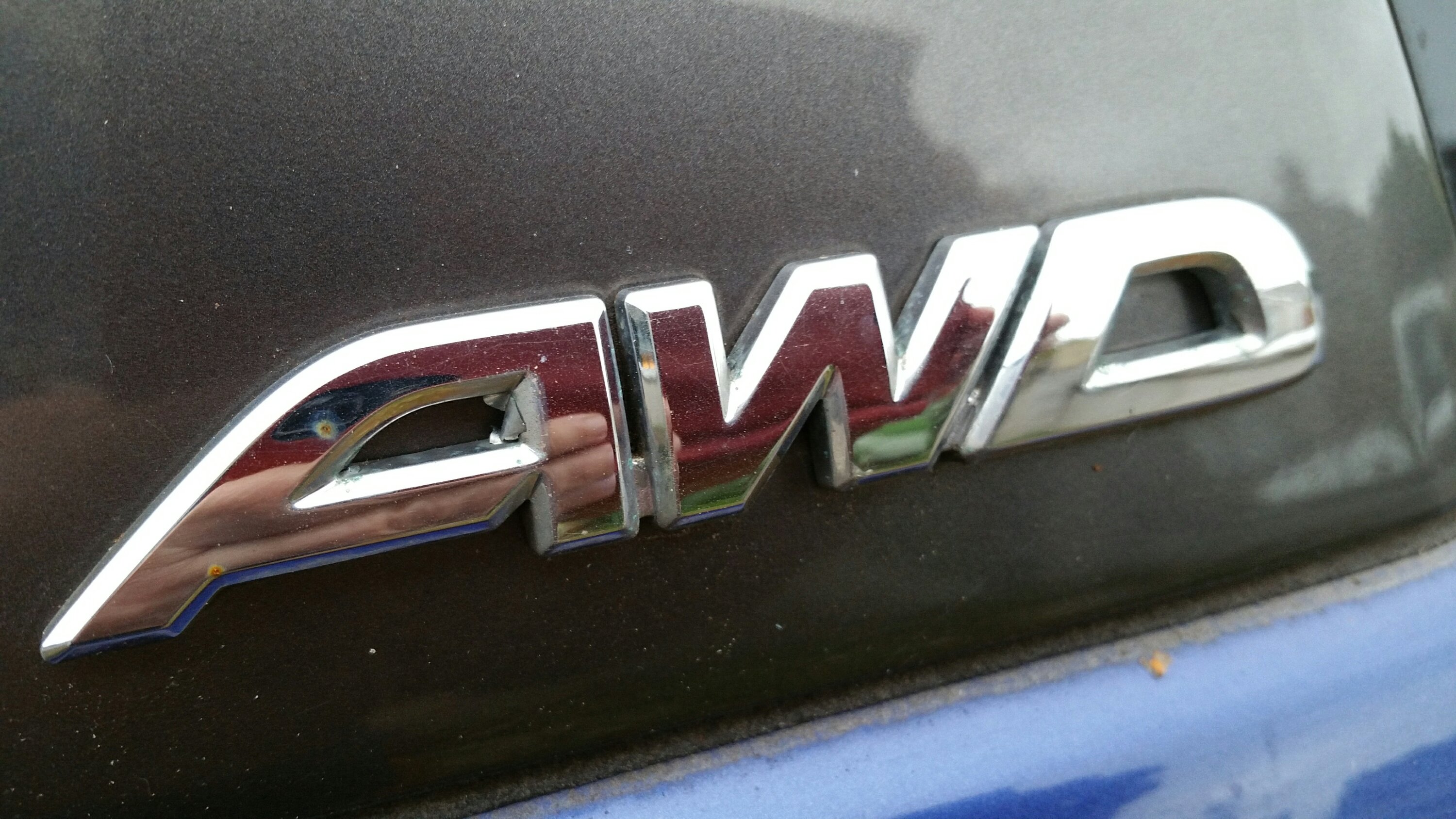
Your first owner was allegedly fond of a wee dram or two, hence the key scratches in the approximate location of the handle…We had our knocks but you kept me and my family safe and comfortable too – how I will miss your heated seat back this winter, old lady!In you I careered around Scotland to film Scotland’s Stories, braving giant anthills in Culbin Forest and off-road moorland tracks at Mar Lodge…You stood patiently outside in all weathers while rare lichens anchored themselves in your nooks and crannies…I was fond of all your wee quirks – like your ever-illuminated lights and the way you screamed whenever anyone other than myself tried to start you with the dodgy key held together with a rubber band…In the end, the rust got to you and even Fraser at Campbells Garage shook his head at the thought of welding on to thin air.
Not the scrapyard, though. Not yet. You’ve earned your Viking burial, old girl. Enjoy your next incarnation at the Stock Car Races in Golspie with lovely Matthew your final owner at the wheel.

We might even pop up and watch!

Nil desperandum with the wartime Walkers…

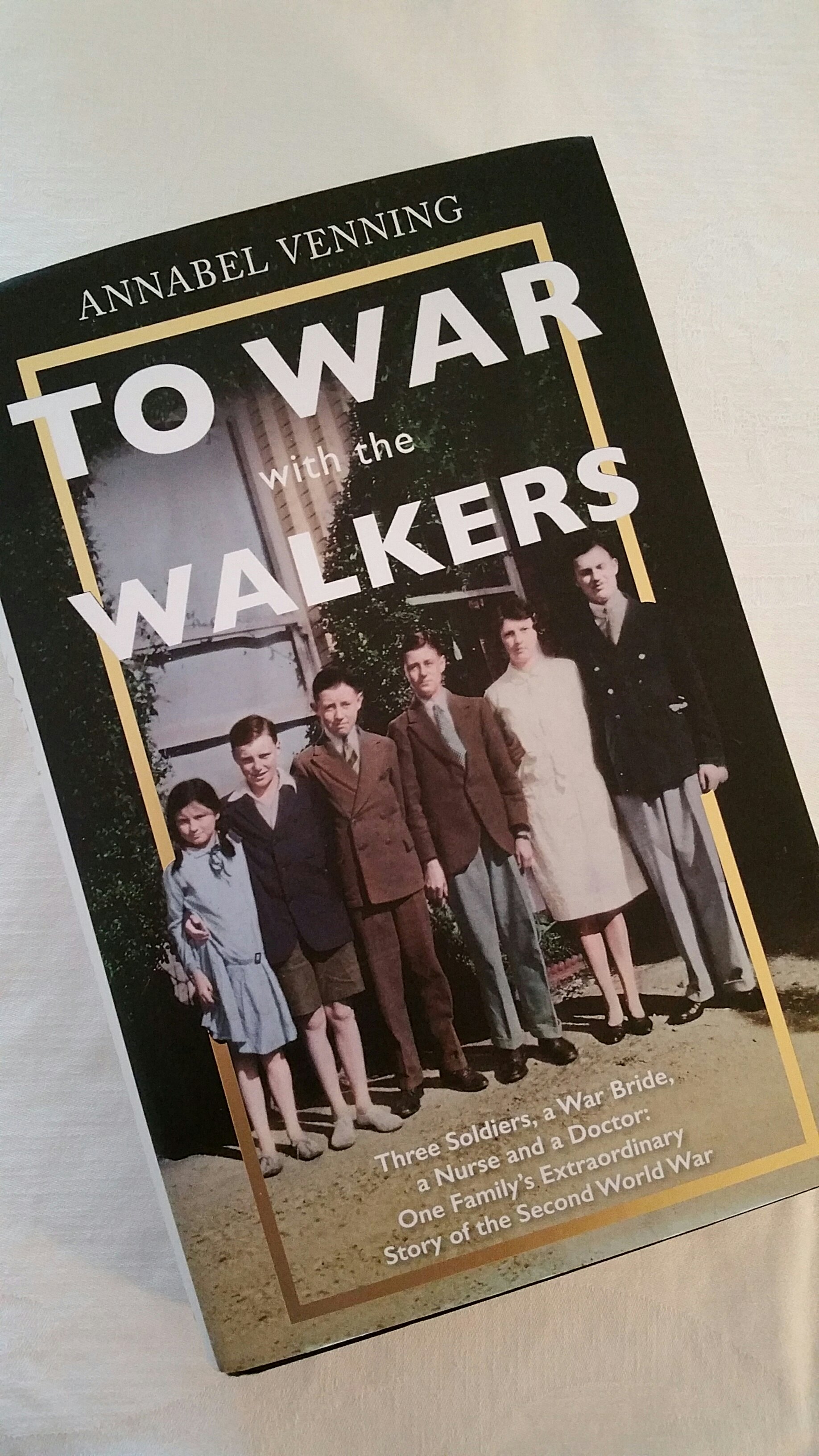
I come from a family which has a dodgy Latin motto, silver cutlery with a crest and album upon album of faded photographs of stern people standing in front of an assortment of ugly houses. All these are accompanied by an inexhaustible supply of stories of the dark deeds and derring-do of my forebears. A rather similar background, by the sound of it, to that of author Annabel Venning.

To War with the Walkers is a well-named and well-constructed family history memoire, all about the real and metaphorical journey taken by six siblings through the Second World War.

After Major Tom’s War, my novel about my own family’s Great War, was published almost exactly a year ago, I remember a kind bookshop manager scratching his head and saying ‘Cracking read, but not sure where to put it.’ He could not decide whether it belonged within the memoire, historical fiction or military history sections. Publishers Hodder & Stoughton may experience similar frustrations with the sales positioning of To War with the Walkers.

Genealogy is now hugely popular, with millions of profiles and interlinked family trees posted on portals such as Ancestry.com. Hundreds and thousands of viewers tune in for every new episode of Who do You Think You Are? This new literary genre of high-quality genealogy fiction and novelistic memoire surely now merits its very own shelf.

To War with the Walkers (no relation, by the way) is non-fiction, if only just. At times its author cannot resist giving her characters rather more of a voice and personality than one might expect from a memoire: or perhaps that is because a run-of-the-mill family history memoire can often prove just a tad dull.

Not this one.

As her great-aunt Ruth lies within the crumbling rubble of the Blitz, stoically awaiting death, for example, the reader will also taste the dust and danger of her ruined hospital at the back of his throat.

The grand-daughter of one of her book’s key protagonists, Venning is completely within her rights to make it come alive for the reader however she chooses, and her work is all the better for it.

She has brought together a journalistic thoroughness combined with a deep personal sensitivity to her family’s many personalities, all set against different backdrops within the global theatre of war, 1939 – 1945.

As a genealogist I found myself flicking through the end matter on the hunt for a family tree (to check who was who) but by the last few pages could see why inserting one might have proved a spoiler for the poignant ending.

The parents of the six Walker siblings, Arthur and Dorothea, were both products of the Great War. When she attended Cheltenham Ladies College, Dorothea might well have been told not to hope for marriage, as there were insufficient supplies of surviving men to go round. The woman delivering that sobering lecture would have been one of the formidable spinster sisters Maud and Ethel (Etty) Winnington-Ingram, my own great-aunts, both of whom taught at Cheltenham during and after WWI (and who feature prominently in Major Tom’s War).

It was perfectly natural to desire as many children as possible post-war, ideally sons, to replace those who had been slaughtered. Dorothea and Arthur more than did their duty with four boys, Edward, Harold, Walter and Peter, and two girls, Ruth and Bea.

As Arthur and Dorothea had lived through the Great War, how hard it must have been to see cherished offspring being sucked into the toils of another conflict so soon, either directly, as soldiers (Edward, Walter and Peter) or indirectly (doctor Harold and nurse Ruth), while beautiful, languorous Bea finds herself a handsome American serviceman.

I know more about the First World War than I do about the Second for obvious reasons. I not only enjoyed To War with the Walkers but also learned a good deal, particularly from reading the chapters covering the three soldiers’ wars, which both horrified and fascinated me. I was shocked for example to discover that certain Sikh troops were lured into working with the Japanese with a false promise of Indian independence.

Venning’s grandfather, the ruthless and dapper Walter, who seems to have inspired admiration and hatred in equal measure, was exceptionally well drawn. His brother Peter’s descent into hell as he is transferred from camp to camp at the hands of the Japanese reminded me of the compelling David Bowie film, Merry Christmas Mr Lawrence. The family motto, Nil Desperandum, never despair, was never so apt as there.

Venning does not shrink from examining the mental health consequences of conflict, both in those who fight and those on the Home Front, male and female alike.

This is genealogy-based writing at its best and as an author of fiction – one step further on from family history memoire – I can hear a film script begging for release from this excellent book too.

Highly recommended.

Hodder & Stoughton, £20

Amazon:

https://www.amazon.co.uk/War-Walkers-Soldiers-Extraordinary-Survival-ebook/dp/B07JH1ZGSV&ved=2ahUKEwjQo8rO9bvkAhW_VRUIHXwfCTkQFjAAegQIBhAB&usg=AOvVaw2TjMTbjwSbyT2QgRKgi0d4

The gentle joys of making breakfast…

I have been earning my living for almost 20 years as a heritage consultant. I have enjoyed the vast majority of my contracts, which have taken me all over the UK and Europe, and led to quirky activity such as writing a play about the success of Captain Scott’s Antarctic exhibition for the RGS or looking at the impact of slavery on museum collections. My need to write – and eventually Major Tom’s War – grew out of some of this story and collection-based work. Much of the more run-of-the-mill contract content was report-based, however, and that has become more and more demanding and formulaic as the years have gone by. I am half sick of planning, said the Lady of Shalott.

Although I will keep doing more of the fun stuff, I sincerely hope I have written my last big interpretive report.

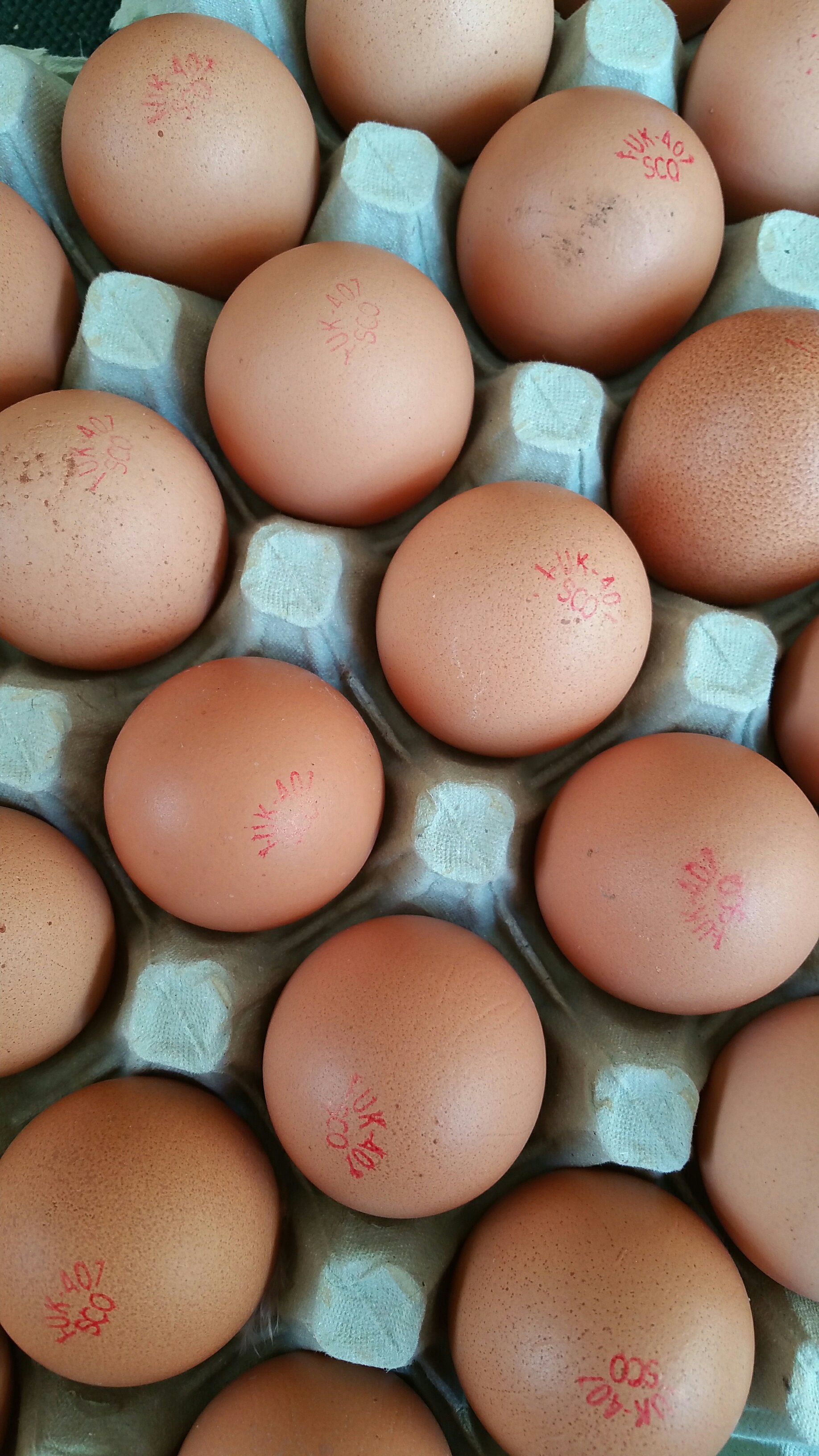
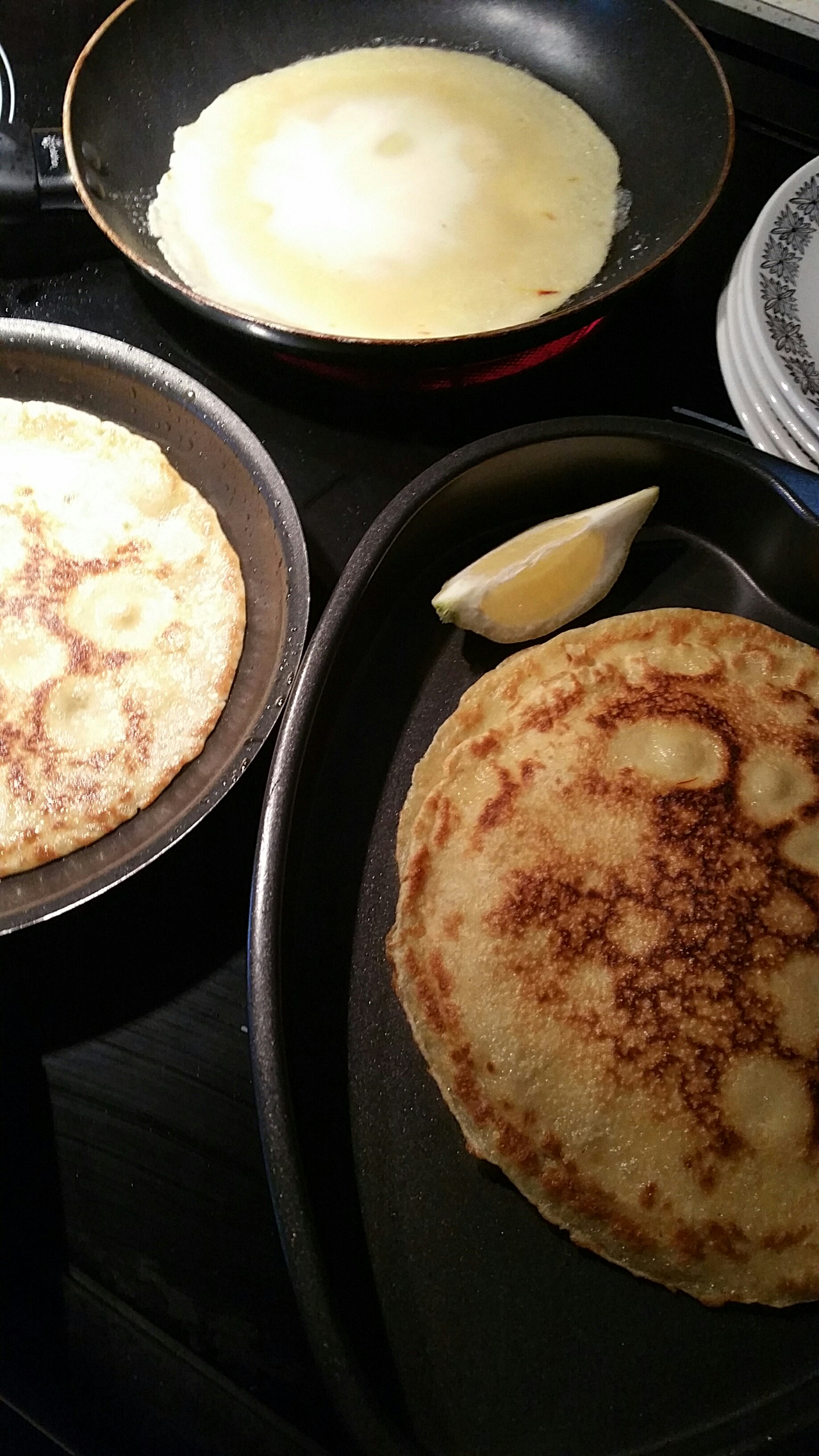
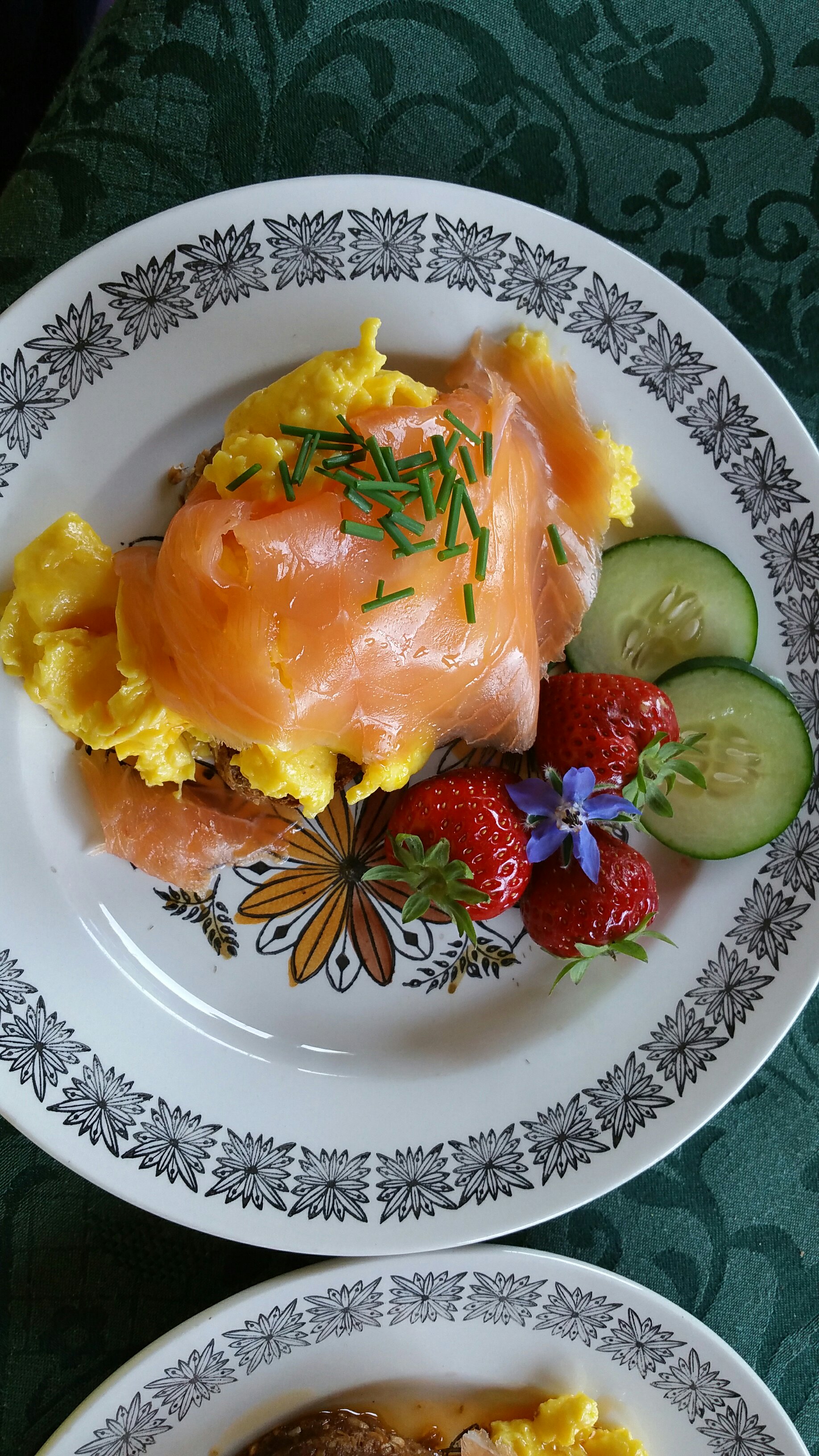
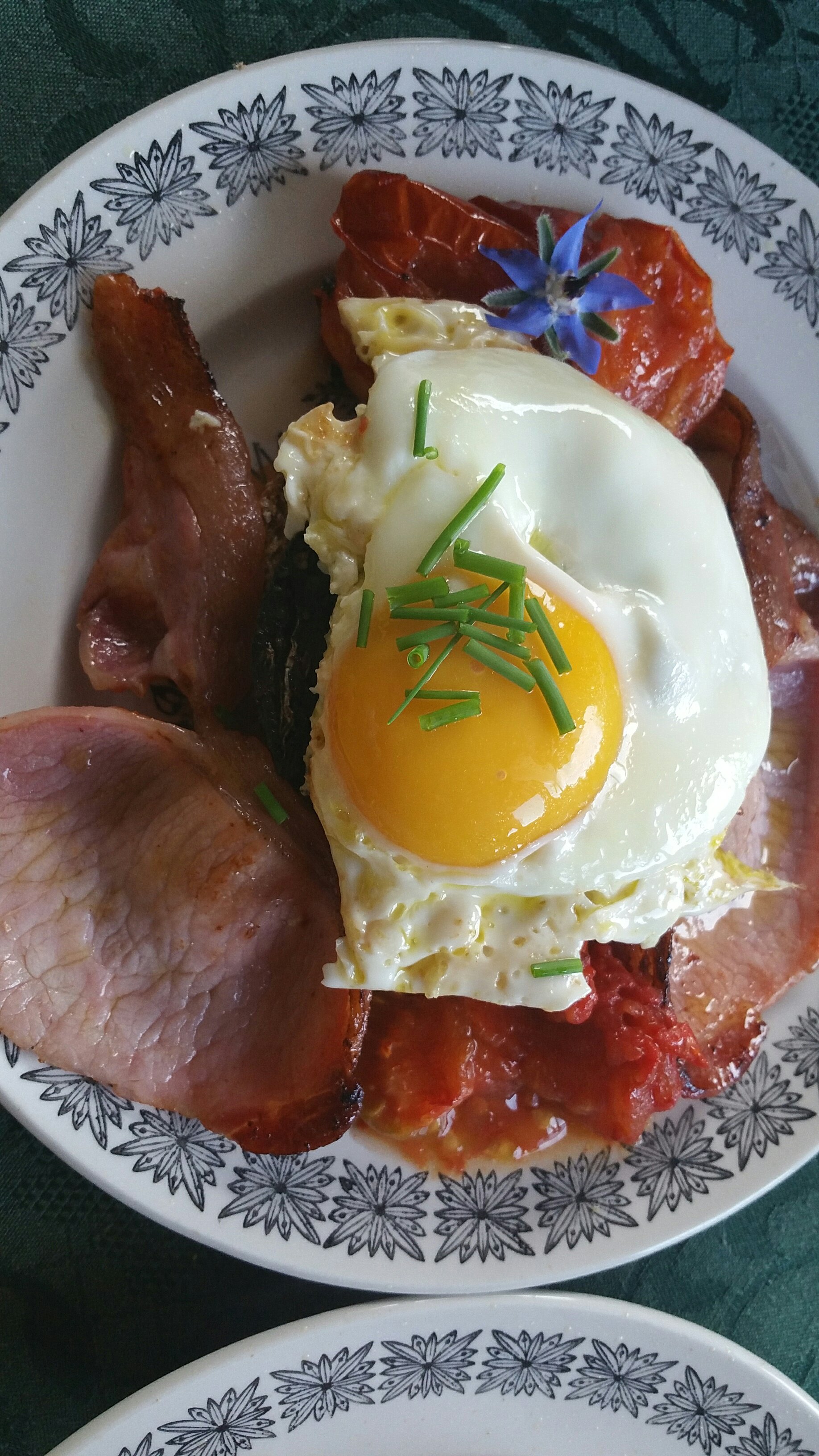
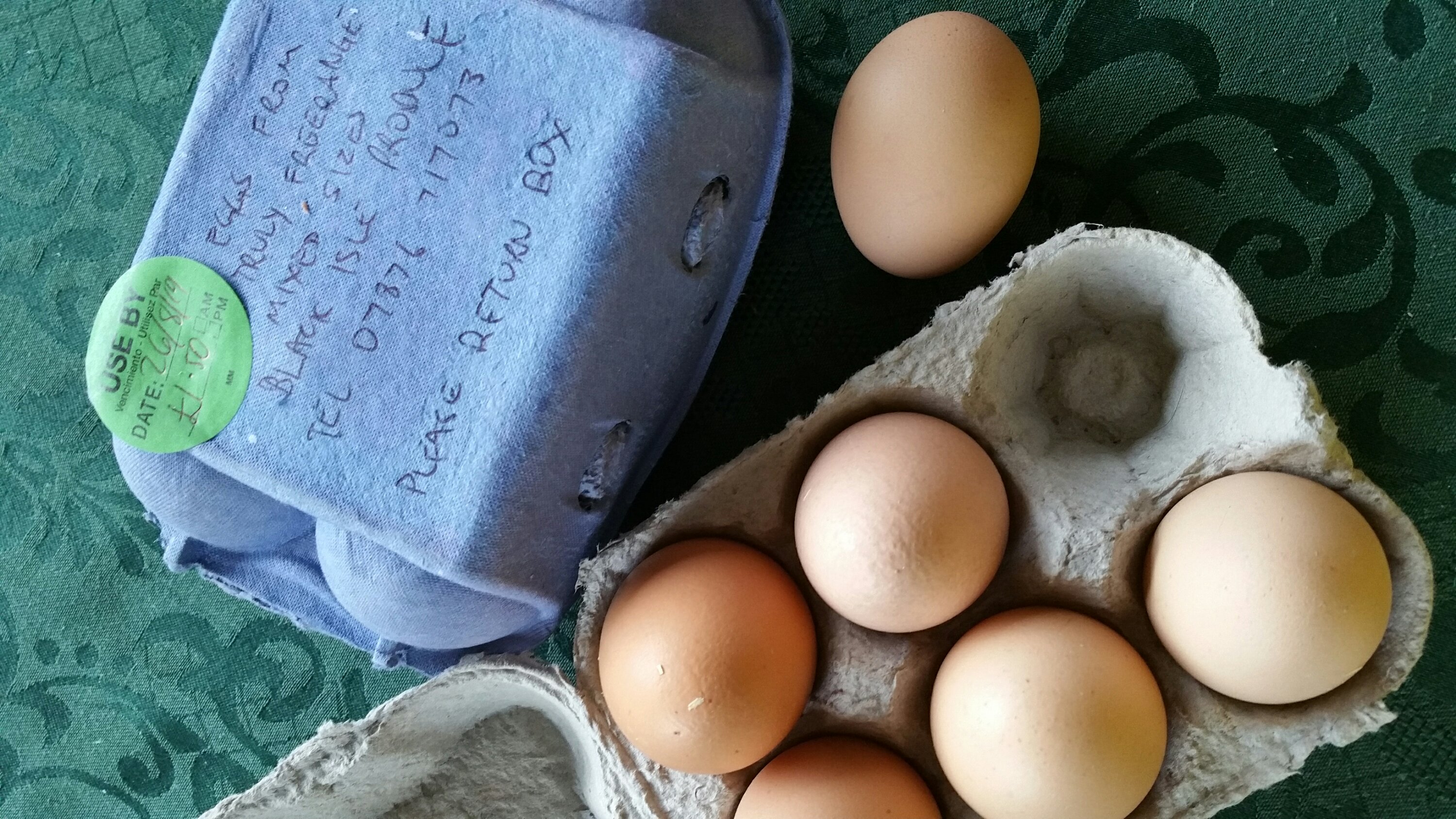
To fill the gap, I am making lovely people some rather splendid breakfasts in our new AirBnB set-up called The Chanonry Bolthole. It is incredible to be able to base life around such a simple transaction. I use fruit and vegetables from my garden and eggs from local hens as much as I can. Il faut cultiver son jardin…

I provide a clean comfortable bed and a nice breakfast made with local ingredients and my guests depart with a smile on their face. It is as simple as that. Doing this (and doing it well) makes me absurdly happy. This feminist has even taken to enjoying the ironing, shock horror!

It is not dull or repetitive (I cannot say that about some of my interpretive plans). I enjoy my guests’ stories, of course, whether they are from Skegness or Ealing, the Basque region or Australia, the USA or France. Every single person who comes sees the Highlands with fresh eyes. I am able to find out what they like and nudge them in the direction of unusual things to see and do which I know they in particular will enjoy. The satisfaction is immense. I really do wish I had done this years ago!

Once my guests have gone, I am free to write knowing that my two spare rooms have bought me that precious writing time.

Of course it is a short season – and Brexit is bound to have an adverse impact on bookings next year – but I am very glad to have made this life change.

Next year I plan to host some writer stays here for folk who need a bit of one-to-one support or just peace to write/edit. Not a formal retreat, more of a creative sanctuary. Keep an eye on http://www.facebook.com/ChanonryBolthole for offers and updates!