My latest work, The Glen Nevis Rose, is an unusual collaboration with Lochaber author Ewen A. Cameron, who lives at Glen Nevis House. It began with Ewen’s fascination for a little-known local story, grew into an idea for a pamphlet (which is when I became involved) and since then has snowballed into something rather remarkable: a full colour, 90 page book which explores the life of one family in the years after Culloden, both through fiction and well-researched non-fiction.
Just over 250 years ago, Lady Mary Cameron of Glen Nevis turned her back on the self- same house where Ewen now lives, to board a mysterious vessel named the Pearl at Fort William. Former staunch Jacobite families like Mary’s had suffered badly at the hands of the victors after Culloden and many set their faces towards the New World. The Pearl was already almost filled to the gunwales with MacDonells of Glengarry. They must have offered some of the few remaining berths to their friends and neighbours, among them Mary’s family.
Mary had young children. Her old father was dying. The preparations for departure must have been emotional, complex and protracted.
Why, then, dig up a rose to take with her, of all things?
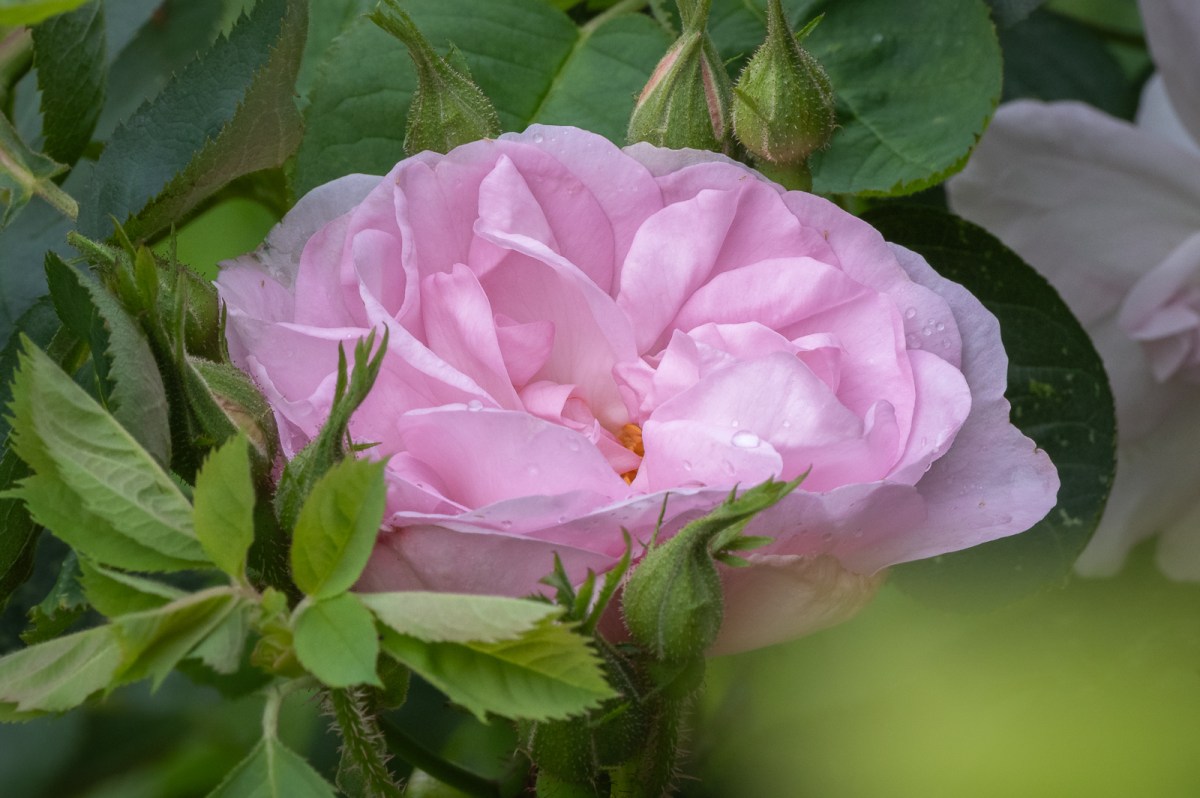
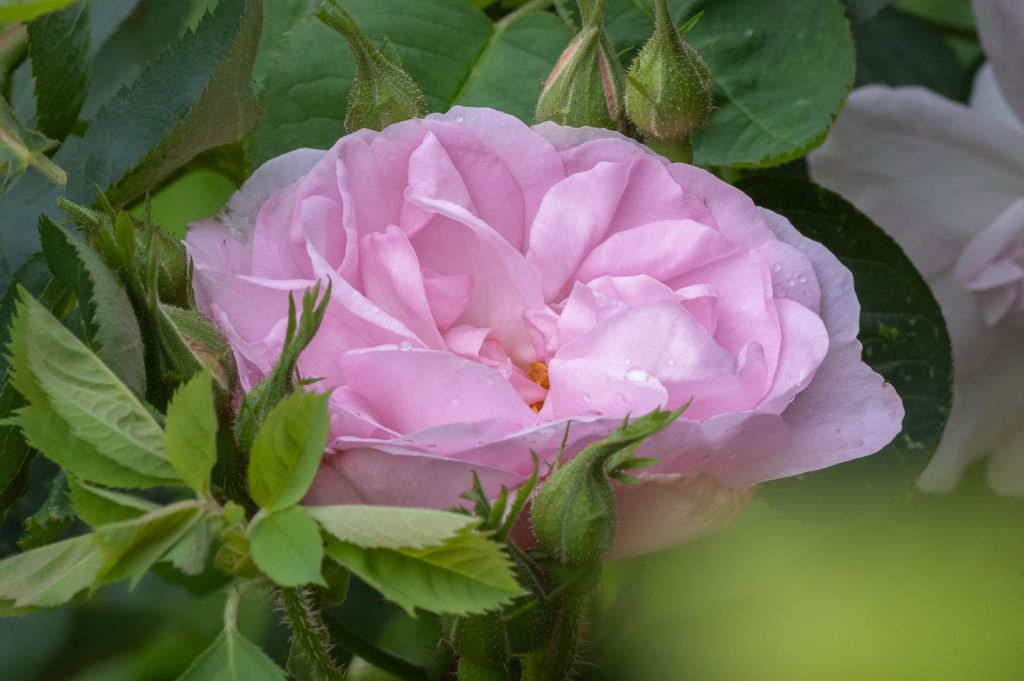
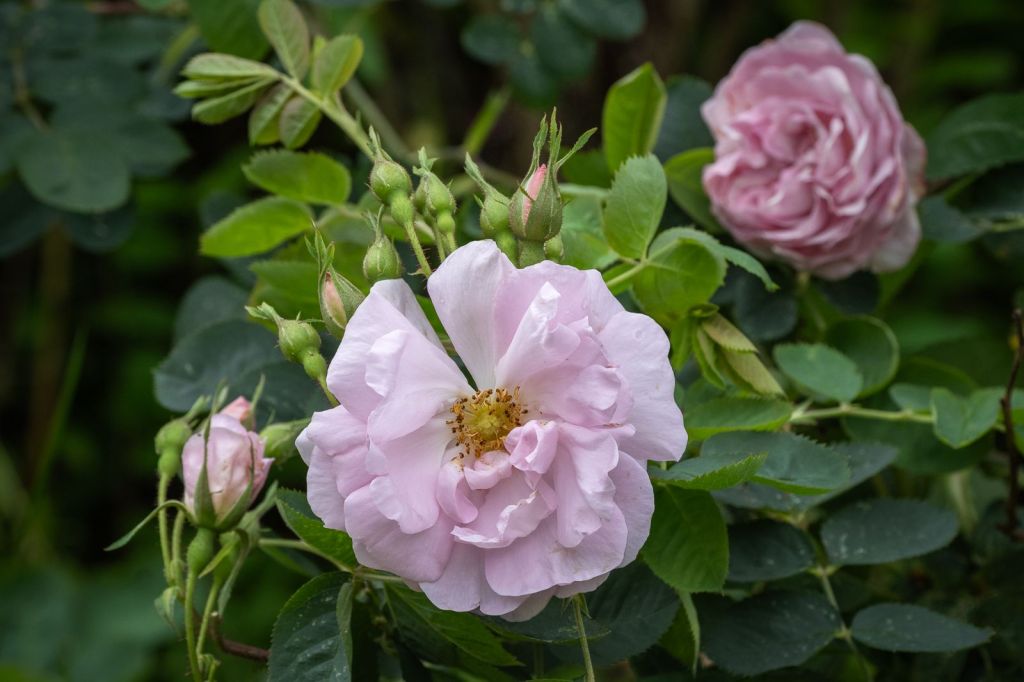
We could so easily have got it all wrong and just seen the rose – an ancient variety named Great Maiden’s Blush – as a perfumed, romantic, nostalgic gesture.
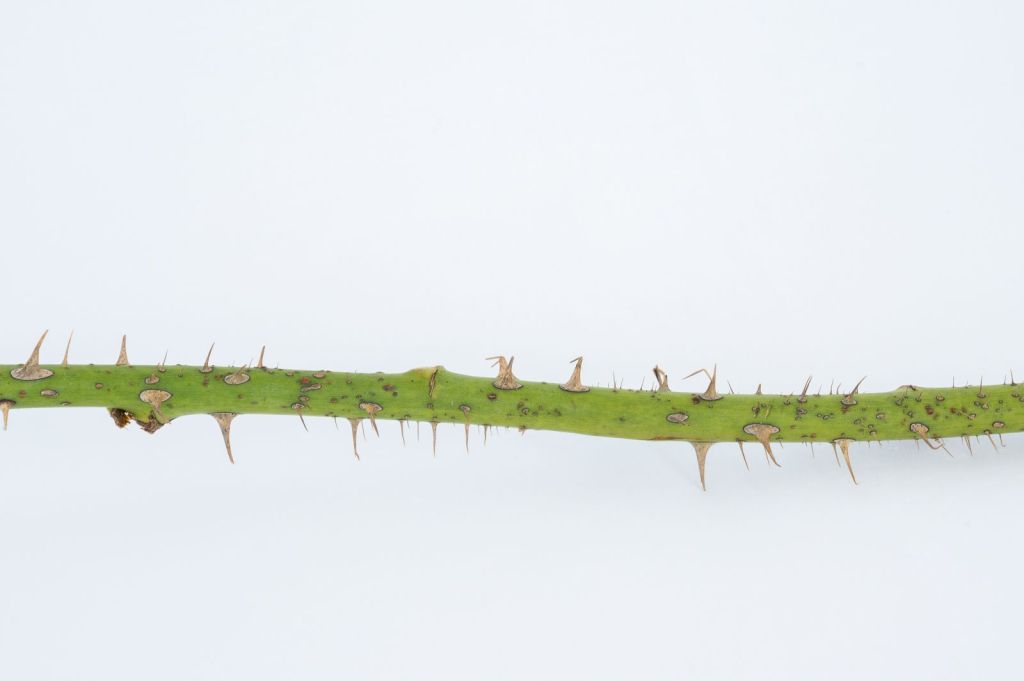
That would be to ignore its vicious thorns, and once we found out the role it is said to have played in the family’s past, we understood.
The story of the journey of the Camerons, their brood of children and the rose to America and beyond is one of love, tenacity, courage and adventure.
Our understanding of the Jacobite Rising tends to end in April 1746 at Culloden, but the aftermath of civil war echoed through the glens for decades after that, triggering the start of an epic migration of wealth and youth and talent from our shores which would later evolve into the Highland Clearances.
If you want to understand what it was like to survive Culloden and then choose to emigrate, please consider reading this book.
It is not available on Amazon and never will be. We are distributing it through smaller bookshops and outlets only at present. Feel free to get in touch and I will let you know your nearest outlet.
Signed copies can be sent by mail order worldwide, too.
This blog is prompted by a recent commercial post circulating on Facebook which gives one rather poor definition for the Black Isle’s ‘black’ nomenclature and then encourages folk to sign up for a tour with the company.
No thanks.
For those who have never visited my home turf, the Black Isle is not an island but a peninsula attached to the mainland Highlands by a narrow neck of land starting at the River Beauly and ending at the river Conon. To the north it is bounded by the Cromarty Firth, to the south the Beauly Firth and to the east the Moray Firth, opening into the North Sea. It is an area with a warmer microclimate than the mainland, resulting in fertile farmland with rich dark soil and pockets of ancient, lush and biodiverse woodland.
An-t-EileanDubh in Gaelic, there is some suggestion that Dubh, black, is just a corruption of Duthac. The Black Isle was on the popular Elgin to Tain pilgrimage route but St Duthac’s shrine was in Tain itself not at the Chanonry in Fortrose, so I find this one unconvincing.
Let’s explore some of the other reasoning (one added courtesy of Paul Johnson, thanks Paul!): 👇
The truth is no-one really knows why the Black Isle is called the Black Isle, but in this blog I will set out five explanations as told to me as a local at intervals over the past fifty or so years. They are geographical, supernatural, historical, social and natural, with some overlap between the five.
If you know of any others, please get in touch!
A contrasting foreground
The Black Isle in times past would not have been capped with today’s commercial coniferous pine forests, most of which are under 100 years old, and it was known as the Black Isle before that. The backbone, the Mulbuie, was, as the name suggests (buidhe means yellow in Gaelic), so at some point in the past it must have been a golden moorland ridge scattered with peat-moss heather and fragrant whin (gorse) bushes.
So why not the Golden Isle?
The answer is in the contrast with the startling bulk of Ben Wyvis behind and to the west of the Black Isle in winter. Travellers from the south who had slogged up the Slocht must have welcomed the sight of the dark bulk of the low-lying Black Isle (barely 1000′) across the water as they descended towards Inverness, contrasting with Ben Wyvis, our much higher (3000′ + Munro) and weather mountain. From the first frost in October to Easter and often later, ‘the Ben’ has a summit white with frost or snow. We look to Ben Wyvis to predict how the day will turn out weatherwise.
A traditional winter greeting hereabouts is ‘Snaw on the Ben’, usually said with doom-laden glee.
Or…
Black magic
The Scottish Reformation of 1560 swept away a now-forgotten Roman Catholic past. With it went carved wayside crosses like those you see on the continent and local religious tolerence of difference, of the old ways. A fearsome zeal for the new Protestant religion (which, ironically, had its roots in an English king’s lust as well as a desire to purge the Christian church of corruption) swept the Highlands like a brush fire. Standing stones were defaced and broken. Carved tombstones were reused as plainer slabs (see more on that at Kirkmichael).
Accusations of witchcraft became numerous in the 1600s, often aimed vindictively at decent, prosperous women as well as those vulnerable through deformity or madness. The outcome of any witch trial was generally a foregone conclusion, but not always.
Sir Thomas Urquhart, the eccentric genius laird of Cromarty, saved one young pair of Croms who had accused themselves of ‘consorting with demons’ – presumably in the grip of some kind of religious fervour whipped up by an enthusiastic witchfinder. Sir T had just returned from a grand tour of the continent and was having none of it. Rather than agree to ‘the cleansing fire’ he put the pair up overnight, got them merry and encouraged a couple of his servants to ‘dally’ with them. In the morning, sure enough, the accused claimed to have consorted with demons that very night. Sir T quickly saw these gullible souls married to their willing ‘demons’, the sacrament of marriage protecting them from further reprisals. Unsurprisingly the church hated Sir Thomas thereafter, and the feeling was mutual.
More about Sir Thomas Urquhart at Cromarty Courthouse!
Less fortunate was the Brahan Seer, one Coinneach ‘Odhar’ (Dun-headed Kenny) Mackenzie, a Lewis man with the second sight. He came unstuck by ‘seeing’ the husband of Isabella Countess Seaforth – the head of the politically powerful Mackenzie clan – up to no good in Paris, and unwisely sharing this insight with his wife publicly. Coinneach was accused of witchcraft and burned to death in a tar barrel (likely the ferry beacon for summoning the vessel from Ardersier) on the highest point of Chanonry Point, where a mediaeval cross base can still be seen today. Before his grim end he thoroughly and chillingly cursed the great House of Seaforth: he predicted the death of all male heirs before the last of the line himself died, and that this doomed chief would know this time had come when various other clan chiefs had a variety of gruesome disfigurements and disabilities.
Worst of all, Coinneach predicted that a ‘white-coiffed lassie from the East’ would then ‘kill her sister’. Sure enough, once all the male heirs had predeceased Francis Humberston Mackenzie, and he himself had died, his widowed daughter returned from India (and in India, white is the colour of mourning) to take up her inheritance. She was at the reins of a carriage one day when it overturned, killing her sister.
It is not uncommon still for local people to have strange presentiments, perhaps echoes of CoinneachOdhar’s ‘seeing’. It is particularly useful for avoiding Police speed traps.
From black magic to…
Black Raiders
It’s hard to shake off the image of Vikings as tall, blonde, handsome chaps with horned helmets, isn’t it (thank you, Uthred son of Uthred…) but this part of Scotland was colonised by dark haired Danes (because ‘there ain’t nuthin’ like a Daaaaane….’). Although the indigenous locals probably did not welcome these new arrivals with open arms, not all Viking settlement was about dark deeds, burning churches, rape and pillage and so forth. The canny seafarers whose ships once stole, terrifyingly, up the firth under cover of a sea-mist or haar (a fine Old Norse word) would eventually settle and embrace Christianity and intermarry and farm the land just like everyone else. Dingwall was the place of the Thing, the Viking parliament (believed to be under the monument car park near the old library building). And in the Black Isle we still have Udale bay, Old Norse for The Bay of the Yew Trees.
Black Islers who belive themselves to be true locals who do an Ancestry-type DNA test will often be surprised to find a high percentage of Scandinavian blood. Tsk. We were all incomers once!
Or…
Black smokefrom many homes
We have forgotten what it is like to warm ourselves and cook solely with open fires. For centuries people in the Black Isle burned wood and ‘moss’ or peat – turf they cut and stacked to dry up on the common land along the Mulbuie Ridge or even from along the coast. Again, travellers from the south might have seen a pall of yellow-black smoke from hundreds of hearths hanging over the Black Isle, rising from the many coastal chimneys of Redcastle, North Kessock, Kilmuir, Munlochy, Avoch, Fortrose, Rosemarkie and Cromarty.
People disposed of rubbish the same way too. Stubblefields were burned off after harvest to nourish the ground for the next crop. I have a happy memory of being allowed to play in a burning stubblefield, jumping through the quick-burning fires of waste straw in the early 1970s!
Higher up among the heather, too, a paler, more mysterious smoke would once have drifted upwards, juniper wood burned to fuel dozens of illicit whisky stills. Winters in the past were longer and harsher than they are now, and a dram of uisge-beatha helped them pass more easily. One Statistical Account relates that there were more whisky stills in the Black Isle than anywhere else in the Highlands.
The first legal distillery was licensed to the Forbes clan in Ferintosh.
Or…
Ancient Woodland
My friend Paul Johnson points out that there are still legacy Caledonian-type Granny Pines all over the Black Isle, from Mount Eagle on top all the way down to sea-level. Many are hidden either singly or in small groups in the current forestry plantations (and Gallowhill, Blackhills and also on the Rosehaugh estate to name just a few) and also in more deciduous woods such as the Beechwood at Raddery and the natural Birchwoods at Gallowhill – even in the Oakwoods at Drummonreach and Tore.
Many of the plantations and other woods are included on the Ancient Woodland Inventory for Scotland, almost all in fact. The Black Isle was once (maybe still is) home to Capercaillie and still has many of the usual pinewood residents, from Pine Martens to Crossbills. We still have the Bog Woodland Monadh Mor which is not considered part of the Caledonian Pinewood Fragments inventory for some stupid bureaucratic reason, but it should be!
Mature pines are dark green that look black from a distance. Most of the Black Isle may well have been part of the Great Wood, but it was systematically felled for timber and to clear land for farming and housing over the last 1500 years or so. Perhaps there was always a moorland ‘top’ above the trees, covered in moorland and whin, hence the ‘Mulbuie’ ridge – looking a bit like a monk’s tonsure.
From a distance, a mass of ancient woodland would look black…
So…
.. landscape, witchcraft, Vikings, whisky or ancient pines could all explain why our Isle is known as Black today.
For many of us who were ten years old in the early 1970s, our darkest repressed memories of cruelty and mutilation, if not actual murder, have been stirred up by the phenomenon that is the Barbie movie.
I had always hated traditional dolls, especially their slow, sinister eye-closing when tilted backwards. When (at the Bogroy Inn aged about six) I was told to hold a baby doll and sing a lullaby, I dropped it on its head. People laughed, but it was an act of protest, not an accident.
Golden Slumbers kiss my ***.
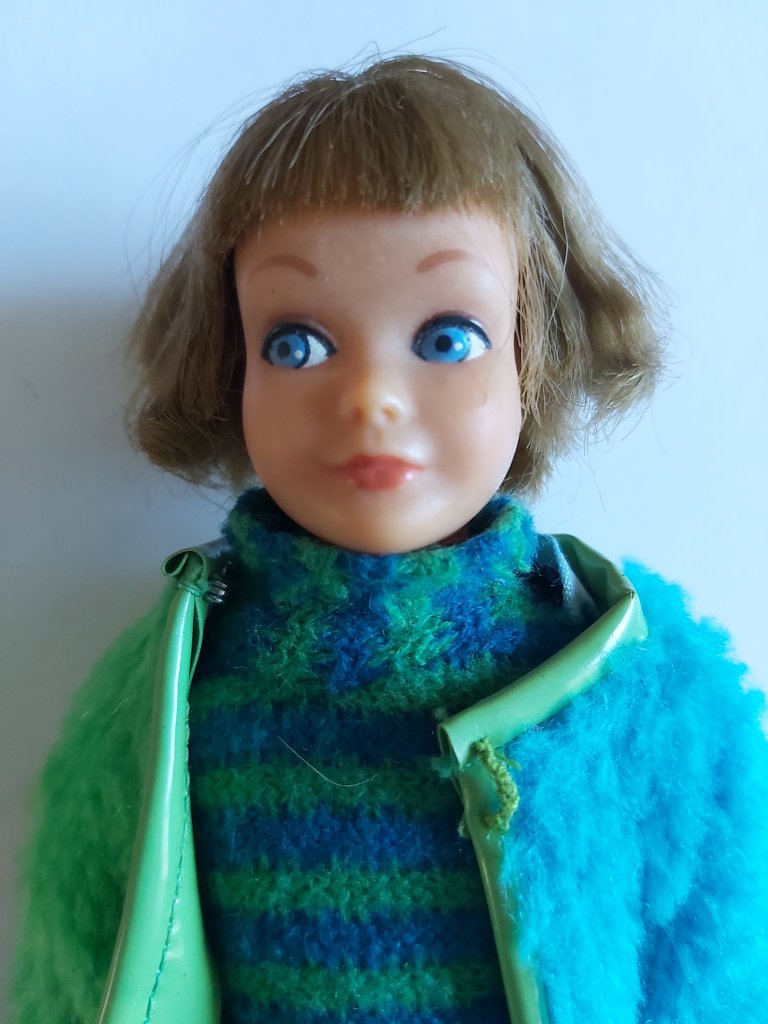
Sindy was still too much of a fat-head for me and so I shunned her: but when my eyes met those of Skipper across a crowded toyshop, I knew she had to be mine.
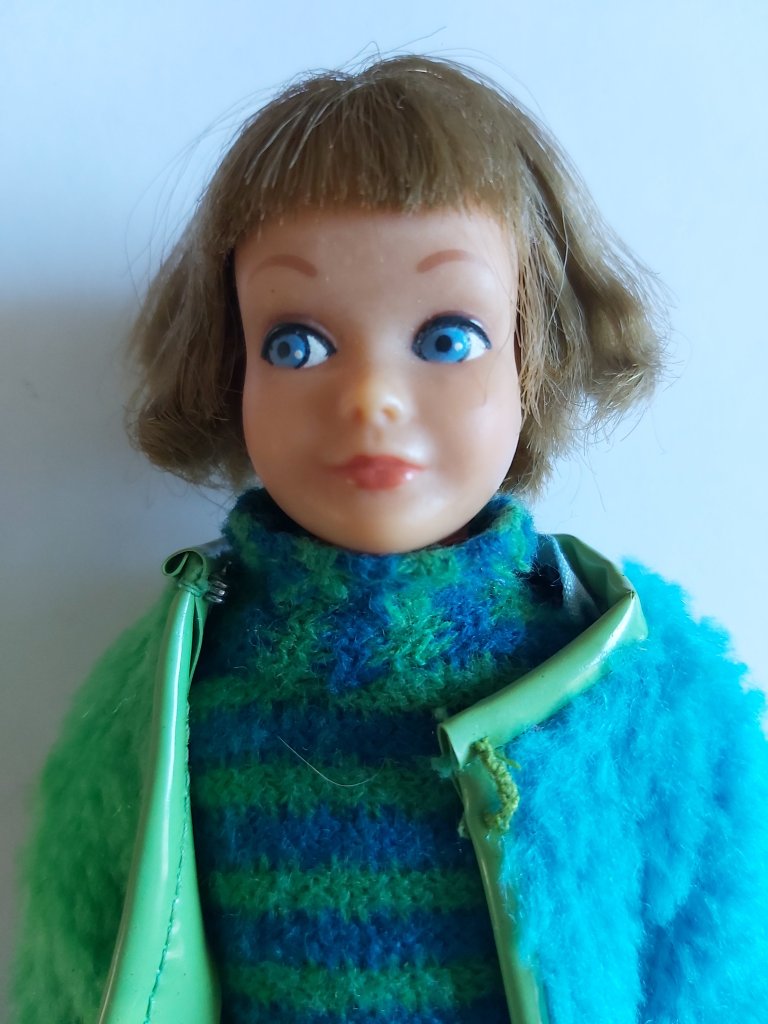
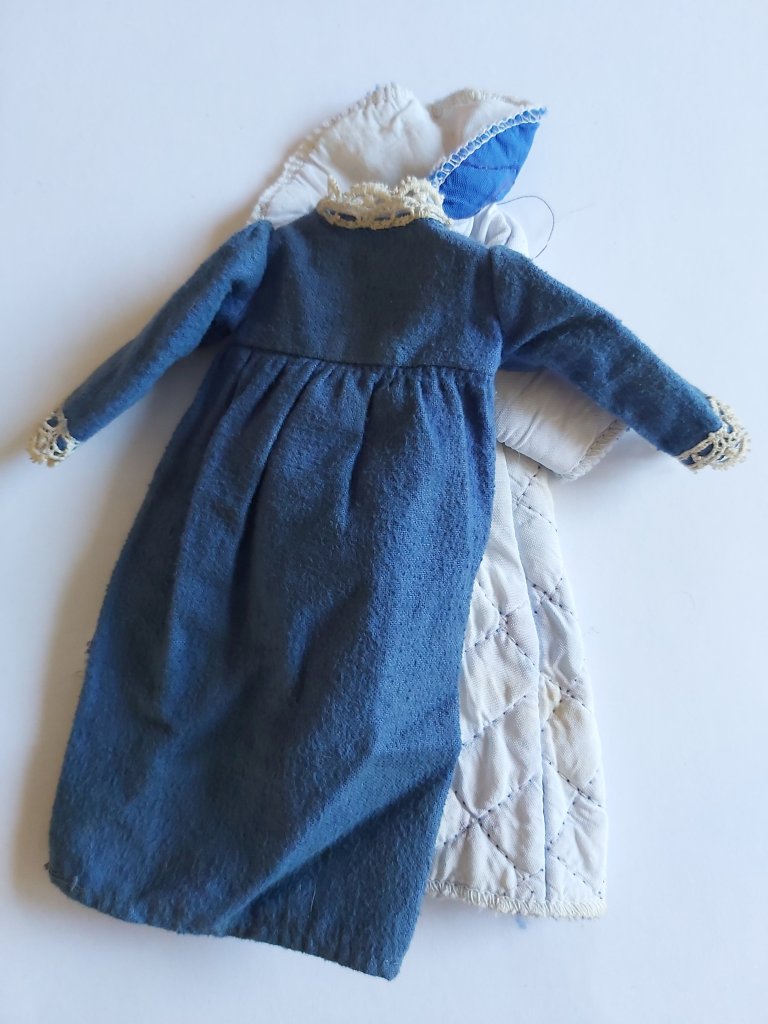
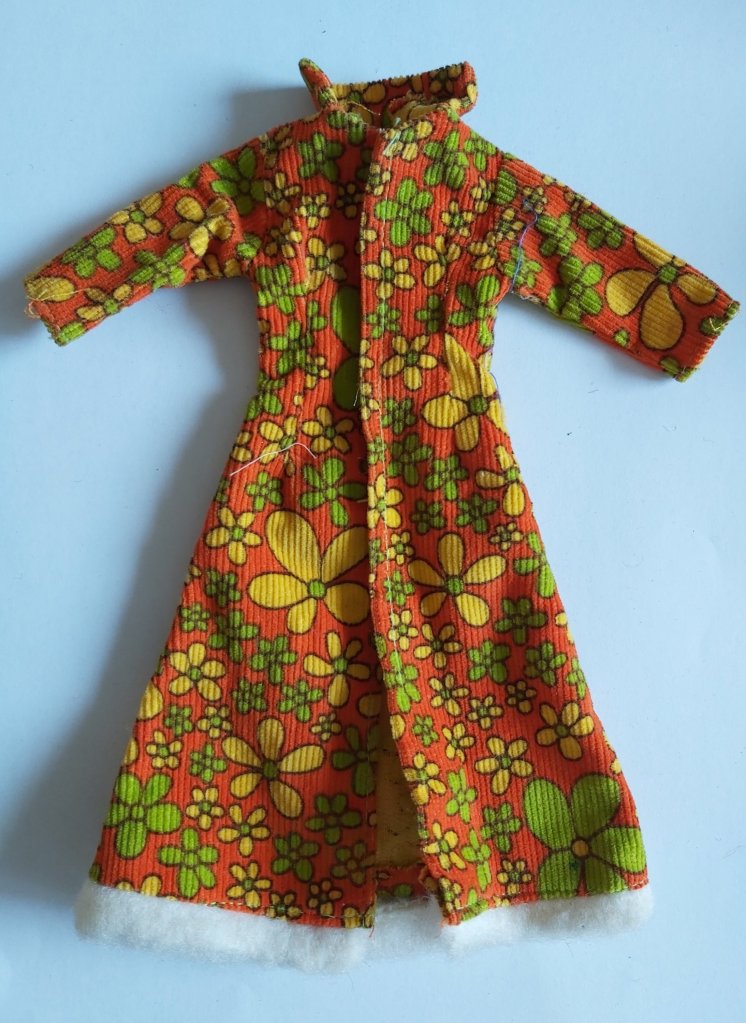
Marketed as ‘Barbie’s kid sister’, Skipper was like me: mouse brown hair, flat chested and flat-footed; something of a relief after her long-legged, wasp-waisted, pointy-boobed and arch-footed blondie big sister. Also like me, Skipper wore a dull blue flannelette nighty with lacy bits at the neck and cuffs, plus a sensible quilted dressing-gown for the Highland winter.
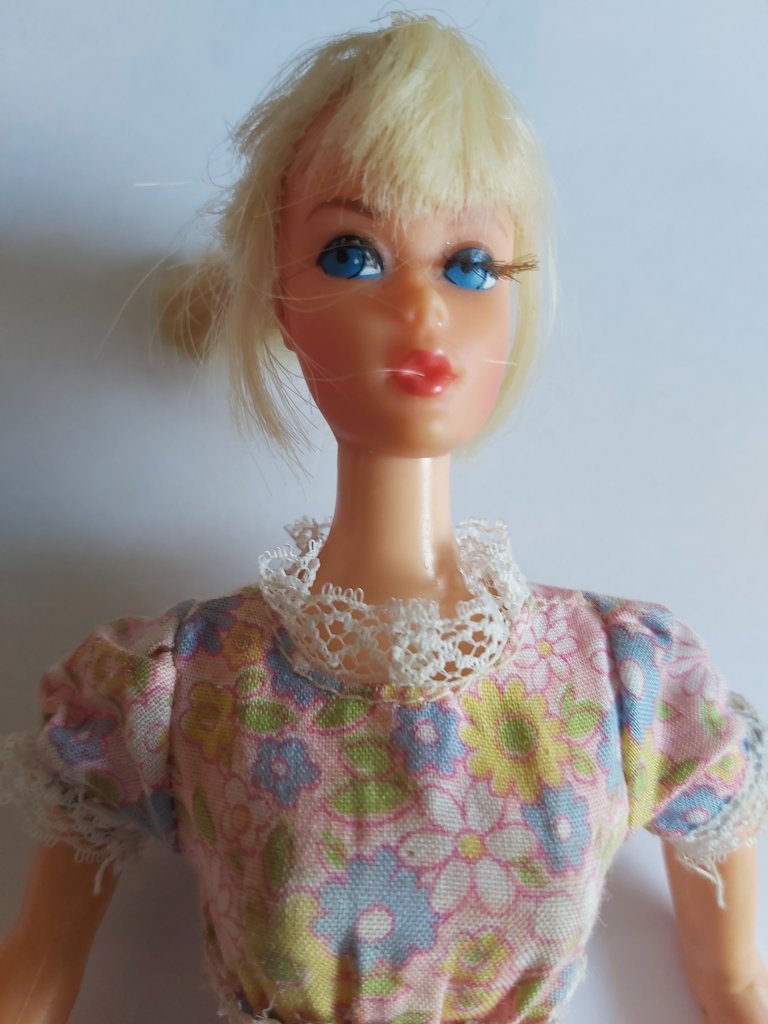
At first she had long hair, which I forgave her, but like all those early Barbie locks it seemed to have strayed from the Oppenheimer movie set, radioactively charged. Eventually all their hairstyles became crackling mushroom clouds of static fuzz. I quietly swiped Mum’s nail scissors to deal with that and soon Skipper, like me, had short curly hair, the shorn evidence stuffed down the back of the sofa. It was at that moment of personalisation that she became unique and mine, so all my Barbies followed the same trend.
The only thing I disliked about Barbie and Skipper et al were their ridiculous names. This was a serious friendship and I knew they could not possibly like their ‘box names’. They might wear gold and silver lamé bathing costumes and Flower Power maxi coats but they weren’t American to me. They were born – or unboxed, rather – in Scotland.
It never occurred to me that Barbie was short for Barbara (and in any case the only real Barbara I knew used to torture me behind the school shed). Mum suggested I should just rename them, but that didn’t seem respectful. These weren’t gormless baby dolls after all. They were sentient, real. And they had been sold in a box with their name on, whether they liked it or not.
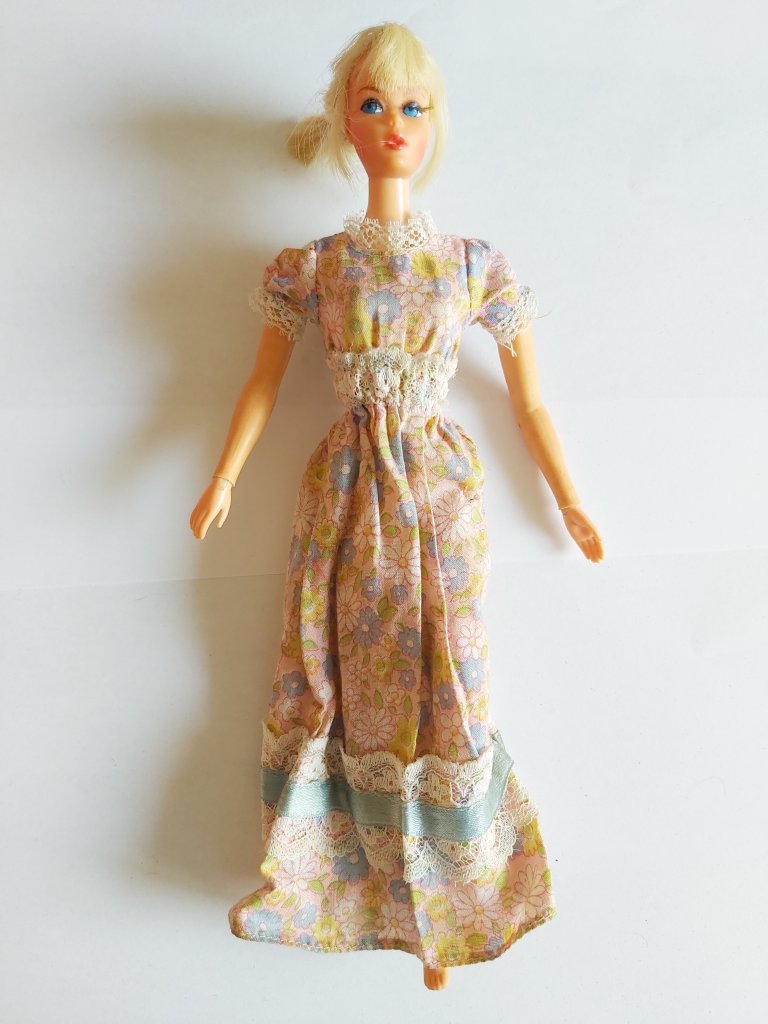
And so they became my eternally-nameless companions, whom I thought of collectively as ‘Them’. I had, at one point, about seven of the Them, of whom just two (my short-haired mouse-brown Skipper and a shorn blonde Barbie, the latter still wearing the Most Beautiful Dress In The World) survive today.
At Peak Barbiedom there were two Skippers and four Barbies: some had knees that bent with an arthritic succession of clicks; some, rubbery arms that bent like they were hefting a pint until they broke at the shoulder through overuse to dangle uselessly at their sides; some, like the Barbie I kept, had a daintily angled head turn.
I truly loved Them. They were my only utterly dependable friends. I have kept two of Them for over fifty years, through over seven house moves.
How could I not, given the secret we share?
All looked sideways. None made eye contact. Nor did I. So He should surely have suspected something. There was only ever the one Ken, and he didn’t last long.
He wasn’t really a Ken, either. That was the thing. He was either a ‘Big Jim’ or a ‘Mark Strong’, I can’t remember which it said on the box (Mark Strong was I suspect the meeker British branding of Big Jim. Perhaps the latter would grow up to wear a bow tie and direct the British Museum, although he would need to ease up on the testosterone to manage such a transformation).
The real Ken was originally intended for boys to play with, not girls, but boys turned out to be ‘brand-resistant’, as some ashen-faced marketeer at Mattel probably pointed out in front of a chart showing his bombing sales figures.
Then Ken was launched in the UK as ‘Barbie’s boyfriend’, and every girl in Primary 7 at Inchmore School wanted him. At ten we were beginning to be curious about, if not actually interested in, boys. Our paths didn’t cross much with the real thing. They even had a separate shelter in the swampy school playground, just in case they contaminated us. No, none of the scowling, grubby, football-obsessed boys of Inchmore looked at all like the marketing pictures of Ken.
What wisdom might Barbie’s tall, handsome and mysterious new boyfriend impart? I had to know.
Mum bought my compliance for a trip to the dentist in Inverness (up the echoey stairs beside the station for a painful encounter with Mr Robertson or Mr Allan) with the promise of a Ken. Alas, once in the toyshop (Melvens? Pentangle?) we found they were clean out of Kens. I was more than a bit wobbly-lipped. I had had a jag and a filling and everything and not made a fuss, after all, and a deal was a deal. We only went to Inverness on the ferry a few times a year. A wasted trip was not to be countenanced.
Moreover, I had told my friends Jennifer, Wilma, Yvonne et al that I was going to get a Ken, so a Ken I jolly well had to have.
Then the kind lady said, ‘Ah, but these have just come in.’ She placed a plastic box on the counter. ‘Still Mattel, see?’ She pointed to the branding on the front.
‘Perfect,’ said Mum, lunging for him before I could really look. She hurriedly paid and handed the box over to me in the car with obvious relief. ‘See? Just the same. A Karate Ken.’ I tried to look enthusiastic, but I really wasn’t so sure. What I could see of ‘Karate Ken’ below his cheesy grin did not looked particularly enticing. And his name Wasn’t On The Box.
Would They take to him?
Kens and Barbies (I can’t quite say dolls – they were never dolls to me) were always held in place in their boxes by plastic-coated wires which it took a lifetime to undo. My ten-year-old self used to mutter ‘nearly there’ to reassure them as the fiddly process of release was brought about: I associated this with an awakening of sentience. But Ken/Mark/Jim or whoever he was looked positively delighted to be so confined and equally delighted to be released. I did not yet know or use the word vacuous but there it was in person.
He was wearing a white karate outfit surrounded by other manly karate accessories attached to the backing card with nylon threads as tough as cheesewire. It was never about the clothes for me, though. It was always a struggle to dress any of them in the garments they came with, the sleeves were so fiddly. Perhaps that is why so many shoebox outfits have survived in good nick for fifty-odd years.
I undressed him on the back seat of the car only to find that his rigid plastic hair was not the only thing welded on. So were his underpants. This was disappointing for some disturbing reason I could not yet pinpoint. His neck was bull-like and his head fitted over it, not on to it, so a hard seam showed. It looked rather as though he had been guillotined, then had his head stuck back on, but there was nothing of the suave French aristocrat about ‘Ken’. He was covered in very large, very rubbery muscles, had bizarrely articulated knees and a right arm that karate-chopped when you pressed a round panel in his back.
He was, to put it simply, gross.
Once home I wondered how I was going to introduce him to the massed ranks of my fun-loving tomboy Skippers and more glamorous and refined Barbies. I needn’t have worried. They took one look at him and my bedroom rocked with cruel laughter, for I had not spotted one last appalling detail in the car. This ‘fake Ken’ was for some mad Mattel reason made to a slightly smaller scale from the others. The Barbies were way taller than he was, and that wasn’t just because Barbie was strutting about on her impossible heels. I mean, everyone knew girls couldn’t ever ‘go with’ boys shorter than they were, for goodness sake! I could see They all hated him on sight.
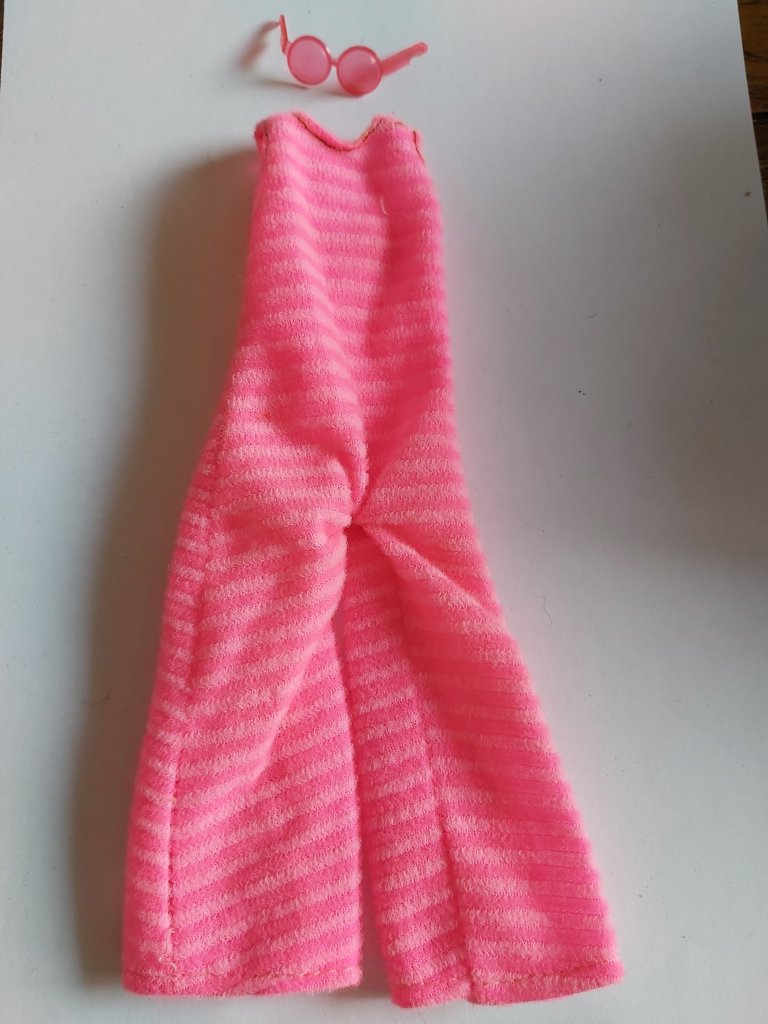
Once Mum and I had started to watch Colditz, one of the meaner Barbies (who always wore the pink striped jumpsuit) pointed out that if I raised Ken’s arm above his head, then pressed the panel in his back, he gave a very creditable Nazi salute.
And that was the most interesting thing ‘Ken’ ever did. Almost.
I did take him to school once in the early days. Sharon (who had perfect hair and at least two real Kens) said, ‘That’s not a Ken.’
‘He is though!’ I blustered, knowing it was a lie.
‘No he’s not. He’s too short. And look, he’s all funny and lumpy. Yuck.’
I couldn’t really argue with that. I thought he was yuck too. ‘Ken’ was relegated to the bottom of my schoolbag. At home They began to pinch his dumbbells and try on his Karate gear, which fitted them rather better than it had him.
‘Ken’ lay abandoned in one corner of my toybox, his legs splayed at a vulgar angle. It was then that the plotting began in earnest. He might have cost my poor Mum hard-earned cash, but he was not one of Us. He had to go.
Our first attempt at permanent disposal was when I attached a home-made parachute to the naked-except-for-his-plastic-underpants ‘Ken’ with Sellotape and threw him up over the roof of our house. To my disappointment he failed to tumble down the chimney to become a writhing mass of hot plastic on the embers or to be snatched by a passing bird of prey. No, he made it right over the tiles, landing in an apple tree, from which my suspicious Mum disentangled his slowly spinning, still grinning form. When interrogated They – and I – said nothing.
Our final Wicker Ken moment came when Mum called us back down to the car. I looked at Them and They looked at me. We knew then without a word spoken that ‘Ken’ wasn’t coming home.
The final, fateful day of cold-blooded execution took place during a summer treat outing to a favourite burn referred to only as ‘up Strathconon,’ near a mighty bridge where sometimes we would swim. We loved to explore this burn. They would clamber up and up it, build dens in the heather, taking refreshing dips in the rockpools or sunbathing on the garnet-speckled granite outcrops wearing cool shades. Meanwhile Ken or Jim or Mark or whatever his bl**dy name was would just lie there, ape-like, in his plastic underpants, grinning at the sky.
As we walked back down the burn to Mum’s Morris Traveller, ‘Ken’, his arm still fixed in a Nazi salute, began to dive into the water just upstream of the many waterfalls en route. We would watch him plunge over and downwards into the depths, before bobbing to the surface with that repugnant smirk. Then, at the highest, deepest waterfall, We took him by one leg and threw him in a spiralling arc high into the air. The setting sun caught his face and I will swear to this day that there was the faintest tremor about his perky lips as he smacked the smooth, peaty water above the falls. The Barbies sniggered. We caught a flash of his red plastic underpants as he shot over the edge to plunge down, down, down into the darkly frothing water below.
He never came up again.
I looked at Them. They stared back in mute defiance. I gave a desultory poke about in the pool below the falls with a broken stick, just so I could say I had looked, but Mum was calling again. Collective feminism personified, we turned as one our backs on that smug plastic interloper – and condemned ‘Ken’ forever to his watery grave.
Perhaps someone else found and rescued him. Perhaps he is still down there somewhere, bravely leering through the slime. And although over the years I have returned to the same picnic spot up Strathconon many times, it is never, ever, without a tiny, thrilling, shiver of guilt.
Did you have a Barbie, a Skipper or a Ken? Feel free to share this post if so…
Vee Walker is an author and editor based in the Scottish Highlands. Her prizewinning archived-based novel of WWI, Major Tom’s War (an adventurous love story) is available in paperback and ereader editions from Kashi House 👇.
I am writing this as Storm Boelo rocks my Scottish Highland home on its foundations. Outside my salt-caked windows, autumn is being brutally displaced by winter, all the bright leaves and any fruit I missed gathering in now dashed to the ground.
Escapism is therefore the order of the day!
Short stories are something I love to write myself and it is a surprisingly fragmented and nuanced genre, ranging from microfiction (which I cannot get the hang of, however much I try!) which can be as little as 50 words, to novella, virtual mini-novels at 15,000 – 40,000 words or more.
Sometimes short stories can be humorous, sometimes saccharin, sometimes dark and deeply unsettling. They are often (wrongly) considered to be a lesser genre than the novel. Writing a good short story is just as challenging – and writing a collection of them as good as this even more so.
I prefer longer forms of short story to microfiction and so, clearly, does Stuart R. Fleming, author of this unusual collection of witty, at times gritty and poignant tales. Fleming is a true wordsmith. His polished style reveals previous experience as a writer, even if this is his debut short story collection.
Yes, these short stories are set in Greece, and often in the exquisite and unspoiled Ionian island of Kythira (which has more spellings that you can shake a stick at…) but please don’t expect to find Mamma Mia type holiday froth within these pages.
Fleming’s short stories are deeply respectful of local people and culture and their characters are believable and well rounded. Even the individual story titles are clever and inviting: Bagno describes the ancient healing ritual of sea bathing (not ‘wild swimming’!) among women of a certain age; Helene and Paris offers a witty nod towards Homer’s Odyssey; and who would not want to enjoy the hilarious company of The Sisters of Lemon Street?
I am a great believer in sugar for peace myself.
To me, though, one story stands out from the rest: Faith. The story of Tasos, Eleni (there are many, many Elenis in these stories) and Matina made me weep (and I am a hard-boiled old bat who reads manuscripts for a living). Its themes spoke to me: themes of devoted love and heartbreaking loss; of evolving belief and of the discovery of an ability to move through, if never truly moving beyond, tragedy.
This tale would make a superb film – it has sufficient depth and heart. Perhaps a script treatment would be something to think about in the future?
Printed by the hybrid press Noble Legacy Publishing, this is a beautifully presented collection of short stories. In my view, however, something this good should have been picked up by an agent and published commercially by a short story specialist such as Comma Press in London. The publishing industry misses far too many good things at present.
I have reason to believe that a second collection of short stories is already in the offing. Lucky us to have some more of Stuart R. Fleming’s heartfelt stories to look forward to when the next storm hits…
Olive Leaves – stories of islands, memory and return by Stuart R. Fleming is available online here 👇 https://ebay.io/m/XqF1XX
Photography by Matilda Walker
Vee Walker is an author and editor who loves islands, based between the Scottish Highlands and the Cote d’Azur.
For bigger birthdays, I like to buck the trend, dodging the horrific ‘surprise’ party bullet in favour of a small adventure, often alone, or at least away from my nearest and dearest.
I have worked in Iceland (50), climbed Ben Wyvis (55) and explored Bennachie and the archaeology/history of Aberdeenshire (mid-Lockdown, 60).
This time it turned out to be another island which beckoned.
I was already in Orkney for the magnificent 50th Anniversary St Magnus Festival (well done Alasdair Nicolson and team) but I found I wanted a wilder moment to mark turning 65.
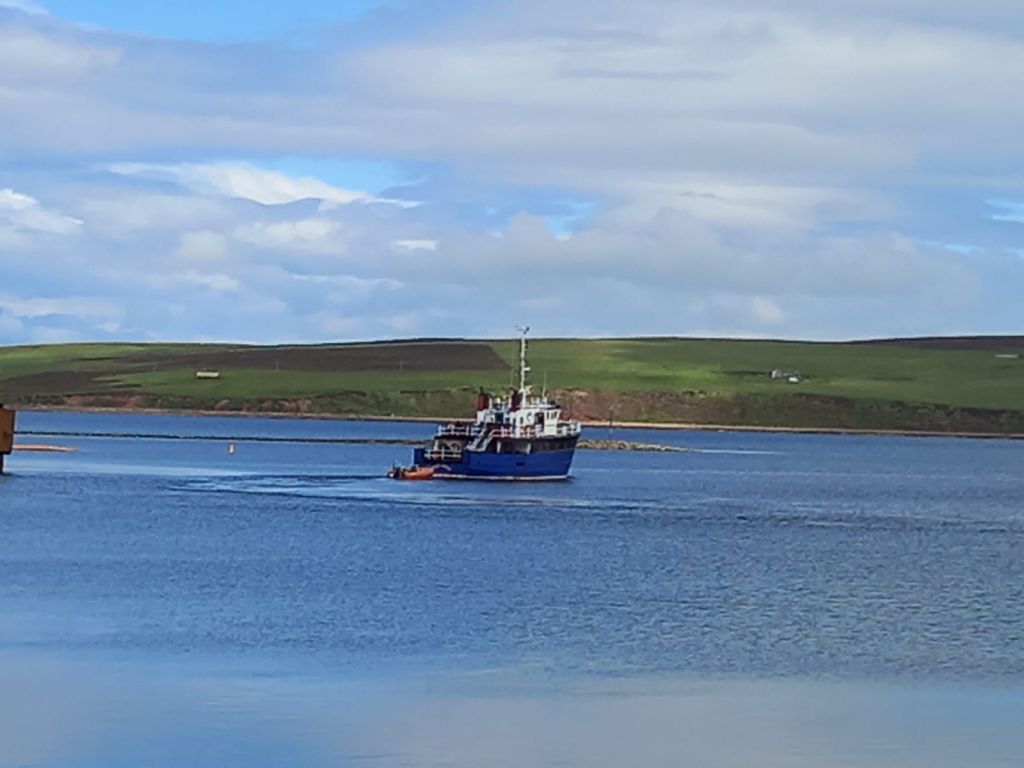
John Cordock of OrcaVentures, skipper of the well-appointed 12-passenger tour vessel BoyRyan, offers fabulous wildlife cruises (which happen most days, sea conditions permitting) – but – given that we have our own trips to see bottlenose dolphins and often whales here in the coastal waters around the Black Isle, I was hoping for something a wee bit more challenging.
It was then I noticed John was offering a longer trip (though trip is not really the right word for this adventure!) – a longer exploration of the remote island of Swona. It is costly, but this is a riskier, more complicated exercise than the bog standard oh look, a seal of a wildlife tour. Plus a large chunk of the fee goes to support the hard work of the Swona Heritage Group (see link at end), and as I was to discover that is money very well spent. And if sea conditions prevent the trip from happening, then you are refunded in full.
I am so glad I went.
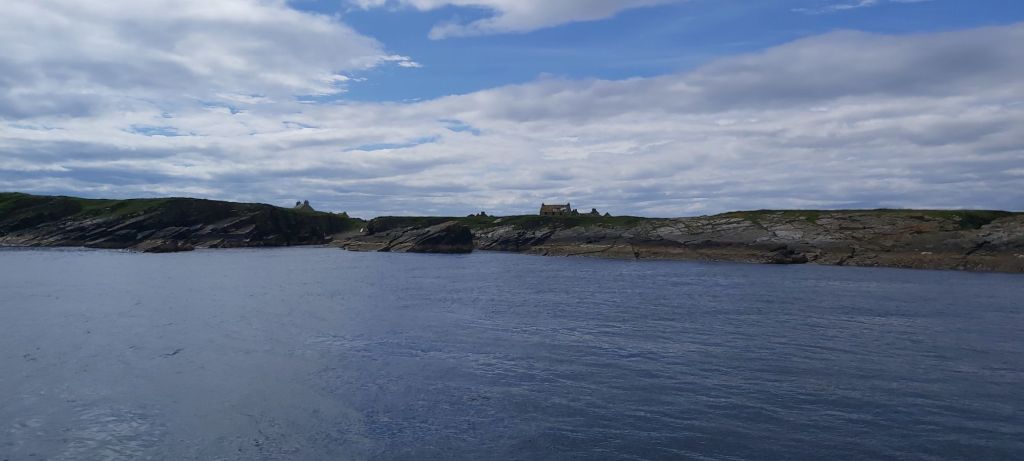
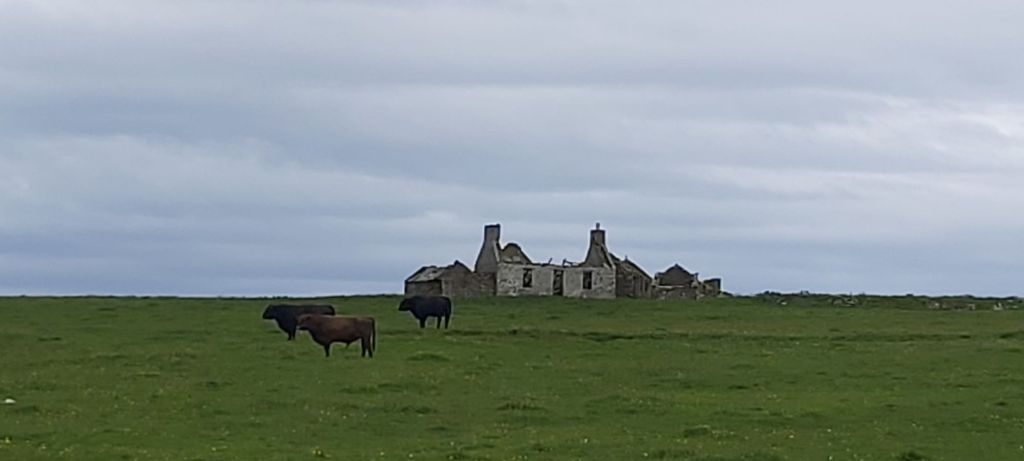
If you have ever taken the Orkney ferry from Gills Bay in Caithness to St Margaret’s Hope in Orkney, you’ll have passed two islands nearer the mainland than the archipeligo en route – Stroma, dotted with houses, which is still farmed – and then wilder Swona, with only scattered buildings, which now has no permanent residents other than its herd of extraordinary wild cattle. These were turned loose when their last owners, siblings James and Violet Rosie, left the island for medical reasons, intending to return but never doing so, thus bringing to an end the era of permanent human habitation on Swona.
I had read about the evolution back to feral of the Swona cattle in Cal Flyn’s remarkable collection of essays Islands of Abandonment (2021) but I never imagined I could travel there to see them for myself.
And I so nearly didn’t. The booking conditions require a signed disclaimer, and (rightly) warn off anyone with mobility issues. If you are prone to tripping or stumbling, this may not be the island for you. Aging is a cruelly insidious process, however, and if I had listened to my own inner demons – itmight be too much for you… you’ll be the oldest… the slowest… you’ll spoil it for everyone else – I would have bottled it. I have my daughters to thank for encouraging me, even paying half the cost ❤.
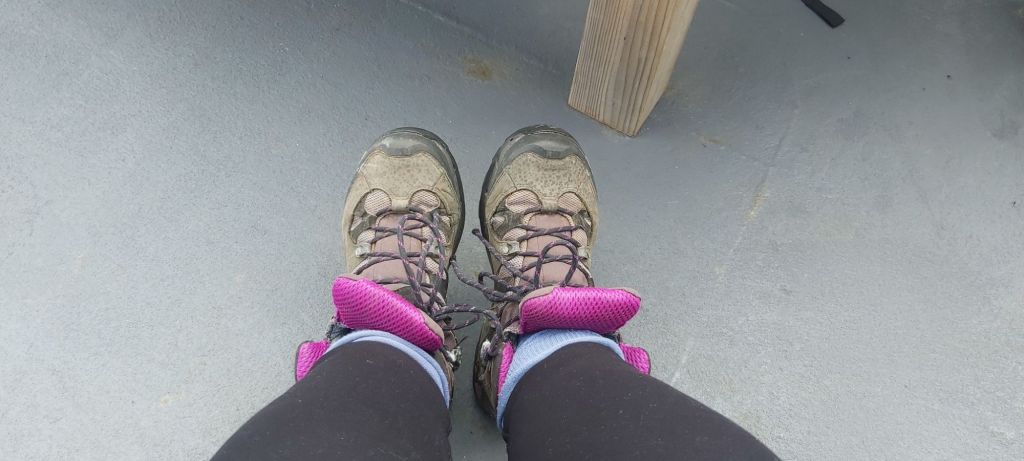
There aren’t many trips to Swona so if you get the chance, grab it! The tides and the weather have to be exactly right. Our midsummer trip left at 13.00 and arrived back about 20.15, so later than scheduled, for reasons I will explain. I wore a dryrobe over jeans and a fleece, then tossed up over wellies or walking boots. The latter won, and I took a thumbstick too, both good calls.
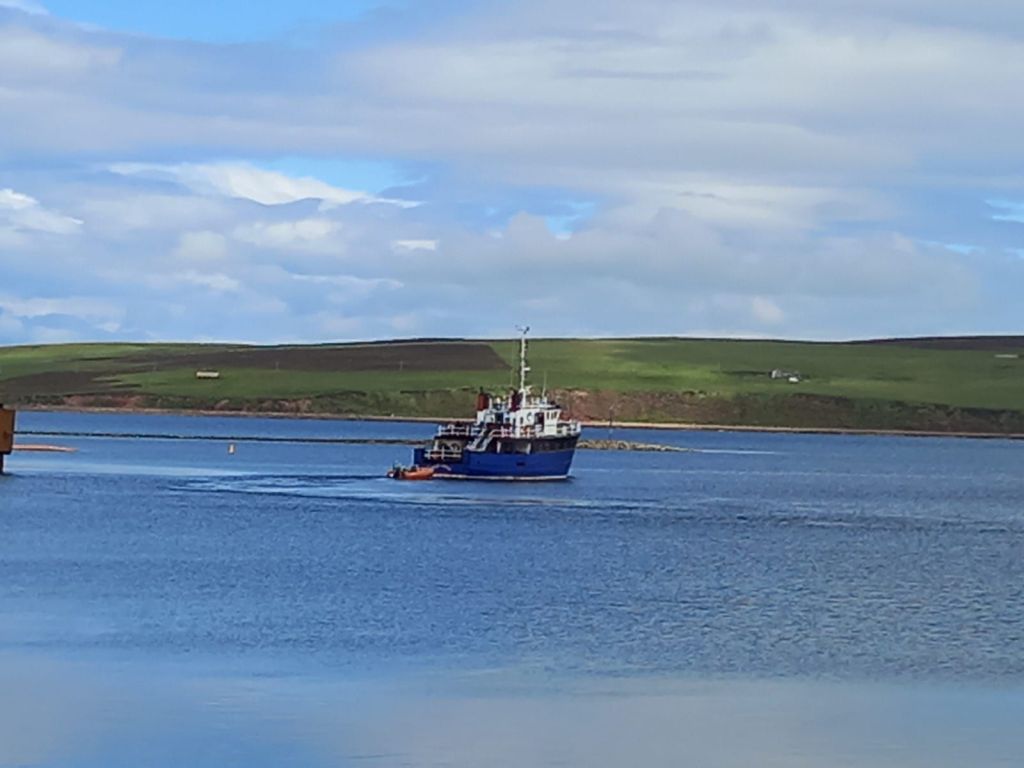
As Boy Ryan bobbed across a remarkably calm and increasingly sunny Pentland Firth (thanks for the pic Eleanor), it became obvious that six of the passengers were Orcadians, several of whom knew each other, and a few of whom had strong connections to the island already. Swona is sometimes known as Orkney’s St Kilda due to its dicey seas, isolation and state of abandonment, so clearly it has a special place in the hearts and minds of local people and is not ‘just for the tourists’. Other than a friendly South African lady (wearing unfortunate footwear about which more later) who was lending John a hand in the onboard catering front, I was the only outsider. I found I felt a wee bit shy, like a new girl in the classroom.
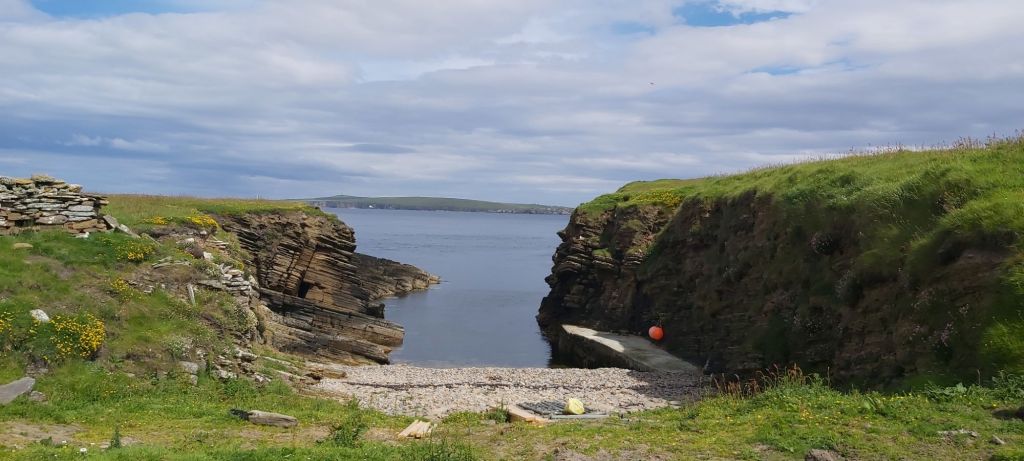
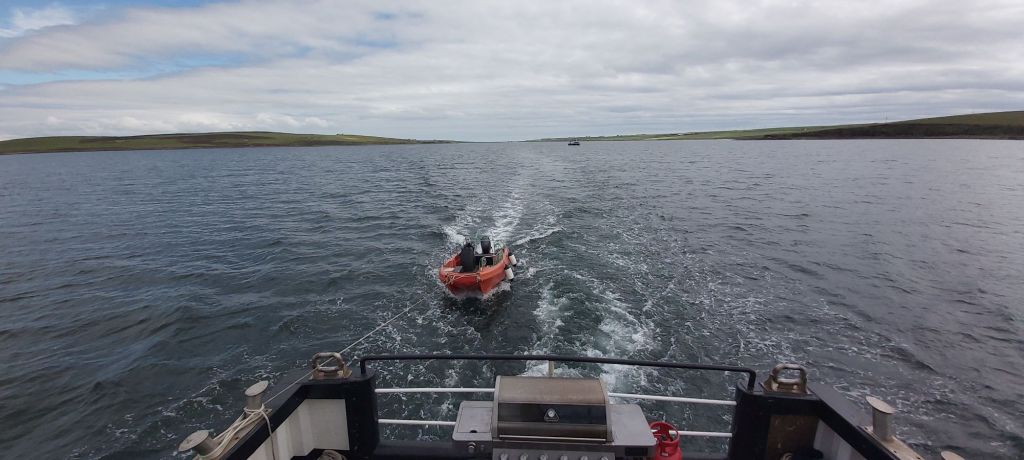
As we approached Swona, John told us there were just two possible places to land a tender on the island (we had been towing a small orange dinghy which was now brought alongside).
Getting onboard this was quite interesting (an undignified scrabble over shipside rails then a drop into the tender while hanging on to a vertical handrail) but with John keeping me right I managed it fine. We were lucky and landed without incident in the preferred northwest inlet known as The Haven, closest to the greatest concentration of former island homes.
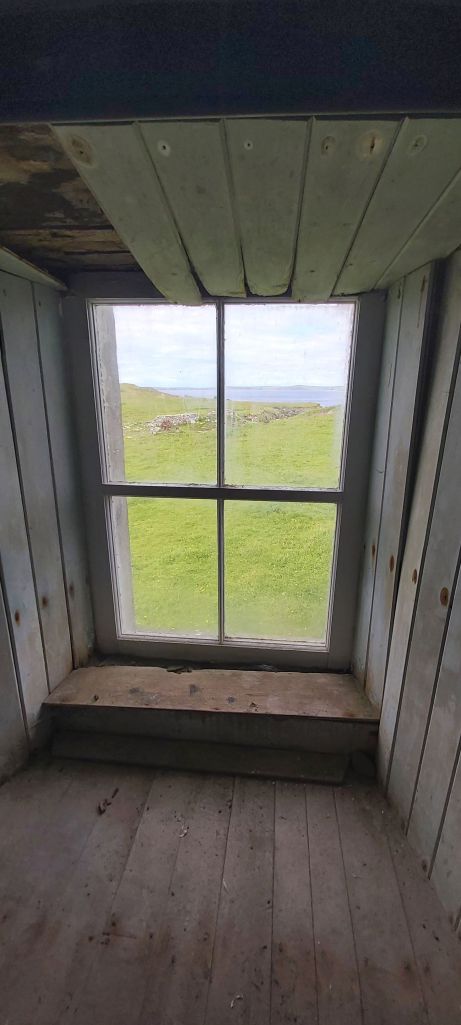
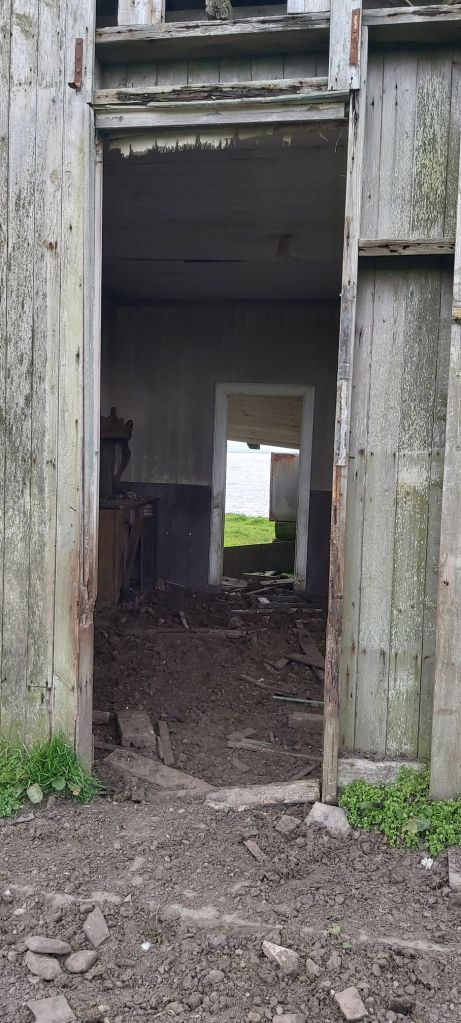
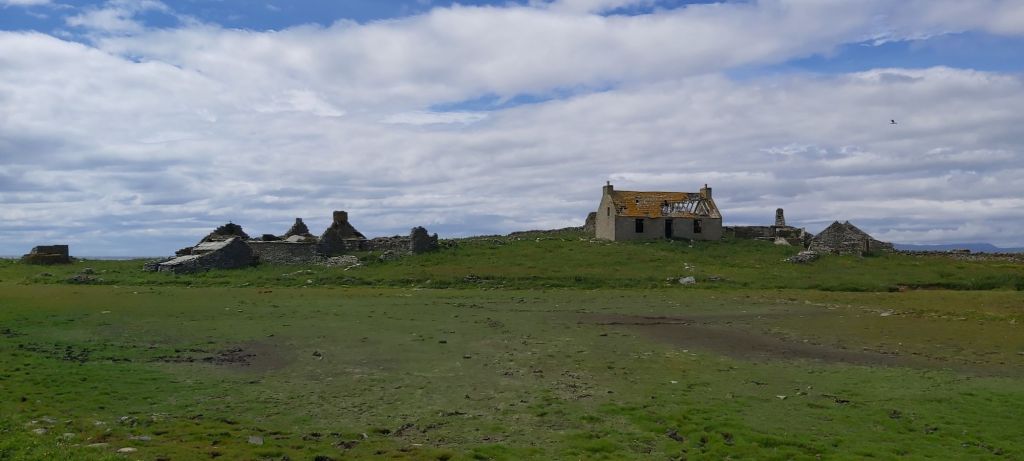
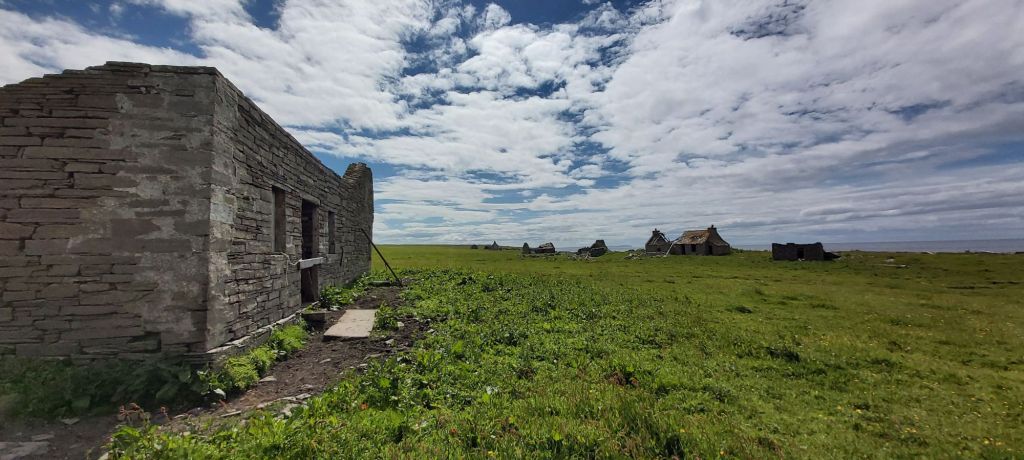
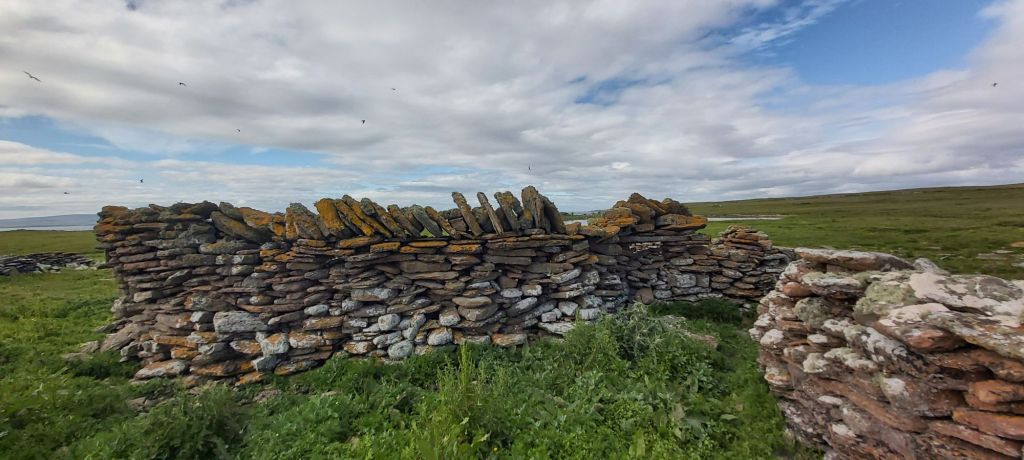
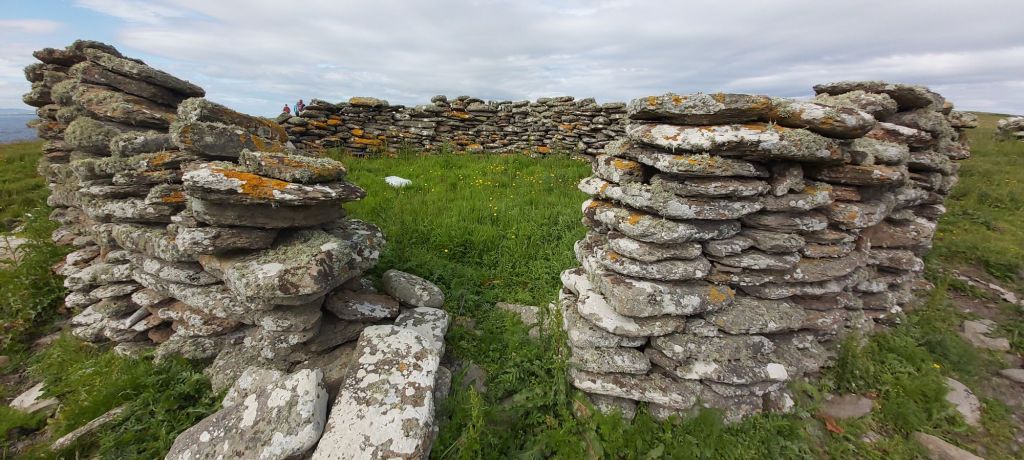
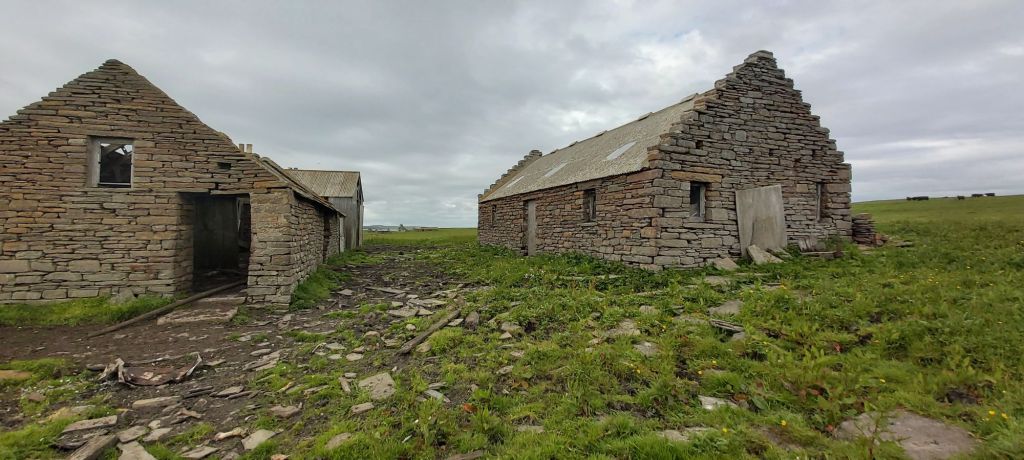
The buildings on Swona are not subsistence-farming blackhoose ruins, they are solid, stolid and often two-storey houses, several still in a reasonable state of repair (with the Heritage Group determined to improve on this). Others are being allowed to become roofless winter shelters for the wild cattle.
Before the collapse of the fishing which sustained its wealth, this was a thriving island community with modern farm machinery and even its own school. Swona folk lived off fishing, farming and anything salvaged from the many shipwrecks around the coast. The northeast part was the most densely inhabited.
It was really sunny by the time I landed and I was already regretting the hot dryrobe, so Lindsay – retired firefighter, diver, self-confessed Swona addict and our expert guide for the day – allowed some of us to leave surplus kit in Norhead Cottage.
This was in good repair with a surprising amount of timber inside – some bought and brought to Swona no doubt, but some salvaged shipwreck timber too. This is used as a base by visiting specialist groups (Gordonstoun School regularly brings field trips to Swona) so had camp chairs and a lived-in feel, as well as a photograph of the late Queen and Duke of Edinburgh in their glamorous youth, setting the time-stands-still tone of the place.
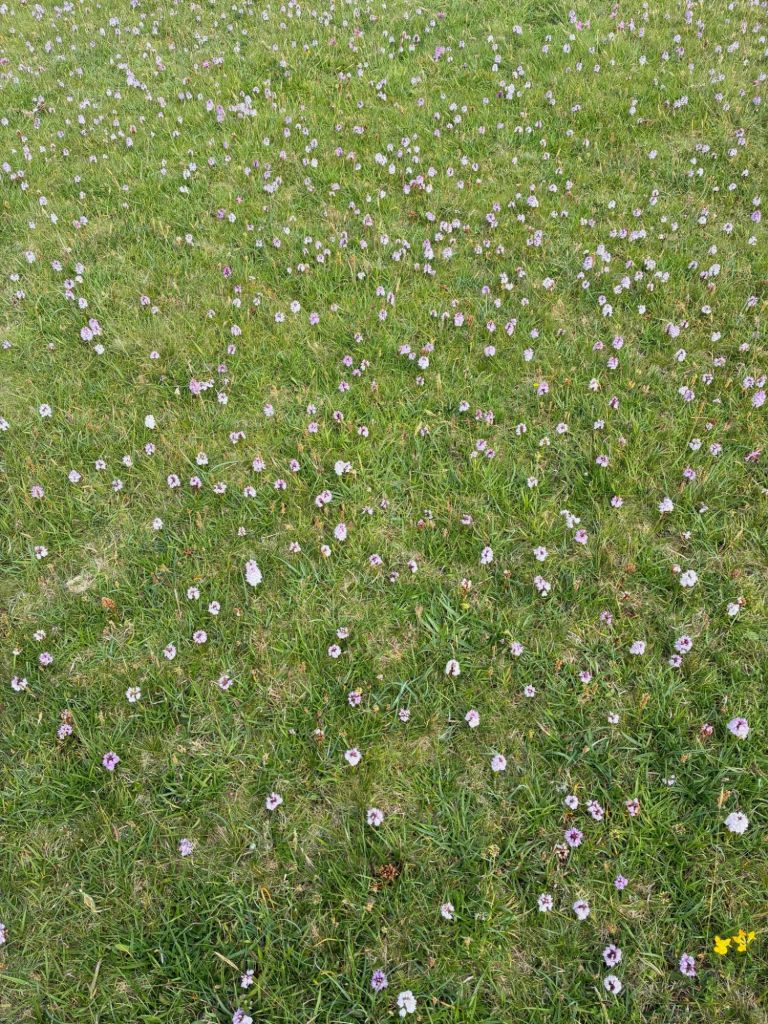
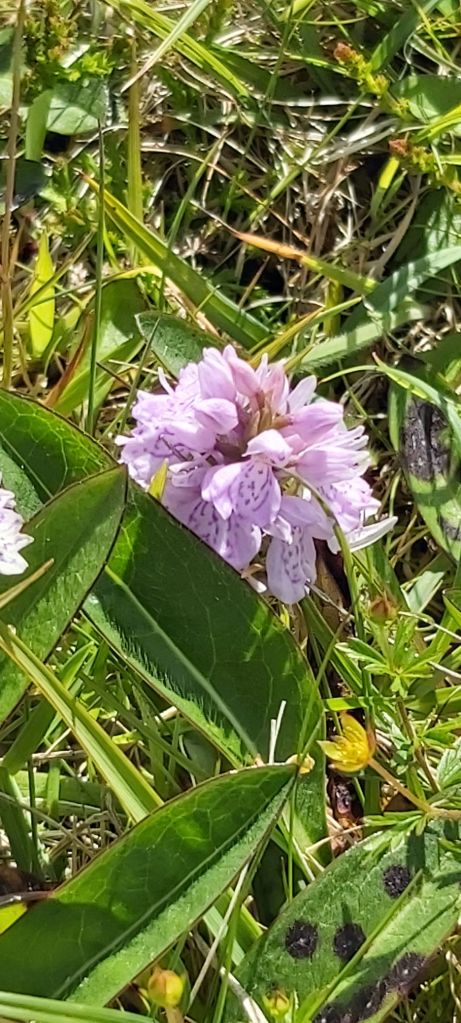
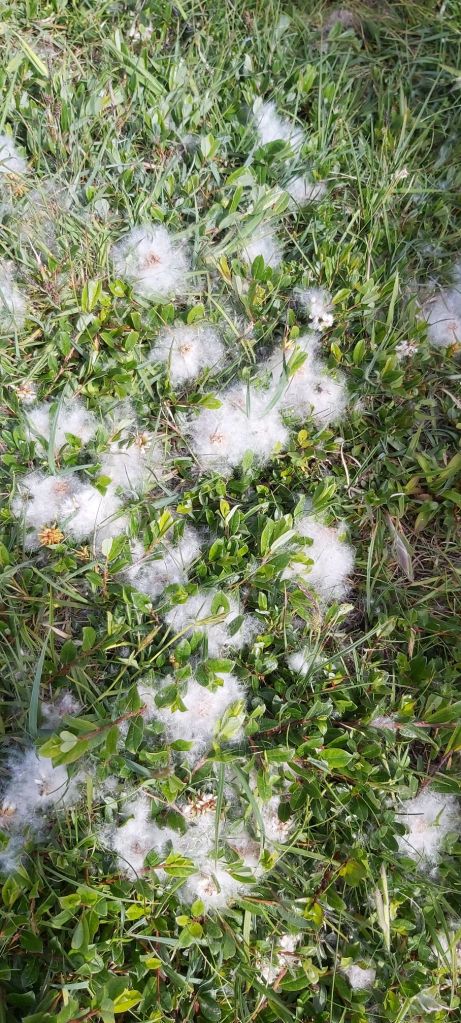
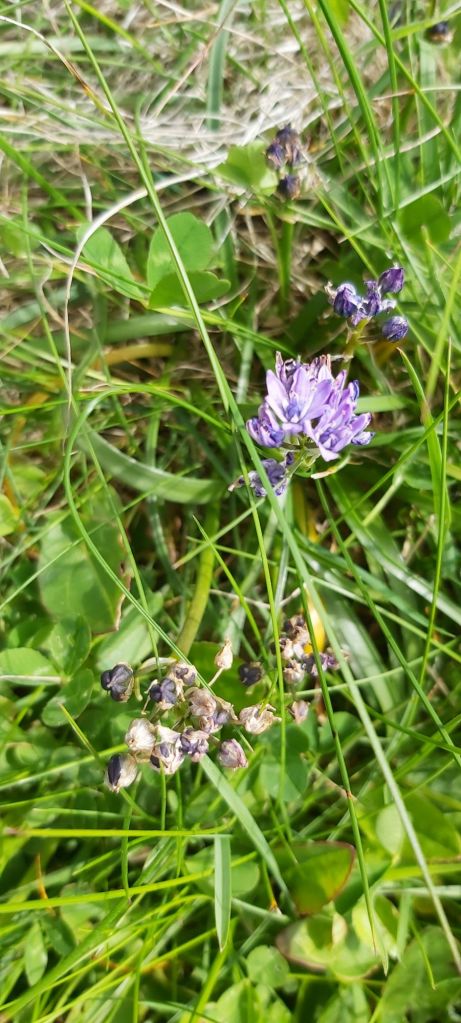
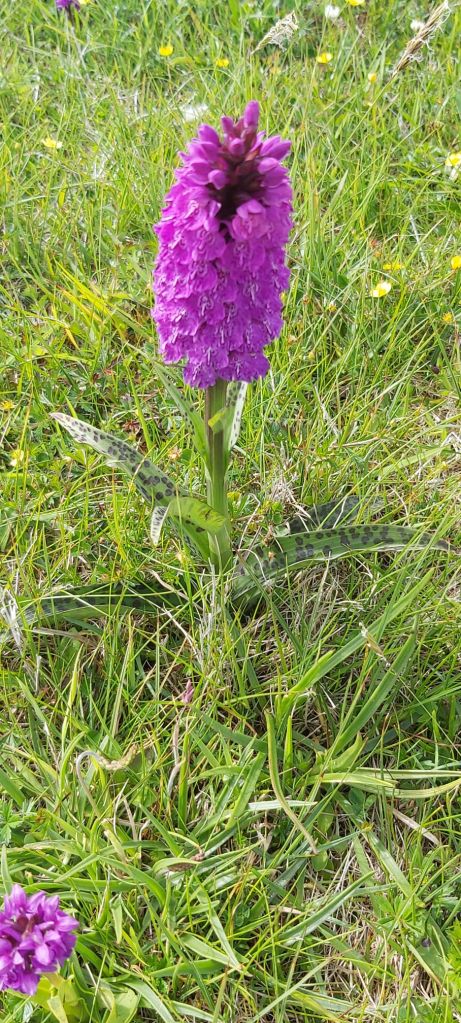
We walked onwards and upwards, Lindsay wisely leading us up the steepest terrain while we were still fresh. Carpets of orchids (mainly northern marsh), ragged robin and cats-ear had me gasping, with here and there a bright blue dab of late vernal squill, a tiny flowering bulb related to our garden scylla. I was able to be useful in tentative identification of most species we found, including the fluffy seeds of creeping willow – a ground-level shrub, if not an actual Swonan tree.
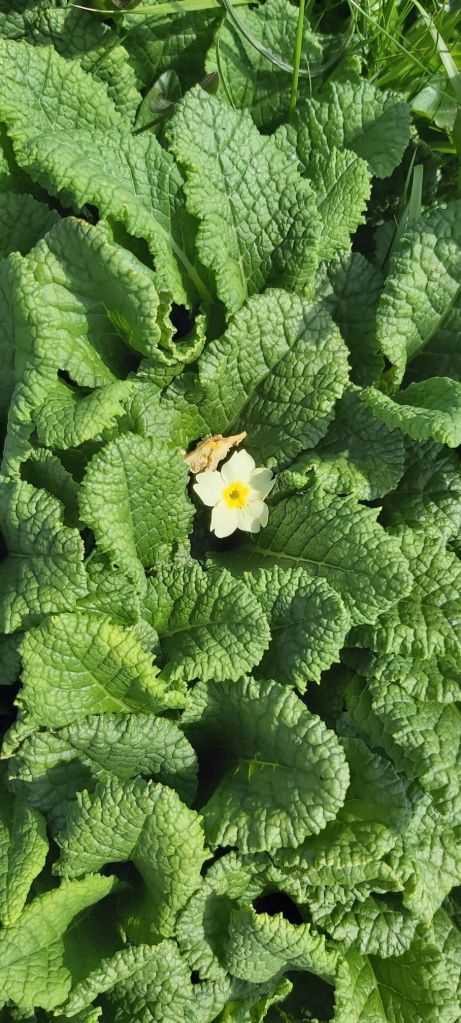
I wondered if a small patch of unexpected primroses found in the cliff edge could be a deliberate planting as they looked so outbof place.
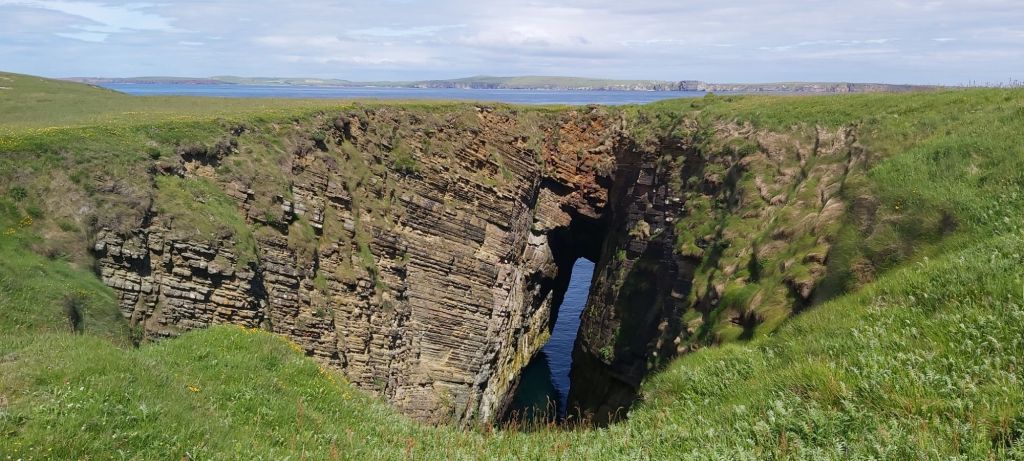
We admired the fearsome gloup, a collapsed sea cave, now a nesting place for shags. I read later that this was also the perfect hiding place for the island’s illicit whisky still.
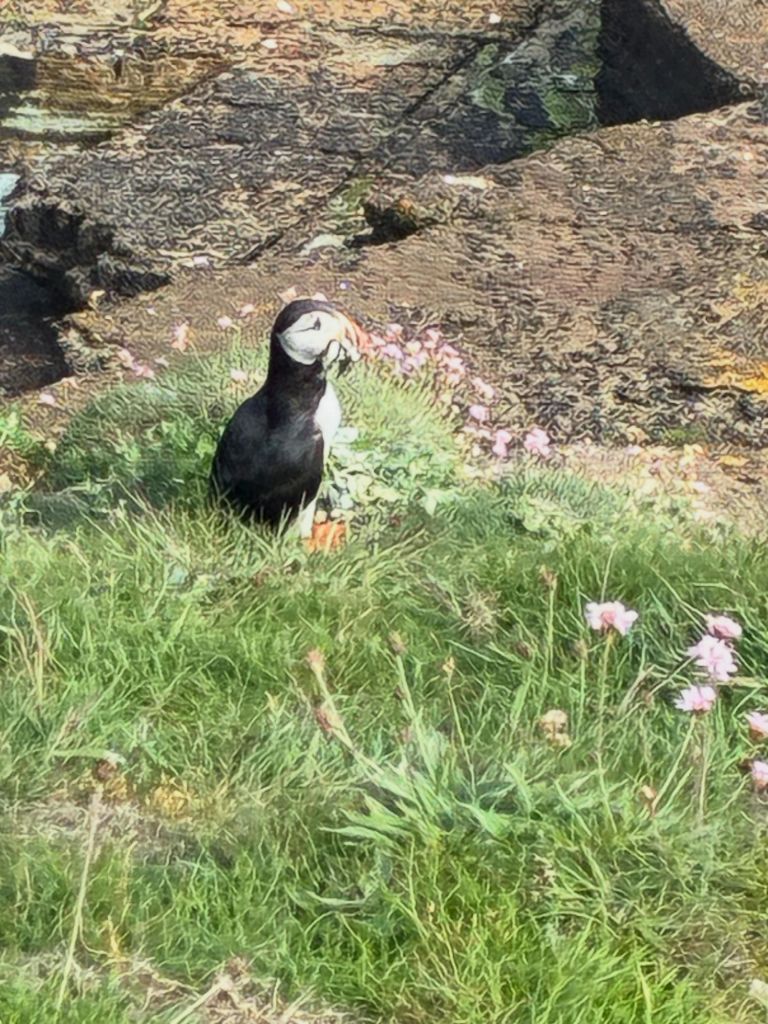
This is more a shelfy/ledgy coastline than a cliffy one but plenty of seabirds were scolding us from nests or roosts in the Caithness flag nooks and crannies, notably puffin, fulmar and shags and we watched seals from the clifftop.
Spot the bonxie!
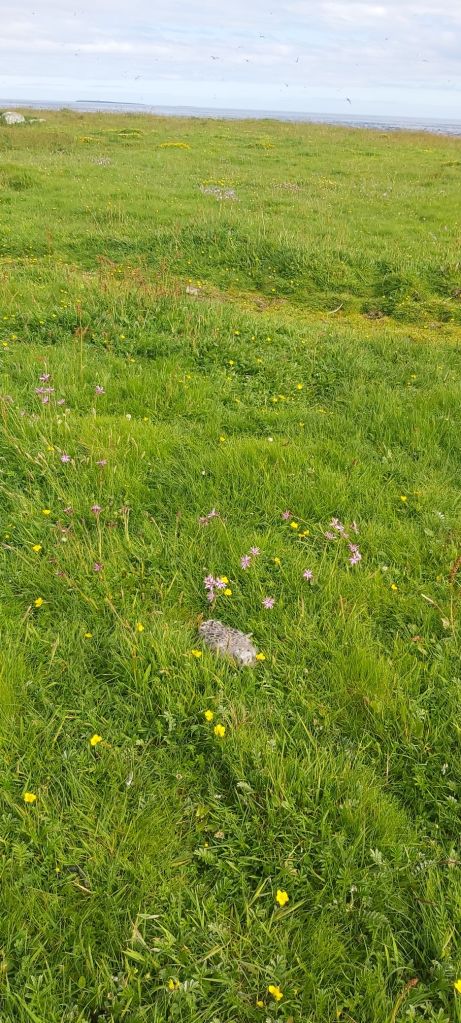
We had to watch our feet (and heads!) as a few late bonxie chicks were huddled into the grassland – we walked on quickly to avoid parental skua indignation. The entirety of the north ‘head’ of Swona is a ternery and wisely put out of bounds in spring/summer as tern chicks are tiny and fragile and their parents understandably fierce in their defence.
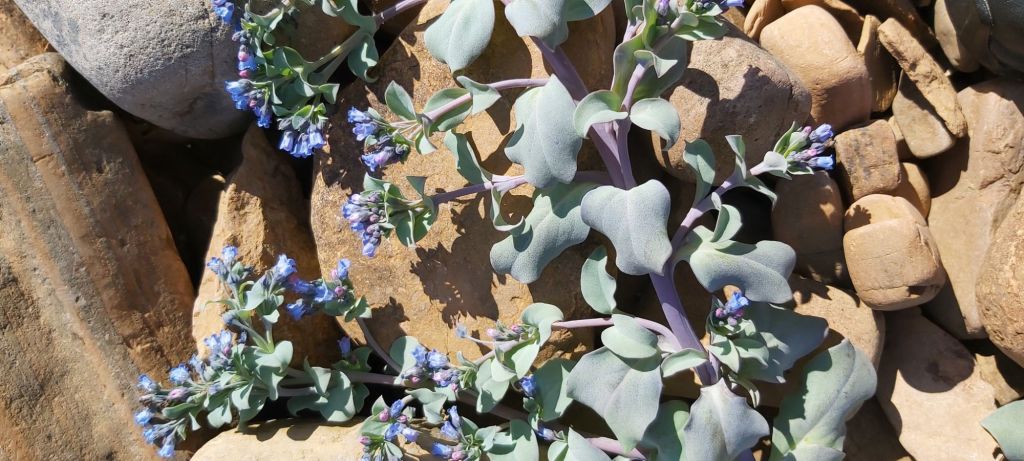
In the south of the island Lindsay led us to an idyllic spot for a snack near carpets of rare blue and grey oysterplant, a plant very dear to my late mother’s heart. I would love to return and paint it.
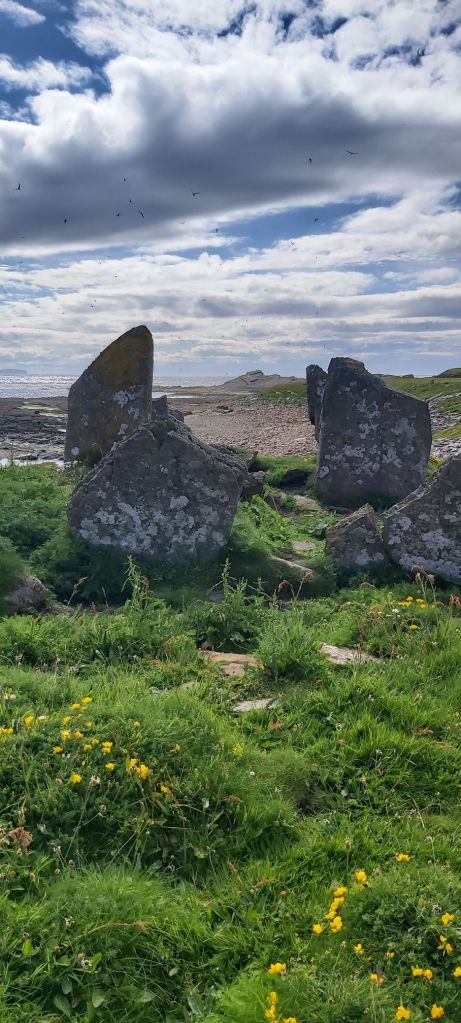
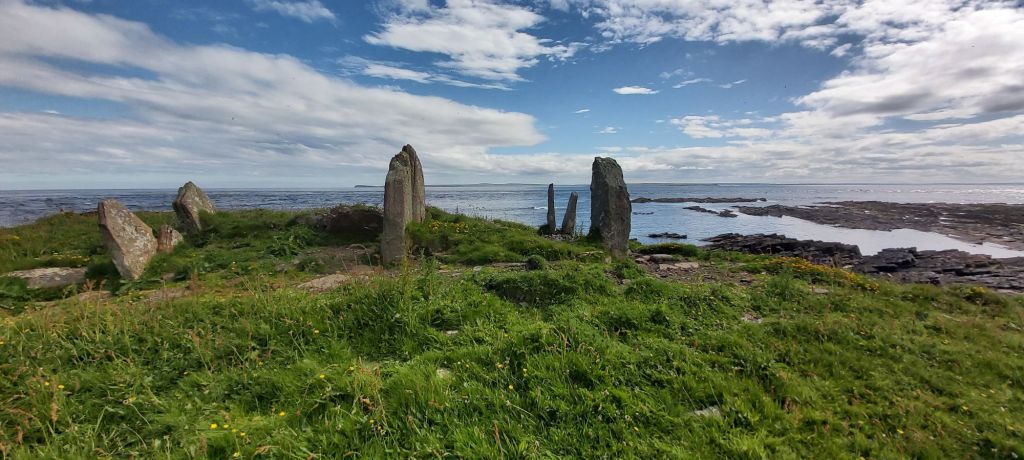
The older archaeological features of the island are concentrated in the south, with the stones of the chambered cairn offering dramatic views. More excavation work is planned here soon.
There are also fish-drying sk-yeos, walled enclosures where sea harvests could be air-dried.
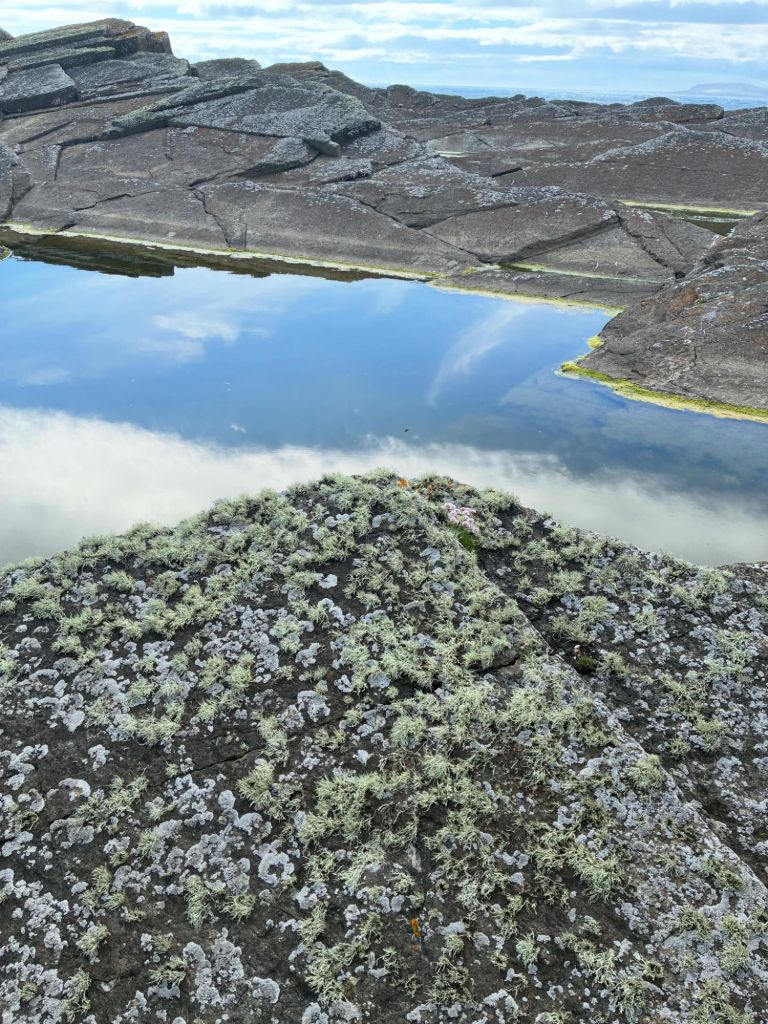
A giant rock pool lured many of our group down to it but no-one was quite brave enough to take a dip, though Lindsay has done so in the past.
The modern lighthouse still keeps vessels clear of this treacherous coastline, fringed with shipwrecks and tragic tales of loss. I read in the late John S. Findlay’s epic SwonaRevisited(2014) how one Norwegian vessel came ashore and the only survivor was a big dog, who led the islanders to the wreck. Later the Norwegian ambassador sent an urgent message from the captain’s brother with a description of the captain and an assurance that all repatriation and quarantine costs would be met for the dog, but alas, the animal had already been shot: possibly inconsolable at the loss of its master, and too great a risk to have a non-local dog among free range livestock. Still very sad!
A modern lighthouse shed has been knocked over by the wind like a stack of playing cards.
In this area I noticed there were fewer northern marsh orchids and more early purple orchids (unless they are the same and it is simply a strong colour variation – I am no orchid expert?). If the cattle concentrate in this wetter area, their dung will be gradually enriching the soil, so this may explain the variation.
One of the planticrues, shelters for growing vegetables.
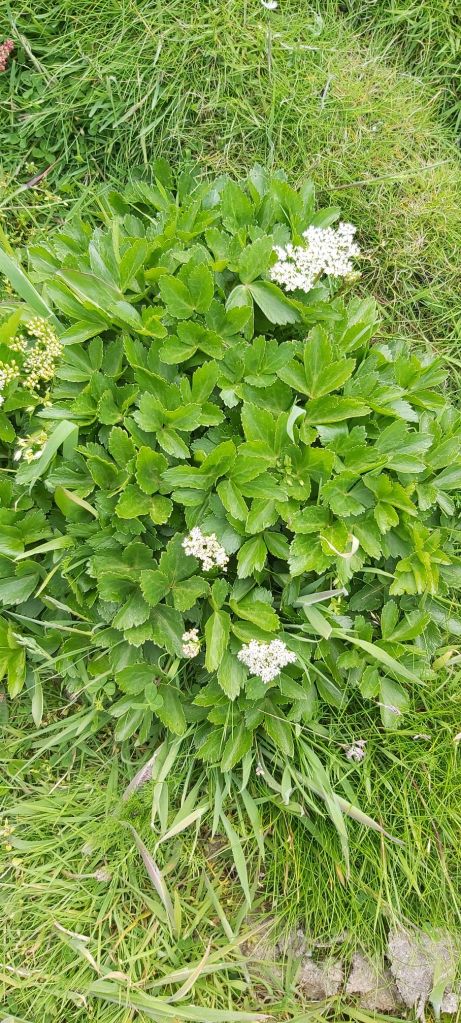
The vegetation around Rose Cottage, the home of the Rosies, showed surviving potato haulmes and stands of.rhubarb, with camomile, Scots lovage and sorrel also present (nice to know the youngsters from Gordonstoun won’t go hungry, providing they can dig and forage!). The Rosie family barns are full of useful flotsam and jetsam found while beachcombing.
The South African lady stepped into a giant cowpat up to her ankles at this point – Swona is no place to explore in slip-on loafers.
The island cattle were vigilant, not aggressive, and moved as we did, always at a cautious distance. It can be a rather different story if there is a taurine power struggle taking place, as newly-deposed bulls can be feisty and sullen.
Ordinary farmed cattle associate humans with food and tend to approach out of greed or just dull curiosity. Not so these. I counted about 30 in all, maybe 20 cows, 6 calves and four bulls. They watched us closely as we plodded across the flat area known as Dyke End, the hardest walking, as the terrain is dried into rigid ruts made by hooves and these ruts are masked by longer vegetation. I was glad of my stick here.
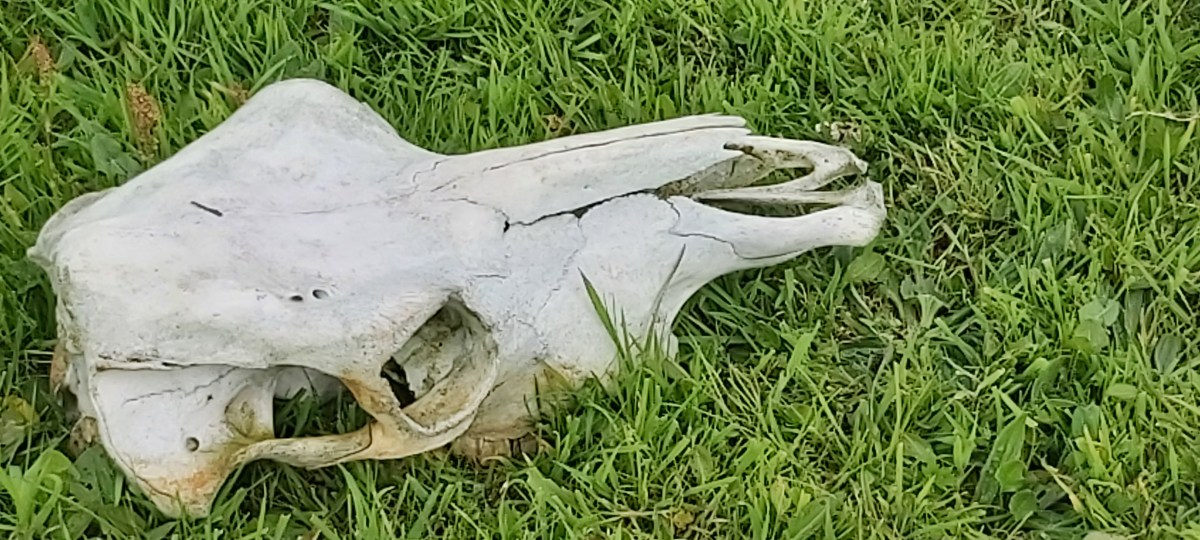
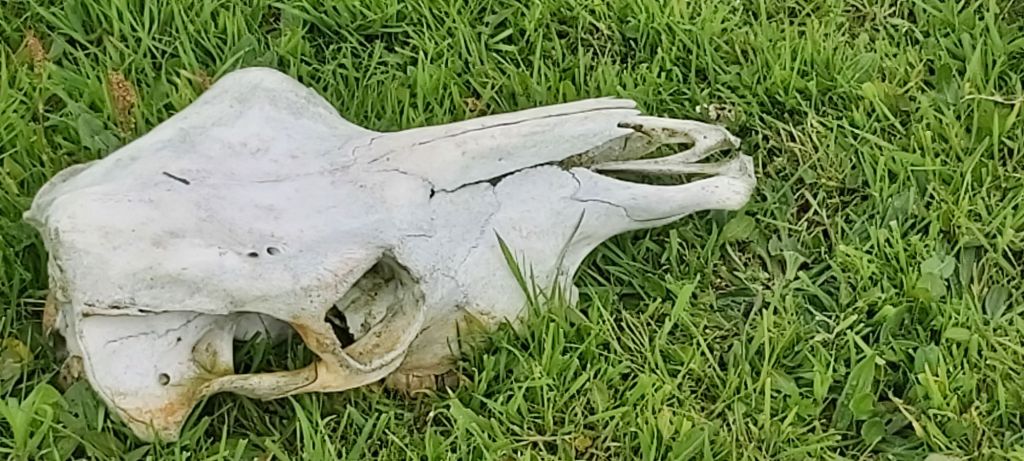
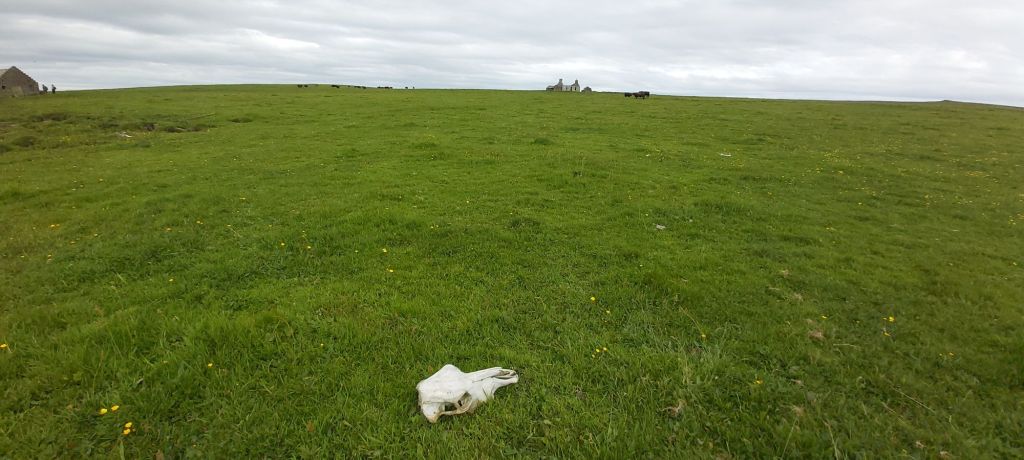
Three deposed bulls – each a former clan chief – watched their former consorts longingly from the periphery of the herd. Here and there, a winter-bleached and wind- and bird-picked skull augured their future. We saw one long dead animal and a healthy-looking calf lying freshly dead in different parts of the island. Why they died will never be known, as this is a truly wild herd (some descriptions of Swona have suggested that a vet keeps an occasional eye on the herd but that is not the case).
This is not sad, but natural. What is on Swona stays on Swona.
The same goes for the old coastguard/lighthousekeeper records, which seemed in good condition. From a curatorial point of view it would be wise, I think, to make digital photographic copies of everything paper-based on the island for duplication to Orkney Archives, just as a safeguard. This could be done in situ. It is astonishing that anyone should sail as far as the dangerous skerries of Swona in order to steal or vandalise these old homes, but bampots abound, and it has already happened 💔.
All accessible buildings are now kept padlocked as a result.
By the time we got to the school and North-houses, back at The Haven, my legs were wobbly, but I felt cleansed by the air and the exercise and all the wonders I had seen. I had had a very tough spring and felt like I laid down a heavy burden, somehow.
Being on Swona reminds you of what matters in life.
John came back to pick us up, in two groups again, in the wee orange dinghy. I always save the best till last! he grinned and promptly turned the bow not for Boy Ryan but for the cliffs to the south of The Haven. I won’t spoil John’s surprise by telling you where we ended up, but it was an exciting moment at the end of a fabulous day!
John exudes an air of total confidence and is obviously a man happy in his life and work, but when he mentioned a bit of a swell with studied nonchalance I thought oh-oh. This is the Pentland Firth, a place where the tides change, the winds can rise and a whirlpool can appear out of nowhere.
Our first attempt to board was aborted as the swell was slapping the dinghy against the side of the boat. I got soaked as the dryrobe was deemed too hazardous to wear in the tender. Not happy with this, says John, and we pulled away again. A clever manoeuvre then saw us moving parallel with the ship on the opposite side and boarding as both vessels moved through the water. We all scrambled aboard, some of us less elegantly than others, hearts thudding and gleeful. John’s seamanship meant we felt safe the whole time. We sailed for home through rougher seas and a whirlpool.
Thank you again to Lindsay and to John for this wonderful experience.
Timings on all Swona trips are of necessity approximate. On the way back I found I had missed my bus by half an hour, so begged a lift from lovely Ruth (who kindly allowed me to use her orchid and pool and puffin shots for this blog as they were much better than my own) who was also heading for Kirkwall. Thanks to her accelerator pedal made it back in time for almost all the Voces Thules concert in St Magnus Cathedral.
A more-than-just memorable experience. So much more than a boat trip too, a true adventure. Afterwards I was able to identify 21 plant species and send the list over to Lindsay for future fine-tuning and use. Nice to give something back to the island.
If you’re coming to Orkney, do try to go to Swona – but maybe leave those leather loafers at home…
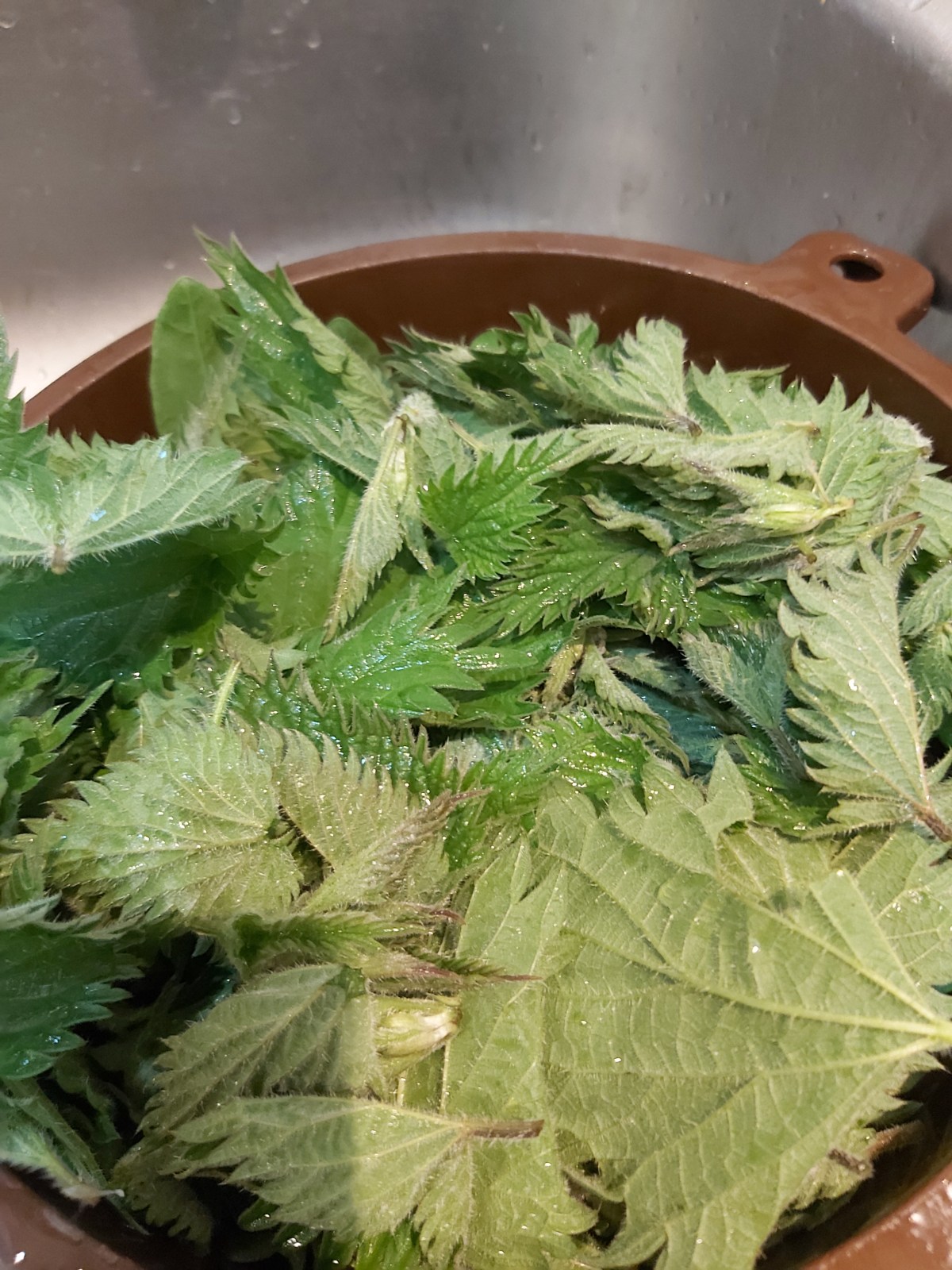
The taste of spring to me is the taste of this soup: rich, sweet and lemony. And early May is its moment.
To make it you’ll need:
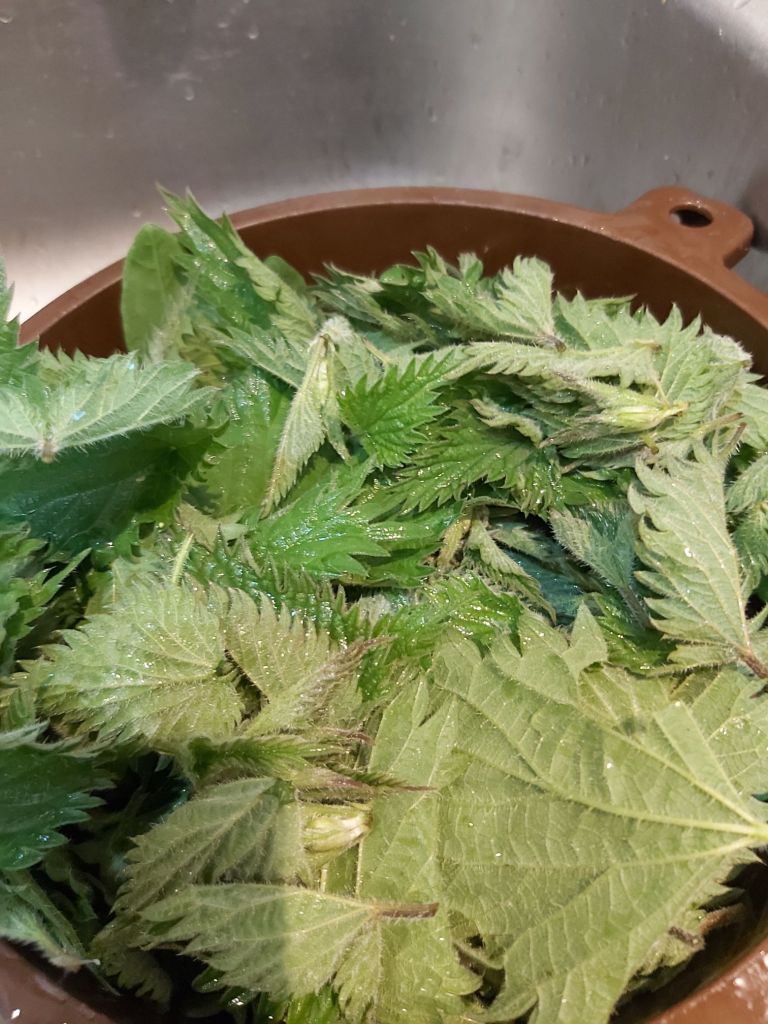
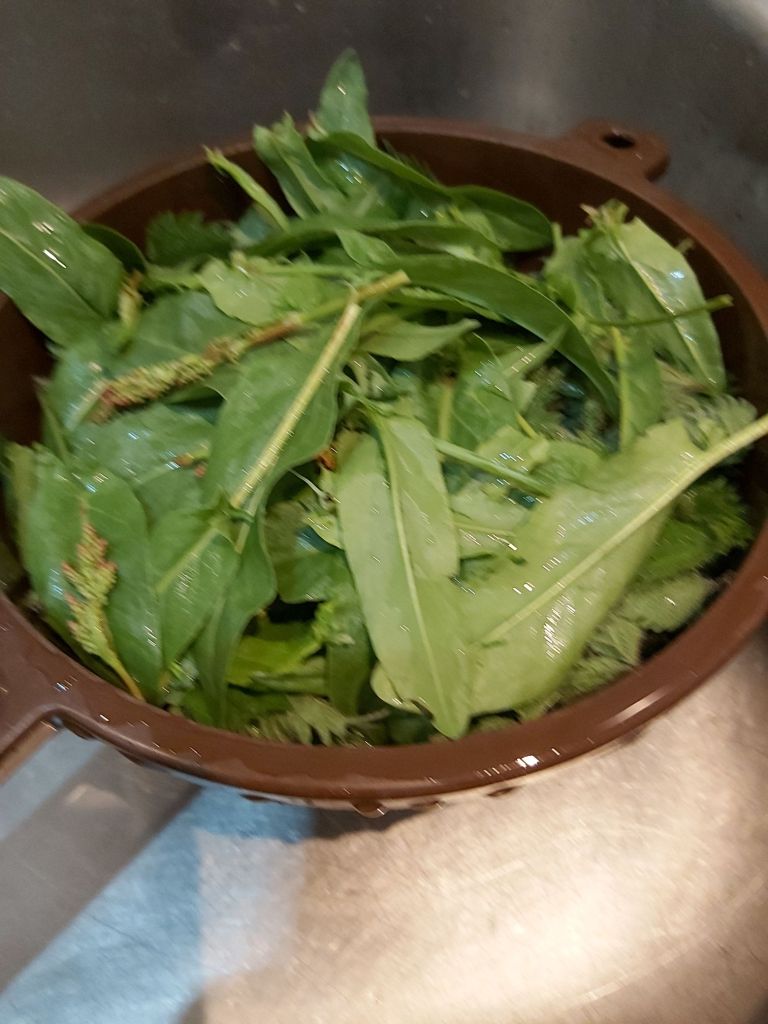
a pint jug of nettle tips and sorrel leaves
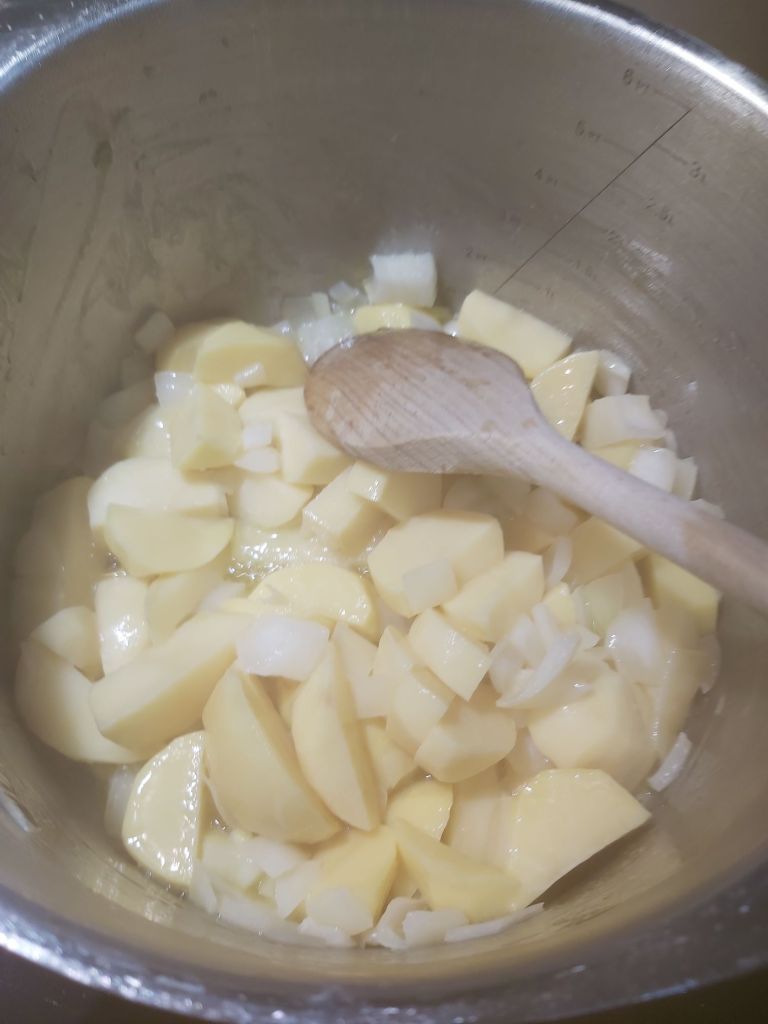
three medium sized potatoes and one onion, chopped small
3 oz butter
a pint of vegetable stock (I used Maggi bouillon which has a slight thickening property useful in this soup)
***
As with all foraging, you’ll need to know precisely what you are picking. Avoid anything which could have been sprayed with toxic chemicals (look for contorted or yellowed leaves), too closely inspected by dogs or too old (once they have flowered, both sorrels and nettles lose their flavour, and later they become a food plant for caterpillars).
If in doubt, never trust AI ID. Go out with someone who knows what they are looking at and learn from them.
To pick nettles, wear gloves, take scissors and a basket or plastic bag and snip off only the top tips, the first six leaves at most.
With sorrel, pick leaves one by one or strip the leaves from the woody stems. Never uproot the plant, it will give you more leaves. Wash both nettle tips and sorrel leaves in clear water several times. Snip the nettle leaves from the hard stems – then discard the latter. They’re so tough they were used for string by early peoples, so you won’t want them in your soup.
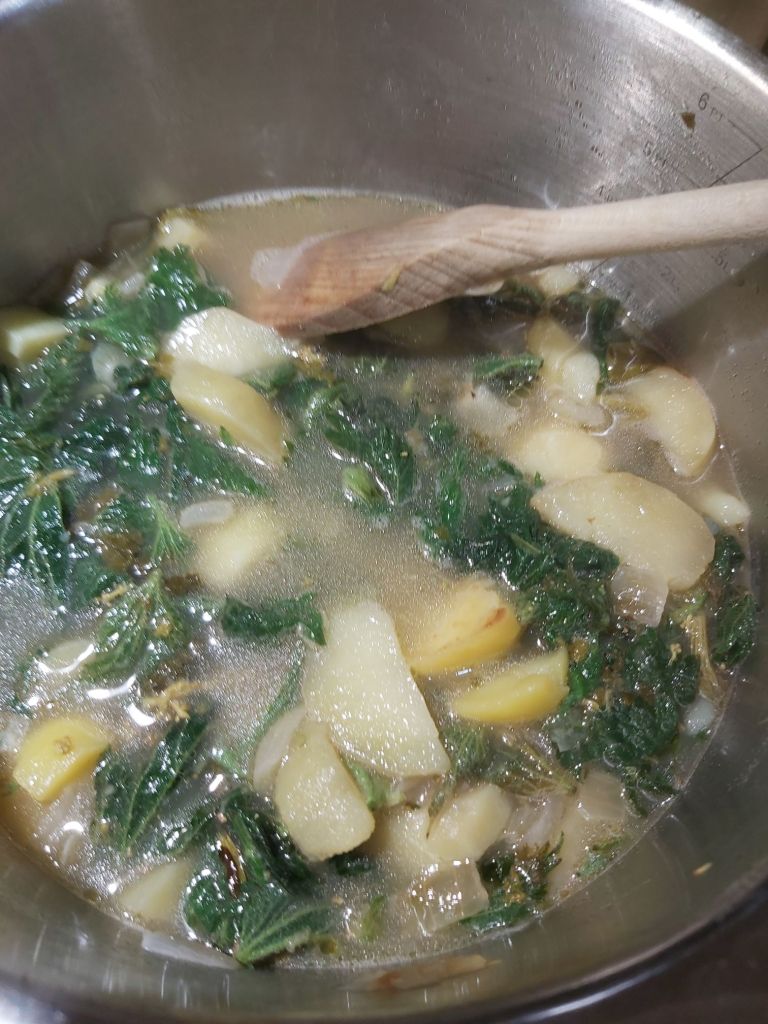
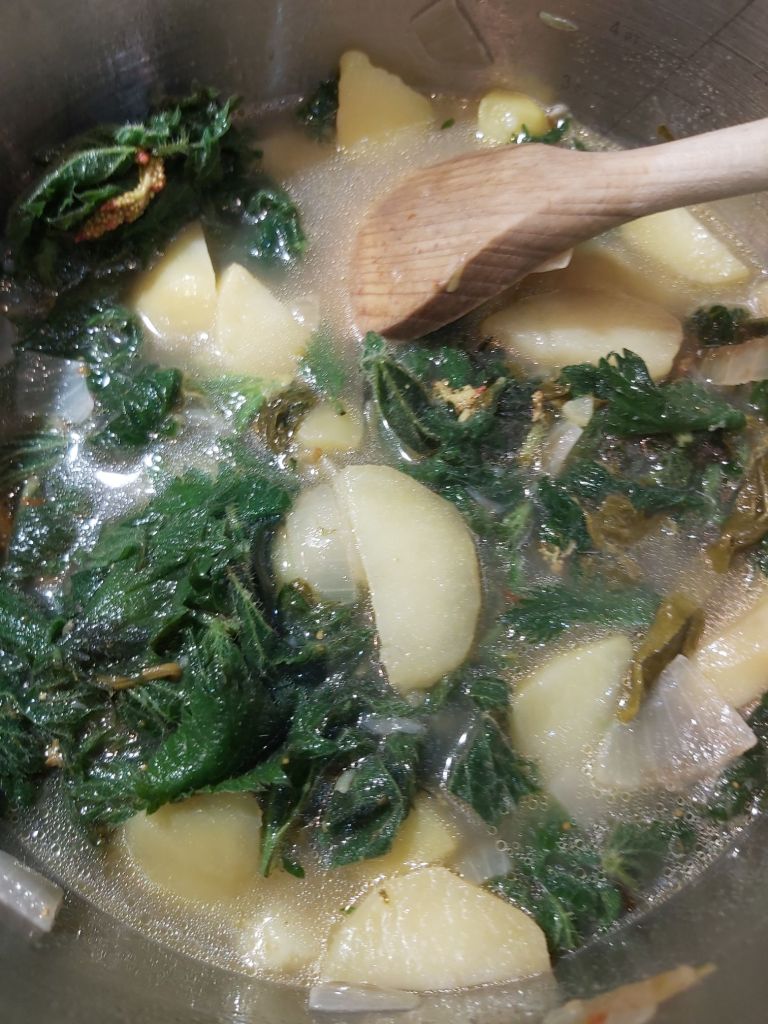
Fry the onion and potato in the butter until starting to turn golden. Add the washed leaves and stir until wilted. Add vegetable stock, bring to boil, turn down and simmer until all soft.
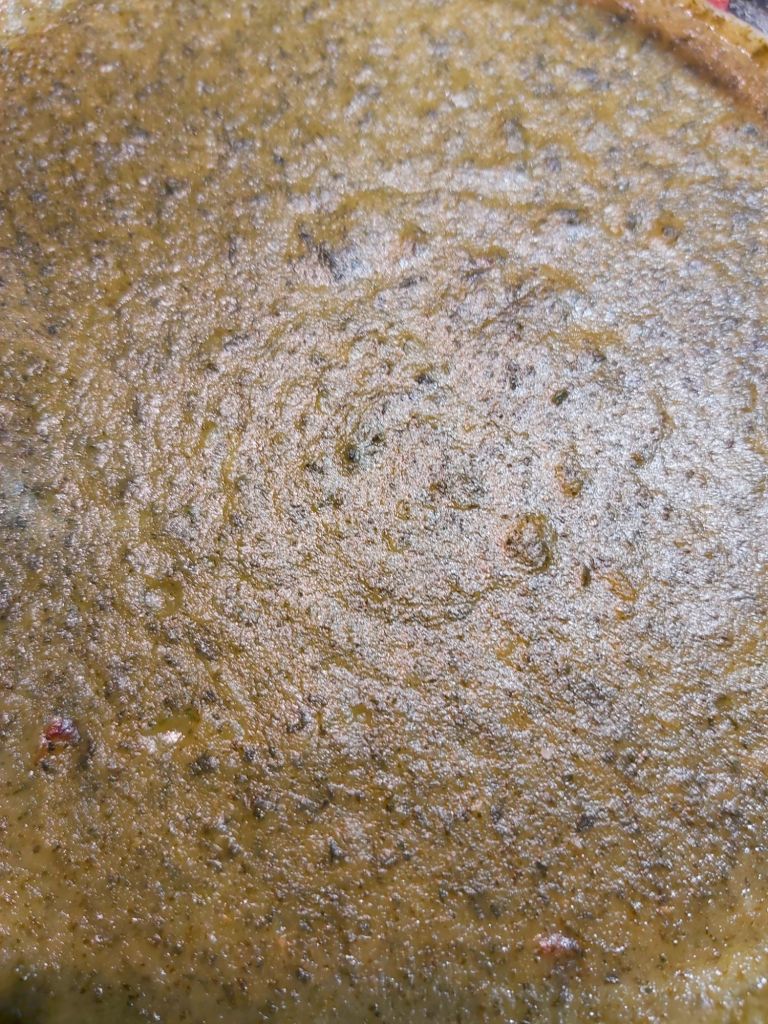
Blend until lovely and smooth, stir in a little cream if liked, and serve.
Back in 2011, my first ever publication (long since out of print alas) was The 1810 Cookbook, a new edition of a recipe collection pulled together by Jane Onslow, my 4 x great grandmother, on the occasion of her marriage to Edward Winnington-Ingram in 1810. It is long since out of print but I still use the original to cook from. And one of the best recipes it contains is for this Seville Orange marmalade. Jars of pure sunlight.
The W-Is were church gentry – and Jane, daughter of the Dean of Worcester, whose portrait suggests she enjoyed fine dining, moved with Edward into the family stately pile, Ribbesford House, which is currently for sale if you have a spare million and three times that as a restoration budget! 👇
Jane’s recipe collection shows how widely they sourced their food: macaroni ‘as at Naples’, Curaçao, curry powder, mock turtle soup, macarons and crême brulée for example.
To make this marmalade you will need a spare week, about 20 Seville oranges, an ample supply (3kg or so) of granulated sugar, plenty of good tapwater, a large preserving pan, a ladle, a spurtle or long wooden spoon (check it does not smell of onions), a jam funnel and a basin – or a handy clean bathtub!
In 1810 oranges from Seville would have been picked green and ripened in the holds of sailing vessels. Sevilles are small, rather dull fruits, never sold with the preservative wax which generally make an orange shiny today. This also means the fruits do not last as long, so marmalade season begins in December and will be over before the month of January is out.
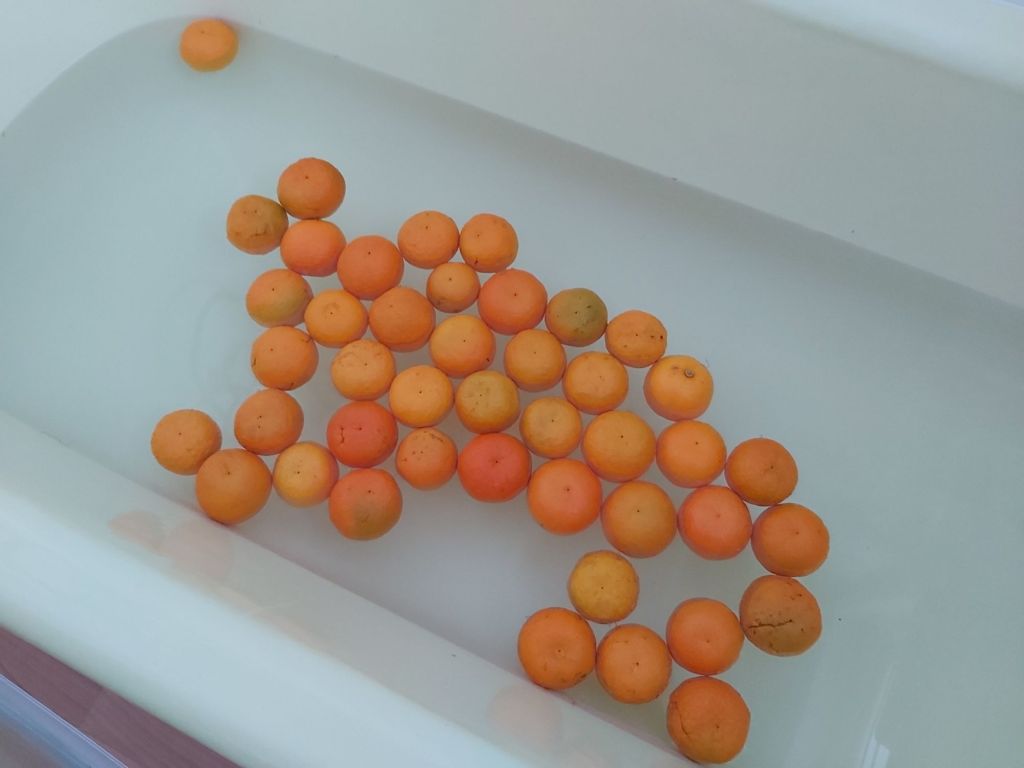
A ship’s hold was probably not the cleanest of places, which is why the recipe begins with rather a strange instruction to modern eyes: to soak the fruit in a basin for three days, changing the water daily. I use our guest bath, well scrubbed before and after, for convenience! If you do this, the different layers of the orange soften and much of the bitterness gets washed away. Even in these modern times, it is remarkable how many tiny specks of grit get released from the skins during this three day process.
Yes, I scrub it first!
On day four, rinse the fruit one last time, drain and remove all the ‘eyes’ (where the stalk was connected) with a sharp pointed knife. You may need to clean or cut around this area.
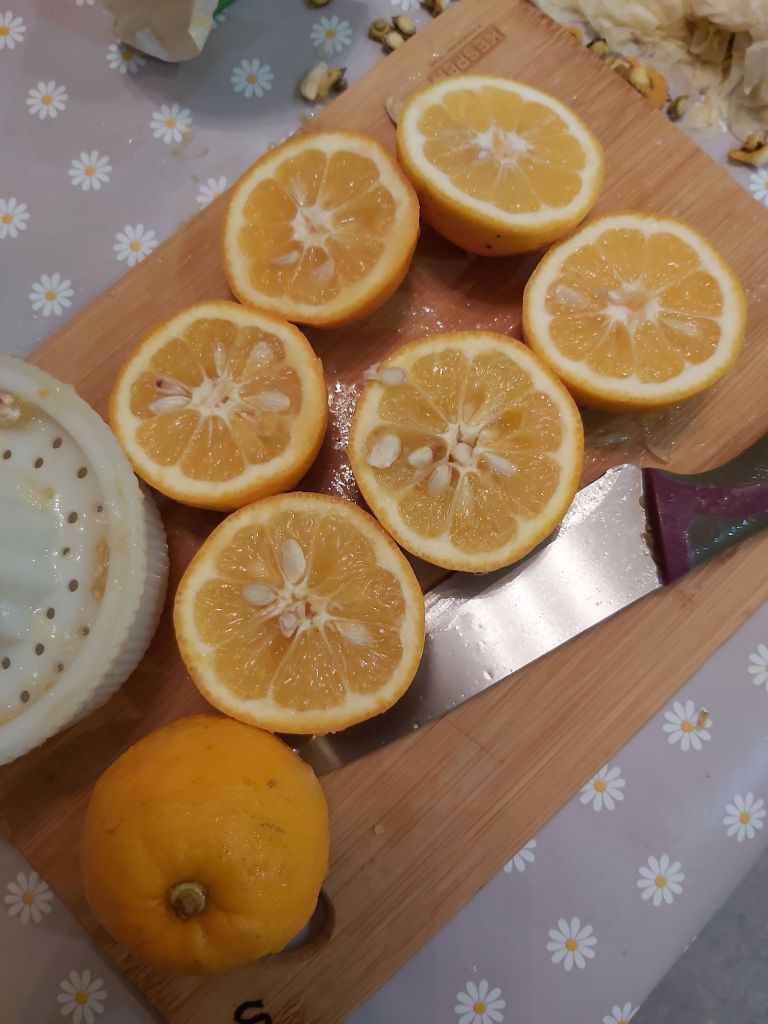
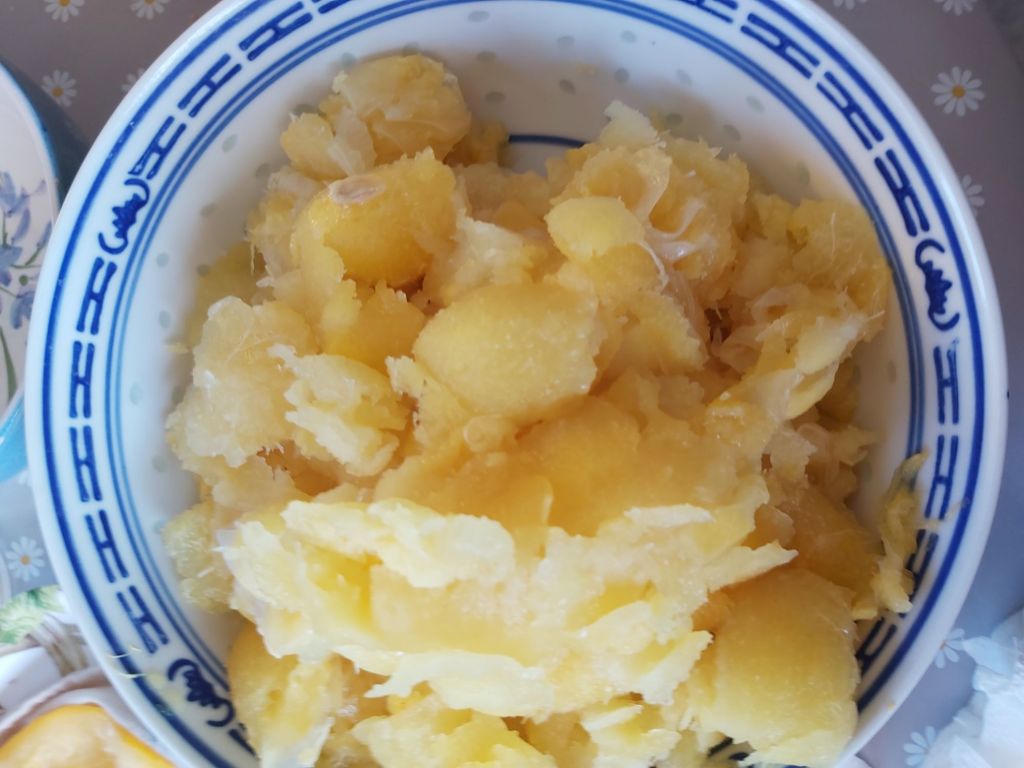
Now chop each orange in half around its equator. Squeeze the juice into a bowl and set aside. Strain any pulp from the seedy discard and add to the juice bowl.
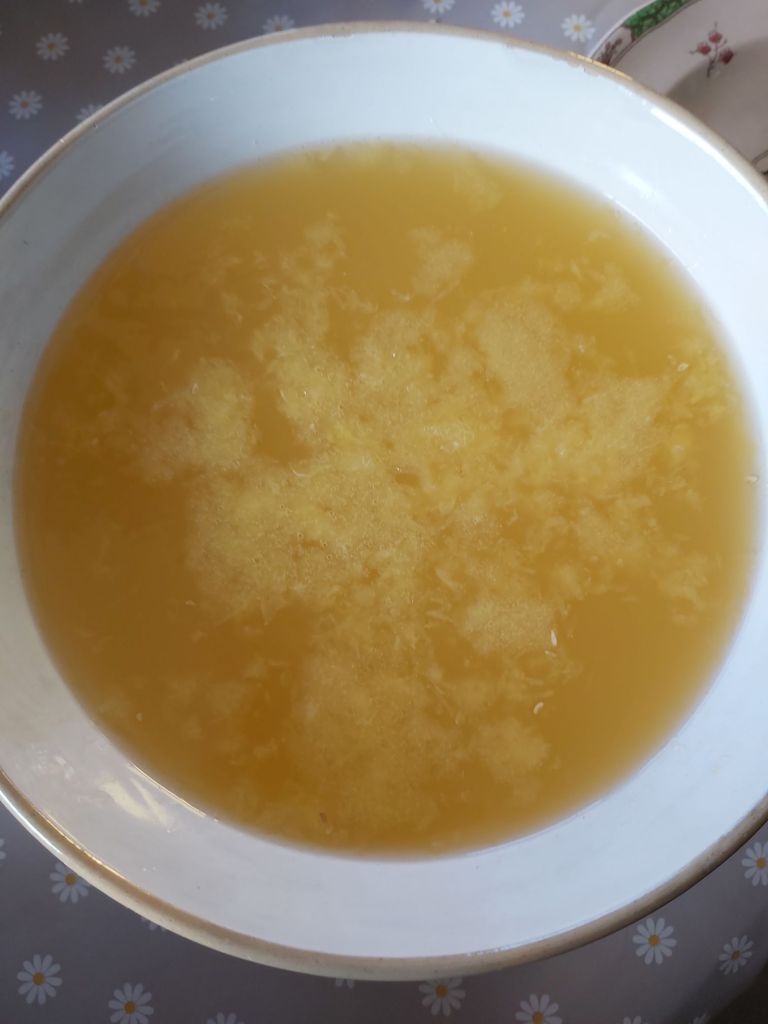
Lots of seeds. Some put these in a muslin bag and add them to the boil to aid setting but I don’t risk it. Pulpy juice, sharp and sour.
Now chop the half oranges into quarters and place in a preserving pan. Cover with water and – yes, you’ve guessed it – leave to stand overnight. Taste this steeping water in the morning and it will still be bitter – these are not sweet oranges. Replace the water with fresh, covering the fruit. Bring to the boil, then simmer, covered, for about 20 minutes or until the zest yields to the tip of a knife but still has some resistance, but the pulp and pith are quite soft.
Place the quarters on trays and allow to cool and dry off overnight.
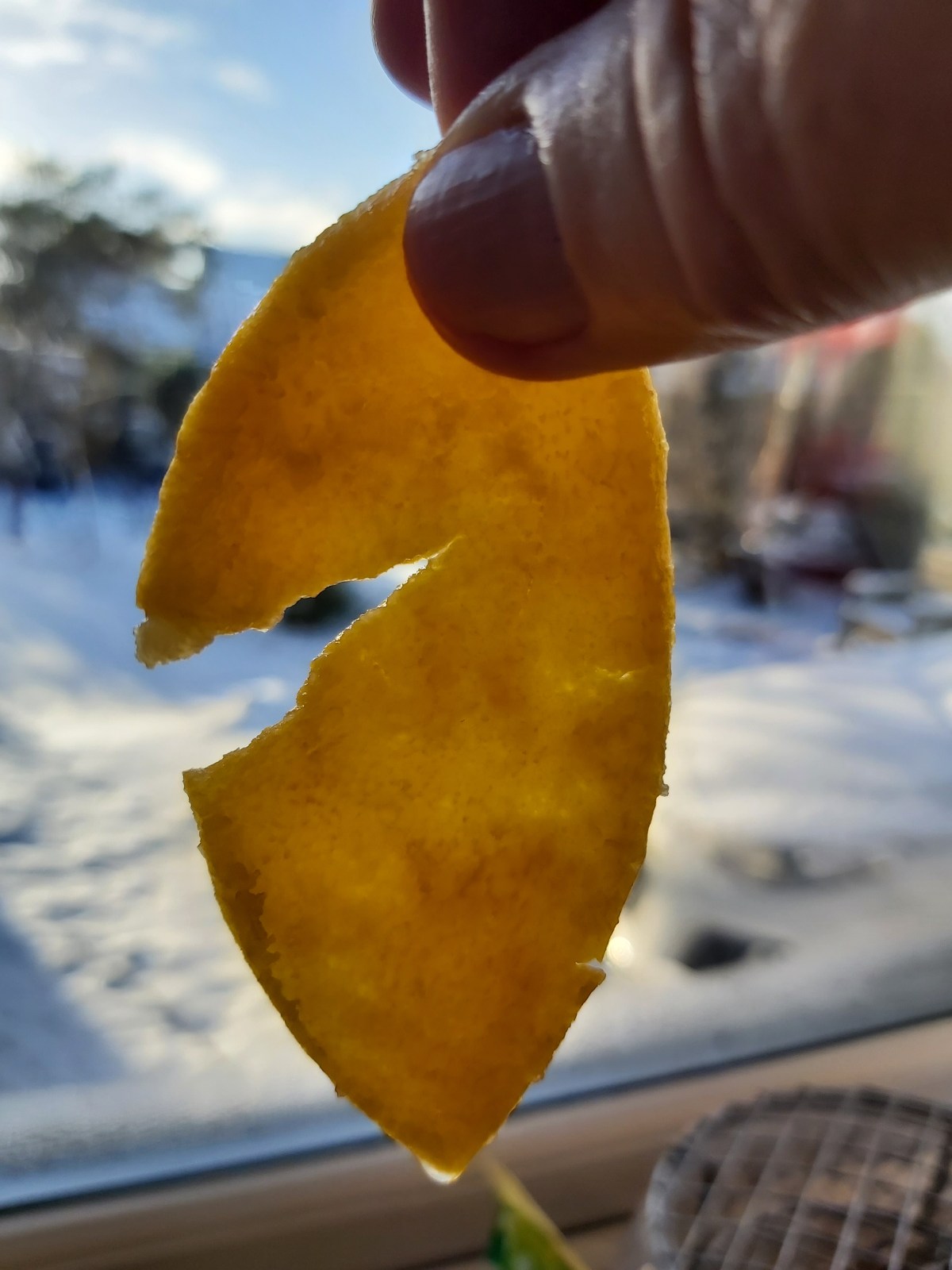
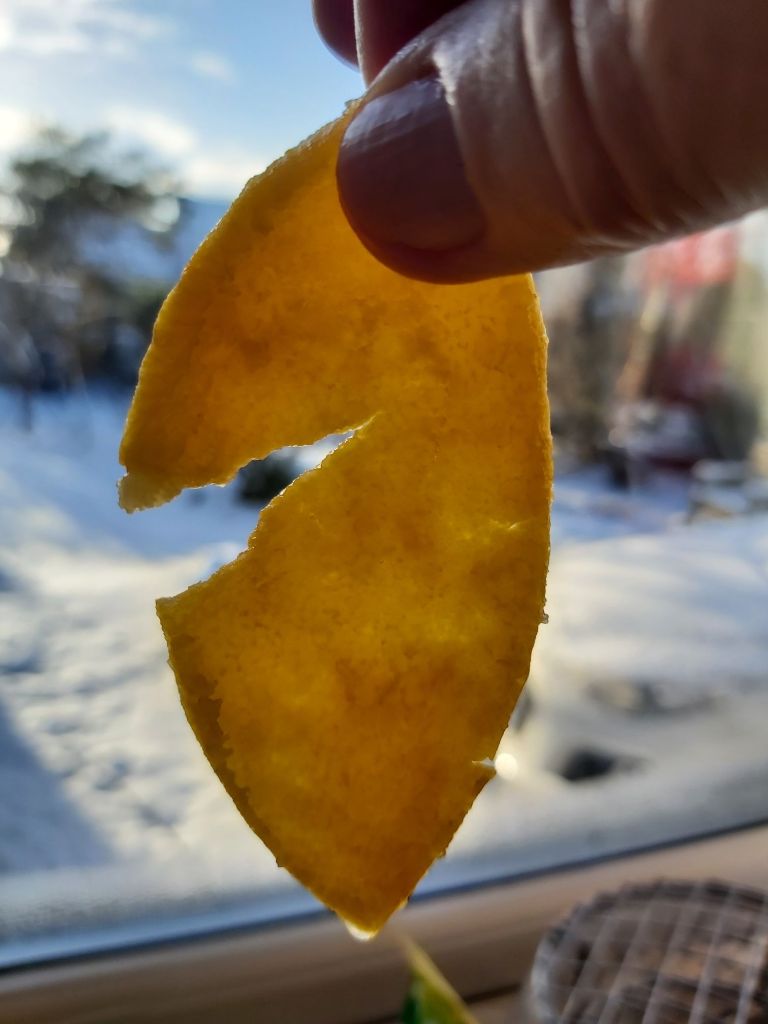
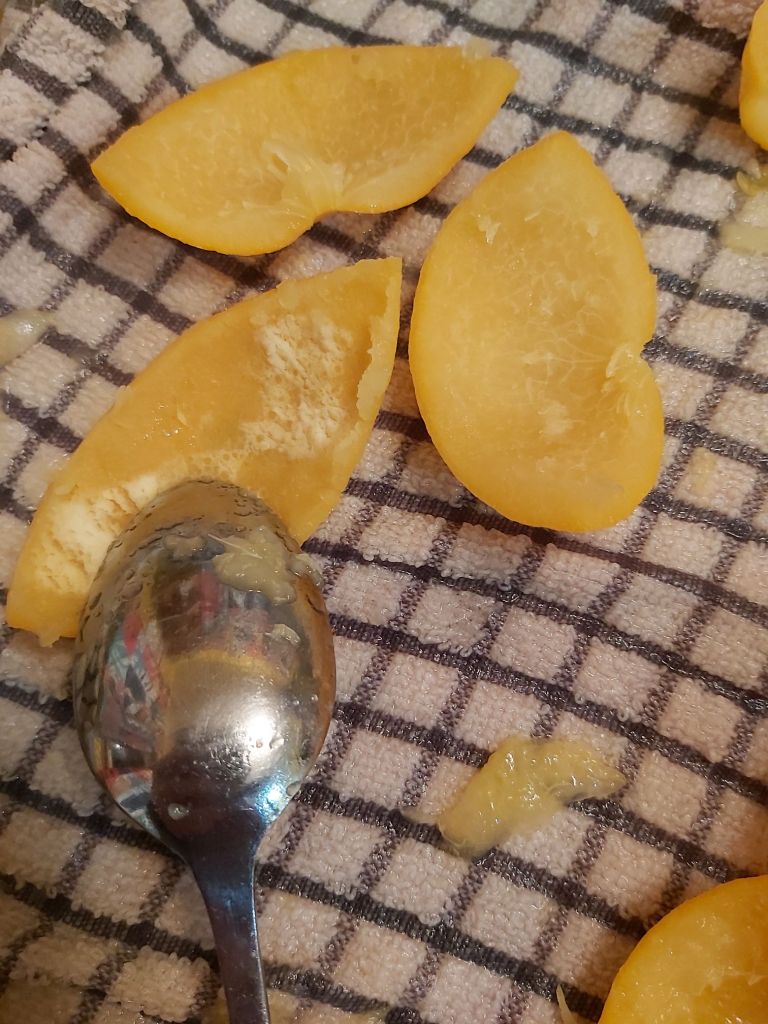
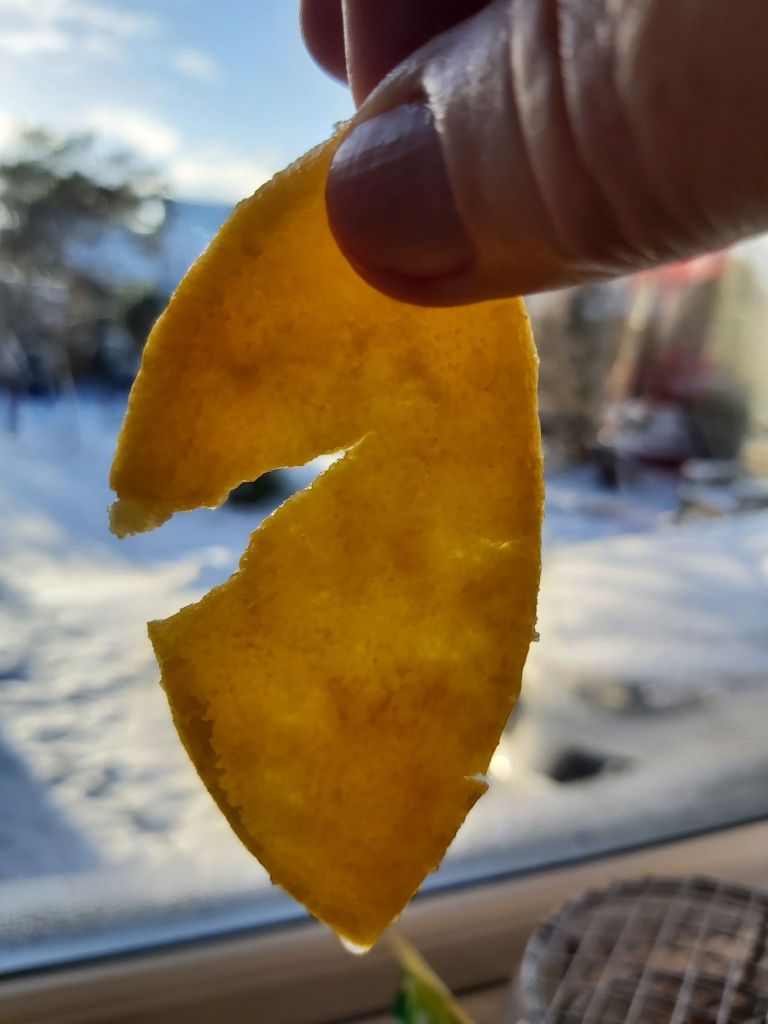
In the morning, scoop out all the pulp and strain it into the bowl of juice, then, with a sharp dessert spoon, scrape away and discard as much of the thick white pith as you can. You should now be able to see daylight through the skins.
Scrape as hard as you can!Daylight…Discarded bitter pith – taste it, it’s awful!
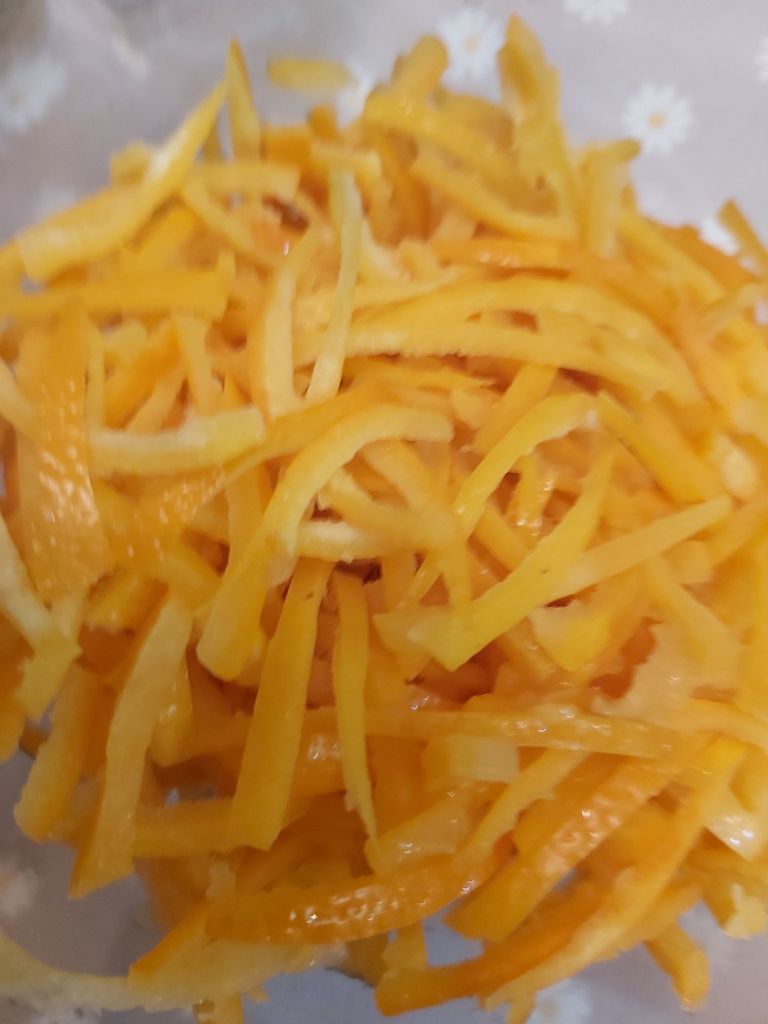
Either with a sharp knife or with a pair of sharp kitchen scissors, cut these translucent zests into thin strips of varying lengths.
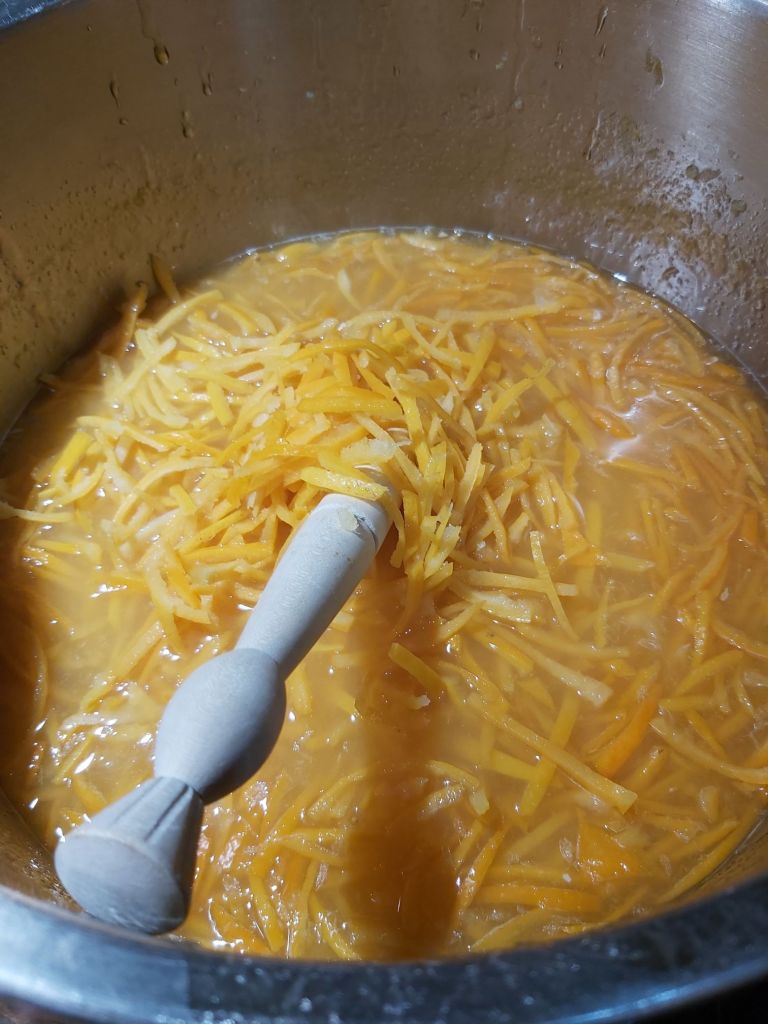
Much larger than lifesize!
I use a big measuring jug for the next bit. For every jug of shredded zest and every jug of juice, add a jugful of sugar to the preserving pan. Set aside to allow the sugar to dissolve, in theory overnight, but this particular corner I cut. Jane’s sugar would have been grated from a sugarloaf cone, so might have taken all night to break down. The main thing is to keep stirring it and not start to heat it until all the sugar has dissolved into the juice.
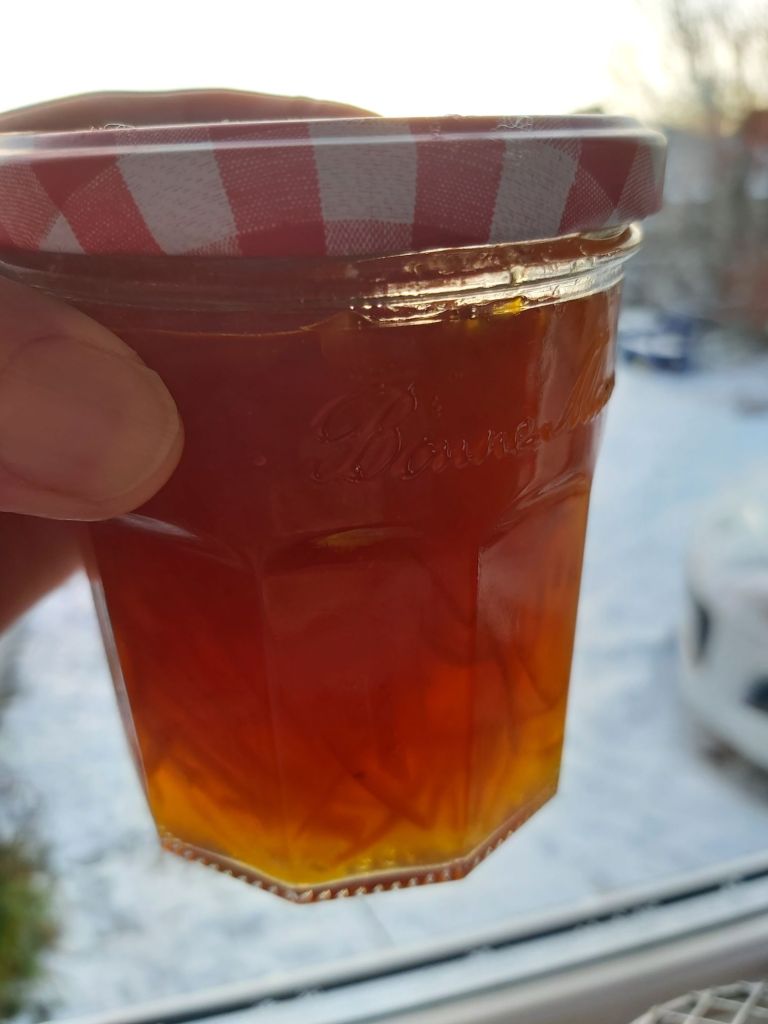
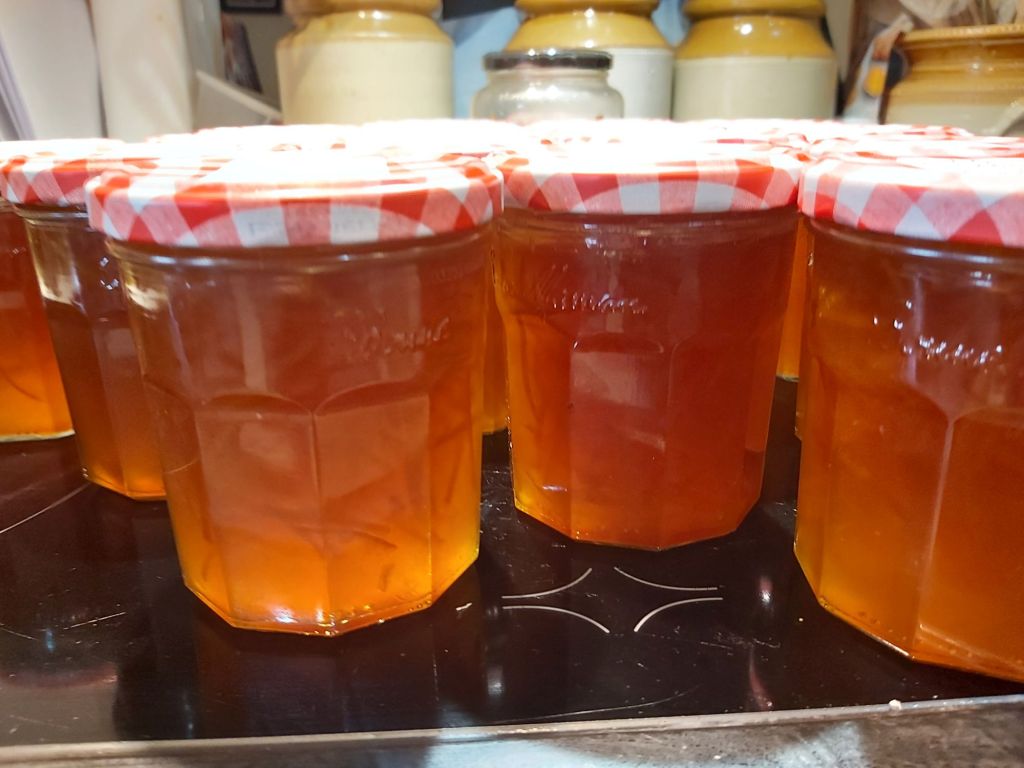
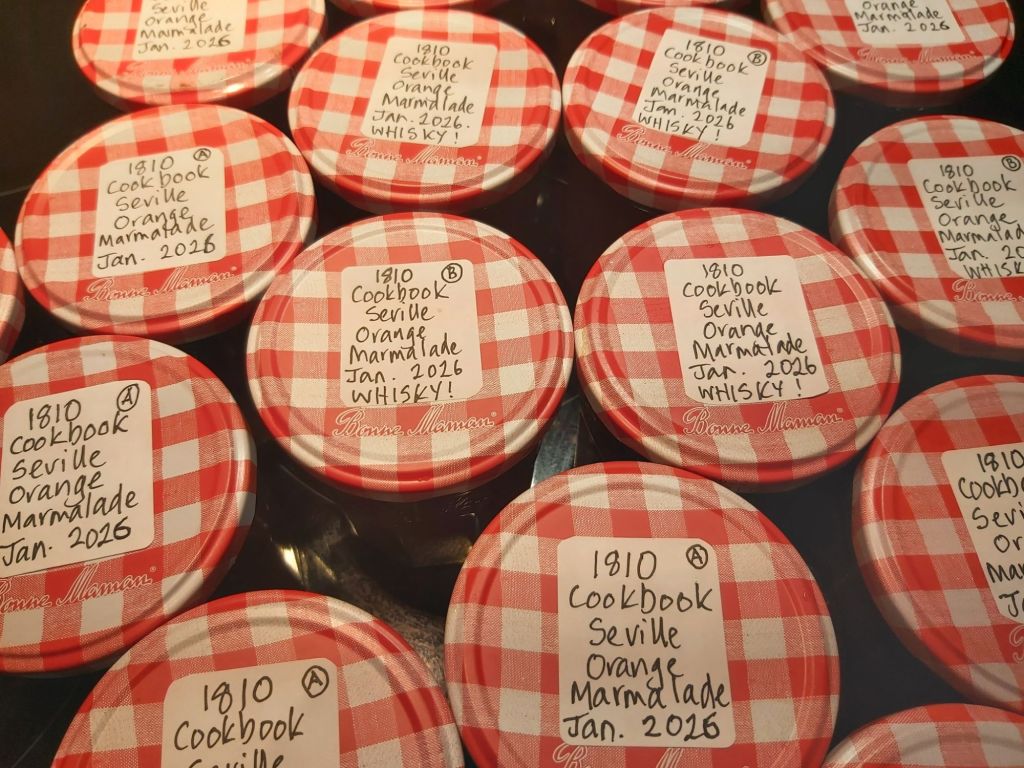
Now prepare your pots and lids. I like to use the commercial vacuum method, not faff around with circles of cellophane and elastic bands (sorry SWRI!), so good quality recycled jars like Bonne Maman are ideal. I made marmalade with 5kg of oranges this year and used 20 jars as shown. I run them through the dishwasher first, then pop them on a big baking tray with sides, along with my ladle and jam funnel, in the oven at 100 degrees.
Back to your jam pan. Mine is a giant stainless steel pressure cooker base. You want a nice heavy bottom! I inch up the heat bit by bit until, after an hour, it comes to a rolling boil on maximum heat. Heat too rapidly and it will burn. Don’t be tempted to stick a finger in it to taste it, either, you’ll end up in Casualty!
At this stage the marmalade will be quite pale in colour and all the zest will be floating on top. Stir mixture frequently – I use a porridge spurtle.
So hot it is difficult to get true colour because of steam!
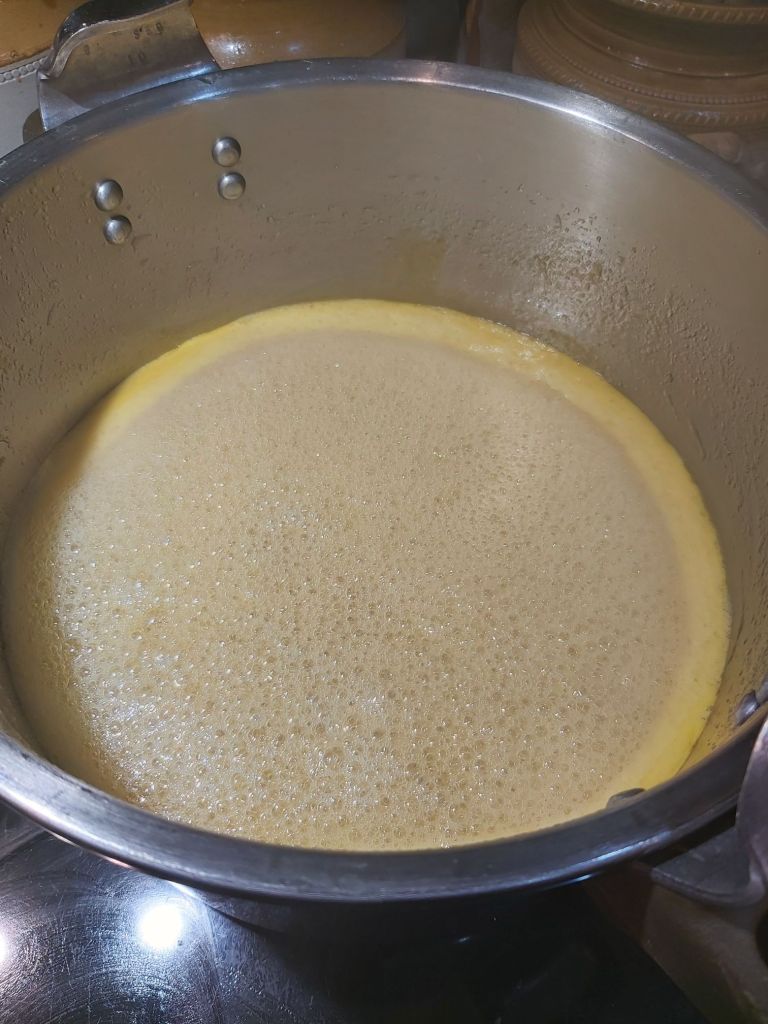
Once a circle of yellow froth forms after about 20 minutes, skim off these impurities which will spoil the clarity of your marmalade (a good time to test the flavour, skimmings are delicious, impure or not!). Jane’s sugar probably had a few more impurities than Tate & Lyle does today.
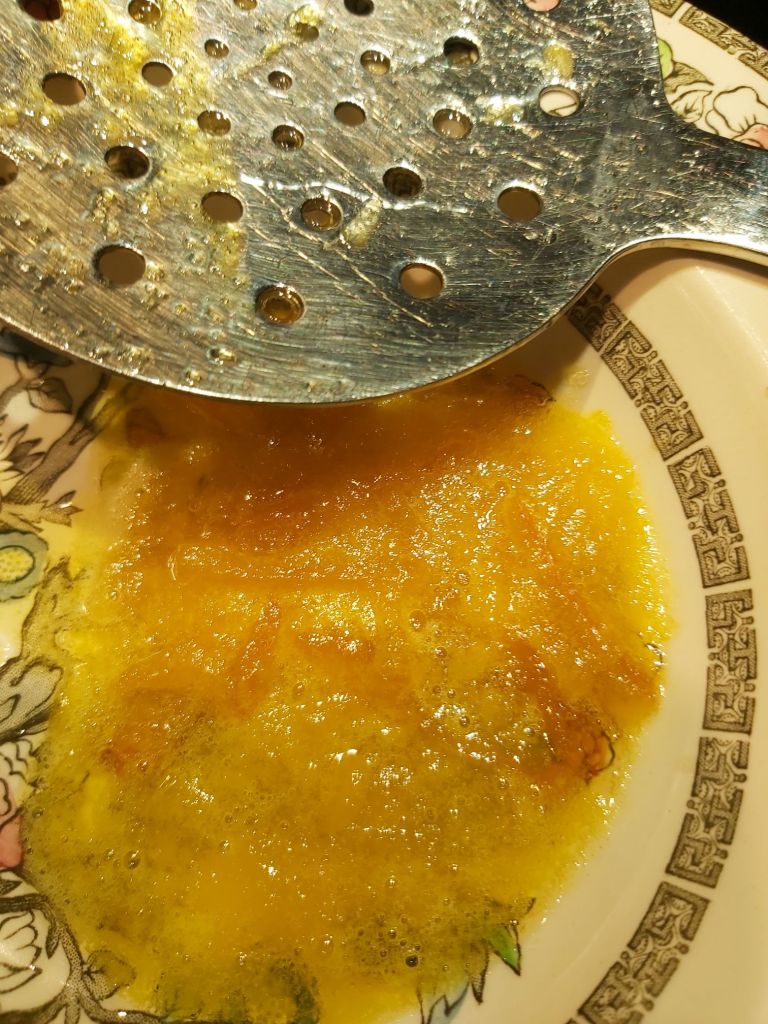
True colour
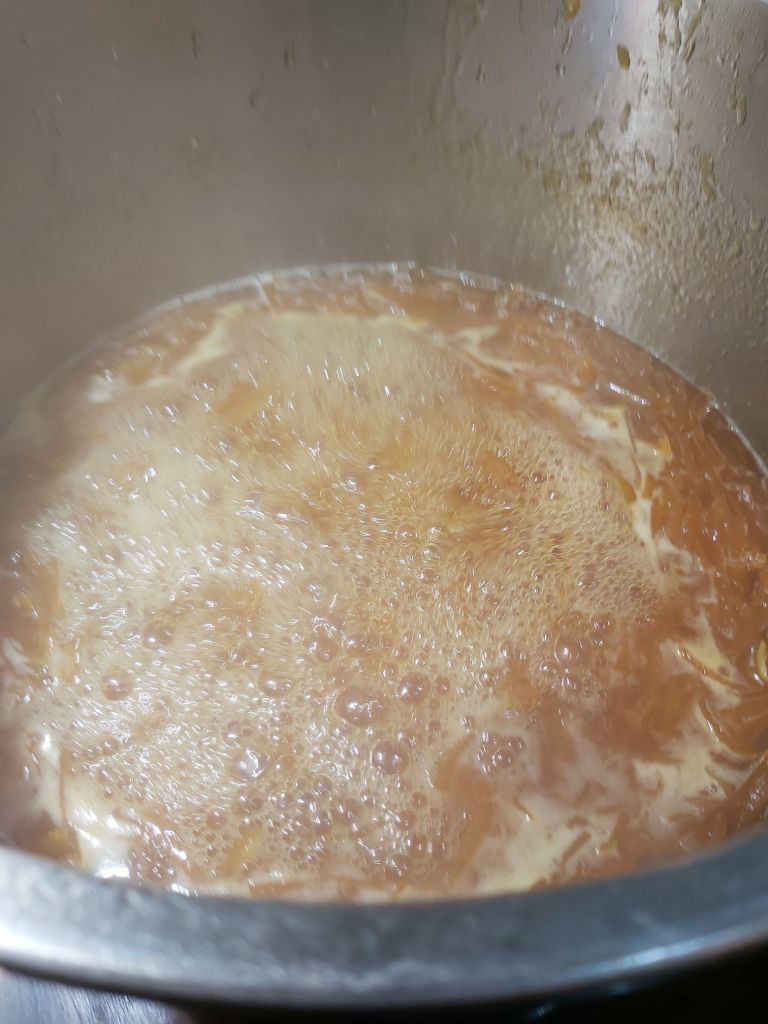
After a final 20 minutes or so, watch for three magical signs: the liquid reduces and starts to set on the sides of the pan, the colour and sound of the mixture deepens, and the bubbles become more glossy. When a little of the liquid starts to wrinkle when dripped on to a cold plate and tilted, pull your pan off the heat right away.
Again, true colour darker – too steamy!
Wearing washable or rubber gloves, ladle the hot marmalade into the hot jars. I added a nip of Scotch to part of my batch then poured the hot marmalade on to it. You can also add treacle and cut the skins more chunkily to make Dundee style marmalade.
Place lid on jar only loosely. Once all jars are filled and lidded, put tray of jars back in the oven for 15 minutes.
All that soaking makes sure the zest is distributed evenly
Tighten all the lids thoroughly and wipe any stickiness from jars. Allow to cool overnight – you’ll hear the pleasing ‘pop’ of the lids as the protective vacuum takes hold – then label and store. Will keep for a couple of years – if it gets the chance!
Guess who managed to label them all as Jan 2025 🤣
Thanks for reading this blog post. There are a few other recipes on here if you scroll back. Happy to answer queries and I would love to see pix of successful makes! I am on Threads as @veewalkerwrites and Facebook as Vee Walker.
You can still buy my novel Major Tom’s War (a WWI love and adventure story based on real people, including descendants of Jane and Edward W-I) and events in paperback or ereader from http://www.kashihouse.com.
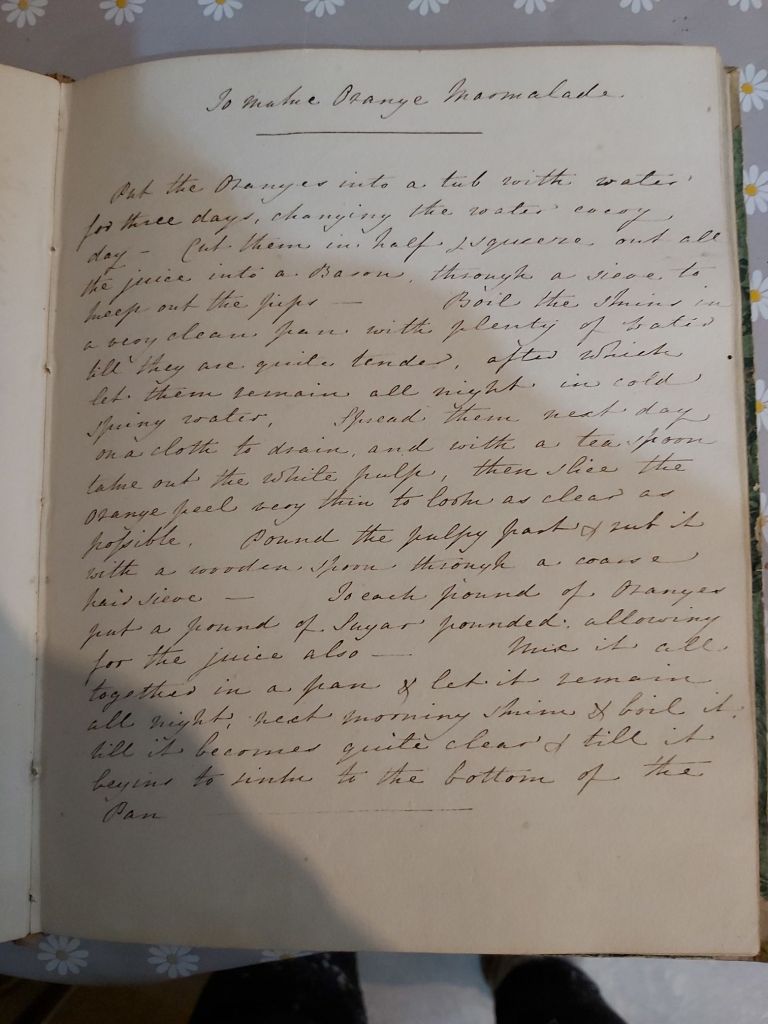
Here’s Jane W-I’s (cook’s, probably) original recipe, by the way 👇.
I have only very occasionally ventured into writing poetry myself, usually as interpretive commissions for clients. I am more of the why-use-one-word-where-297-will-do persuasion. I do admire good poets and poetry, though, and have a sneaking adoration for the really epic stuff; the adventurous Aeneid, the transformations of Ovid’s Metamorphoses, the gore of The Lays of Ancient Rome, the glorious Highland fakery of Ossian.
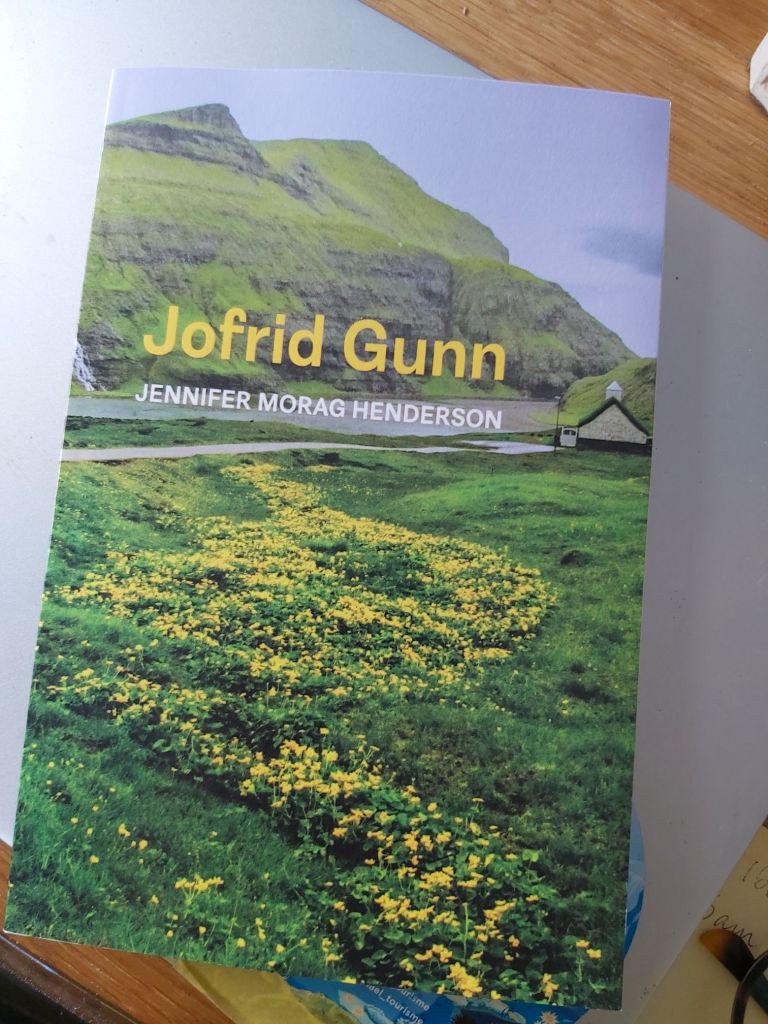
I have long enjoyed Jennifer Morag Henderson’s historical and biographical work – Daughters of the North is real edge-of-the-seat stuff – but Jofrid Gunn is a step miles out of her admirable comfort zone. I find this extraordinary book defies any normal description. It is, but is not just, a collection of poems. It is a biography of sorts. There is a direction of travel of sorts – Faroes to Highlands, Highlands to Faroes, both time and place shifting with the tides and centuries. Yes, the story of Jofrid is related through this journeying, to a degree – if not as literally as I had anticipated, but this was no disappointment. Instead, the reader experiences a kind of multi-sensory immersion in carefully patterned words. When I had finished the book and its copious notes, I felt salt-blasted, wind-blown, refreshed, and deeply sorry that the experience was over.
Jennifer has been learning Faroese to give her work increased authenticity. Has that mammoth effort paid off? Without question, yes.
This style of prose poetry is less about rhythm than the shapes and patterns of words and phrases within the text. Again, the closest comparison I can draw is with epic Celtic poetry – the Taìn bò Cùlaìgne, the Mabinogion and the brilliant imitation of these in Macpherson’s Ossian.
The patterns within Jennifer’s poetry rouse and enchant and beguile in equal measure, and soon I found myself enjoying them far too much to bother myself unduly about any analysis of their (huge variety of) themes and threads and structures. Whether Jennifer is writing as or about Jofrid or as or about herself, I was not always certain, and for me, this is a boundary pleasingly blurred.
Hard to pick out favourites. The poignant story of the violin which was played to sound like the wind, one of several prose interludes, I found deeply moving and reread several times.
The Salt and the Coal reminded me of how long the remarkable Jean Gordon had to wait for the right time and place in which to marry her true love in Daughters of the North.
I have had a similar (if less poetic) conversation than Wedding-ring Shawl – advice from a mother-in-law, all about a knitted shawl in wool fine enough to draw through a wedding ring – patterns again: an old family friend, Eva Holmes, used a special frame surrounded by tiny pin-tacks to shape and launder them, and gave me a fine shawl for my firstborn. I had not thought about that for a long time. Good, powerful poetry like this is provocative in its original sense; it calls forth voices from deep within a reader’s heart and head.
Do read this remarkable book, which is so much more than just a debut poetry collection.
This World Book Day, here is a shout-out for the humble short story and the BBC Short Story Awards!
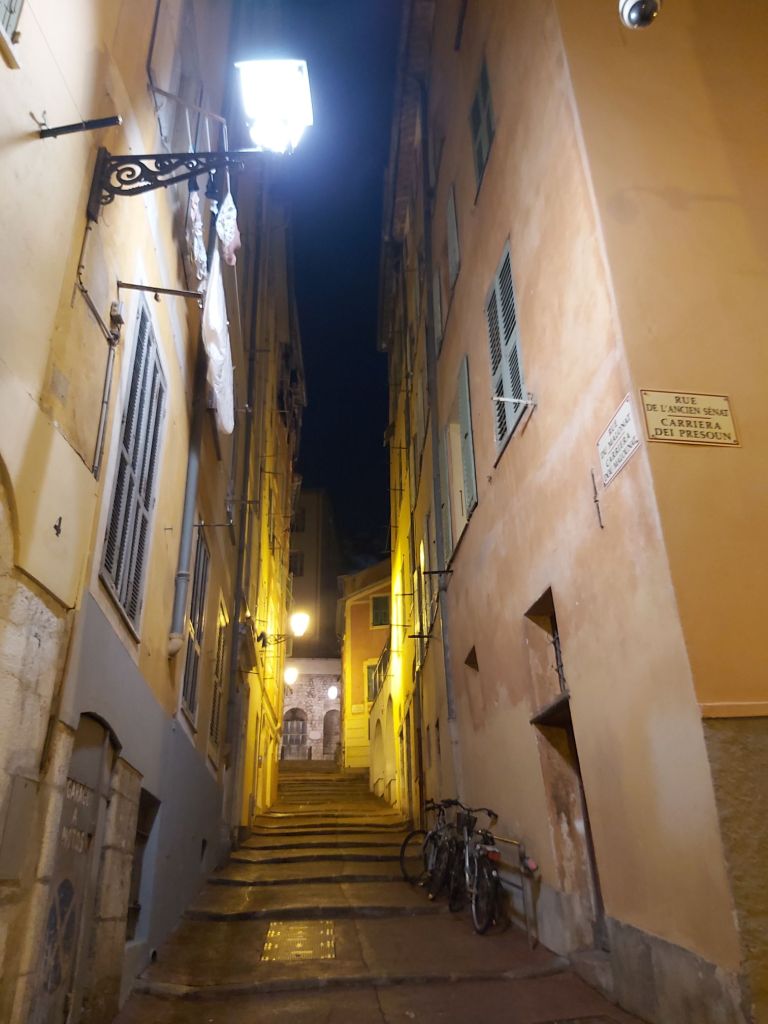
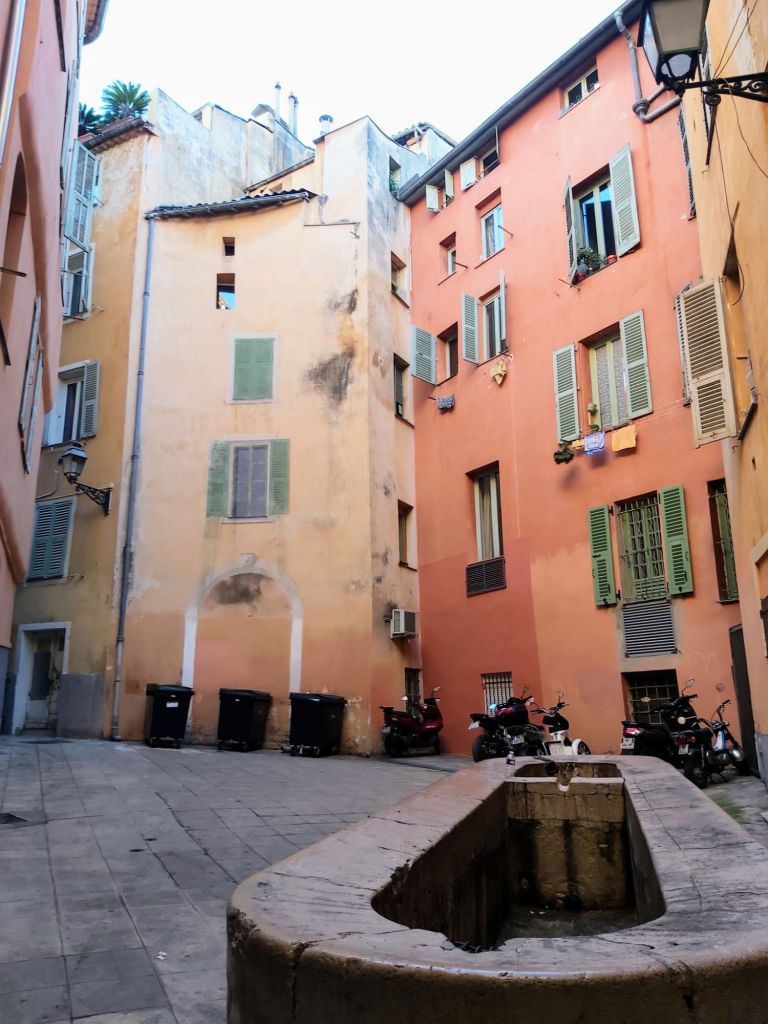
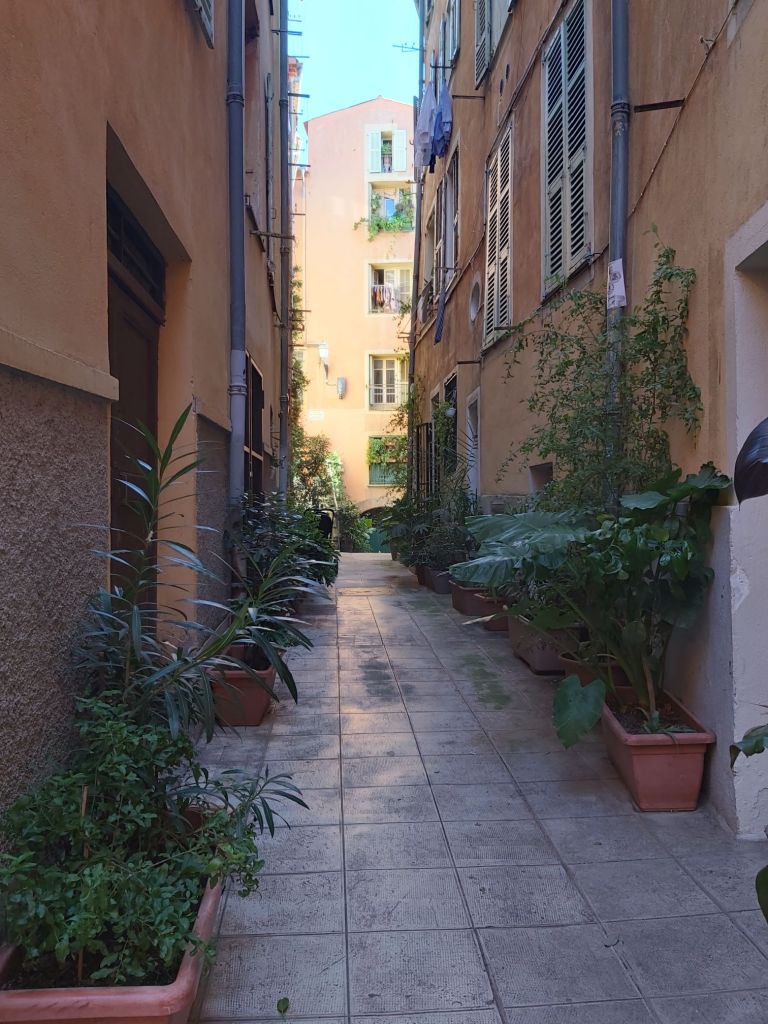
December 2023. My family and I arrive in Nice for our first ever visit. We arrive late and blunder through Old Nice looking for our apartment in darkness. By night its narrow alleys are sinister, and I think what on earth have I done. There is a grim old lavoir, which I can just see contains only a couple of empty beer cans and a pizza box.
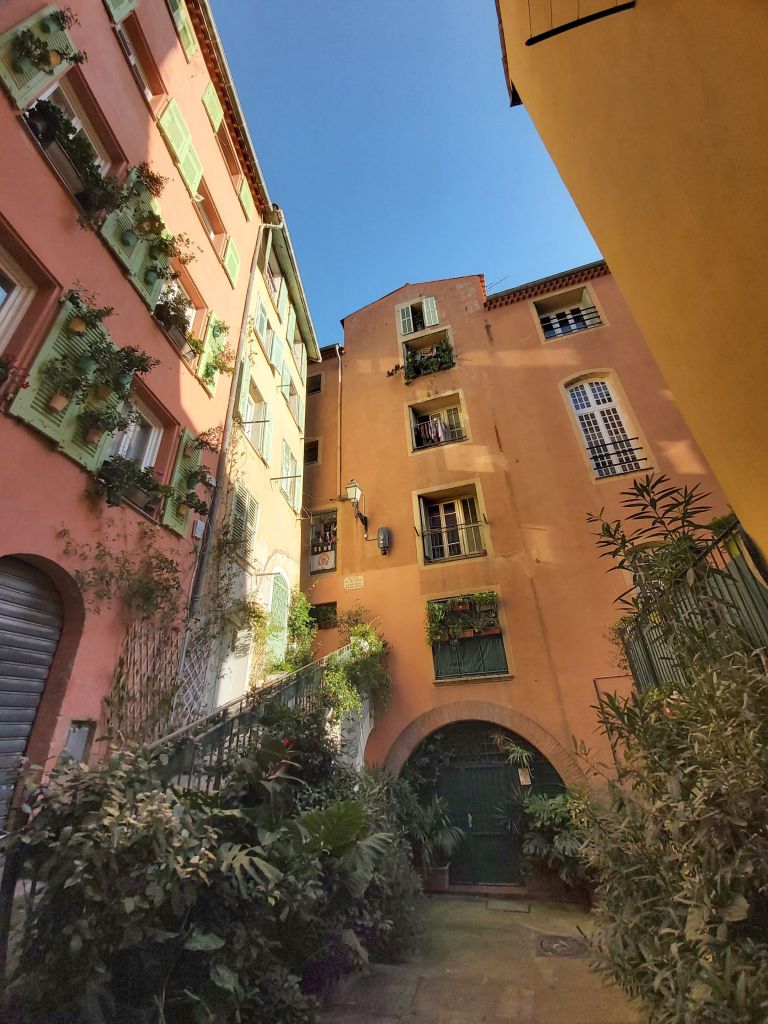
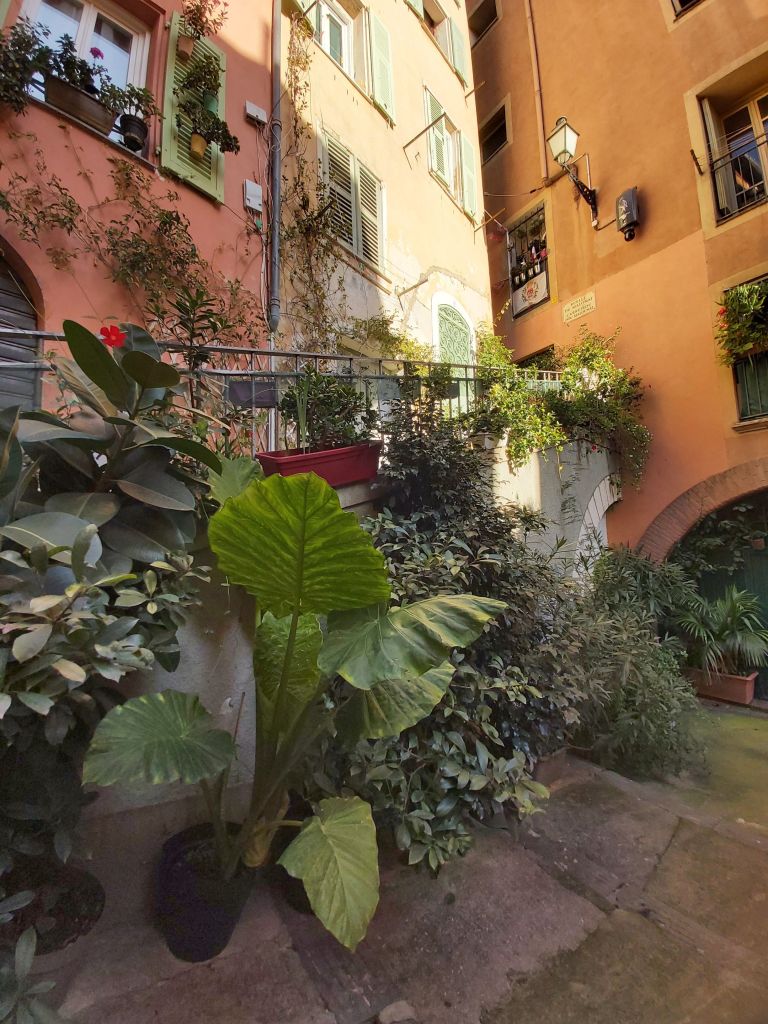
Then we turn a corner and a sliver of moonlight catches the motionless fronds of a vast urban jungle. No 13, our destination, lies within it, and after navigating a flight of ancient and uneven steps, we are soon tucked up in comfortable beds.
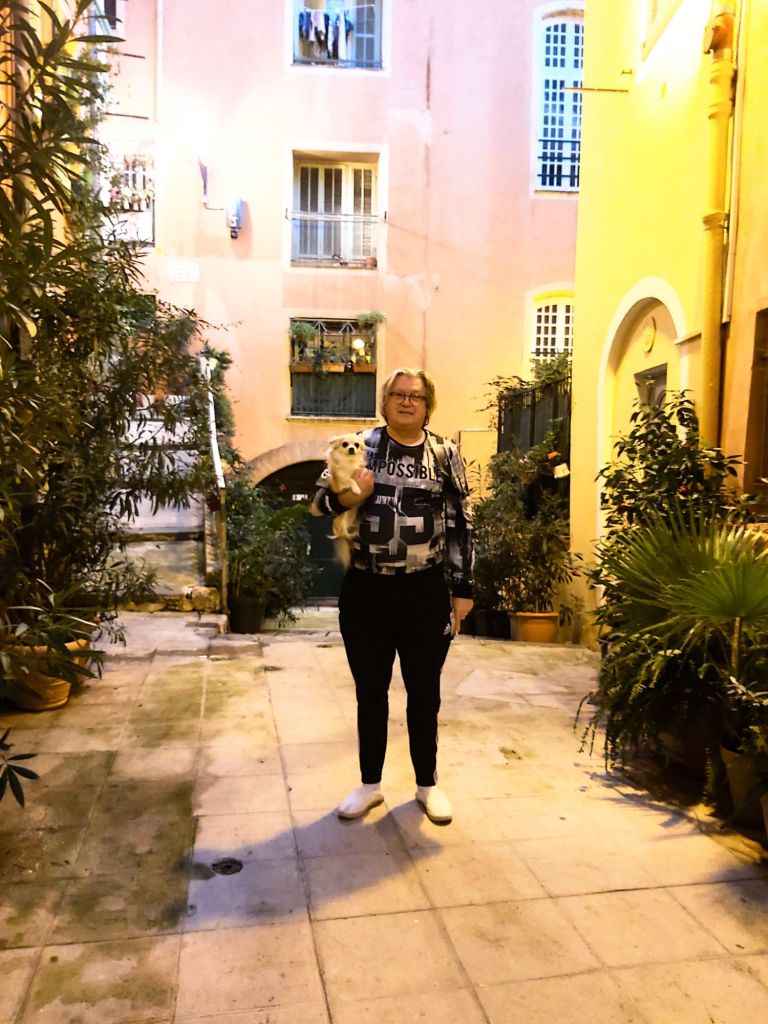
As we explore in the coming days, we realise that this extraordinary forest of green plants is limited to our own little narrow street. The air is sweeter there, and it feels somehow safer. I often see a man out there with a chihuahua at his heels. We say a polite bonjour, but nothing more. To the permanent residents, AirBnB guests feel like phantoms.
At the épicerie they tell me that this man is trying, solo, to displace the local drug dealers with green plants. And it is working. From that point onwards, the story takes root in my subconscious.
I return home and should be editing my unwieldy novel but the green shoots of NiceDog have taken invasive root in my subconscious. What if the chihuahua told his master’s story? What if a young dealer were in trouble?
I write the whole story out in a couple of nights but then polish it almost daily for months, treating it as an exercise in paring back unnecessary adjectives and adverbs. I add a little love interest as a twist. I also decide to fill the old stone lavoir near the (now fictionalised) alley with green plants as part of the dénouement.
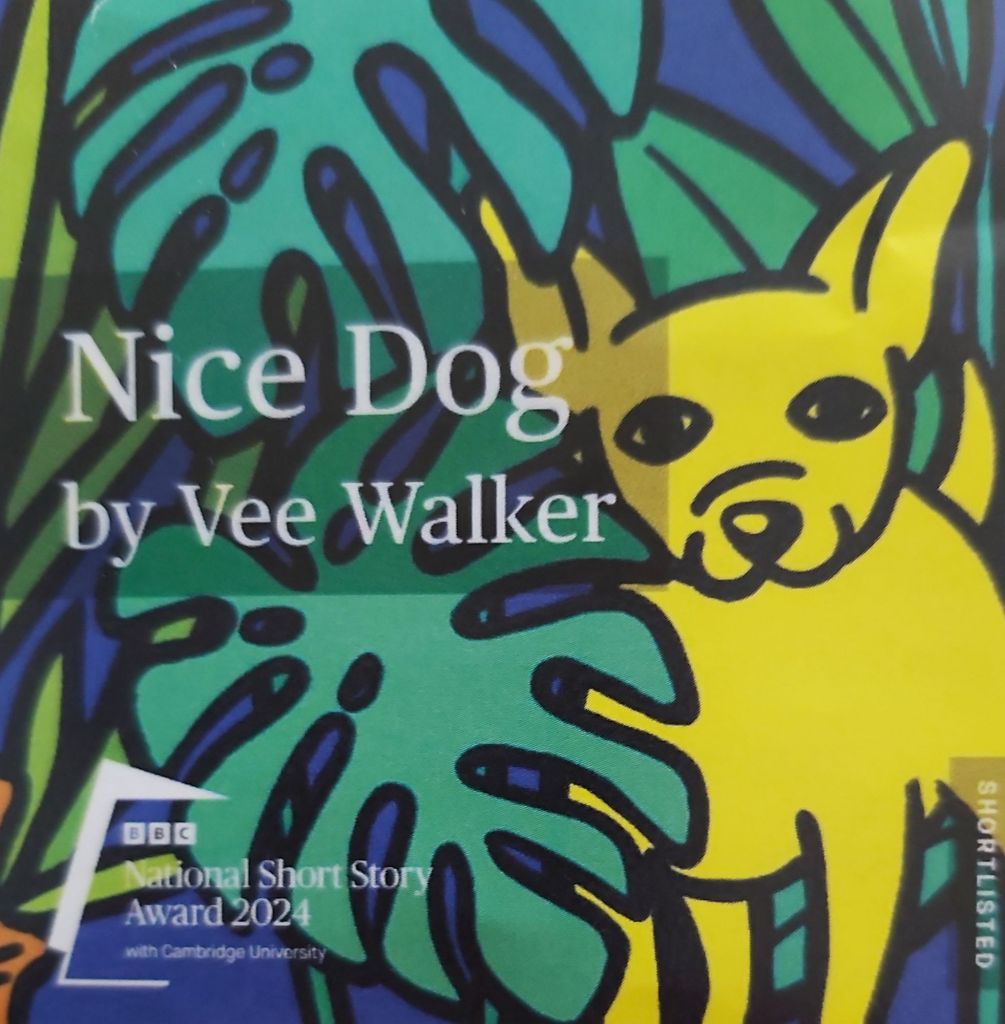
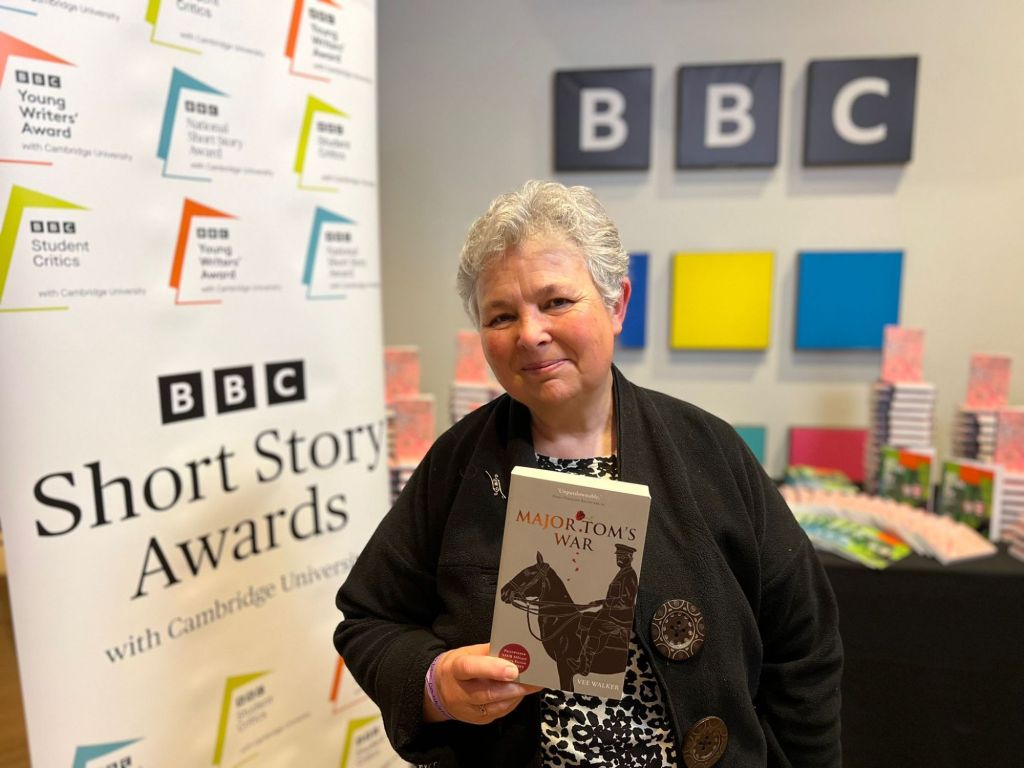
Shortlistees of the BBC Short Story competition are generally established novelists with other day jobs to support their writing habit: one has to have published to enter at all (a filter for both quality and quantity perhaps). I submit mine on a whim off the back of my one commercially-published novel, Major Tom’s War. 1000 writers enter, but just five were selected for prizes, broadcast and publication, among them Nice Dog.
Hearing the brilliantly-abridged version of Nice Dog, read by the actor Paterson Joseph, and broadcast on BBC Sounds (where you can still hear it, see listing at end of blog) has been a high point of my life.
This competition was my first foray into an alien land of BBC non-disclosure agreements. Scared to blot my copybook, I told almost no-one. I was then interviewed by Kirsty Wark, among others. Mostly the people who interviewed me or discussed the story picked up on a small, witty neologism in Nice Dog, the messagerie-pisse, a non-verbal means of canine communication so convincing that no-one wanted to believe it came from my imagination. No-one at all asked me about its more serious underlying theme, cannabis legalisation.
That’s what you get for making your narrator a chihuahua 😊!
I then travelled to London from the Highlands (over 600 miles) for the live awards evening on BBC Radio 4’s Front Row,
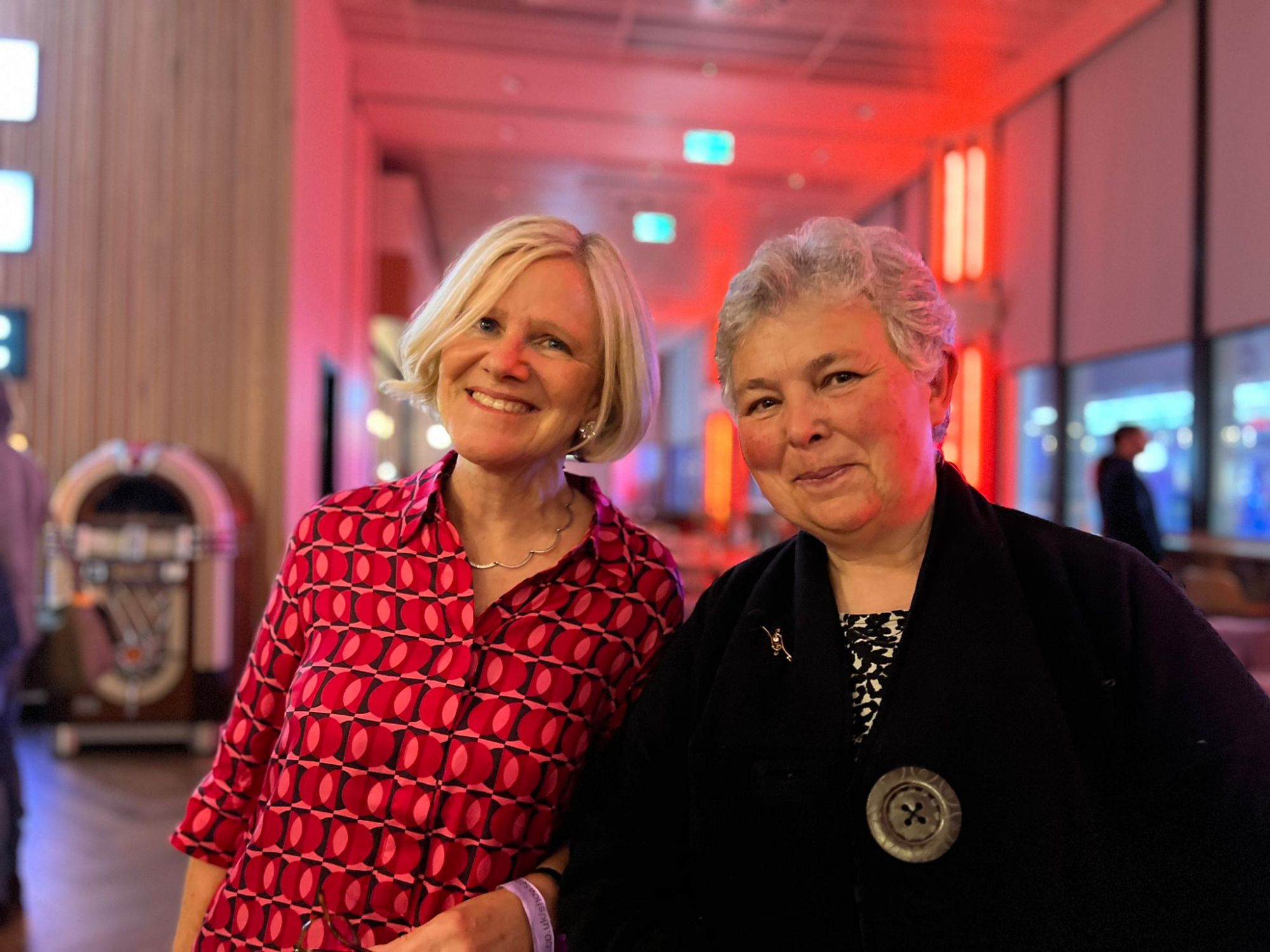
Exciting to meet famous names of course, but a bit of an ordeal too. In a huge room where people were constantly recognising and greeting each other by name, no-one really knew or cared who I was – no name tag, no well-connected agent to introduce me and no introductions from the stage, other than for the overall winner.
The best bit of the whole BBCNSSA experience for me was not the awards bash itself but publication within the beautiful BBC/Comma Press 2024 anthology. Anthologies are curious publishing models. Unless by a single author, contributors do not usually derive royalties from an anthology, instead receiving a fee for participation up front. The Comma Press editorial team were just marvellous, helping me to polish Nice Dog until it gleamed. A beautiful wee book.
The shortlisting has made a big difference to my life as a writer, especially in terms of confidence. About 9 million people listen to BBC Radio 4. This kind of exposure and recognition doesn’t come every day. It has also inspired me to translate Nice Dog into French. I am now in touch with the charming Jean-Jacques Wanner and his exquisite chihuahua Pépette, the original dual inspiration for Papa Rémy and Duby, and they have their copy, too. I should point out however that Jean-Jacques is a great deal better-looking and younger than my fictional Papa Rémy! His green-figured magic in Old Nice continues.
I think Nice Dog could work well as a bande dessinée in France. It’s a story on a journey. Watch this space.
On my last visit to the Old Town in Nice to see Jean-Jacques I was overjoyed to find that the ancient lavoir washing trough is now filled with Jean Jacques’ green plants and camelias, not with beer cans and rubbish as it was on that first visit.
If you get a strong itch to write a short story, then drop everything, if you can, to scratch it. You never know where it might lead…
The other four shortlisted stories for BBC National Short Story of the Year 2024 can be heard here 👇
Ross Raisin, Ghost Kitchen 👇https://www.bbc.co.uk/sounds/play/p0jrst8?partner=uk.co.bbc&origin=share-mobile)
Margaret and Vee on the ‘Titanic’ staircase at the Royal Highland Hotel, Inverness
If writing a novel can often feel like a long and winding road, editing a completed draft manuscript can sometimes feel more like climbing a never-ending flight of stairs. Fortunately my friend and fellow Highland author Margaret Kirk and I are here to help. We share a guilty pleasure – editing the work of others.
For the last year or so we have been considering starting our own joint venture to support Highland writers with locally-based editorial services and now we have taken the plunge.
Margaret is an award-winning short story and crime writer who specialises in Highland Noir. Both of us already have professional (and voluntary) experience of editing work within our own community and beyond. Our skills complement each other well: Margaret enjoys the nitty-gritty of line by line proofing, for example, while I prefer the face-to-face contact of writer mentoring.
We launched CannyEdit at the HighlandLIT gathering on Tuesday 17th October and we have already had a few enquiries as a result.
All our contract agreements begin with a free discussion of the client’s needs, which is entirely without obligation. If you would like more information, why not email us at info(at)cannyedit(dot)scot?