MAJOR TOM’S WAR APRIL 2019 BOOK TOUR BLOG #1
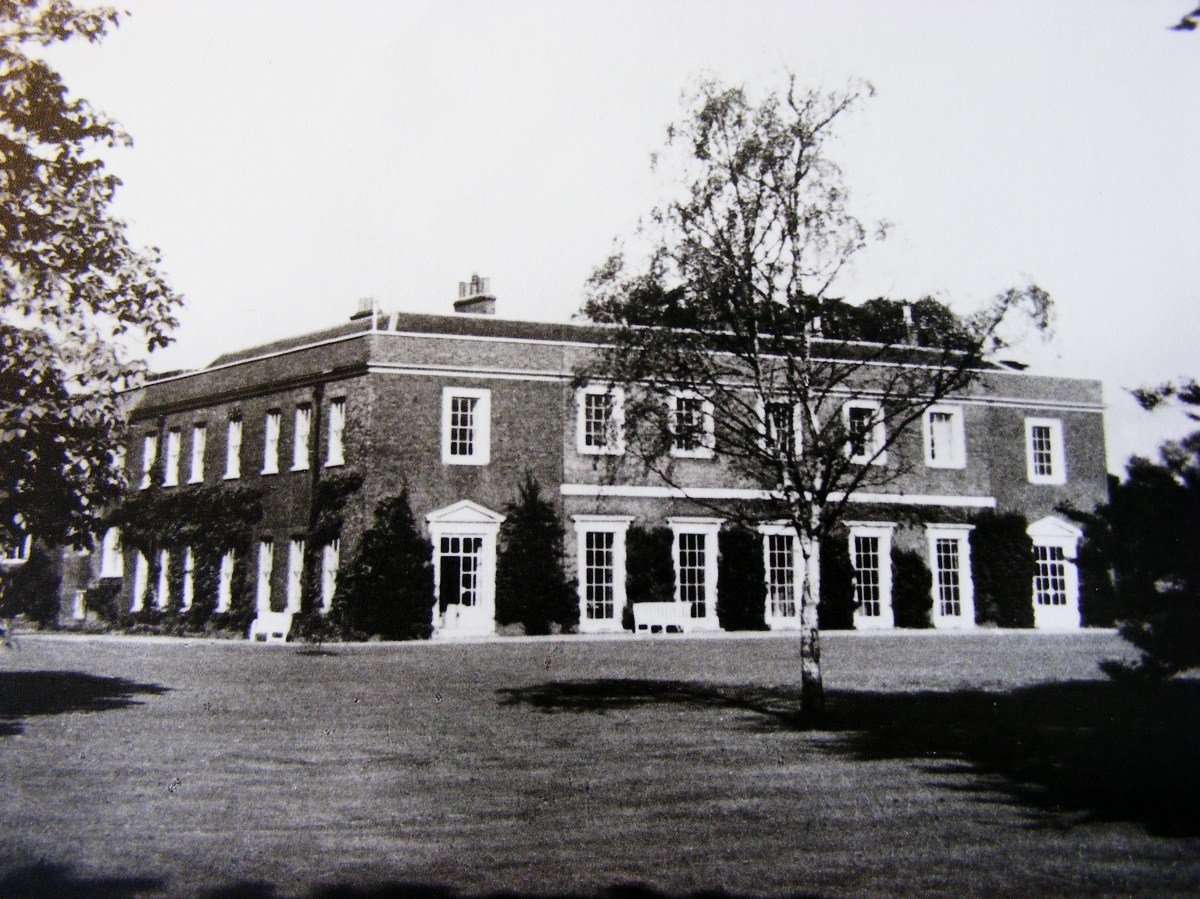
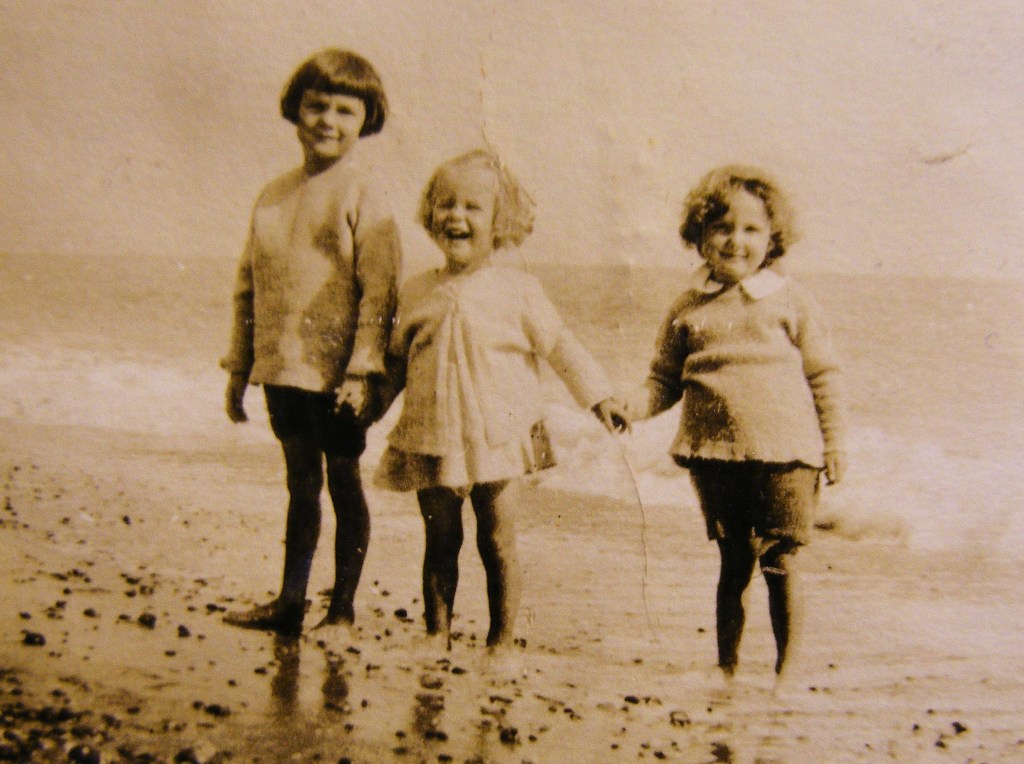
Genealogists like myself are often the youngest of their generation. We have grown up looking backwards up the skirts of our elders, so to speak! It was therefore eerie for me this April to visit so many places my family has lived in before (many of which feature in my fact-dusted-with-fiction novel, Major Tom’s War). I found so many of them strangely familiar. In this three-part blog we will be visiting (1) Fulham Palace and the Cavalry and Guards Club in London, (2) Hartlebury Castle, Bewdley, Hagley Hall and Ribbesford House in Worcestershire and then (3) the little town of Ross-on-Wye in Herefordshire and the village of Bridstow nearby.
This is part one.
Dear old Fulham Palace…
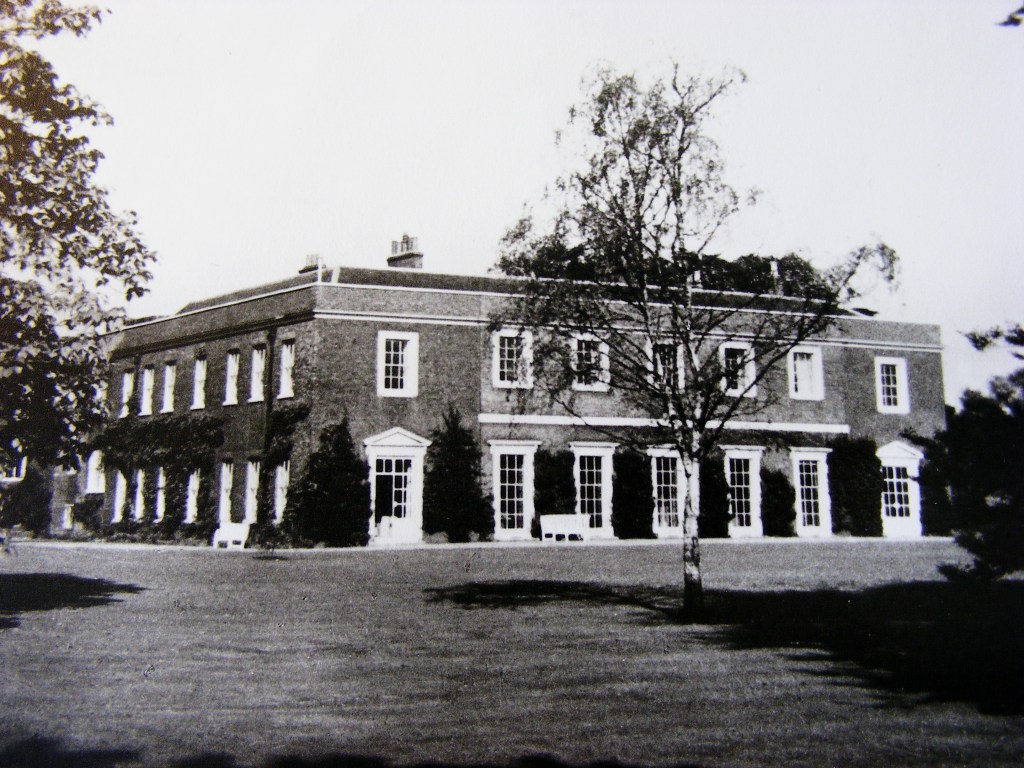
Was this simply a case of an empathetic nature and an over-active imagination? Or something stranger, some kind of genetic memory? I am still uncertain myself how it was that unfamiliar places could possibly feel so much like home on my book tour this April. See what you think!
My publisher Kashi House is based in London and I needed to have a meeting with them and with the book’s distributor, Allison and Busby. I thought ‘why not make the most of being south’ (I live in the Scottish Highlands) and the book tour expanded from there.
Stop One was at Fulham Palace of ‘dear old Fulham’ as referred to by my mother’s generation (in fact the phrase ‘dear old’ had to be excised from all over the text of Major Tom’s War by my editor), home during his Bishopric of my 2 x great uncle Arthur Foley Winnington-Ingram, younger brother of Edward, Evie’s father, who features in the book. Edward was the Arch-Deacon of Worcester but Arthur trumped this by becoming Bishop of London for almost 40 years. It is a comfortable sprawling Tudor building with Georgian and other additions, currently undergoing a Heritage Lottery funded restoration.
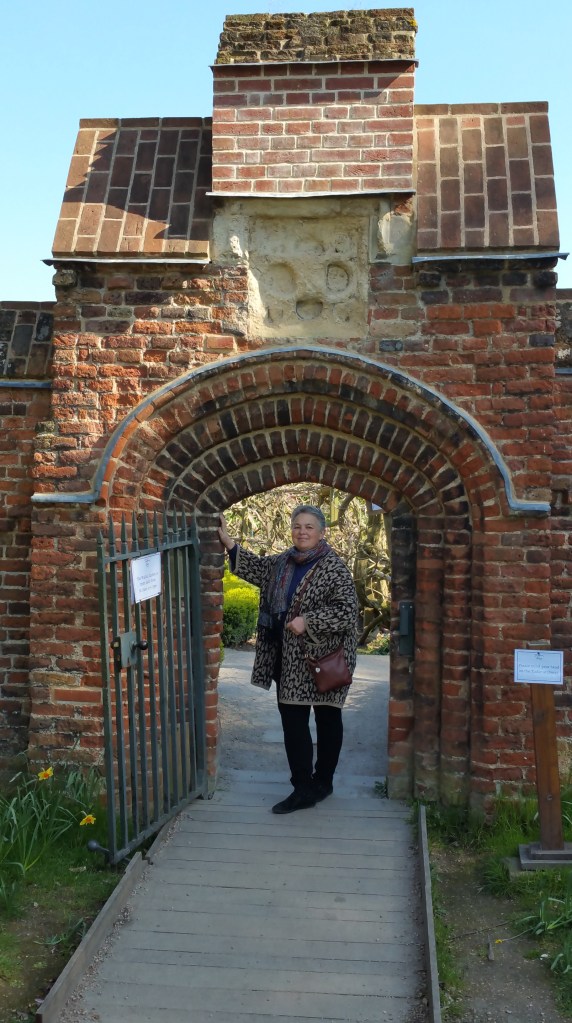
I was invited there by Kate Groenhelm (thanks again Kate!) to do a talk as a fundraising event for the Friends of Fulham Palace who have tremendous drive and vision. I had been there before fairly recently but even on that visit it still felt like coming home, ducking under the warm arched brick in the sunlight and into the courtyard where once a fountain would have played (in fact I missed the sound of the water – something was missing). It was peculiarly lovely to walk though into the walled garden, too, and to see beehives with new swarms, and blossom slathering the fruit trees.
I always carefully tailor my talks to their venue and audience, so integrating ‘dear old (sic) Uncle Arthur Bishop’ into the narrative was fascinating. I learned a lot myself. He had done great work as Bishop of Stepney but was a controversial Bishop of London – terrific at sports, achingly good-looking with a real chiselled jaw, and he knew it, consciously posing for the camera – but considered a gullible and lightweight establishment sycophant by some of his crueller contemporaries. He gave a particularly hideous sermon in 1915 which exhorted young men to join up and kill as many Germans as they could in order to save civilisation as they knew it. He must have been responsible for hundreds if not thousands of young Londoners becoming cannon-fodder. Hard to imagine him being nicknamed
‘Chuckles’ in his boyhood.
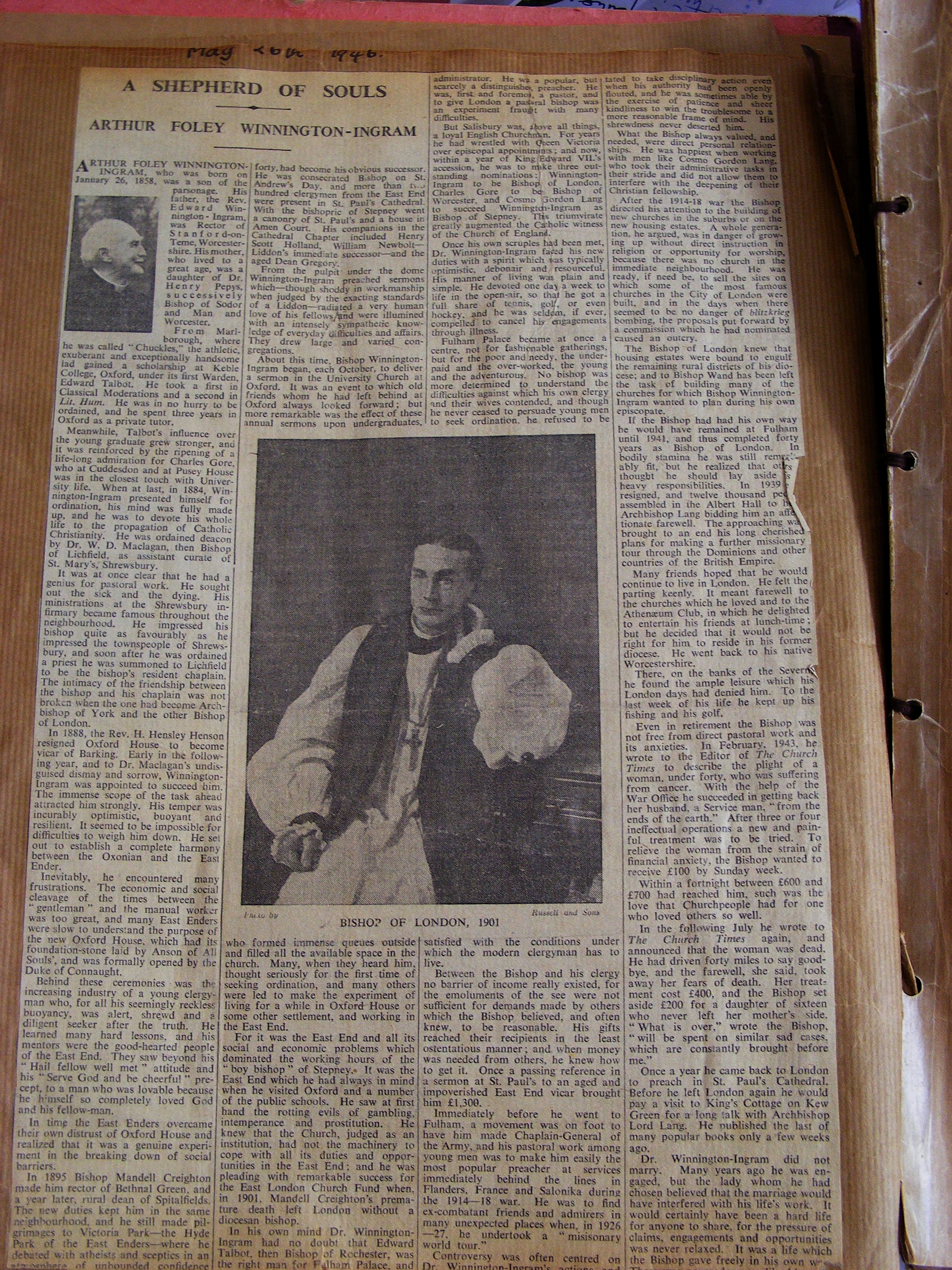
And yet, and yet. Hindsight is such an easy position to hold now. We know it as the 1914 – 1918 war. All they knew then was that it had begun in 1914 and had not ended at Christmas as they had believed it would. How must that have felt? Appalling postcards were arriving at home from the front showing cathedrals in ruins. Arthur must have thought that St Pauls could be next if the spread of Germany was not stopped. We can judge, but we were not there then.
The blood-curdling warmonger, Bishop Arthur, was also a deeply kind man and priest. He was unmarried (the story goes that he was once engaged, but she decided he was already wedded to the church!) but devoted to his young nieces and nephews and great-nieces and great-nephews and in the habit of taking in various odd and unsuitable waifs and strays to live in the vast palace, which also triggered criticism. My aunt and mother when tiny endured rather than enjoyed visits and got locked into Bishop Bonner’s bathroom. No-one heard their cries (the stuff of gothic horror) so my aunt courageously flung herself out of the window and into the rhododendrons beneath. My snivelling mother heard her wail off into the distance to get help. They were of course roundly scolded for Making a Fuss.
Many of those present mentioned the tremendous children’s parties he held at Fulham Palace – how we would love to find a photograph of one!
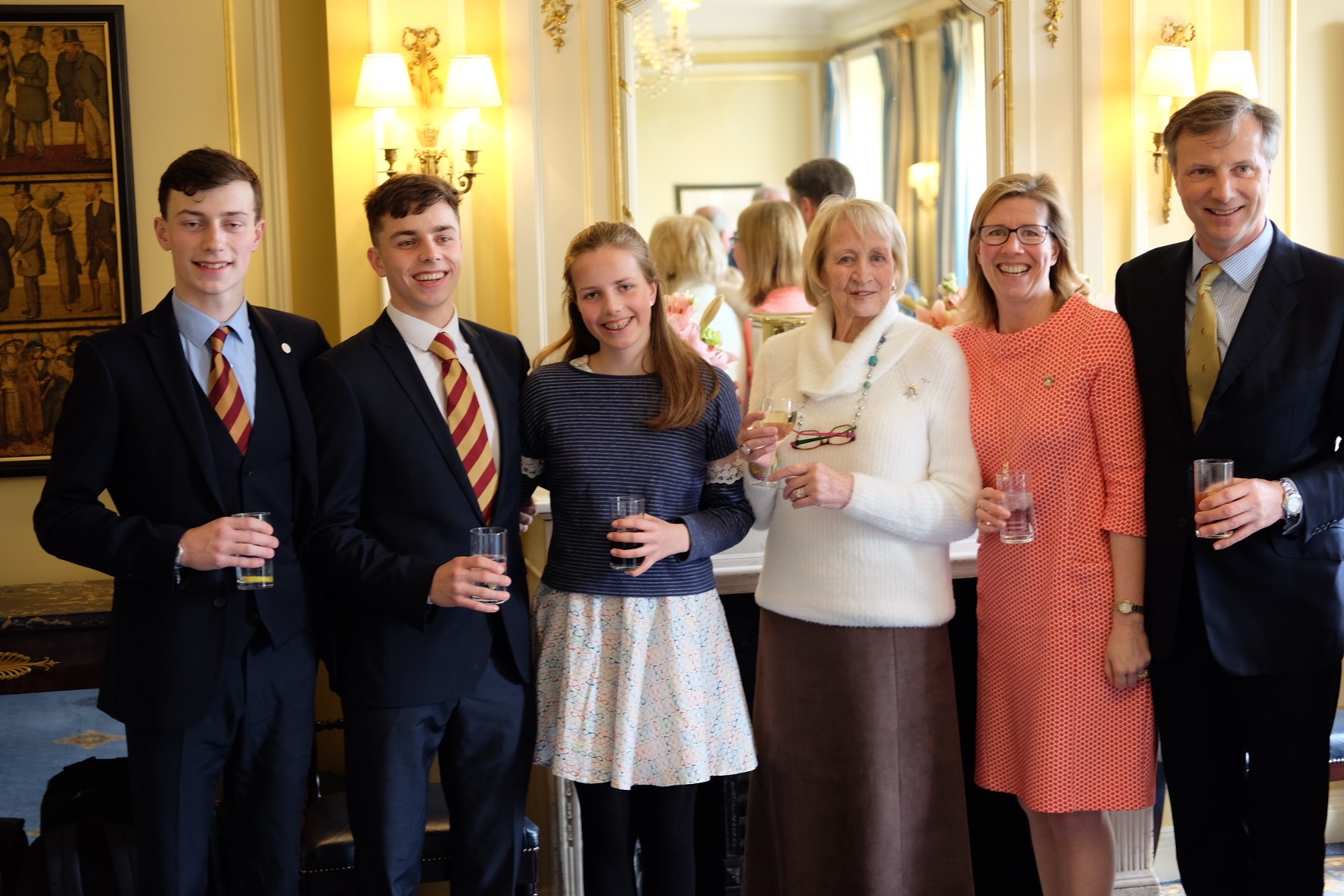
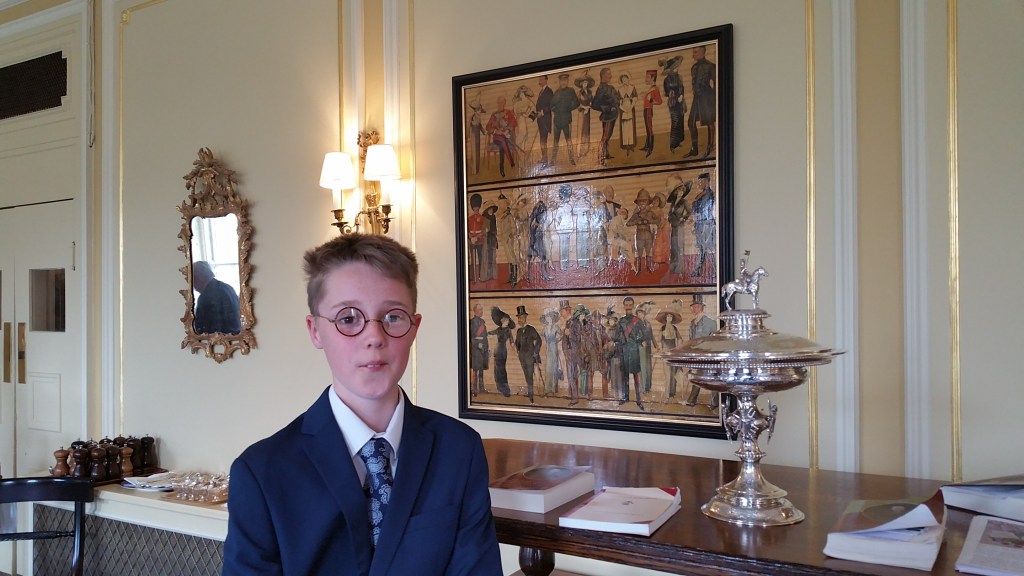
It was a thought-provoking discussion with the audience and such a memorable evening. I was particularly touched that some of my Winnington-Ingram cousins turned out to meet me at Fulham Palace: here is another Tom wearing his great-great-uncle’s specs.


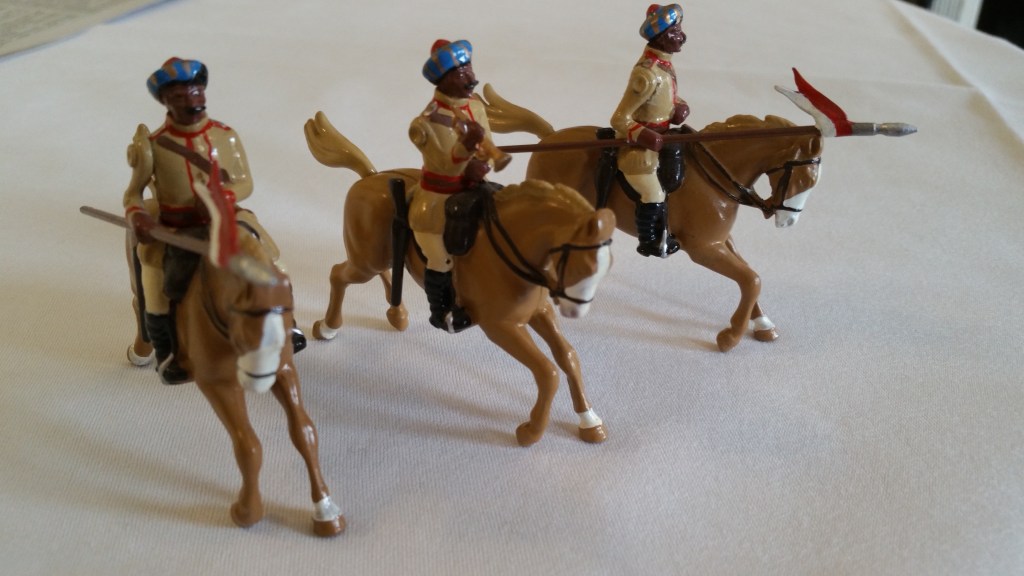
The following lunchtime I gave a short talk after a wonderful meal with the Central India Horse Association, held annually in the Cavalry and Guards Club.
If only I had known of the existence of this fabulous group of cavalry descendants I would have found them so supportive while I was writing Major Tom’s War (a website has now just been launched and can be found at www.centralindiahorseassociation.co.uk ).
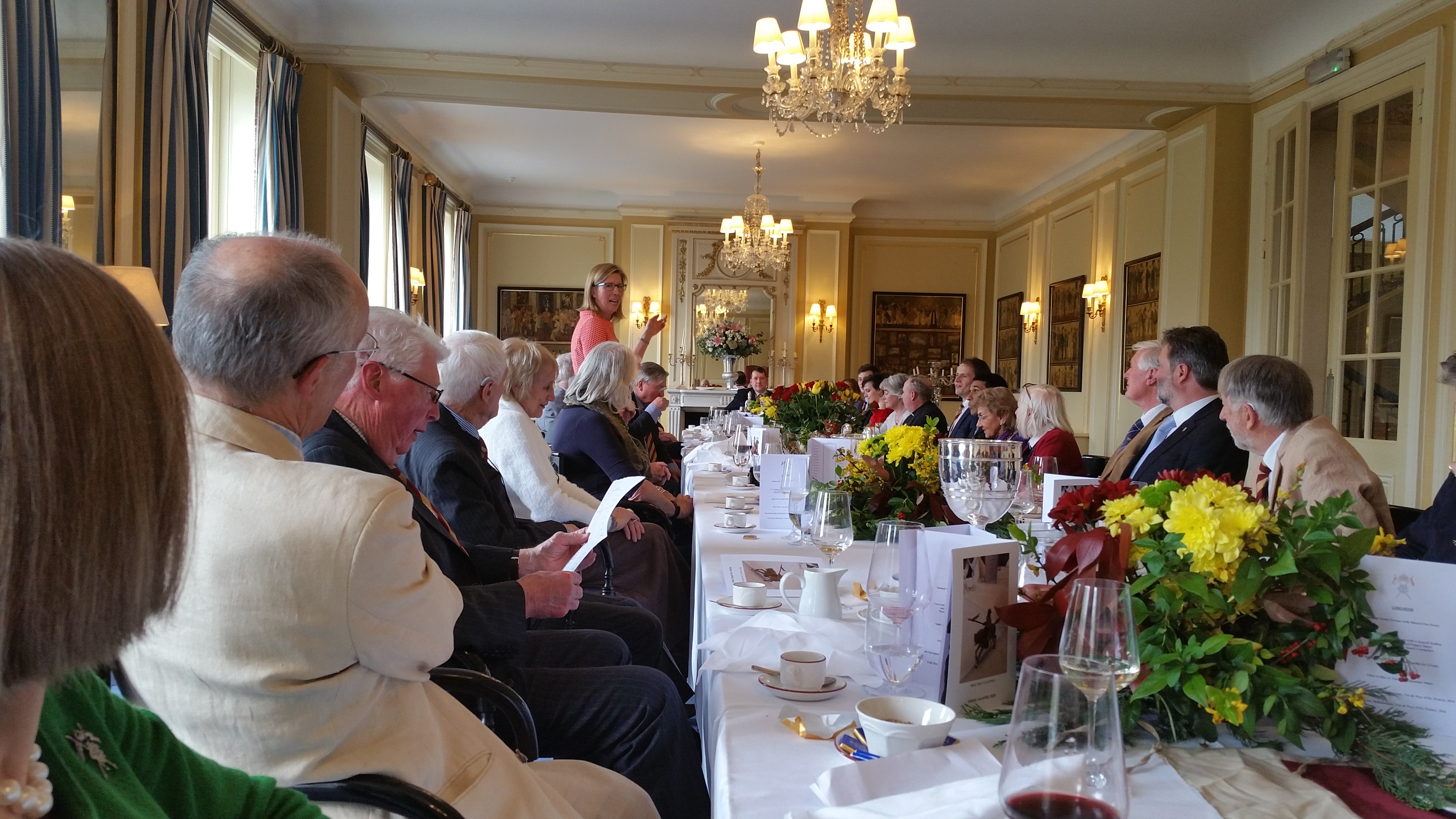
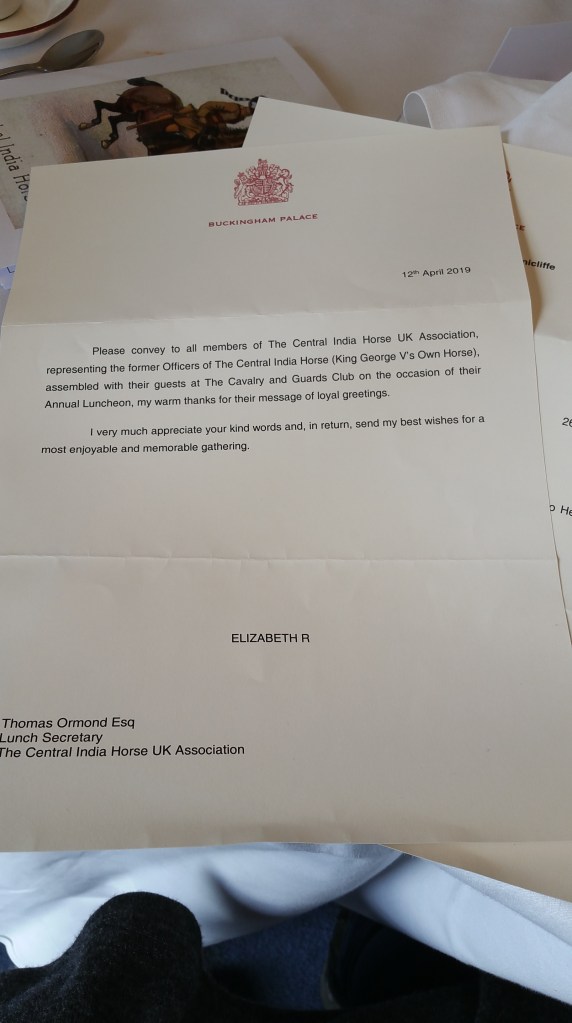
Again, sitting at a long table decorated with flowers and polished regimental silver surrounded by charming people was like stepping back in time. A message of loyal support had been sent to Her Majesty the Queen who had reciprocated with a letter wishing us an enjoyable lunch.
Wherever I talk, I spend a lot of time explaining Tom’s presence in the Indian Cavalry at the beginning of a Great War. It was rather lovely to be among people who simply understood. The Indian Cavalry were a remarkable body of men of many faiths who fought for a colonial power, often to the death. Unlike the infantry which left the western front in 1915, the cavalry stayed almost until the bitter end, leaving for Mesopotamia only in March 1918.
The CIHA still has very strong links with India and many members visit annually. Thank you Charlie Welch and everyone else for making me so very welcome. I am looking forward to becoming an active CIHA member.
I had another odd moment of deja vu as I left the Club, walking into the entrance hall and thinking, ah, yes, there’s that statuette of Douglas Haig. I have never been there before, but when I looked more closely, it was indeed Earl Haig.

COMING NEXT: #2, Hartlebury Castle, Hagley Hall, Bewdley and Ribbesford House

 Vee Walker writes...