My latest work, The Glen Nevis Rose, is an unusual collaboration with Lochaber author Ewen A. Cameron, who lives at Glen Nevis House. It began with Ewen’s fascination for a little-known local story, grew into an idea for a pamphlet (which is when I became involved) and since then has snowballed into something rather remarkable: a full colour, 90 page book which explores the life of one family in the years after Culloden, both through fiction and well-researched non-fiction.
Just over 250 years ago, Lady Mary Cameron of Glen Nevis turned her back on the self- same house where Ewen now lives, to board a mysterious vessel named the Pearl at Fort William. Former staunch Jacobite families like Mary’s had suffered badly at the hands of the victors after Culloden and many set their faces towards the New World. The Pearl was already almost filled to the gunwales with MacDonells of Glengarry. They must have offered some of the few remaining berths to their friends and neighbours, among them Mary’s family.
Mary had young children. Her old father was dying. The preparations for departure must have been emotional, complex and protracted.
Why, then, dig up a rose to take with her, of all things?
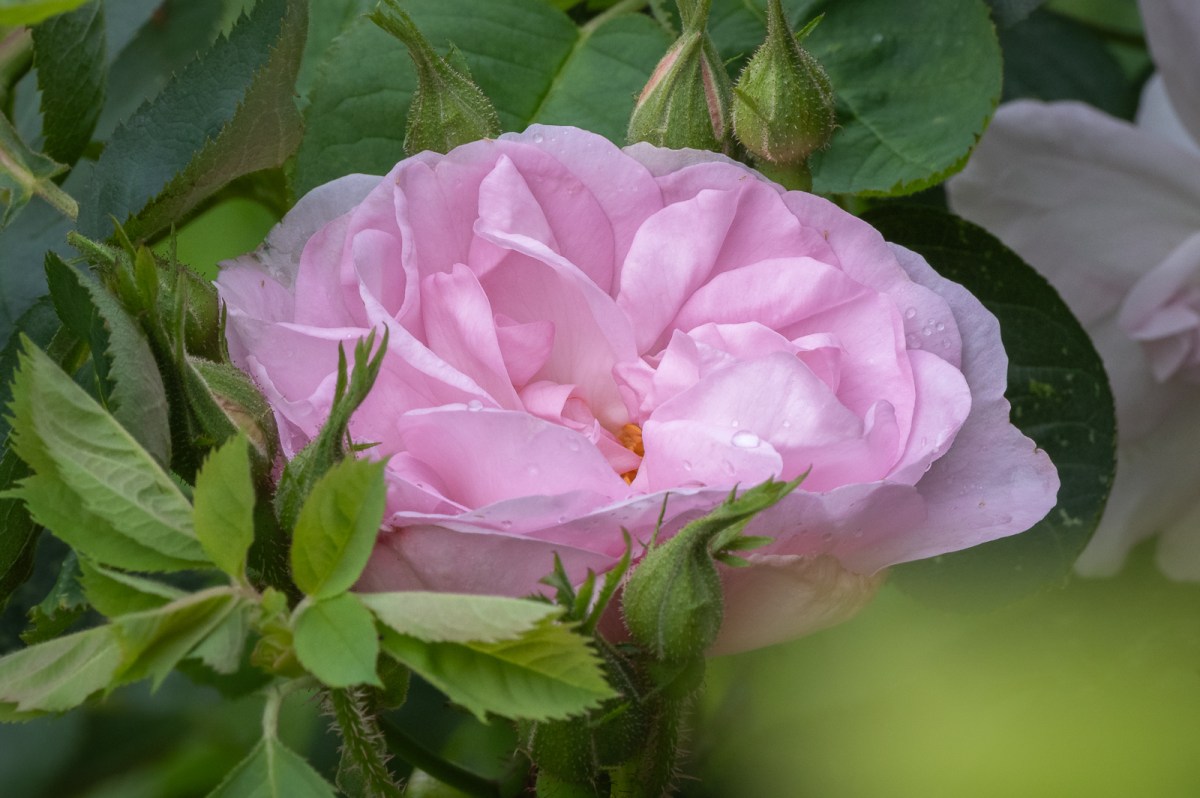
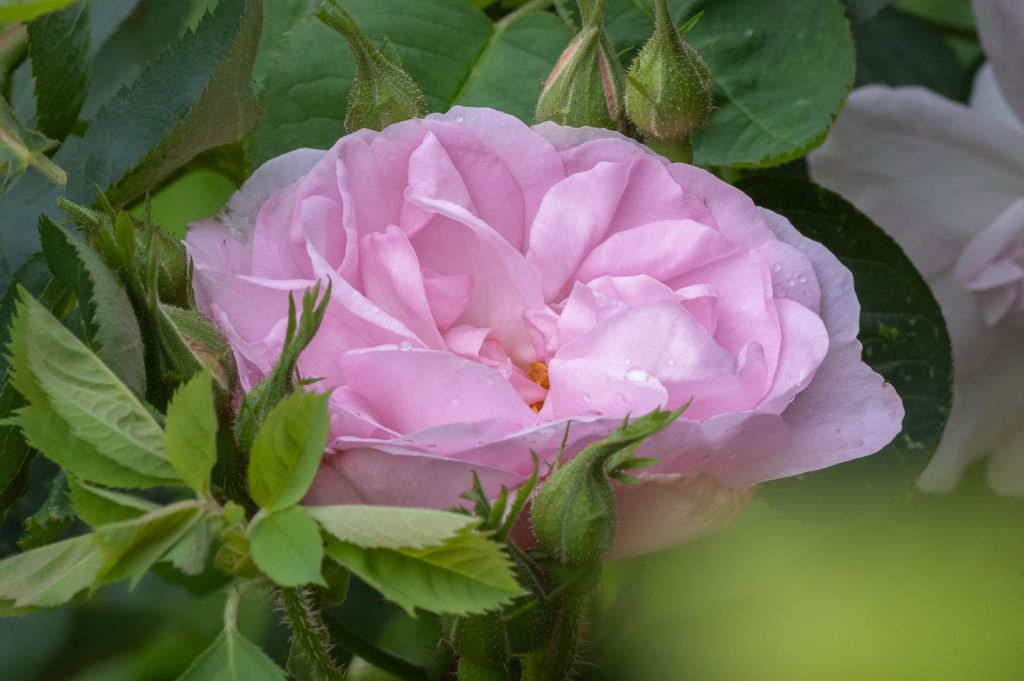
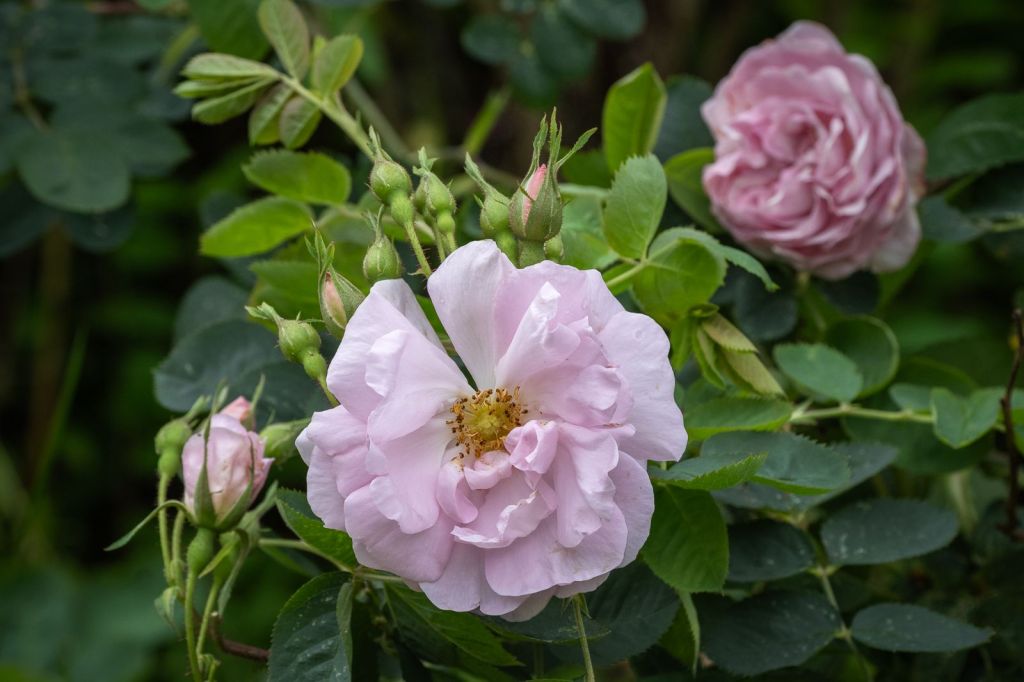
We could so easily have got it all wrong and just seen the rose – an ancient variety named Great Maiden’s Blush – as a perfumed, romantic, nostalgic gesture.
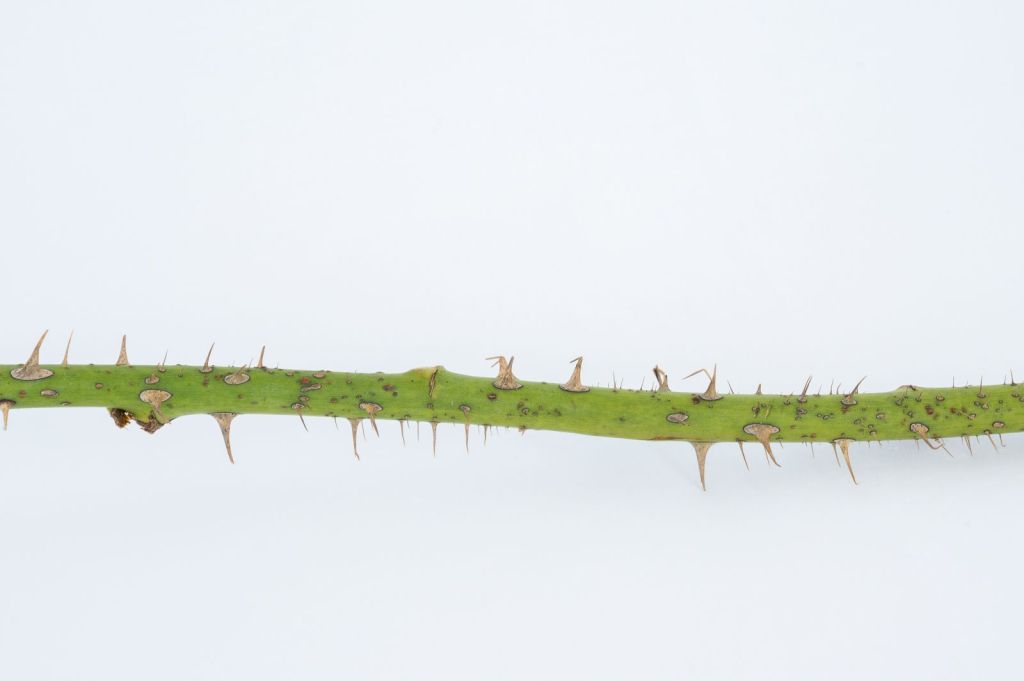
That would be to ignore its vicious thorns, and once we found out the role it is said to have played in the family’s past, we understood.
The story of the journey of the Camerons, their brood of children and the rose to America and beyond is one of love, tenacity, courage and adventure.
Our understanding of the Jacobite Rising tends to end in April 1746 at Culloden, but the aftermath of civil war echoed through the glens for decades after that, triggering the start of an epic migration of wealth and youth and talent from our shores which would later evolve into the Highland Clearances.
If you want to understand what it was like to survive Culloden and then choose to emigrate, please consider reading this book.
It is not available on Amazon and never will be. We are distributing it through smaller bookshops and outlets only at present. Feel free to get in touch and I will let you know your nearest outlet.
Signed copies can be sent by mail order worldwide, too.
This blog is prompted by a recent commercial post circulating on Facebook which gives one rather poor definition for the Black Isle’s ‘black’ nomenclature and then encourages folk to sign up for a tour with the company.
No thanks.
For those who have never visited my home turf, the Black Isle is not an island but a peninsula attached to the mainland Highlands by a narrow neck of land starting at the River Beauly and ending at the river Conon. To the north it is bounded by the Cromarty Firth, to the south the Beauly Firth and to the east the Moray Firth, opening into the North Sea. It is an area with a warmer microclimate than the mainland, resulting in fertile farmland with rich dark soil and pockets of ancient, lush and biodiverse woodland.
An-t-EileanDubh in Gaelic, there is some suggestion that Dubh, black, is just a corruption of Duthac. The Black Isle was on the popular Elgin to Tain pilgrimage route but St Duthac’s shrine was in Tain itself not at the Chanonry in Fortrose, so I find this one unconvincing.
Let’s explore some of the other reasoning (one added courtesy of Paul Johnson, thanks Paul!): 👇
The truth is no-one really knows why the Black Isle is called the Black Isle, but in this blog I will set out five explanations as told to me as a local at intervals over the past fifty or so years. They are geographical, supernatural, historical, social and natural, with some overlap between the five.
If you know of any others, please get in touch!
A contrasting foreground
The Black Isle in times past would not have been capped with today’s commercial coniferous pine forests, most of which are under 100 years old, and it was known as the Black Isle before that. The backbone, the Mulbuie, was, as the name suggests (buidhe means yellow in Gaelic), so at some point in the past it must have been a golden moorland ridge scattered with peat-moss heather and fragrant whin (gorse) bushes.
So why not the Golden Isle?
The answer is in the contrast with the startling bulk of Ben Wyvis behind and to the west of the Black Isle in winter. Travellers from the south who had slogged up the Slocht must have welcomed the sight of the dark bulk of the low-lying Black Isle (barely 1000′) across the water as they descended towards Inverness, contrasting with Ben Wyvis, our much higher (3000′ + Munro) and weather mountain. From the first frost in October to Easter and often later, ‘the Ben’ has a summit white with frost or snow. We look to Ben Wyvis to predict how the day will turn out weatherwise.
A traditional winter greeting hereabouts is ‘Snaw on the Ben’, usually said with doom-laden glee.
Or…
Black magic
The Scottish Reformation of 1560 swept away a now-forgotten Roman Catholic past. With it went carved wayside crosses like those you see on the continent and local religious tolerence of difference, of the old ways. A fearsome zeal for the new Protestant religion (which, ironically, had its roots in an English king’s lust as well as a desire to purge the Christian church of corruption) swept the Highlands like a brush fire. Standing stones were defaced and broken. Carved tombstones were reused as plainer slabs (see more on that at Kirkmichael).
Accusations of witchcraft became numerous in the 1600s, often aimed vindictively at decent, prosperous women as well as those vulnerable through deformity or madness. The outcome of any witch trial was generally a foregone conclusion, but not always.
Sir Thomas Urquhart, the eccentric genius laird of Cromarty, saved one young pair of Croms who had accused themselves of ‘consorting with demons’ – presumably in the grip of some kind of religious fervour whipped up by an enthusiastic witchfinder. Sir T had just returned from a grand tour of the continent and was having none of it. Rather than agree to ‘the cleansing fire’ he put the pair up overnight, got them merry and encouraged a couple of his servants to ‘dally’ with them. In the morning, sure enough, the accused claimed to have consorted with demons that very night. Sir T quickly saw these gullible souls married to their willing ‘demons’, the sacrament of marriage protecting them from further reprisals. Unsurprisingly the church hated Sir Thomas thereafter, and the feeling was mutual.
More about Sir Thomas Urquhart at Cromarty Courthouse!
Less fortunate was the Brahan Seer, one Coinneach ‘Odhar’ (Dun-headed Kenny) Mackenzie, a Lewis man with the second sight. He came unstuck by ‘seeing’ the husband of Isabella Countess Seaforth – the head of the politically powerful Mackenzie clan – up to no good in Paris, and unwisely sharing this insight with his wife publicly. Coinneach was accused of witchcraft and burned to death in a tar barrel (likely the ferry beacon for summoning the vessel from Ardersier) on the highest point of Chanonry Point, where a mediaeval cross base can still be seen today. Before his grim end he thoroughly and chillingly cursed the great House of Seaforth: he predicted the death of all male heirs before the last of the line himself died, and that this doomed chief would know this time had come when various other clan chiefs had a variety of gruesome disfigurements and disabilities.
Worst of all, Coinneach predicted that a ‘white-coiffed lassie from the East’ would then ‘kill her sister’. Sure enough, once all the male heirs had predeceased Francis Humberston Mackenzie, and he himself had died, his widowed daughter returned from India (and in India, white is the colour of mourning) to take up her inheritance. She was at the reins of a carriage one day when it overturned, killing her sister.
It is not uncommon still for local people to have strange presentiments, perhaps echoes of CoinneachOdhar’s ‘seeing’. It is particularly useful for avoiding Police speed traps.
From black magic to…
Black Raiders
It’s hard to shake off the image of Vikings as tall, blonde, handsome chaps with horned helmets, isn’t it (thank you, Uthred son of Uthred…) but this part of Scotland was colonised by dark haired Danes (because ‘there ain’t nuthin’ like a Daaaaane….’). Although the indigenous locals probably did not welcome these new arrivals with open arms, not all Viking settlement was about dark deeds, burning churches, rape and pillage and so forth. The canny seafarers whose ships once stole, terrifyingly, up the firth under cover of a sea-mist or haar (a fine Old Norse word) would eventually settle and embrace Christianity and intermarry and farm the land just like everyone else. Dingwall was the place of the Thing, the Viking parliament (believed to be under the monument car park near the old library building). And in the Black Isle we still have Udale bay, Old Norse for The Bay of the Yew Trees.
Black Islers who belive themselves to be true locals who do an Ancestry-type DNA test will often be surprised to find a high percentage of Scandinavian blood. Tsk. We were all incomers once!
Or…
Black smokefrom many homes
We have forgotten what it is like to warm ourselves and cook solely with open fires. For centuries people in the Black Isle burned wood and ‘moss’ or peat – turf they cut and stacked to dry up on the common land along the Mulbuie Ridge or even from along the coast. Again, travellers from the south might have seen a pall of yellow-black smoke from hundreds of hearths hanging over the Black Isle, rising from the many coastal chimneys of Redcastle, North Kessock, Kilmuir, Munlochy, Avoch, Fortrose, Rosemarkie and Cromarty.
People disposed of rubbish the same way too. Stubblefields were burned off after harvest to nourish the ground for the next crop. I have a happy memory of being allowed to play in a burning stubblefield, jumping through the quick-burning fires of waste straw in the early 1970s!
Higher up among the heather, too, a paler, more mysterious smoke would once have drifted upwards, juniper wood burned to fuel dozens of illicit whisky stills. Winters in the past were longer and harsher than they are now, and a dram of uisge-beatha helped them pass more easily. One Statistical Account relates that there were more whisky stills in the Black Isle than anywhere else in the Highlands.
The first legal distillery was licensed to the Forbes clan in Ferintosh.
Or…
Ancient Woodland
My friend Paul Johnson points out that there are still legacy Caledonian-type Granny Pines all over the Black Isle, from Mount Eagle on top all the way down to sea-level. Many are hidden either singly or in small groups in the current forestry plantations (and Gallowhill, Blackhills and also on the Rosehaugh estate to name just a few) and also in more deciduous woods such as the Beechwood at Raddery and the natural Birchwoods at Gallowhill – even in the Oakwoods at Drummonreach and Tore.
Many of the plantations and other woods are included on the Ancient Woodland Inventory for Scotland, almost all in fact. The Black Isle was once (maybe still is) home to Capercaillie and still has many of the usual pinewood residents, from Pine Martens to Crossbills. We still have the Bog Woodland Monadh Mor which is not considered part of the Caledonian Pinewood Fragments inventory for some stupid bureaucratic reason, but it should be!
Mature pines are dark green that look black from a distance. Most of the Black Isle may well have been part of the Great Wood, but it was systematically felled for timber and to clear land for farming and housing over the last 1500 years or so. Perhaps there was always a moorland ‘top’ above the trees, covered in moorland and whin, hence the ‘Mulbuie’ ridge – looking a bit like a monk’s tonsure.
From a distance, a mass of ancient woodland would look black…
So…
.. landscape, witchcraft, Vikings, whisky or ancient pines could all explain why our Isle is known as Black today.
Hello. My name is Vee and for the past forty years or so – most of my adult life in fact – I have lived, part-time at least, in the village of Ferness.
For those who have never visited, Ferness is to be found simultaneously both on the east and the west coast of northern Scotland. It is a wee fishing community with one pub, one church and no school (there’s just the one baby…).
As a Fernessian, I love a ceilidh in the local drinking-hole. I have a weakness for red telephone boxes. Also for pimply biker boys named Ricky. I buy extra normal shampoo, occasionally have aspirations to mermaidhood and avoid menus which include rabbit.
Especially rabbits named Trudi.
Bill Forsyth’s extraordinary film LocalHero is forty years old and to celebrate this anniversary, author and journalist Jonathan Melville has written a book about its creation.
I appreciate after this interesting read that it could have been a very different film: it is only thanks to Forsyth’s genius in casting and then the subtleties of the process of editing that the nuanced scenes we love have been whittled into existence.
The book is structured by describing iconic scenes chronologically in each chapter (so impossible to avoid spoilers, but no-one who has not seen the film is likely to buy the book anyway). Each of these scenes is followed by a description of a different aspect of the making of the film, with many interesting crew and cast comments woven in.
Forsyth seems to feel he has said enough about Local Hero already, so was not interviewed for the book, although he did provide the author with some rare and wonderful photographs. Melville has done well to transcribe and blend 2013 directorial interviews with fresh material drawn from other members of the production team and cast.
And what a cast it is: Denis Lawson, Peter Riegert, Jenny Seagrove, Fulton Mackay, Jennifer Black, Peter Capaldi (then unknown) and the Hollywood legend Burt Lancaster among so many other familiar faces. The early discarded options for the casting of some of these key characters are hair-raising (I won’t spoil the discovery for you). Forsyth was particularly insistent on Riegert playing MacIntyre, saying that without him there would be no film.
LocalHero has a lot to answer for me personally. It evokes the oil boom cowboy Highlands of my 1970s//80s youth. And there was a turning point in my life 20 years ago when I faced a straight choice between moving from England to France or moving to back to the Scottish Highlands. By then I had seen the film so many times that I no longer needed to: Mark Knopfler’s seductive score – my desert island music for sure – wound itself into my subconscious to such a degree that the film played on a loop in my head whenever I heard it. I realised I was homesick down there, out of place in the brash England of the early noughties. I longed for Ferness – and I came home to the Black Isle (where I was brought up) to find it.
In a way, for the next few decades, I did.
I know this may sound a bitty pompous, but the thing about Ferness is the essential truth of the place. It is a decent representation of the less worldly Highlands I was raised in. Forty years on, there are still echoes of Ferness in Black Isle life. People who have never left (if they are not farmers or landowners) still manage somehow to exist, with good humour and with dignity, adapting to whatever it is life throws at them.
Scratch the surface however and both Ferness and the Black Isle are rather less Brigadoon and rather more WickerMan. In LocalHero, the people of Ferness seem intent on becoming rich through an oil deal which they know, and yet do not understand, will destroy their homes and way of life: they will not let anyone, even one of their own, stand in the way.
The dark heart of my home became apparent during Lockdown as various toxic local grievances ignited (there is another screenplay there, Bill, if you’re reading this). While 2020 Black Islers sniped and snarled and vilified each other on Facebook until the pieces settled again into an altered normality, 1980s Ferness folk (when Felix Happer’s sanity, or possibly insanity prevails to ‘save’ their village) simply accept their change in community destiny with typical Highland fatalism.
Both communities emerge from their time of trial with everything and nothing changed: they can never go back, but not going forward is not an option either. Achweel…
Much as I love Mark Knopfler’s music, I am not altogether sure about the wisdom of the musical version which opened before Lockdown and has not yet resurfaced. Perhaps Forsyth sensed the impending schmaltzification of his masterpiece and that was why he withdrew from further involvement.
Bill Forsyth is said now to be uncertain of his virtues as a director. What a shame, for the man is a genius. This could have been a rather different book had he been interviewed for it, but he seems now to have distanced himself from the film world, and for good reason. There is no place among the money- driven Hollywood-and-Netflix hot air for his special brand of quiet, clever creativity, more’s the pity.
To me LocalHero was, is and always will be the perfect film. It is tender and honest and steers clear of that saccharin twee-ness which is always the risk in film-making about northern Scotland.
Thank God there has never been any question of a remake…
An index for future film buffs would (in my view) have been the only useful addition to this very good tribute to a cherished piece of Scottish cinematography. Well done Mr Melville. It will enhance any Christmas stocking it happens to land in.
Happy reading!
Vee Walker is an author and editor from the Black Isle. Her first novel Major Tom’s War was a prizewinner at the 2019 SAHR Military History Fiction Awards: it is available in paperback and audiobook from http://www.kashihouse.com and all good booksellers.



 Vee Walker writes...