Hello new readers. If you enjoy my blog why not try my prizewinning novel of WWI, Major Tom's War? It's available as a revised and expanded second edition in paperback and on Kindle. You can order it via my lovely publisher Kashi House at www.kashihouse.com or from any good bookseller. Ask me nicely and I can send you a signed/dedicated copy for just £12 including UK postage and packing 🙏🌹
My latest work, The Glen Nevis Rose, is an unusual collaboration with Lochaber author Ewen A. Cameron, who lives at Glen Nevis House. It began with Ewen’s fascination for a little-known local story, grew into an idea for a pamphlet (which is when I became involved) and since then has snowballed into something rather remarkable: a full colour, 90 page book which explores the life of one family in the years after Culloden, both through fiction and well-researched non-fiction.
Just over 250 years ago, Lady Mary Cameron of Glen Nevis turned her back on the self- same house where Ewen now lives, to board a mysterious vessel named the Pearl at Fort William. Former staunch Jacobite families like Mary’s had suffered badly at the hands of the victors after Culloden and many set their faces towards the New World. The Pearl was already almost filled to the gunwales with MacDonells of Glengarry. They must have offered some of the few remaining berths to their friends and neighbours, among them Mary’s family.
Mary had young children. Her old father was dying. The preparations for departure must have been emotional, complex and protracted.
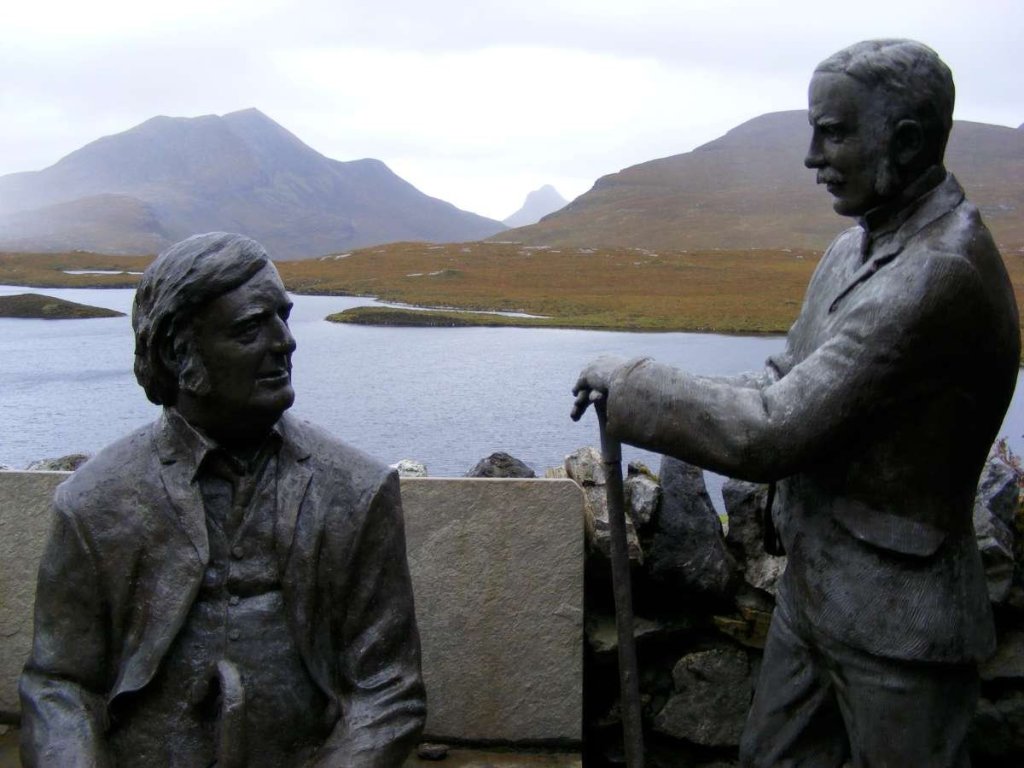
Why, then, dig up a rose to take with her, of all things?
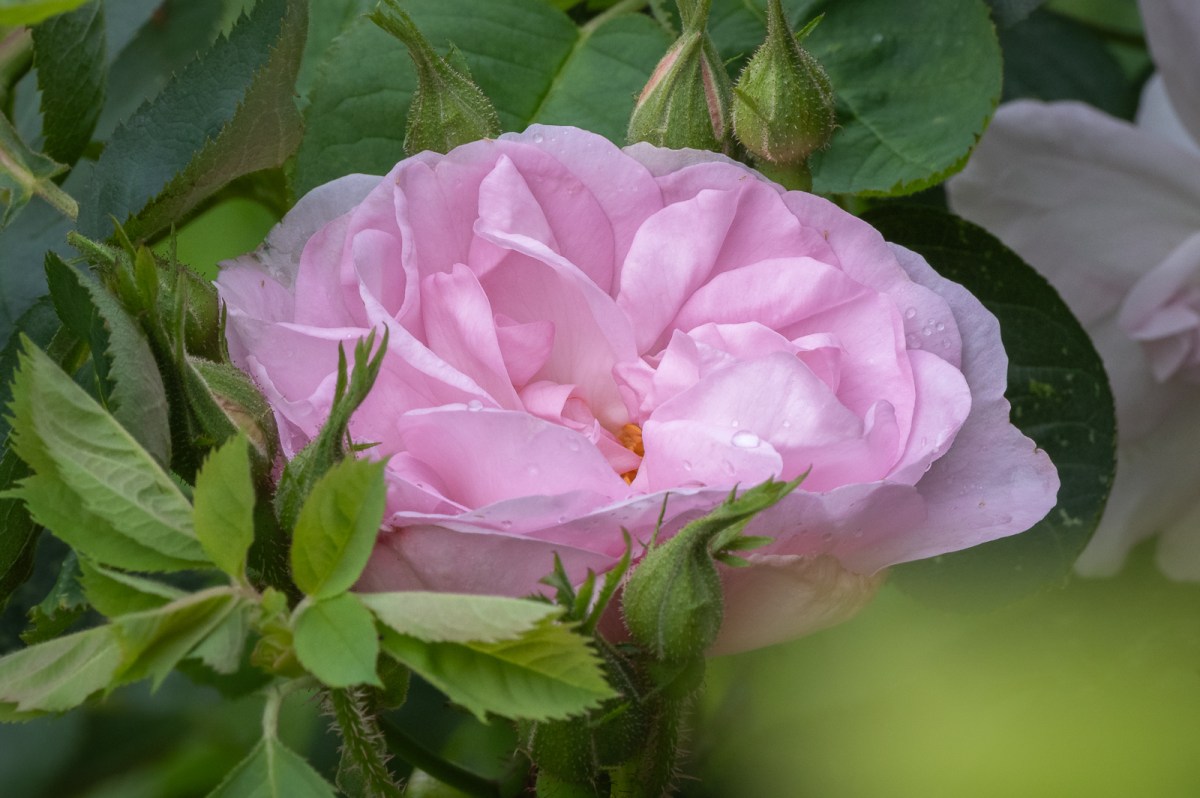
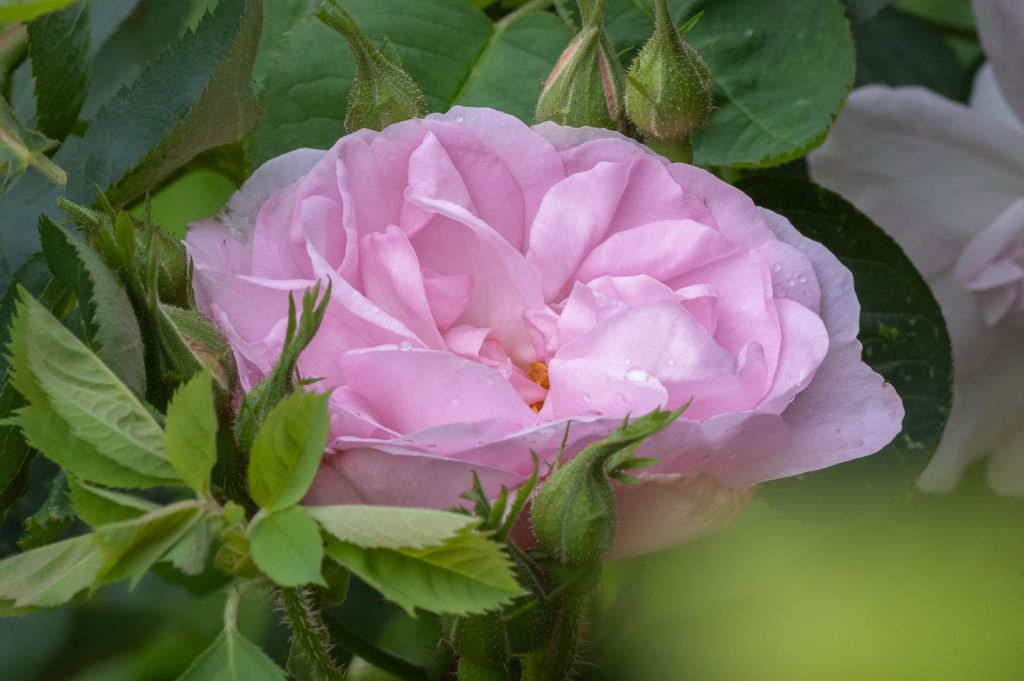
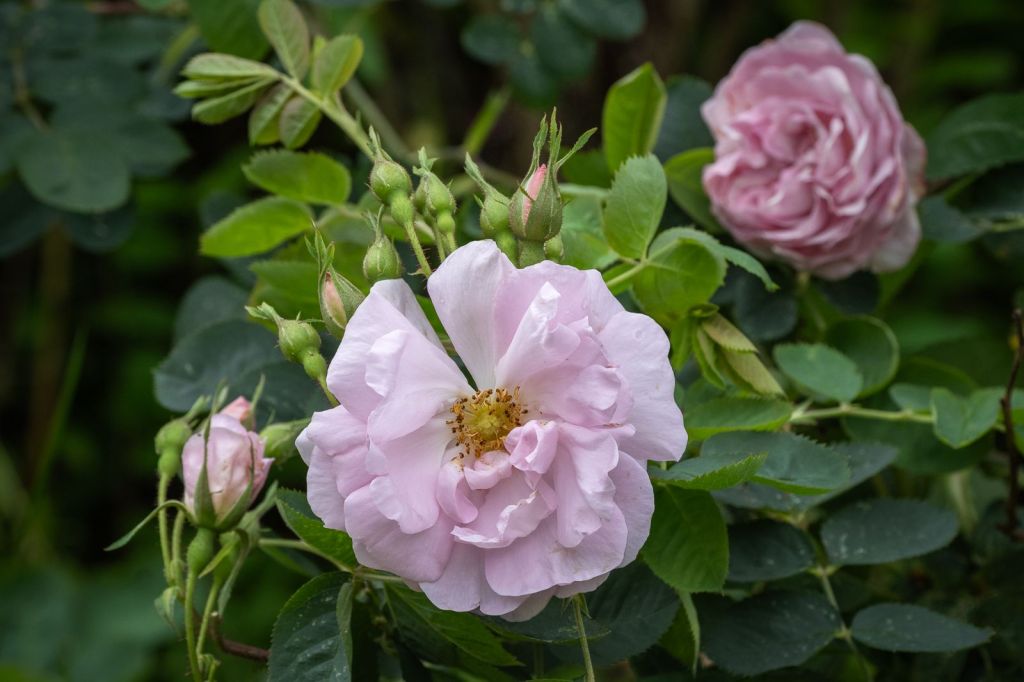
We could so easily have got it all wrong and just seen the rose – an ancient variety named Great Maiden’s Blush – as a perfumed, romantic, nostalgic gesture.
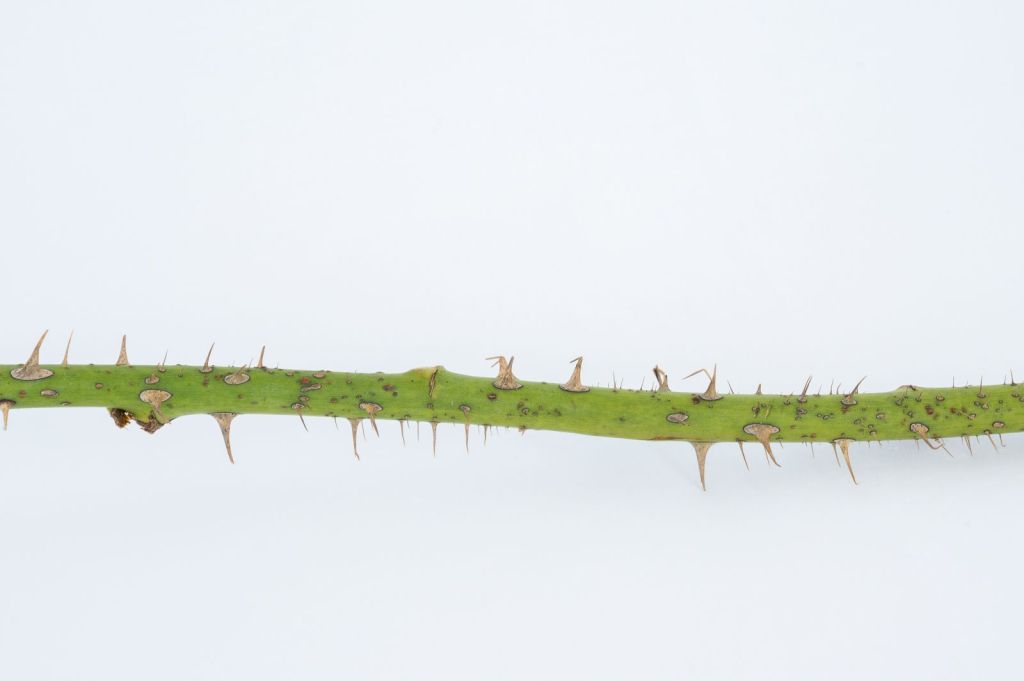
That would be to ignore its vicious thorns, and once we found out the role it is said to have played in the family’s past, we understood.
The story of the journey of the Camerons, their brood of children and the rose to America and beyond is one of love, tenacity, courage and adventure.
Our understanding of the Jacobite Rising tends to end in April 1746 at Culloden, but the aftermath of civil war echoed through the glens for decades after that, triggering the start of an epic migration of wealth and youth and talent from our shores which would later evolve into the Highland Clearances.
If you want to understand what it was like to survive Culloden and then choose to emigrate, please consider reading this book.
It is not available on Amazon and never will be. We are distributing it through smaller bookshops and outlets only at present. Feel free to get in touch and I will let you know your nearest outlet.
Signed copies can be sent by mail order worldwide, too.
I have only very occasionally ventured into writing poetry myself, usually as interpretive commissions for clients. I am more of the why-use-one-word-where-297-will-do persuasion. I do admire good poets and poetry, though, and have a sneaking adoration for the really epic stuff; the adventurous Aeneid, the transformations of Ovid’s Metamorphoses, the gore of The Lays of Ancient Rome, the glorious Highland fakery of Ossian.
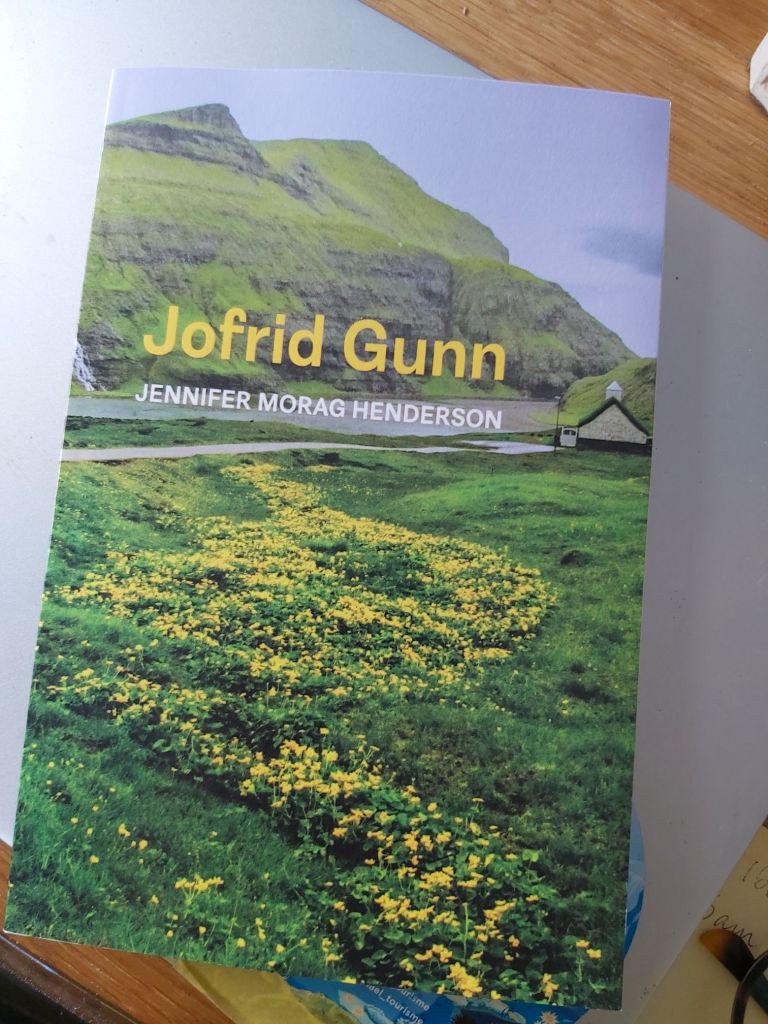
I have long enjoyed Jennifer Morag Henderson’s historical and biographical work – Daughters of the North is real edge-of-the-seat stuff – but Jofrid Gunn is a step miles out of her admirable comfort zone. I find this extraordinary book defies any normal description. It is, but is not just, a collection of poems. It is a biography of sorts. There is a direction of travel of sorts – Faroes to Highlands, Highlands to Faroes, both time and place shifting with the tides and centuries. Yes, the story of Jofrid is related through this journeying, to a degree – if not as literally as I had anticipated, but this was no disappointment. Instead, the reader experiences a kind of multi-sensory immersion in carefully patterned words. When I had finished the book and its copious notes, I felt salt-blasted, wind-blown, refreshed, and deeply sorry that the experience was over.
Jennifer has been learning Faroese to give her work increased authenticity. Has that mammoth effort paid off? Without question, yes.
This style of prose poetry is less about rhythm than the shapes and patterns of words and phrases within the text. Again, the closest comparison I can draw is with epic Celtic poetry – the Taìn bò Cùlaìgne, the Mabinogion and the brilliant imitation of these in Macpherson’s Ossian.
The patterns within Jennifer’s poetry rouse and enchant and beguile in equal measure, and soon I found myself enjoying them far too much to bother myself unduly about any analysis of their (huge variety of) themes and threads and structures. Whether Jennifer is writing as or about Jofrid or as or about herself, I was not always certain, and for me, this is a boundary pleasingly blurred.
Hard to pick out favourites. The poignant story of the violin which was played to sound like the wind, one of several prose interludes, I found deeply moving and reread several times.
The Salt and the Coal reminded me of how long the remarkable Jean Gordon had to wait for the right time and place in which to marry her true love in Daughters of the North.
I have had a similar (if less poetic) conversation than Wedding-ring Shawl – advice from a mother-in-law, all about a knitted shawl in wool fine enough to draw through a wedding ring – patterns again: an old family friend, Eva Holmes, used a special frame surrounded by tiny pin-tacks to shape and launder them, and gave me a fine shawl for my firstborn. I had not thought about that for a long time. Good, powerful poetry like this is provocative in its original sense; it calls forth voices from deep within a reader’s heart and head.
Do read this remarkable book, which is so much more than just a debut poetry collection.
This World Book Day, here is a shout-out for the humble short story and the BBC Short Story Awards!
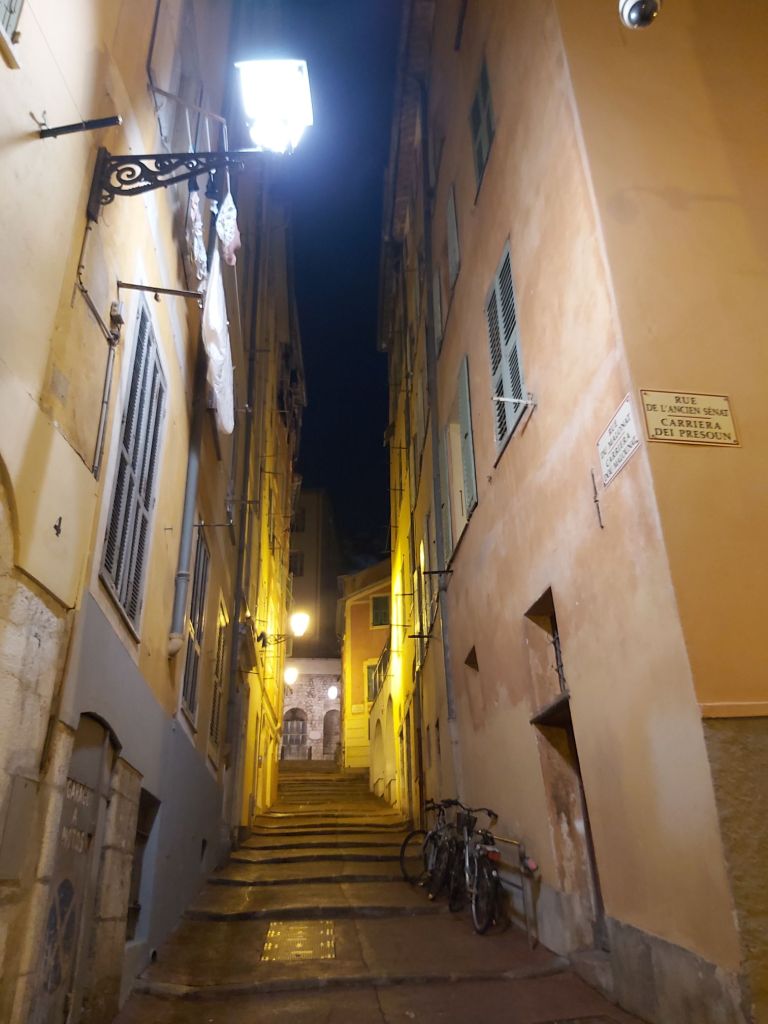
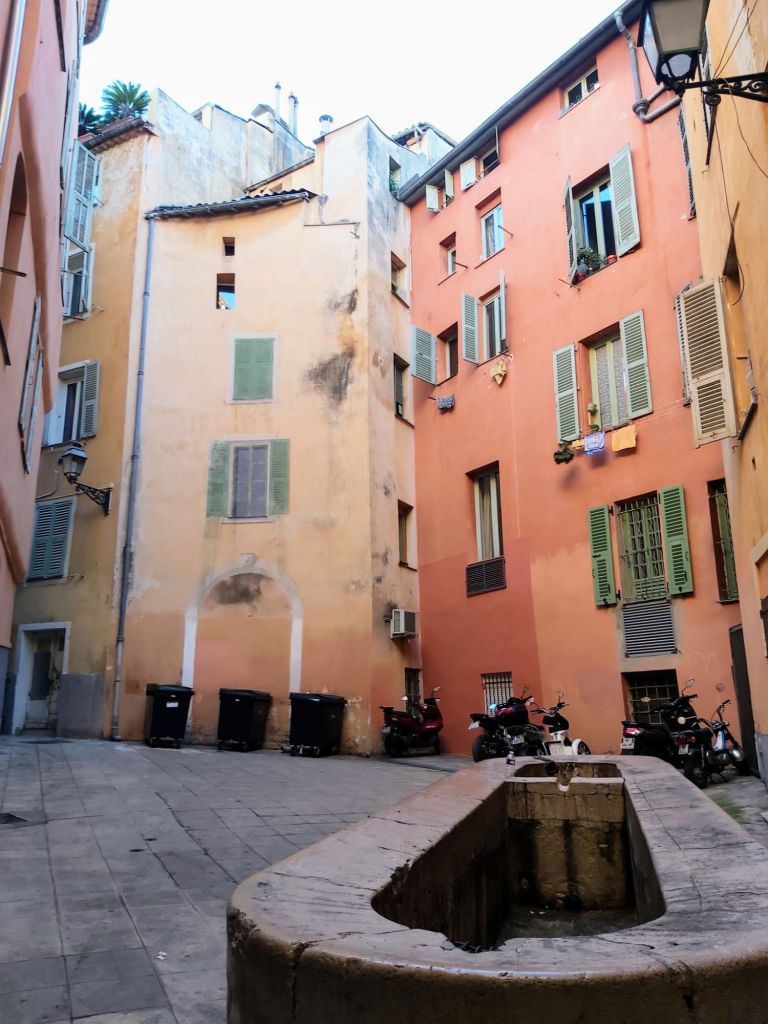
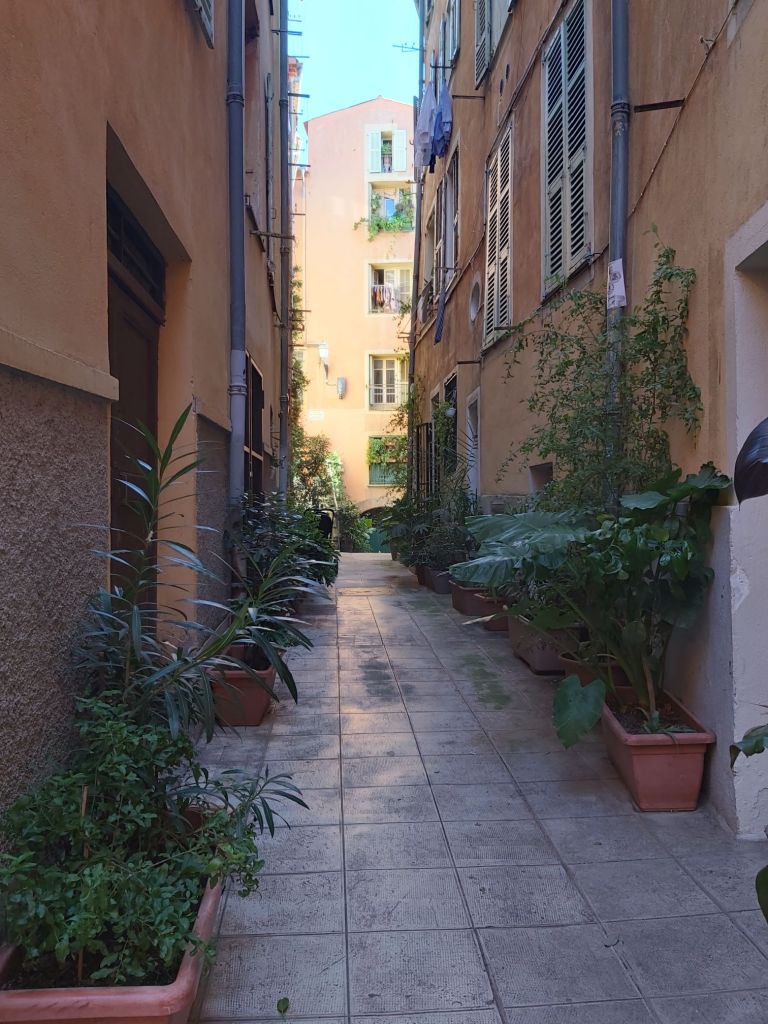
December 2023. My family and I arrive in Nice for our first ever visit. We arrive late and blunder through Old Nice looking for our apartment in darkness. By night its narrow alleys are sinister, and I think what on earth have I done. There is a grim old lavoir, which I can just see contains only a couple of empty beer cans and a pizza box.
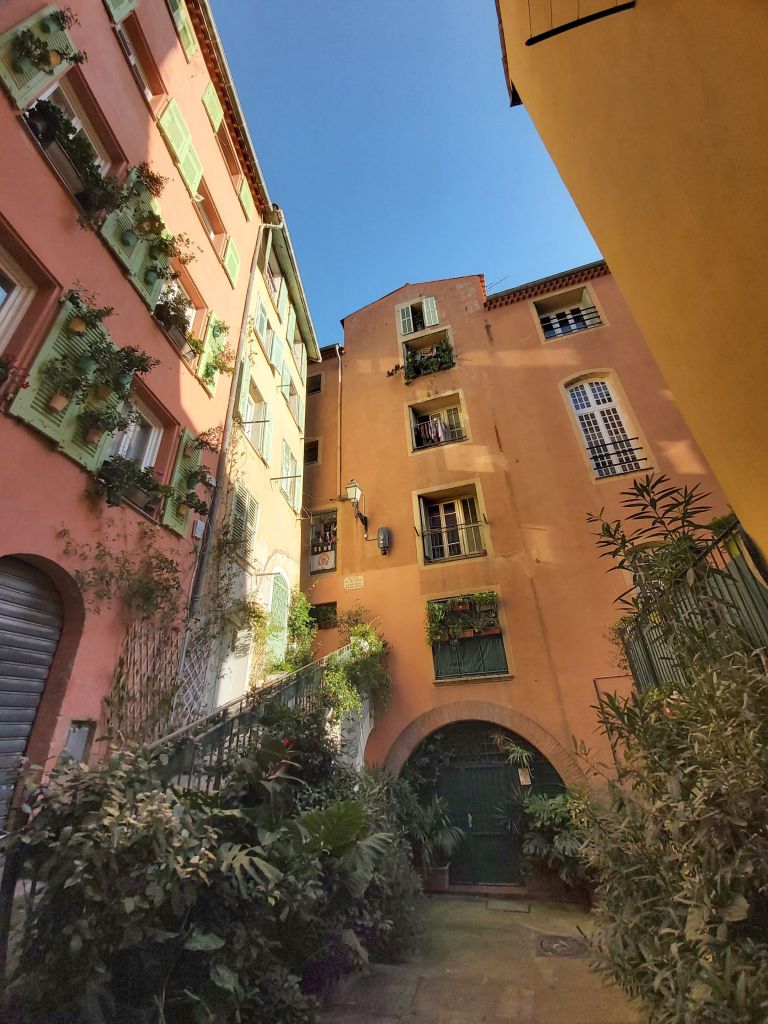
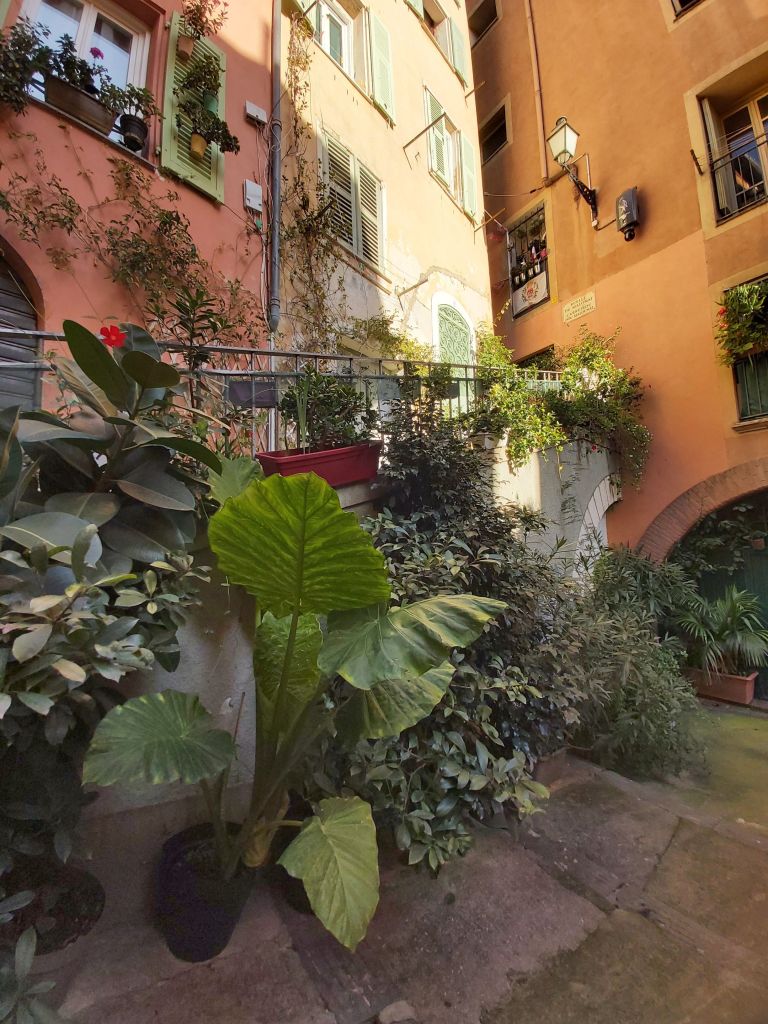
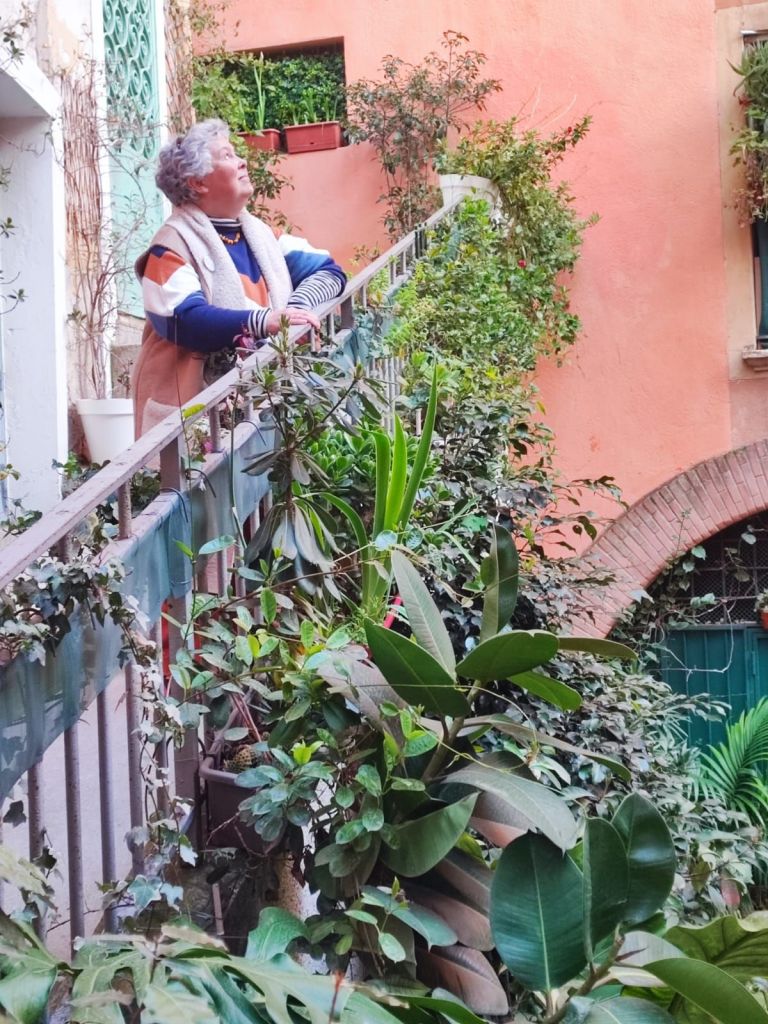
Then we turn a corner and a sliver of moonlight catches the motionless fronds of a vast urban jungle. No 13, our destination, lies within it, and after navigating a flight of ancient and uneven steps, we are soon tucked up in comfortable beds.
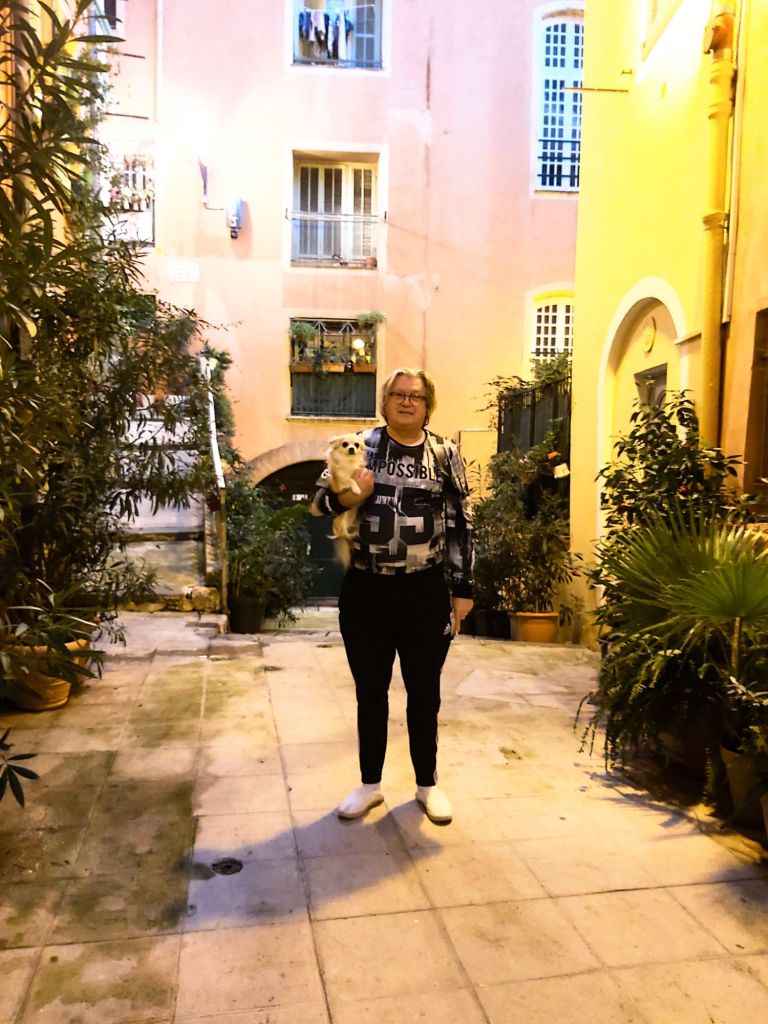
As we explore in the coming days, we realise that this extraordinary forest of green plants is limited to our own little narrow street. The air is sweeter there, and it feels somehow safer. I often see a man out there with a chihuahua at his heels. We say a polite bonjour, but nothing more. To the permanent residents, AirBnB guests feel like phantoms.
At the épicerie they tell me that this man is trying, solo, to displace the local drug dealers with green plants. And it is working. From that point onwards, the story takes root in my subconscious.
I return home and should be editing my unwieldy novel but the green shoots of NiceDog have taken invasive root in my subconscious. What if the chihuahua told his master’s story? What if a young dealer were in trouble?
I write the whole story out in a couple of nights but then polish it almost daily for months, treating it as an exercise in paring back unnecessary adjectives and adverbs. I add a little love interest as a twist. I also decide to fill the old stone lavoir near the (now fictionalised) alley with green plants as part of the dénouement.
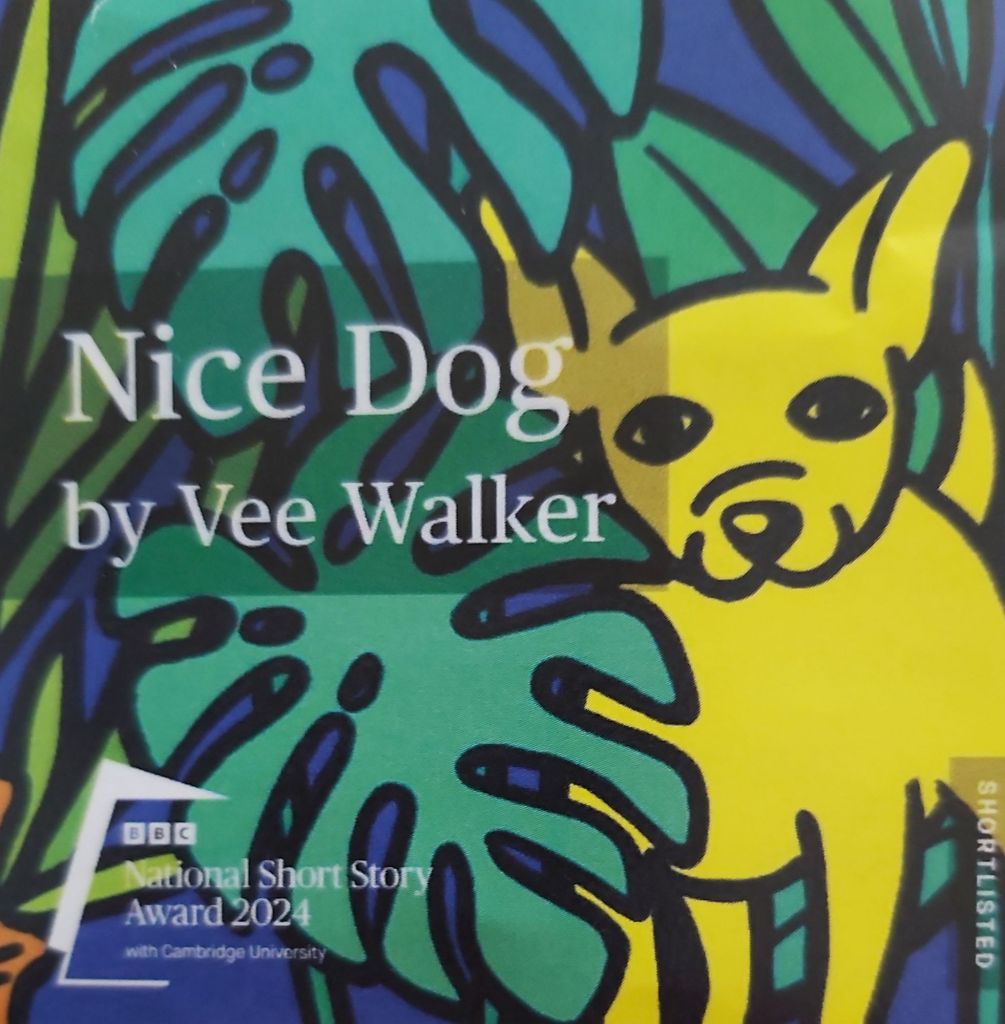
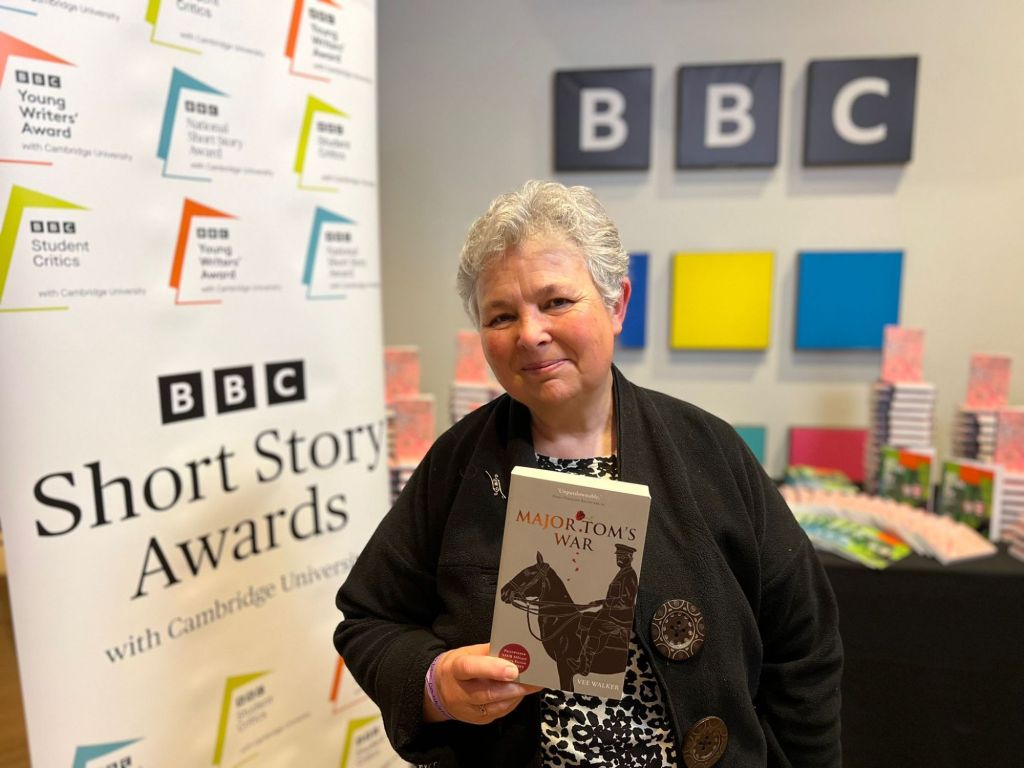
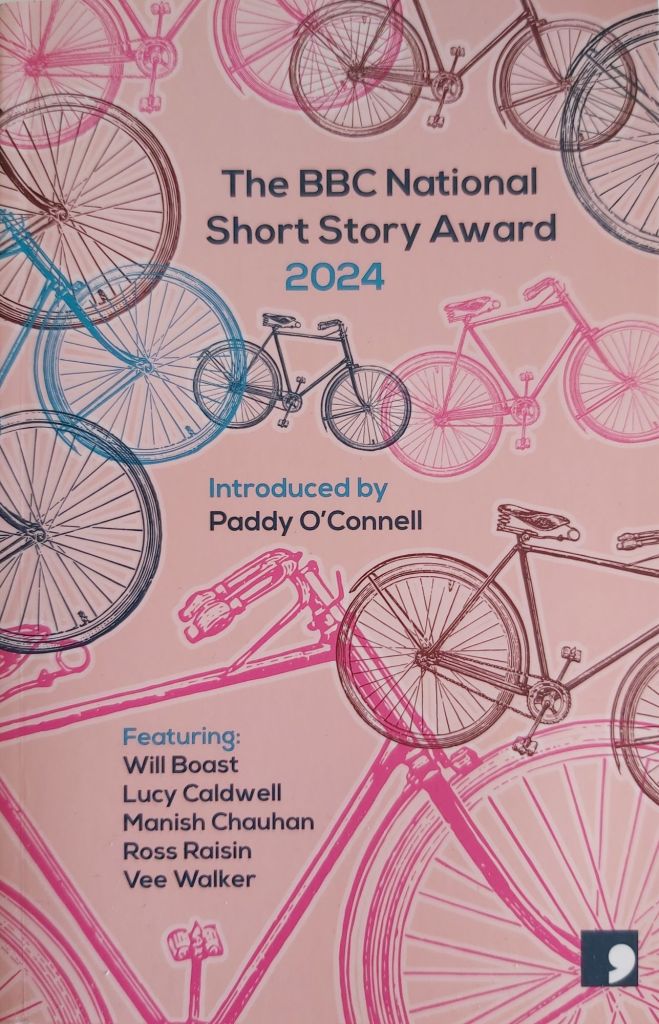
Shortlistees of the BBC Short Story competition are generally established novelists with other day jobs to support their writing habit: one has to have published to enter at all (a filter for both quality and quantity perhaps). I submit mine on a whim off the back of my one commercially-published novel, Major Tom’s War. 1000 writers enter, but just five were selected for prizes, broadcast and publication, among them Nice Dog.
Hearing the brilliantly-abridged version of Nice Dog, read by the actor Paterson Joseph, and broadcast on BBC Sounds (where you can still hear it, see listing at end of blog) has been a high point of my life.
This competition was my first foray into an alien land of BBC non-disclosure agreements. Scared to blot my copybook, I told almost no-one. I was then interviewed by Kirsty Wark, among others. Mostly the people who interviewed me or discussed the story picked up on a small, witty neologism in Nice Dog, the messagerie-pisse, a non-verbal means of canine communication so convincing that no-one wanted to believe it came from my imagination. No-one at all asked me about its more serious underlying theme, cannabis legalisation.
That’s what you get for making your narrator a chihuahua 😊!
I then travelled to London from the Highlands (over 600 miles) for the live awards evening on BBC Radio 4’s Front Row,
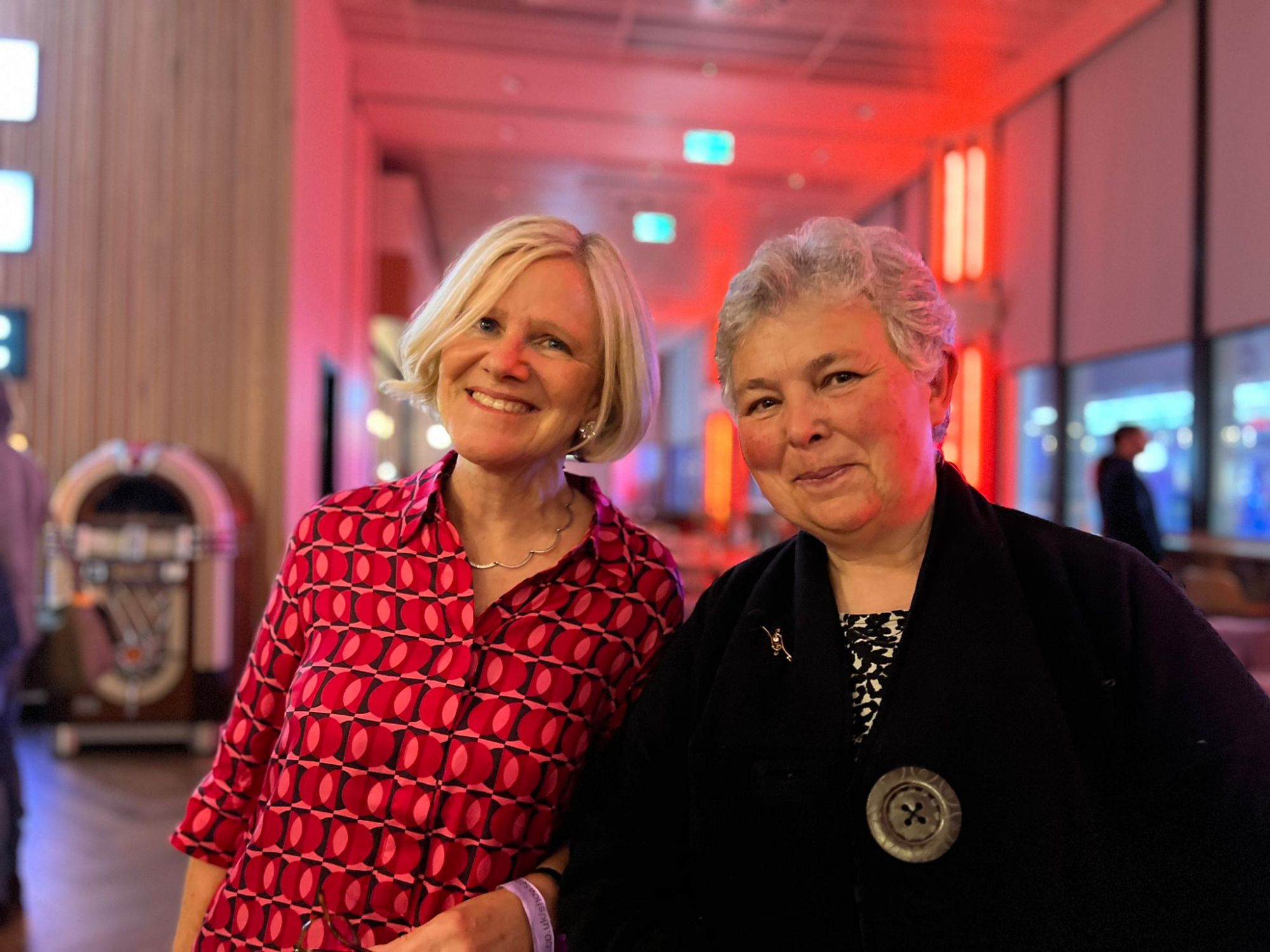
Exciting to meet famous names of course, but a bit of an ordeal too. In a huge room where people were constantly recognising and greeting each other by name, no-one really knew or cared who I was – no name tag, no well-connected agent to introduce me and no introductions from the stage, other than for the overall winner.
The best bit of the whole BBCNSSA experience for me was not the awards bash itself but publication within the beautiful BBC/Comma Press 2024 anthology. Anthologies are curious publishing models. Unless by a single author, contributors do not usually derive royalties from an anthology, instead receiving a fee for participation up front. The Comma Press editorial team were just marvellous, helping me to polish Nice Dog until it gleamed. A beautiful wee book.
The shortlisting has made a big difference to my life as a writer, especially in terms of confidence. About 9 million people listen to BBC Radio 4. This kind of exposure and recognition doesn’t come every day. It has also inspired me to translate Nice Dog into French. I am now in touch with the charming Jean-Jacques Wanner and his exquisite chihuahua Pépette, the original dual inspiration for Papa Rémy and Duby, and they have their copy, too. I should point out however that Jean-Jacques is a great deal better-looking and younger than my fictional Papa Rémy! His green-figured magic in Old Nice continues.
I think Nice Dog could work well as a bande dessinée in France. It’s a story on a journey. Watch this space.
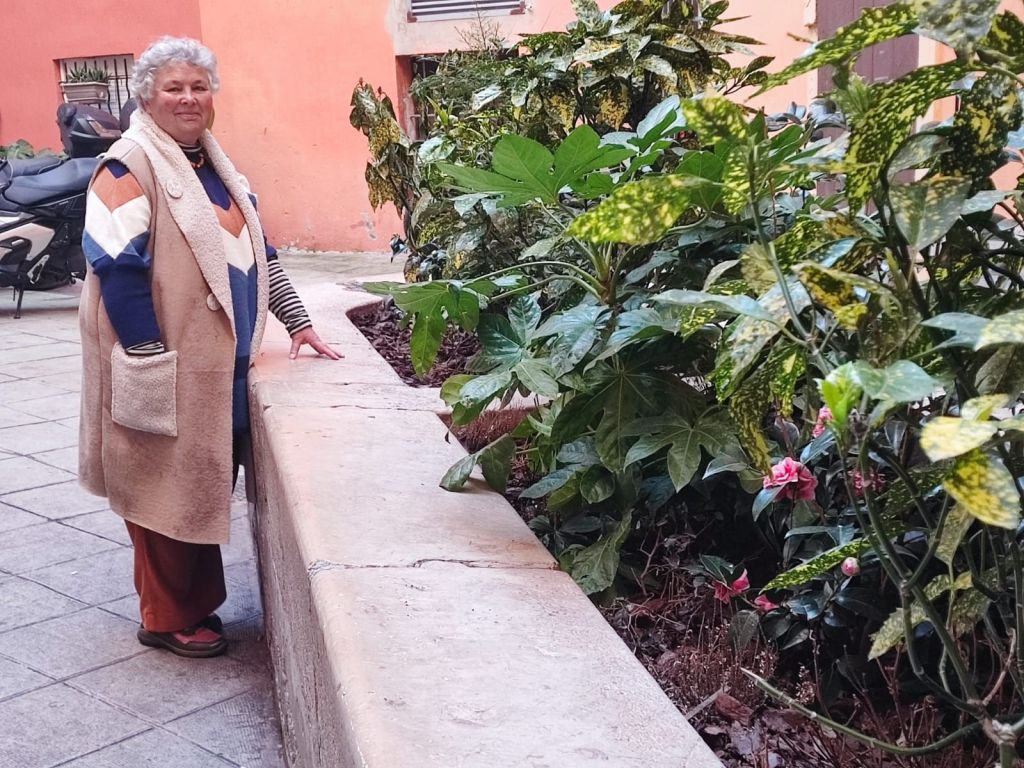
On my last visit to the Old Town in Nice to see Jean-Jacques I was overjoyed to find that the ancient lavoir washing trough is now filled with Jean Jacques’ green plants and camelias, not with beer cans and rubbish as it was on that first visit.
If you get a strong itch to write a short story, then drop everything, if you can, to scratch it. You never know where it might lead…
The other four shortlisted stories for BBC National Short Story of the Year 2024 can be heard here 👇
Ross Raisin, Ghost Kitchen 👇https://www.bbc.co.uk/sounds/play/p0jrst8?partner=uk.co.bbc&origin=share-mobile)
Margaret and Vee on the ‘Titanic’ staircase at the Royal Highland Hotel, Inverness
If writing a novel can often feel like a long and winding road, editing a completed draft manuscript can sometimes feel more like climbing a never-ending flight of stairs. Fortunately my friend and fellow Highland author Margaret Kirk and I are here to help. We share a guilty pleasure – editing the work of others.
For the last year or so we have been considering starting our own joint venture to support Highland writers with locally-based editorial services and now we have taken the plunge.
Margaret is an award-winning short story and crime writer who specialises in Highland Noir. Both of us already have professional (and voluntary) experience of editing work within our own community and beyond. Our skills complement each other well: Margaret enjoys the nitty-gritty of line by line proofing, for example, while I prefer the face-to-face contact of writer mentoring.
We launched CannyEdit at the HighlandLIT gathering on Tuesday 17th October and we have already had a few enquiries as a result.
All our contract agreements begin with a free discussion of the client’s needs, which is entirely without obligation. If you would like more information, why not email us at info(at)cannyedit(dot)scot?
This blog is prompted by a recent commercial post circulating on Facebook which gives one rather poor definition for the Black Isle’s ‘black’ nomenclature and then encourages folk to sign up for a tour with the company.
No thanks.
For those who have never visited my home turf, the Black Isle is not an island but a peninsula attached to the mainland Highlands by a narrow neck of land starting at the River Beauly and ending at the river Conon. To the north it is bounded by the Cromarty Firth, to the south the Beauly Firth and to the east the Moray Firth, opening into the North Sea. It is an area with a warmer microclimate than the mainland, resulting in fertile farmland with rich dark soil and pockets of ancient, lush and biodiverse woodland.
An-t-EileanDubh in Gaelic, there is some suggestion that Dubh, black, is just a corruption of Duthac. The Black Isle was on the popular Elgin to Tain pilgrimage route but St Duthac’s shrine was in Tain itself not at the Chanonry in Fortrose, so I find this one unconvincing.
Let’s explore some of the other reasoning (one added courtesy of Paul Johnson, thanks Paul!): 👇
The truth is no-one really knows why the Black Isle is called the Black Isle, but in this blog I will set out five explanations as told to me as a local at intervals over the past fifty or so years. They are geographical, supernatural, historical, social and natural, with some overlap between the five.
If you know of any others, please get in touch!
A contrasting foreground
The Black Isle in times past would not have been capped with today’s commercial coniferous pine forests, most of which are under 100 years old, and it was known as the Black Isle before that. The backbone, the Mulbuie, was, as the name suggests (buidhe means yellow in Gaelic), so at some point in the past it must have been a golden moorland ridge scattered with peat-moss heather and fragrant whin (gorse) bushes.
So why not the Golden Isle?
The answer is in the contrast with the startling bulk of Ben Wyvis behind and to the west of the Black Isle in winter. Travellers from the south who had slogged up the Slocht must have welcomed the sight of the dark bulk of the low-lying Black Isle (barely 1000′) across the water as they descended towards Inverness, contrasting with Ben Wyvis, our much higher (3000′ + Munro) and weather mountain. From the first frost in October to Easter and often later, ‘the Ben’ has a summit white with frost or snow. We look to Ben Wyvis to predict how the day will turn out weatherwise.
A traditional winter greeting hereabouts is ‘Snaw on the Ben’, usually said with doom-laden glee.
Or…
Black magic
The Scottish Reformation of 1560 swept away a now-forgotten Roman Catholic past. With it went carved wayside crosses like those you see on the continent and local religious tolerence of difference, of the old ways. A fearsome zeal for the new Protestant religion (which, ironically, had its roots in an English king’s lust as well as a desire to purge the Christian church of corruption) swept the Highlands like a brush fire. Standing stones were defaced and broken. Carved tombstones were reused as plainer slabs (see more on that at Kirkmichael).
Accusations of witchcraft became numerous in the 1600s, often aimed vindictively at decent, prosperous women as well as those vulnerable through deformity or madness. The outcome of any witch trial was generally a foregone conclusion, but not always.
Sir Thomas Urquhart, the eccentric genius laird of Cromarty, saved one young pair of Croms who had accused themselves of ‘consorting with demons’ – presumably in the grip of some kind of religious fervour whipped up by an enthusiastic witchfinder. Sir T had just returned from a grand tour of the continent and was having none of it. Rather than agree to ‘the cleansing fire’ he put the pair up overnight, got them merry and encouraged a couple of his servants to ‘dally’ with them. In the morning, sure enough, the accused claimed to have consorted with demons that very night. Sir T quickly saw these gullible souls married to their willing ‘demons’, the sacrament of marriage protecting them from further reprisals. Unsurprisingly the church hated Sir Thomas thereafter, and the feeling was mutual.
More about Sir Thomas Urquhart at Cromarty Courthouse!
Less fortunate was the Brahan Seer, one Coinneach ‘Odhar’ (Dun-headed Kenny) Mackenzie, a Lewis man with the second sight. He came unstuck by ‘seeing’ the husband of Isabella Countess Seaforth – the head of the politically powerful Mackenzie clan – up to no good in Paris, and unwisely sharing this insight with his wife publicly. Coinneach was accused of witchcraft and burned to death in a tar barrel (likely the ferry beacon for summoning the vessel from Ardersier) on the highest point of Chanonry Point, where a mediaeval cross base can still be seen today. Before his grim end he thoroughly and chillingly cursed the great House of Seaforth: he predicted the death of all male heirs before the last of the line himself died, and that this doomed chief would know this time had come when various other clan chiefs had a variety of gruesome disfigurements and disabilities.
Worst of all, Coinneach predicted that a ‘white-coiffed lassie from the East’ would then ‘kill her sister’. Sure enough, once all the male heirs had predeceased Francis Humberston Mackenzie, and he himself had died, his widowed daughter returned from India (and in India, white is the colour of mourning) to take up her inheritance. She was at the reins of a carriage one day when it overturned, killing her sister.
It is not uncommon still for local people to have strange presentiments, perhaps echoes of CoinneachOdhar’s ‘seeing’. It is particularly useful for avoiding Police speed traps.
From black magic to…
Black Raiders
It’s hard to shake off the image of Vikings as tall, blonde, handsome chaps with horned helmets, isn’t it (thank you, Uthred son of Uthred…) but this part of Scotland was colonised by dark haired Danes (because ‘there ain’t nuthin’ like a Daaaaane….’). Although the indigenous locals probably did not welcome these new arrivals with open arms, not all Viking settlement was about dark deeds, burning churches, rape and pillage and so forth. The canny seafarers whose ships once stole, terrifyingly, up the firth under cover of a sea-mist or haar (a fine Old Norse word) would eventually settle and embrace Christianity and intermarry and farm the land just like everyone else. Dingwall was the place of the Thing, the Viking parliament (believed to be under the monument car park near the old library building). And in the Black Isle we still have Udale bay, Old Norse for The Bay of the Yew Trees.
Black Islers who belive themselves to be true locals who do an Ancestry-type DNA test will often be surprised to find a high percentage of Scandinavian blood. Tsk. We were all incomers once!
Or…
Black smokefrom many homes
We have forgotten what it is like to warm ourselves and cook solely with open fires. For centuries people in the Black Isle burned wood and ‘moss’ or peat – turf they cut and stacked to dry up on the common land along the Mulbuie Ridge or even from along the coast. Again, travellers from the south might have seen a pall of yellow-black smoke from hundreds of hearths hanging over the Black Isle, rising from the many coastal chimneys of Redcastle, North Kessock, Kilmuir, Munlochy, Avoch, Fortrose, Rosemarkie and Cromarty.
People disposed of rubbish the same way too. Stubblefields were burned off after harvest to nourish the ground for the next crop. I have a happy memory of being allowed to play in a burning stubblefield, jumping through the quick-burning fires of waste straw in the early 1970s!
Higher up among the heather, too, a paler, more mysterious smoke would once have drifted upwards, juniper wood burned to fuel dozens of illicit whisky stills. Winters in the past were longer and harsher than they are now, and a dram of uisge-beatha helped them pass more easily. One Statistical Account relates that there were more whisky stills in the Black Isle than anywhere else in the Highlands.
The first legal distillery was licensed to the Forbes clan in Ferintosh.
Or…
Ancient Woodland
My friend Paul Johnson points out that there are still legacy Caledonian-type Granny Pines all over the Black Isle, from Mount Eagle on top all the way down to sea-level. Many are hidden either singly or in small groups in the current forestry plantations (and Gallowhill, Blackhills and also on the Rosehaugh estate to name just a few) and also in more deciduous woods such as the Beechwood at Raddery and the natural Birchwoods at Gallowhill – even in the Oakwoods at Drummonreach and Tore.
Many of the plantations and other woods are included on the Ancient Woodland Inventory for Scotland, almost all in fact. The Black Isle was once (maybe still is) home to Capercaillie and still has many of the usual pinewood residents, from Pine Martens to Crossbills. We still have the Bog Woodland Monadh Mor which is not considered part of the Caledonian Pinewood Fragments inventory for some stupid bureaucratic reason, but it should be!
Mature pines are dark green that look black from a distance. Most of the Black Isle may well have been part of the Great Wood, but it was systematically felled for timber and to clear land for farming and housing over the last 1500 years or so. Perhaps there was always a moorland ‘top’ above the trees, covered in moorland and whin, hence the ‘Mulbuie’ ridge – looking a bit like a monk’s tonsure.
From a distance, a mass of ancient woodland would look black…
So…
.. landscape, witchcraft, Vikings, whisky or ancient pines could all explain why our Isle is known as Black today.
For many of us who were ten years old in the early 1970s, our darkest repressed memories of cruelty and mutilation, if not actual murder, have been stirred up by the phenomenon that is the Barbie movie.
I had always hated traditional dolls, especially their slow, sinister eye-closing when tilted backwards. When (at the Bogroy Inn aged about six) I was told to hold a baby doll and sing a lullaby, I dropped it on its head. People laughed, but it was an act of protest, not an accident.
Golden Slumbers kiss my ***.
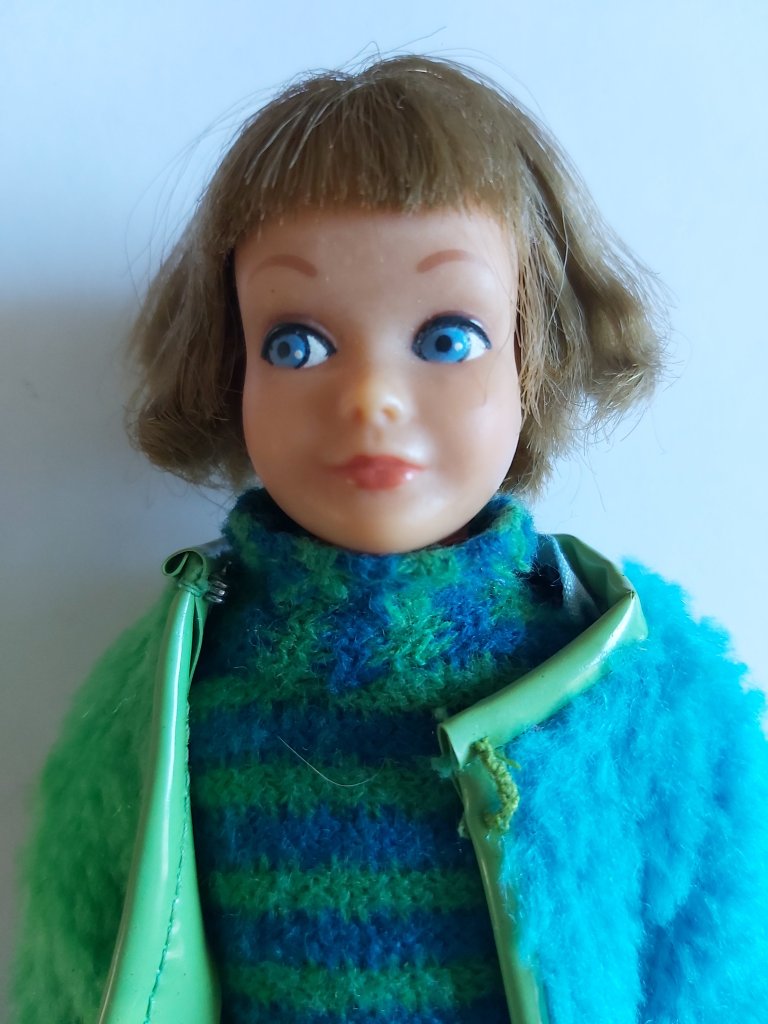
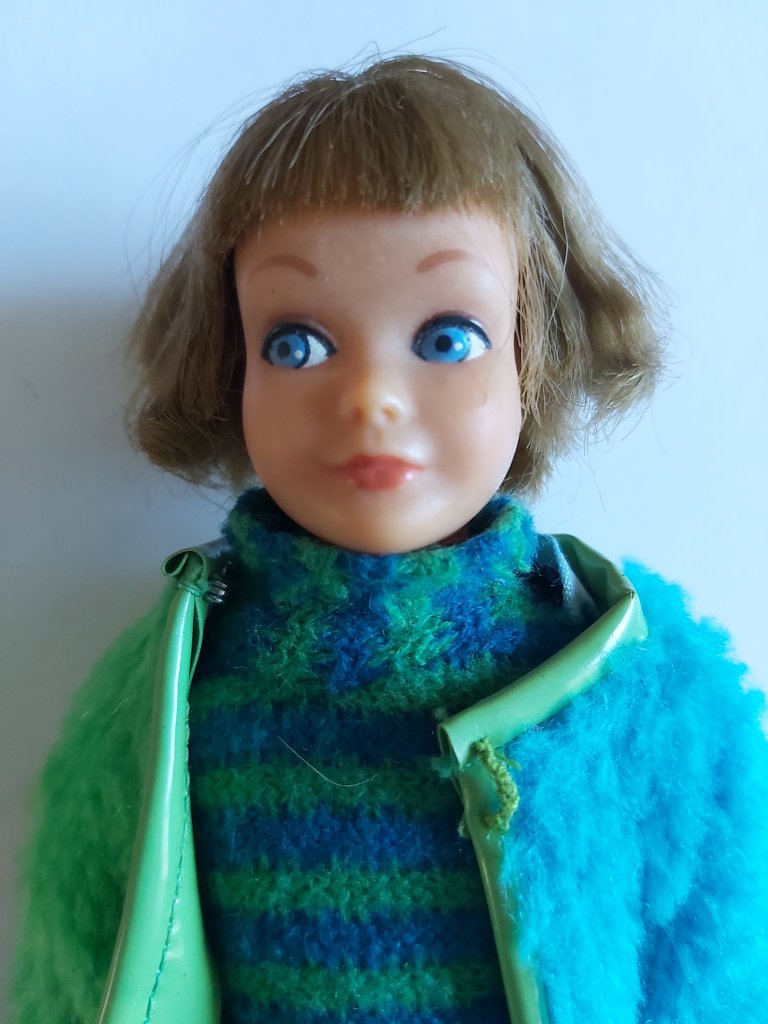
Sindy was still too much of a fat-head for me and so I shunned her: but when my eyes met those of Skipper across a crowded toyshop, I knew she had to be mine.
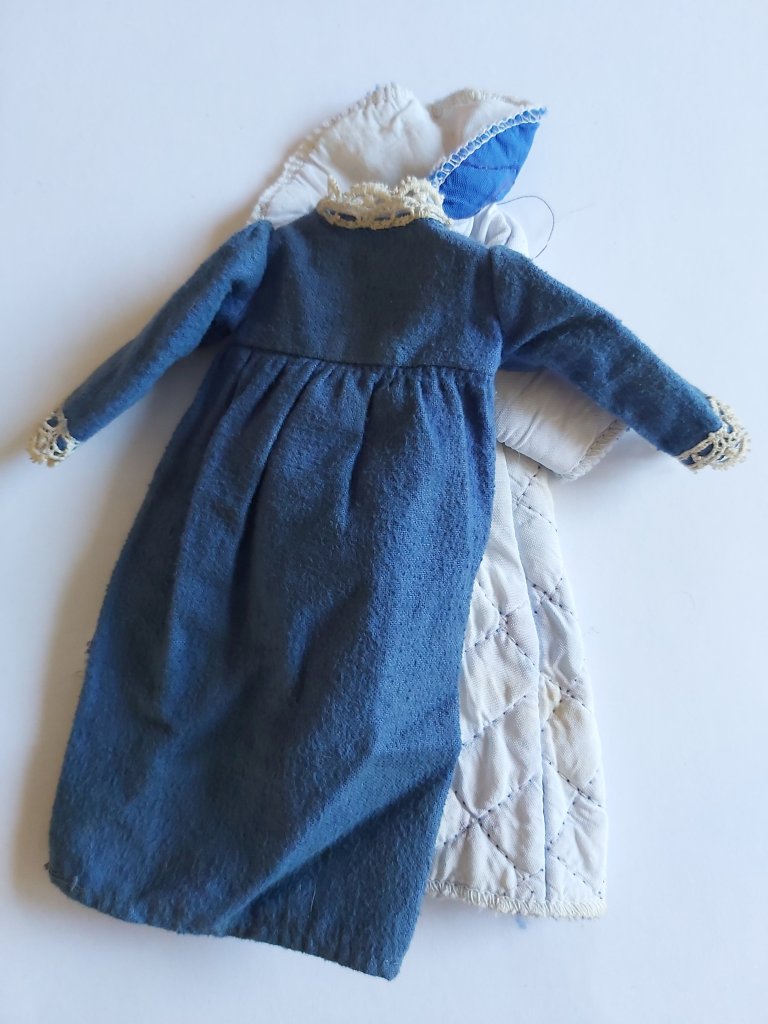
Marketed as ‘Barbie’s kid sister’, Skipper was like me: mouse brown hair, flat chested and flat-footed; something of a relief after her long-legged, wasp-waisted, pointy-boobed and arch-footed blondie big sister. Also like me, Skipper wore a dull blue flannelette nighty with lacy bits at the neck and cuffs, plus a sensible quilted dressing-gown for the Highland winter.
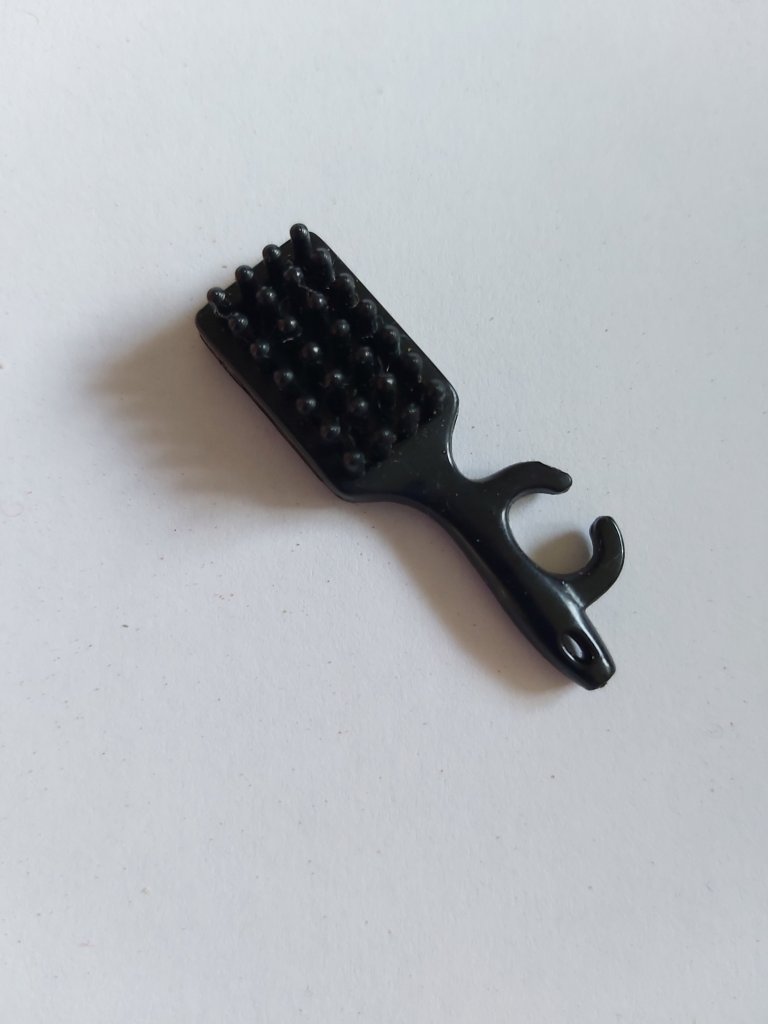
At first she had long hair, which I forgave her, but like all those early Barbie locks it seemed to have strayed from the Oppenheimer movie set, radioactively charged. Eventually all their hairstyles became crackling mushroom clouds of static fuzz. I quietly swiped Mum’s nail scissors to deal with that and soon Skipper, like me, had short curly hair, the shorn evidence stuffed down the back of the sofa. It was at that moment of personalisation that she became unique and mine, so all my Barbies followed the same trend.
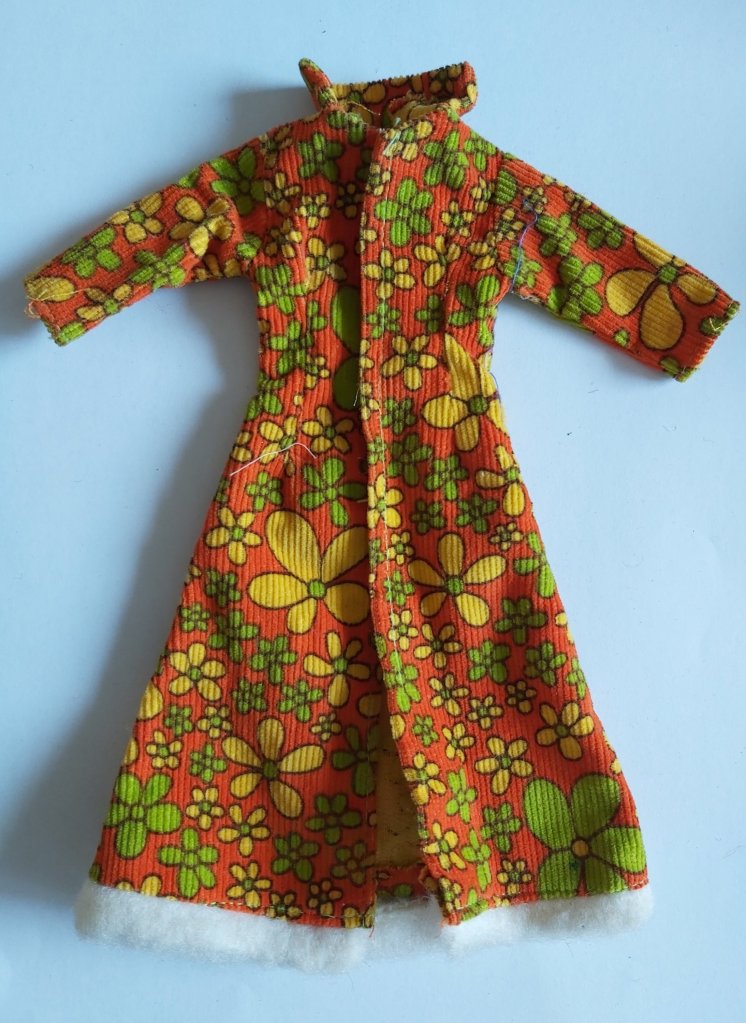
The only thing I disliked about Barbie and Skipper et al were their ridiculous names. This was a serious friendship and I knew they could not possibly like their ‘box names’. They might wear gold and silver lamé bathing costumes and Flower Power maxi coats but they weren’t American to me. They were born – or unboxed, rather – in Scotland.
It never occurred to me that Barbie was short for Barbara (and in any case the only real Barbara I knew used to torture me behind the school shed). Mum suggested I should just rename them, but that didn’t seem respectful. These weren’t gormless baby dolls after all. They were sentient, real. And they had been sold in a box with their name on, whether they liked it or not.
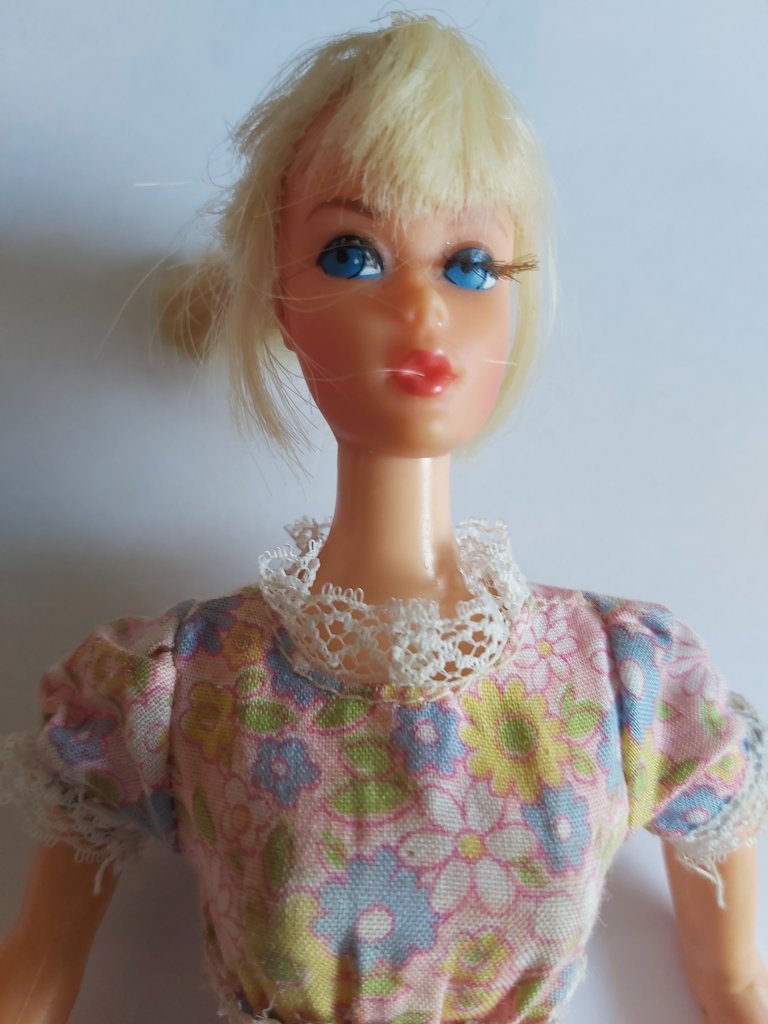
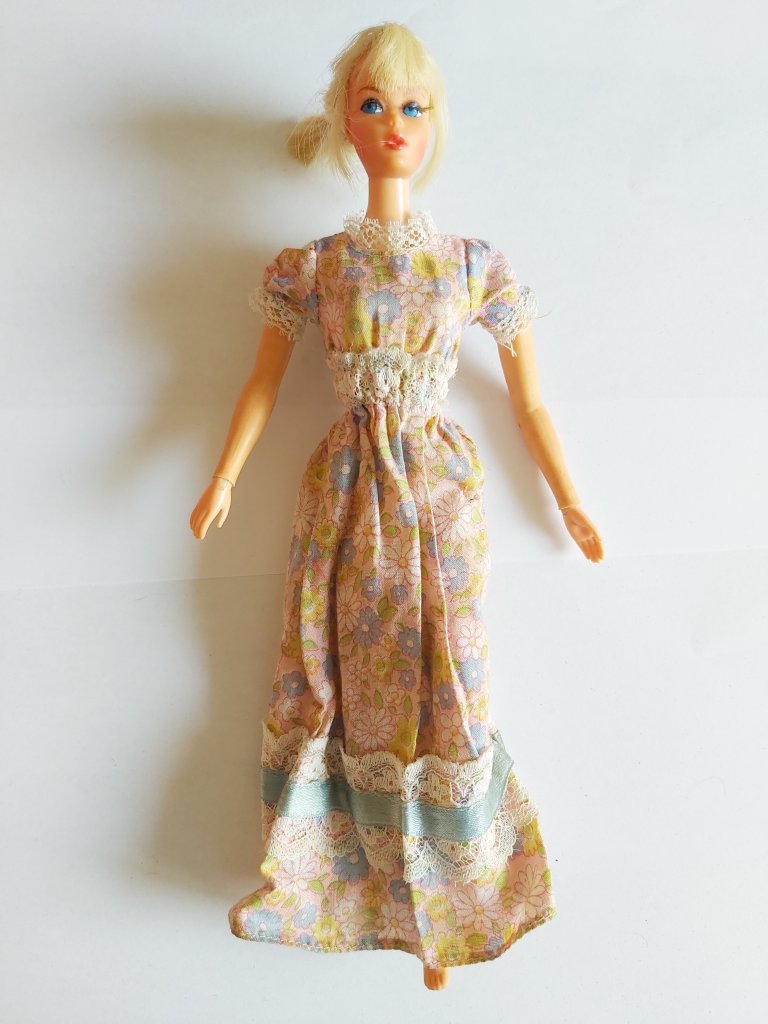
And so they became my eternally-nameless companions, whom I thought of collectively as ‘Them’. I had, at one point, about seven of the Them, of whom just two (my short-haired mouse-brown Skipper and a shorn blonde Barbie, the latter still wearing the Most Beautiful Dress In The World) survive today.
At Peak Barbiedom there were two Skippers and four Barbies: some had knees that bent with an arthritic succession of clicks; some, rubbery arms that bent like they were hefting a pint until they broke at the shoulder through overuse to dangle uselessly at their sides; some, like the Barbie I kept, had a daintily angled head turn.
I truly loved Them. They were my only utterly dependable friends. I have kept two of Them for over fifty years, through over seven house moves.
How could I not, given the secret we share?
All looked sideways. None made eye contact. Nor did I. So He should surely have suspected something. There was only ever the one Ken, and he didn’t last long.
He wasn’t really a Ken, either. That was the thing. He was either a ‘Big Jim’ or a ‘Mark Strong’, I can’t remember which it said on the box (Mark Strong was I suspect the meeker British branding of Big Jim. Perhaps the latter would grow up to wear a bow tie and direct the British Museum, although he would need to ease up on the testosterone to manage such a transformation).
The real Ken was originally intended for boys to play with, not girls, but boys turned out to be ‘brand-resistant’, as some ashen-faced marketeer at Mattel probably pointed out in front of a chart showing his bombing sales figures.
Then Ken was launched in the UK as ‘Barbie’s boyfriend’, and every girl in Primary 7 at Inchmore School wanted him. At ten we were beginning to be curious about, if not actually interested in, boys. Our paths didn’t cross much with the real thing. They even had a separate shelter in the swampy school playground, just in case they contaminated us. No, none of the scowling, grubby, football-obsessed boys of Inchmore looked at all like the marketing pictures of Ken.
What wisdom might Barbie’s tall, handsome and mysterious new boyfriend impart? I had to know.
Mum bought my compliance for a trip to the dentist in Inverness (up the echoey stairs beside the station for a painful encounter with Mr Robertson or Mr Allan) with the promise of a Ken. Alas, once in the toyshop (Melvens? Pentangle?) we found they were clean out of Kens. I was more than a bit wobbly-lipped. I had had a jag and a filling and everything and not made a fuss, after all, and a deal was a deal. We only went to Inverness on the ferry a few times a year. A wasted trip was not to be countenanced.
Moreover, I had told my friends Jennifer, Wilma, Yvonne et al that I was going to get a Ken, so a Ken I jolly well had to have.
Then the kind lady said, ‘Ah, but these have just come in.’ She placed a plastic box on the counter. ‘Still Mattel, see?’ She pointed to the branding on the front.
‘Perfect,’ said Mum, lunging for him before I could really look. She hurriedly paid and handed the box over to me in the car with obvious relief. ‘See? Just the same. A Karate Ken.’ I tried to look enthusiastic, but I really wasn’t so sure. What I could see of ‘Karate Ken’ below his cheesy grin did not looked particularly enticing. And his name Wasn’t On The Box.
Would They take to him?
Kens and Barbies (I can’t quite say dolls – they were never dolls to me) were always held in place in their boxes by plastic-coated wires which it took a lifetime to undo. My ten-year-old self used to mutter ‘nearly there’ to reassure them as the fiddly process of release was brought about: I associated this with an awakening of sentience. But Ken/Mark/Jim or whoever he was looked positively delighted to be so confined and equally delighted to be released. I did not yet know or use the word vacuous but there it was in person.
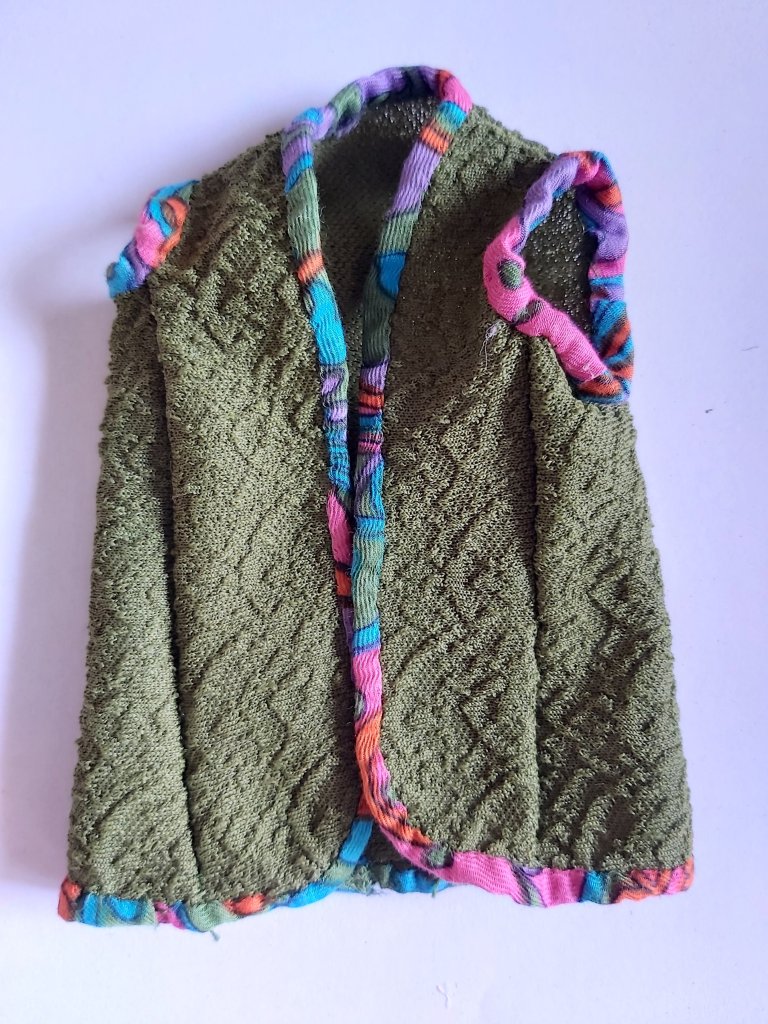
He was wearing a white karate outfit surrounded by other manly karate accessories attached to the backing card with nylon threads as tough as cheesewire. It was never about the clothes for me, though. It was always a struggle to dress any of them in the garments they came with, the sleeves were so fiddly. Perhaps that is why so many shoebox outfits have survived in good nick for fifty-odd years.
I undressed him on the back seat of the car only to find that his rigid plastic hair was not the only thing welded on. So were his underpants. This was disappointing for some disturbing reason I could not yet pinpoint. His neck was bull-like and his head fitted over it, not on to it, so a hard seam showed. It looked rather as though he had been guillotined, then had his head stuck back on, but there was nothing of the suave French aristocrat about ‘Ken’. He was covered in very large, very rubbery muscles, had bizarrely articulated knees and a right arm that karate-chopped when you pressed a round panel in his back.
He was, to put it simply, gross.
Once home I wondered how I was going to introduce him to the massed ranks of my fun-loving tomboy Skippers and more glamorous and refined Barbies. I needn’t have worried. They took one look at him and my bedroom rocked with cruel laughter, for I had not spotted one last appalling detail in the car. This ‘fake Ken’ was for some mad Mattel reason made to a slightly smaller scale from the others. The Barbies were way taller than he was, and that wasn’t just because Barbie was strutting about on her impossible heels. I mean, everyone knew girls couldn’t ever ‘go with’ boys shorter than they were, for goodness sake! I could see They all hated him on sight.
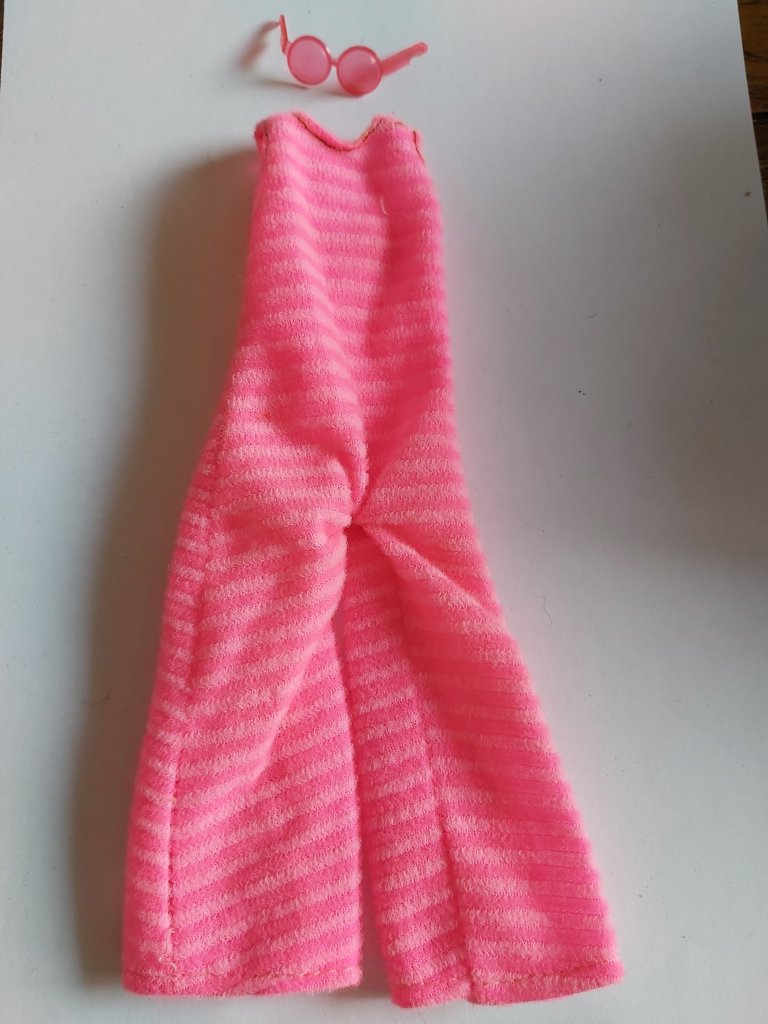
Once Mum and I had started to watch Colditz, one of the meaner Barbies (who always wore the pink striped jumpsuit) pointed out that if I raised Ken’s arm above his head, then pressed the panel in his back, he gave a very creditable Nazi salute.
And that was the most interesting thing ‘Ken’ ever did. Almost.
I did take him to school once in the early days. Sharon (who had perfect hair and at least two real Kens) said, ‘That’s not a Ken.’
‘He is though!’ I blustered, knowing it was a lie.
‘No he’s not. He’s too short. And look, he’s all funny and lumpy. Yuck.’
I couldn’t really argue with that. I thought he was yuck too. ‘Ken’ was relegated to the bottom of my schoolbag. At home They began to pinch his dumbbells and try on his Karate gear, which fitted them rather better than it had him.
‘Ken’ lay abandoned in one corner of my toybox, his legs splayed at a vulgar angle. It was then that the plotting began in earnest. He might have cost my poor Mum hard-earned cash, but he was not one of Us. He had to go.
Our first attempt at permanent disposal was when I attached a home-made parachute to the naked-except-for-his-plastic-underpants ‘Ken’ with Sellotape and threw him up over the roof of our house. To my disappointment he failed to tumble down the chimney to become a writhing mass of hot plastic on the embers or to be snatched by a passing bird of prey. No, he made it right over the tiles, landing in an apple tree, from which my suspicious Mum disentangled his slowly spinning, still grinning form. When interrogated They – and I – said nothing.
Our final Wicker Ken moment came when Mum called us back down to the car. I looked at Them and They looked at me. We knew then without a word spoken that ‘Ken’ wasn’t coming home.
The final, fateful day of cold-blooded execution took place during a summer treat outing to a favourite burn referred to only as ‘up Strathconon,’ near a mighty bridge where sometimes we would swim. We loved to explore this burn. They would clamber up and up it, build dens in the heather, taking refreshing dips in the rockpools or sunbathing on the garnet-speckled granite outcrops wearing cool shades. Meanwhile Ken or Jim or Mark or whatever his bl**dy name was would just lie there, ape-like, in his plastic underpants, grinning at the sky.
As we walked back down the burn to Mum’s Morris Traveller, ‘Ken’, his arm still fixed in a Nazi salute, began to dive into the water just upstream of the many waterfalls en route. We would watch him plunge over and downwards into the depths, before bobbing to the surface with that repugnant smirk. Then, at the highest, deepest waterfall, We took him by one leg and threw him in a spiralling arc high into the air. The setting sun caught his face and I will swear to this day that there was the faintest tremor about his perky lips as he smacked the smooth, peaty water above the falls. The Barbies sniggered. We caught a flash of his red plastic underpants as he shot over the edge to plunge down, down, down into the darkly frothing water below.
He never came up again.
I looked at Them. They stared back in mute defiance. I gave a desultory poke about in the pool below the falls with a broken stick, just so I could say I had looked, but Mum was calling again. Collective feminism personified, we turned as one our backs on that smug plastic interloper – and condemned ‘Ken’ forever to his watery grave.
Perhaps someone else found and rescued him. Perhaps he is still down there somewhere, bravely leering through the slime. And although over the years I have returned to the same picnic spot up Strathconon many times, it is never, ever, without a tiny, thrilling, shiver of guilt.
Did you have a Barbie, a Skipper or a Ken? Feel free to share this post if so…
Vee Walker is an author and editor based in the Scottish Highlands. Her prizewinning archived-based novel of WWI, Major Tom’s War (an adventurous love story) is available in paperback and ereader editions from Kashi House 👇.
I know lots of people – through my writing, through my heritage consulting, through my travels, even through my schooldays fifty or so years ago. The number of individuals I would count among these folk as friends – true friends – is however very low in comparison.
Facebook’s subversion of friendship is insidious. It teaches us to value quantity over quality. My ‘friends’ on social media are simply people I know or with whom I share a mutual interest. I like most of them, enjoy the company of many, but real friendship involves that icky-sticky hard-to-pin-down basic human need – love.
I love my family and my first and second husbands dearly. That goes without saying. I also consider them my friends (and yes, that includes both husbands). There are just five or six people excluding family I would consider to be close friends and, yes, I love them dearly too: I will spare their blushes here, for they must surely know who they are.
Losing friends one has grown to love hurts and as I grow older, bereavement becomes a grim fact of life. Many of my closest friends have been decades older – and the gaps their deaths have left in me will never heal. To me the dead are not lost or late, they are gone – from here at least. It is a lonelier world without them.
Making new friends for me is a slow and layered process. Friendship is rarely instant. As a child I suffered badly whenever I moved school or when a friend moved away (dear Fiona W. from Inchmore Primary circa 1970, where, oh where, are you now?).
Losing living friends through fallings-out or (worse) for reasons unknown I also find acutely painful. I tried recently to analyse all the friendships where we have drifted – or torn ourselves – apart.
Friend 1 (the underappreciated friend?) was the person I called the day of a traumatic rural accident in which I broke my wrist. My husband was away and so I asked F1 to look after my daughter – her own daughter was a frequent playmate. She was a single mum and often came round for meals and company so I thought she would not mind helping me out. She agreed to collect my daughter from the waiting ambulance. I thought I had thanked her adequately for her help once I returned from hospital plastered up, but perhaps not.
Somehow, after that day, F1 became cold and distant and never returned my calls. I moved away and never heard from her again – but once, on a recent whim, I made contact with her charming now-grown-up daughter on Facebook and she offered to put her mum in touch.
In the end, though, I could not face following it through because of the elephant which would have been sharing the conversational sofa in the room: why did you drop me all those years ago? I would have walked over hot coals to help you.
With Friend 2 (the exploited friend?) it was more clearly my fault: I broke the golden rule of never employing an old friend, did so hoping to help her, and ended up losing her friendship because I did. The consulting contract we were working on as a team of three expanded hugely after commission but the fee did not: I was too inexperienced to do anything other than soldier on and we all shared the financial hit. F2’s refusal to talk what happened through or to resume our friendship ever since still makes me very sad.
Friend 3 (the fickle friend?) was a delightful neighbour I considered a permanent part of my life. I chose her – very carefully – as Godmother for one of my children, but once I was no longer living on her doorstep F3 just seemed to sever all contact, never once picking up the phone and not returning my own calls. When a letter went unanswered too I thought enough was enough. I would find it difficult to renew acquaintance with her now because of the impact of her unaccountable neglect on my daughter.
I then stumbled across evidence that Friend 4 (the opportunistic friend?) was rather more interested in my husband than in me. She brushed off the message I had intercepted accidentally – a seismic shock to me – and has never given me an adequate explanation for what happened: F4 had however been through a recent painful divorce, and I had been supportive, or so I thought, during that time. Just telling me properly what had happened (and how, and why) could have helped mend some of the damage.
We still see each other from time to time socially but I never feel wholly relaxed. Now that the fundamental trust (on which I realise my friendships have to be based) has been broken, I am not sure how to recover it.
Friend No 5 (the embarrassed friend?) may, I think, have felt exposed because I inadvertently witnessed a very public row between her and a loved one. I cannot think of any other reason why I should be slowly marginalised. I do not think I am dull company and I try to be a kind and supportive, but who knows? Maybe F5 is choosing to withdraw from our friendship for some other more personal reason I cannot fathom, and so I simply need to accept it. I just wish she would explain, rather than leave me in the dark.
Feeling under-appreciated, exploited or embarrassed – or behaving in a fickle or opportunistic way – are of course all valid reasons for the permanent ending any relationship or friendship. I have had serious misunderstandings with other friends and family members however which have been resolved amicably through grace and kindness on both sides and (crucially) a genuine desire to forgive. And it is in my nature to try to mend things: people as well as pots.
In trying to work out why it is that I care about a friend now missing from my life (in one case) for almost 30 years, the answer has to lie with the autist in me. My hamster-in-a-wheel brain likes to resolve things but this, this proves insoluble. That one of the happiest moments of my life in recent years was when the old friend (who would have been No 6 on this list) reached out to make peace says a lot, I think.
That the others have not wanted to do the same – or could not be bothered to – I find unfathomable.
One of my grown-up children gave me an enlightening tutorial recently on different gender preferences and sexuality. One category I had not come across before is demisexuality: those quiet souls who love rarely and deeply and who can grow to love only those they already know well. This struck a chord, and explains perhaps why I have remained good friends with my first husband. I wondered if the same might go for the making and sustaining of deep friendships.
Perhaps you are reading this post and thinking ‘oh, for goodness sake, woman, so you have lost a few friends over the course of a lifetime? Everyone does! Stop brooding about it – just go out and make a few more!’ And you may have a point, although making friends is never something I can accomplish easily or take lightly.
I miss these people. I always will.
Perhaps writing this blog can in some way draw a line under my grieving for five living – yet, so far at least, lost to me – friends?
Vee Walker is an author who lives in the Scottish Highlands. She is also an editor specialising in memoir with Jericho Writers in Oxford. Her award-winning novel Major Tom’s War is available in paperback and ereader editions from http://www.KashiHouse.comand her second novel The Patiala Letter is approaching completion.
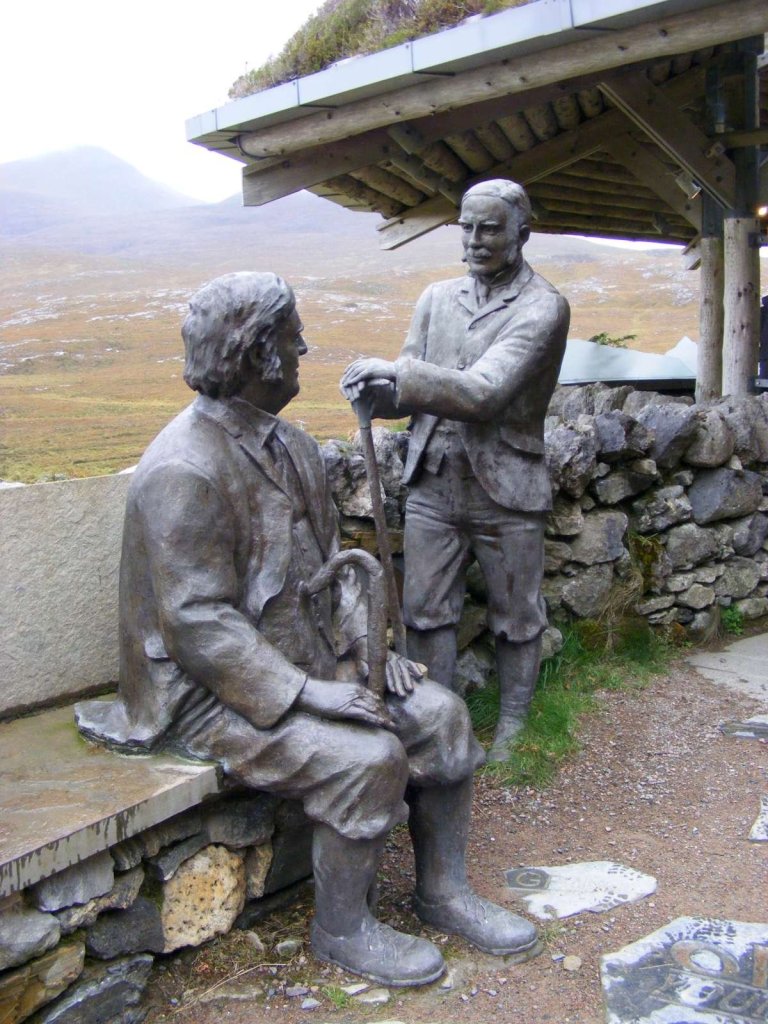
This short story won the Fiction Prize for the Hugh Miller Writing Competition2019 and was first published on the Scottish Geology website, which no longer seems to exist. I have added a few pictures for local colour! Recipe for Cinder Toffee available on request…
‘Well, he is not going to be happy with us, John.’ The speaker, a broad-faced, tweed-clad and generously-rumped male, did not for some reason sound altogether sorry.
The wall clock in the echoing stone hall outside the Edinburgh University office chimed the hour of their appointment. The friends sat awkwardly on a pair of wooden chairs rather too small for their bulk. Both had removed their deerstalker hats and were kneading them between their hardened and scarred palms, tattooed with grit from a lifetime’s work. Their draft report, all 800-odd pages of it, and the precious box of samples, took up a third spindly chair between them.
Although neither realised the other was imitating his own actions, each would reach out and lay a hand on the substantial mound of their findings, seeking reassurance as the moments to their ordeal ticked down.
Their mission had been quite plainly set before them several months before, in the very office of the British Geological Society (Edinburgh Branch) which they were about to re-enter. Professor Archibald Geikie, no less, had requested their presence. There he had sat, peering at them over gold-rimmed spectacles from behind his vast rosewood desk. He proceeded to fulminate at the upstarts who had dared to question the clear and the logical and indeed, to his mind, the natural order of things geological.
‘Geology is formed of layers, gentlemen!’ he had spat. ‘Immense layers which form over the course of aeons, but which must, logic dictates, follow the chronological settlement of all creation. What is geology save one sedimentary layer formed on top of another since the time of the Flood, as Murchison has pointed out so often.’
The younger of the two listeners unwisely cleared his throat to interject, ‘But… Lapworth?’
‘All his nonsense about those uppermost rocks in some dismal corner of the Highlands proving otherwise? Pah! Young Lapworth is merely spouting the heretical writings of his false idol Nicol. It is all bunkum, d’y hear me? Utter bunkum!’ John had found himself agreeing, more out of awkward politeness and the sheer force of The Great Man’s presence than assent.
His friend instead chose to hold his tongue.
‘You do not share The Great Man’s views then, Ben?’ John asked him, as they traipsed with relief down the staircase towards the damp, grey Edinburgh air.
Ben had smiled at John’s use of their ironic nickname for a crusty superior and shrugged. ‘Not that long ago, all Old Red’s theorising about fish growing paws and clawing their way out of the mud was portrayed as the ravings of a lunatic, remember? Now Darwin and everyone else seem to be in agreement.’
John nodded, thoughtfully. Hugh Miller – nicknamed Old Red for his beloved sandstone – had been a favourite of all their circle until his sad demise; a blend of gentle Highland rustic and touchingly devout self-taught academic. Ben shook out his black umbrella at the foot of the stairs, looking down and prodding the last step with the toe of his boot. ‘See, he would have liked that. Hugh’s sandstone used for the fine new university. He wondered whether we are becoming too greedy for the treasures of the earth. We take them without thought.’
John nodded again. ‘Greedy for knowledge too?’
‘Sometimes only insofar as it accords with one’s own views,’ Ben chuckled.
Once out on the Caithness flag pavement, he grinned at John from under his umbrella. ‘If I have learned one thing from my life in science thus far, it is that utter certainty of any scientific fact can be a dangerous thing,’ was all he chose to add.
John understood his friend perfectly. For upstairs, Professor Geikie, puce-faced with professional ire by the end of their interview, had been very clear in his instructions; all but ordering the two geologists to go and prove that he and his mentor Roderick Murchison were in the right.
˜
Six months had passed since their last encounter with The Great Man. He had penned several increasingly terse letters enquiring as to their progress, which they had felt it best to ignore. Now here they were once more.
They sat in silence until the younger of the two snorted, ‘How I should prefer to be back up on the road to Ullapool instead, eh Ben?’ The other nodded. Neither was in his natural habitat, there in that cold and echoing vestibule. They belonged instead among the rough heather and steep hillsides of the North-Western Highlands with only each other, and an occasional golden eagle, for companionship.
‘D’ye recall that day?’ Ben continued. ‘We’d paused to catch our breath after that steep section. Eyeing our meat-paste sandwiches made by the landlady in Cròic a Chnocain.’
‘Ah yes. The damp little croft overlooking the burial ground.’
‘Very poor sandwiches,’ reflected his companion, shifting his considerable weight from one buttock to the other, making his chair groan. ‘The same every day, too. The only lodgings to be had that near to the Crag, though.’
‘Certainly closer than that rather grand hotel. And she was a kindly enough old thing.’
‘No English, only the Gaelic.’
‘Fìor fhìor! No packed lunch on the Sabbath, remember?’
‘Ah, but that extraordinary sweet confection she made…’
‘Wrapped in brown paper.’
‘Quite delicious, wasn’t it? Made up for everything else.’
‘Indeed.’
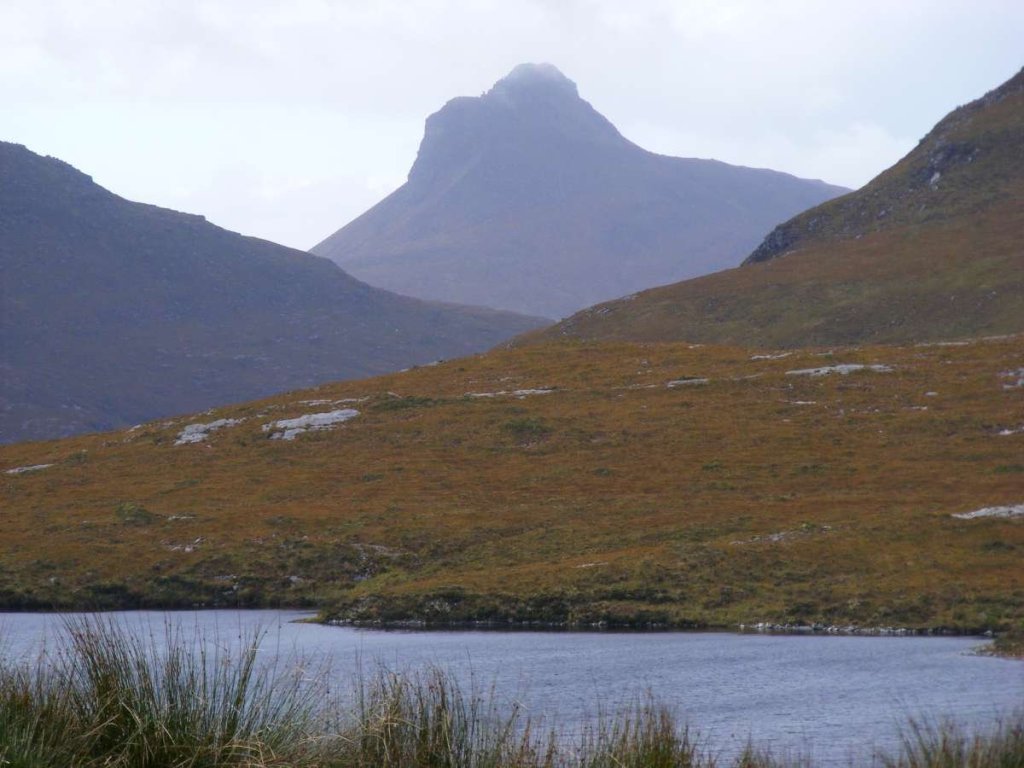
Transported by their shared memory, the friends allowed themselves to recall that extraordinary day: again they felt the clean air and rain on their faces, again they heard the rattle of a ptarmigan from high on the slopes above the crag. They had been glad to pause for a while and rest, even if it meant consuming their forlorn meat-paste sandwiches. Lochan an Ais lay spread below them, its grey, rain-pitted surface broken only by a lone great northern diver, its plumage sleek and oily in the downpour. Cul Mor soared beyond, her face veiled in heavy mist.
‘A bitty dreich, as they say in these parts.’ John could feel the canvas bags which would contain their specimens for the day were growing heavy with rain already.
‘Indeed. But see how the wet brings out the fine pattern in the rocks, John.’ The younger man glanced at the speaker with considerable affection. How many times had he heard Ben bring out this phrase as mitigation for the most atrocious West Highland weather? He knew the debt he owed his old friend. He, John, had the technical skills: could sketch accurately, write plentiful notes and find a perfect turn of phrase to describe a specimen, but he was the first to acknowledge that it was Ben who had the eye. It showed in his paintings of the hills.
That morning the crag had shimmered in the bright light, every available rock surface wet. As he stared upwards, Ben’s head had inclined slightly to one side in a thoughtful manner which John had come both to anticipate and, occasionally, dread. ‘Up yonder today, I reckon, laddie. Perhaps we may reach the base of the cliff before we drown, eh?’ John was no longer a laddie by two decades or more; but Ben had been gently teasing him about his comparative youth for as long as he could recall.
They worked methodically as usual, measuring, pacing, at times with the whole drenched hillside between them; at others, hunched head-to-head over a specimen, magnifying glass in hand. They spoke only in geological labels at such times:
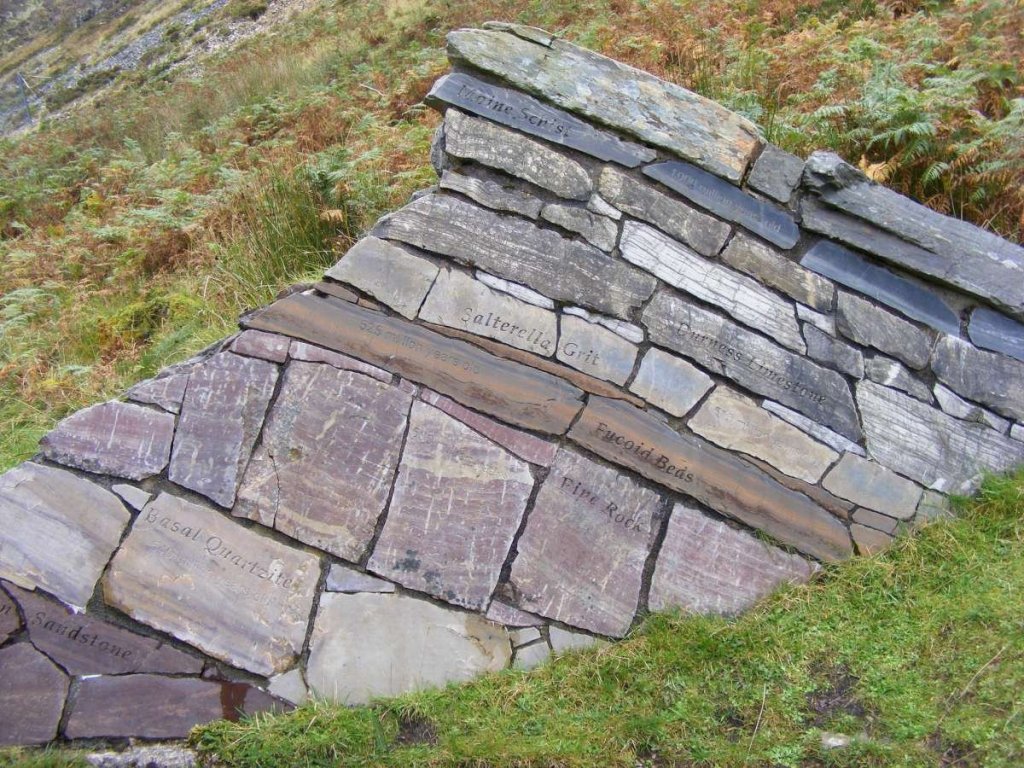
‘Pipe rock. Perfectly clear, look there, and more here. Durness limestone too.’
‘Fucoid beds, Salterella Grits. Only what one might expect. The correct sequence. And yet…’ John searched for words which would capture the nature of these oddly compressed sediments.
They had spent months now working slowly around several other crumbling cliffs in the area. In fair weather and foul, they were up and out just after dawn, providing a generous food source for midges and the occasional tick, nourished daily by hip flasks of whisky, dubious sandwiches, and sublime confectionery. In pencil, in dozens of notebooks, they meticulously recorded their still-inconclusive findings. What they had found was a curious mix. Perhaps it was due to glaciation, this odd jumble of layers, they had thought at first. Freezing and thawing can crack and shatter rock. And yet each of them knew in the depths of his soul that the answer did not lie in a glacial event of mere thousands of years ago.
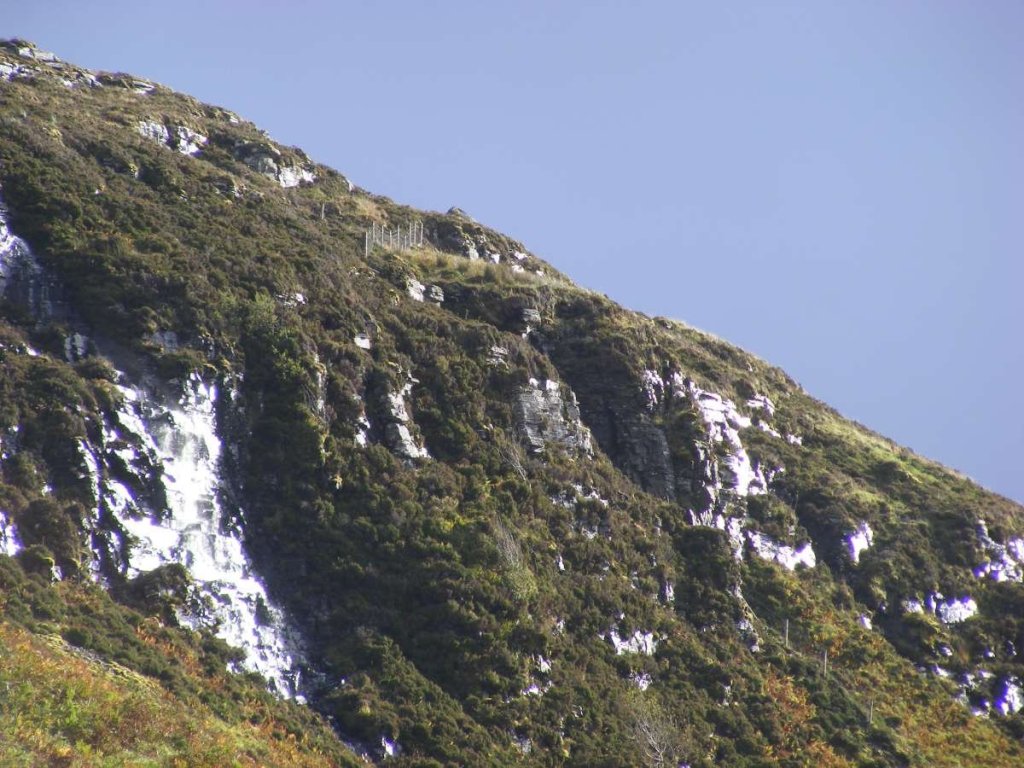
They paused to eat their dismal ‘pieces’, rendered even less palatable than usual by the steady rainfall. ‘John, I must be getting old,’ said Ben, rising even as he chewed from an area of limestone where he had crouched and been prodding. ‘I am feeling the damp in my bones today.’ For a fleeting moment John wondered if his colleague were suggesting they call a halt and retreat, but no such thing. ‘Come, a little treat. Let us warm ourselves by ascending fast to the foot of the crag instead. We might find shelter from the rain in its lee, too.’ He was up and off like the proverbial mountain goat, leaving John to pack the morning’s specimens and plod up the zig-zagging cragside deer track in his wake.
Ben’s cry rent the still air asunder. ‘Here! John, hurry! This is it!’
John had no need to ask what it meant. It was their Holy Grail, the conclusive proof – or disproof – they had been instructed to seek.
John dropped the bags and began to scramble recklessly straight up, the flaky scree slipping beneath his feet. Ben was on his knees at the foot of the crag, as though at prayer. ‘At last, John. See? Clearly Pre-Cambrian, yes? Schists, great sparkling layers of them. And all so… so altered.’
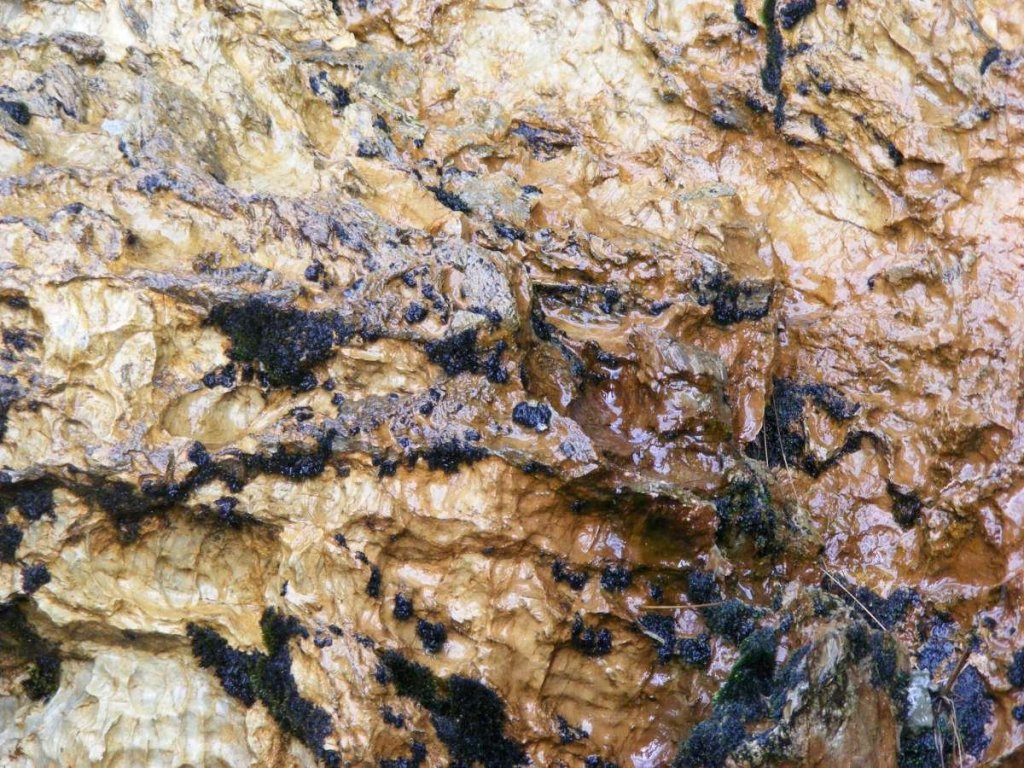
John joined him in worship at the shrine, impervious to the wet now soaking through the tweed of his plus-fours. He touched the pale gold outcrop with disbelieving fingertips. ‘None of this should be visible! It is surely millions of years more ancient than the Cambrian layers we recorded below?’
‘Yes, as though something has thrust the very burning bowels of the earth upwards, to raise them to the surface. Ye Gods, what mighty force can have brought this about?’ demanded Ben. He was pale now, shaking. John was at once more concerned about his friend’s wellbeing than their momentous discovery. He rummaged in his pocket and drew out the small packet of brown paper. ‘Here you are, old fellow,’ he said. ‘It’s a shock. Eat some.’
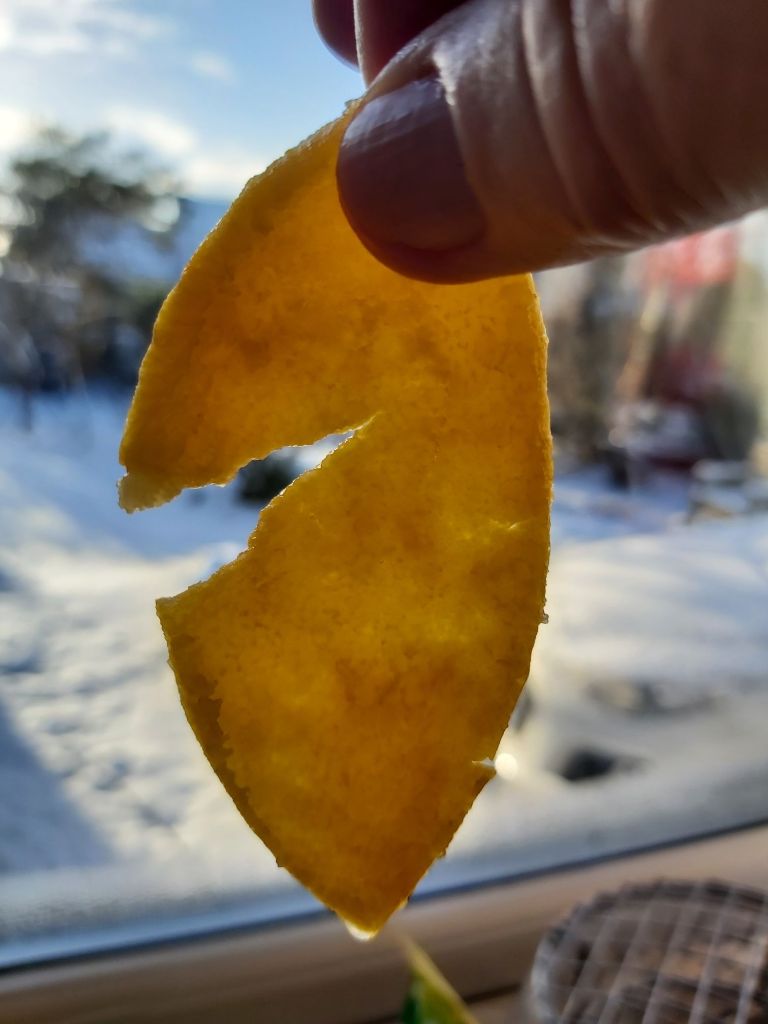
Instead Ben held a piece of toffee up against the hot-yellow, cold-bubbled rock before them. ‘John,’ he said unsteadily. ‘How do you think she makes this stuff?’
Puzzled, John replied, ‘Well. Sugar, clearly. Then…’ Light dawned. ‘Then, she must superheat it. Mixes in something else to change its nature, as it boils?’
Ben nodded, still staring. ‘I watched her once. Bicarbonate of soda. The mixture surges upwards in the great iron pot as a scalding, foaming mass, quite altered. Then she pulls it from the fire and tips it out on to a buttered tin tray to cool.’
‘And when it is hard,’ said John softly, ‘She borrows one of our hammers.’
‘Yes! Bang! Bang! Bang! Elemental powers, John. Pressure, heat. We have been seeing the rocks as too fixed.’
‘Exactly. Given sufficient force they can be changed, turned topsy-turvy. This proves it. Wonderful!’ said John, already pulling out his notebook. Then he paused. ‘I say, Ben. The Great Man. Lapworth…’
‘Yes,’ said Ben. ‘Quite. But we tell no-one. Not yet.’
They then fell on the rain-sticky cinder toffee with the appetites of men half-starved.
˜
At last they were summoned. John cradled the report to his chest as Ben hefted the box, its small yet irrefutable samples from Knockan Crag cushioned within.
Archibald Geikie’s voice boomed out of his office as they approached the door. ‘Ah, good-day to you both, gentlemen.’ There was no apology for having kept them waiting. ‘So, what have you brought me, eh?’
It was then that Ben Peach caught the widened eye of John Horne and, albeit fleetingly, winked.
Copyright Vee Walker 2019.
If you enjoyed this short story why not read Vee’s prizewinning epic novel Major Tom’s War, available as a paperback or e-reader edition from her publisher Kashi House 👇
I am an author – and of course I want everyone in the entire world to buy my books. Over the past weeks and months, though, I have come to realise there is such a thing as book poverty.
I currently want people to buy children’s books instead of my own because I am angry that any child today should not have access to lovely new books in school for financial reasons.
Teachers are striking for better pay and conditions but also for more resources for the kids they teach. There just isn’t enough money for books in schools.
As an author I undertake many school visits. Recently I visited a Highland primary school (which will remain anonymous – no school deserves to be stigmatised for not having enough funds for new books) and was shown around by a delightful but exhausted teacher who took me into the school library.
The content wasn’t great. Very few new titles. Some books were old school prizes from the 1950s. Some were passed-on school stock from elsewhere. Several had teachers’ names in them: teachers buying new books for their school libraries out of their meagre wages because it’s the only way they can replenish the library! One was the same ‘My Learn to Cookbook’ recipe book I was given myself aged about nine. It’s a fun cookbook, if a bit sugar and fat heavy, but I am now 61!
The amazing school staff doggedly wipe and sanitise and stick back together these poor old books as much as they can but some will vanish home, never to be seen again and there’s little to no budget to replace them. Books which have been in a library for years get to look like they have, too – slightly dingy, slightly battered, slightly forlorn. Let’s be frank: old and shabby books are boring.
As the teacher said to me, the kids deserve better.
If you don’t hook a child on books early in life they will never catch up educationally or emotionally. Fact.
I cannot be the only person to lie awake and worry that society is destabilising to such a degree that some schools will soon close entirely through staff sickness and shortages, just as it is becoming nigh-on impossible to find a medical practice in certain areas. If we dare envision a future where children no longer attend a school at all but roam the streets, and where those of us who are sick may not be able to rely on medical care, we are looking into the abyss next door.
I am not a celebrity, nor am I a super wealthy person and I certainly have no political influence, but I thought: there has to be something I can do that is positive in this hideous mess that we are in. And I racked my brains for a small thing I could try, and I thought of the school library and its old, battered, uninspiring books.
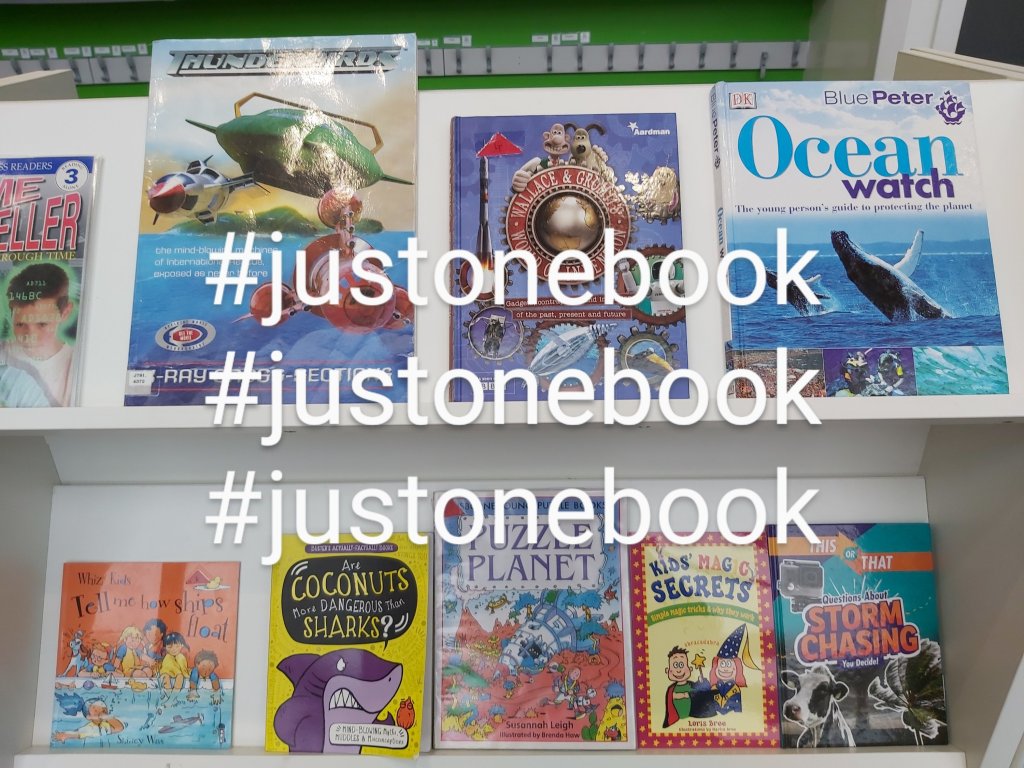
If you see a poster soon in a bookshop which says #justonebook it means you can buy a child a primary school level book there – anything from early years to P7, fiction or non-fiction – and leave it at the bookshop. It will soon be collected, giftwrapped and delivered to a Highland primary school in desperate need of books. All the school will know is that it comes from ‘the magic book fairy’.
A very simple transaction in which you get to feel virtuous, a child gets to feel excited as they undo the parcel, a teacher gets a sense that other people care as much as they do – and I get to sleep just a wee bit better at night.
Ifyou would like to know more about giving #justonebook to a Highland primary school then please get in touch by commenting below. Thanks for reading this 🙏🌹😊
Un récit d’amour de Saint-Raphaël écrit après un séjour magnifique dans la ville cet hiver. Merci aux Raphaëlois qui nous ont si bien accueillis 🙏🌹
Il y a des jours, vous savez, pas comme les autres. Des jours que le vent se lêve et met du désordre dans les cheveux. Des jours qu’un petit chihuahua blanc arrive pour vous pisser sur la chaussure.
Commencer avec le jour de la pisse n’est pas commencer au début. Au début je ne voyais que des couleurs flous à travers du gros papier bulle. Des fois des couleurs qui se bougeaient. Des couleurs qui, au début, n’avaient même pas de nom.
Je me trouva débalée après un certain temps dans une vitrine intérieure d’un grand magasin à Nice, en face du rayon mâquillage. Là, je ne pouvais pas comprendre grande chose. Certains objets, comme moi, restèrent fixe. Des autres, tout le contraire.
Je parvins lentement à comprendre que les objets qui bougaient marchaient à deux pattes mais aussi, des fois, à quatre.
Pour passer le temps je me décida à apprendre à lire et à identifier les couleurs.
Et, des fois, un deux-pattes passa qui portait son quatre-pattes dans une boîte à main Lou-is Vuit-ton.
Je n’avais pas de nom dans ce grand magasin de Nice. Je n’étais qu’un mannequin parmi maints. On ne se parlait même pas entre nous.
Après un certain temps on me brisa un peu le front: une étagère fut tombée. Je m’attendai à être soignée, mâquillée, parce que le mâquillage, ça doit exister pour couvrir les bleus et les blessures, non? Hélas, je me retrouva mal emballée de nouveau dans du gros papier bulle, et renvoyée.
Après un grand voyage dans le noir on me déballa encore. Je voyais un joli deux-pattes aux cheveux marrons qui portait beaucoup de mâquillage (la Roche-Posay, je crois bien) devant moi.
Je me trouvai immédiatement avec un nom grâce à ce gentil deux-pattes, bien que je ne comprenne pas encore tout ce qu’elle me disait: ‘Mais Keska elle est lourde, Keska elle est maladroite, Keska il m’a pris à acheter celle-ci aux enchères…’
Am-an-di-ne sur son badge devait être son nom à elle. Son petit magasin s’appella Préf-Modes de Saint Raphaël.
Amandine venda des robes des écharpes des chaussures. Je fus là pour l’aider. Je faisais mon mieux de les rendre bien quand elle m’habillait. Amandine m’installait, d’habitude, sur une chaise dans la rue, de façon détendue. Des fois elle me tournait vers les magasins en face (il y a le Driv-ing Hotel, Co-co-ri-ri, Les Bou-quets de la Côte d’Az-ure, et quelques autres). Je préfèrais quand Amandine m’orientait un petit peu plus en direction du grand bleu mysterieux au fond de la rue.
Il y avait aussi des messages sécrets écrits au trottoir de temps en temps, et j’en aggrandissais mon vocabulaire.
Ca fait du bien à moi, Keska, de me retrouver dehors pour la première fois de mon existence. Je pus ainsi regarder passer de près les deux-pattes et les quatre-pattes de Saint-Raphaël: bien différent des deux-pattes Niçois et beaucoup moins de boîtes à main Lou-is Vuit-ton. Mais il y avait des quatre-pattes un peu partout.
Ils étaient tous les deux, deux-pattes et quatre-pattes, assez bruyants et de couleurs variés. Je préfèrais les quatre-pattes, qui me regardaient dans les yeux et qui des fois me parlaient, en disant ouahouahouah.
J’étais quasiment sûre que ce fut les quatres-pattes qui faisaient les sculptures qui apparaissent quelquefois de nuit au trottoir. Je supposais que un deux-pattes dut s’emparer de son quatre-pattes pour lui serrer tres fort le ventre afin de créer un de ces petits miracles luisants en spiral.
Amandine était très bruyant, surtout quand elle hurla un jour: ‘adieu pour toujours espèce de connard’ à son rectangle et le jète sur son bureau en sanglotant. Ensuite en me sortant pour la journée elle marcha dans un grand miracle au trottoir et me fit ‘mais Keska, c’est que cette salété mais enfin…’ avec une voix pleine de chagrin.
A part les deux-pattes et les quatre-pattes il y avait des autres objets qui bougeaient à Saint-Raphaël, surtout ces objets carrés-roulants multicolores qui bougaient beaucoup plus quand il faisait froid l’hiver. Quand il faisait chaud et le soleil brillait ils n’allèrent nulle part, il y en avait autant.
Quand il pleuvait, Amandine se précipita pour me rentrer dans le magasin au cas ou mon plâtre ne fonde ‘comme le coeur de son ancien mari.’ Moi, Keska, je ne vieillis pas beaucoup au fil des années mais j’entendais souvent Amandine dire à voix basse que hélas, elle n’était plus bien jeune.
Pas loin de la boutique il y eut un autre magasin magnifique, Les Atouts àToutou. Je voyais passer des jolis sacs en papier imprimés de son nom et d’un image d’un quatre-pattes. J’ai cru comprendre que les quatre-pattes s’appellaient donc des ‘tou-tous’. Après un certain temps, moi, Keska, je me rendais compte que je voulais un toutou à moi, un tout petit toutou dans un petit manteau écossais avec une laisse rouge et un collier diamanté tout beau.
Pour cette raison j’étais bien contente quand le chihuahua blanc arriva pour me pisser sur la chaussure. Amandine courrait bien vite en criant ‘non mais, Keska…’ mais j’y étais pour rien, enfin! Le gentil deux-pattes rêveur qui tenait la laisse (rouge, je notais bien) gronda son toutou en disant ‘Pas encore! Bad dog! Mais non, Pélé, non!’ Le toutou, qui portait un beau chapeau d’hiver (achété chez Les Atouts à Toutou j’en étais sûre) me regardait de travers et se marrait.
Je connaissais donc maintenant deux personnes nommées: Amandine – et Pélé le toutou.
Le deux-pattes s’en alla vite fait, mais Pélé m’inclina polîment sa tête en passant. On allait sûrement se revoir.
Le lendemain je voyais le même grand deux-pattes sur le trottoir en face avec un beau bouquet de fleurs-jaunes-mimosa de chez la fleuriste à la main. Il n’osait pas traverser mais il me regarda, fixement et pendant longtemps, avant de repartir.
Le lendemain, Amandine me sorta sur ma chaise et alors rentra au magasin comme toujours pour boire un expresso et regarder son rectangle. Peu après un grand carré-roulant sans-plafond arriva et tout changea très vite. Je me retrouvais deséquilibrée et ensuite soulevée brusquement par des mains puissantes apartenant à un deux-pattes qui portait une masque COVID. Et me voilà qui pouvait regarder enfin autre chose que la rue: le ciel bleu et le soleil et les nuages qui flottèrent tout en haut! Il y avait aussi des pins-parasol et je pouvais enfin, si de justesse, voir que le grand bleu mysterieux fut encore plus bleu et plus mysterieux de près.
Le deux-pattes masqué me bouscula pour me faire sortir du carré-roulant, et il me semblait qu’il dût me connaître déjà parce qu’il me disait ‘mon Dieu, Keska, j’ai fait.’ En franchissant une porte étroite avec difficulté et après une escalade d’escalier encore pire, me voilà dans une petite piece foncée avec un balcon minuscule. Là se trouvait un deux-pattes aux cheveux gris, assis sur une chaise en métale.
‘Papa, voila, maman est de retour,’ disait le premier deux-pattes, en train de hôter sa masque. Je savais déjà son identité en tout cas, parce que Pele le chihuahua m’a accueilli avec un ouahouahouah enthousiaste qui ne faisait pas du tout chien de garde.
Le deux-pattes gris au balcon se tourna et poussa un grand cri. Il vint s’installer à coté de moi dans son fauteuil à roulettes et me saisit la main. Ses yeux produisaient une liquide claire – je savais que les jeunes deux-pattes pouvait en fabriquer, mais pas les vieux aussi. Il m’appellait ‘sa Marguerite’. Pélé, assis à ses pieds, me fait un beau sourire de complicité avec un petit clin d’oeil. A coté de nous, dans un grand seau, un bouquet de fleurs-jaunes-mimosas rayonnant.
Après un certain temps j’arrive à comprendre que ces deux-pattes furent père et fils. Pélé venait s’assoir sur mes genoux le soir et m’expliquait beaucoup de choses à travers ses regards tendres et compatisants. J’étais si heureuse de me trouver chez Pélé, Florian et Papa mais je me faisais des soucis aussi. Comment Amandine allait-elle vendre ses robes ses écharpes ses chaussures sans moi, sa Keska?
Un jour j’entends le deux-pattes fils, qui s’appellait Florian, monter de nouveau l’escalier en m’appellant. ‘Mais, Keska, je vais faire?’ Il se versa un verre de liquide ambrée avec une main qui tremblait. Je regardais le gros titre du journal qu’il avait jété sur la table à coté de Papa et moi. Il y avait un image d’Amandine devant Préf-Mode Saint Raphaël: qui à volé le mannequin du Cor des Issambres? Florian fit des allers-et-retours le long du salon en gémissant, mais son Papa, lui, n’avait pas du tout l’air soucieux. Il me tapotait la main et me souriait en disant des gentillesses à sa Marguerite, comme toujours.
Le vendredi matin, on frappa à la porte en bas. Florian descenda et rémonta avec… Amandine! J’étais si heureuse de la revoir. Florian fut devenu tout rouge mais Amandine, toute blême. Elle disait quelque chose de très rapide dont je n’ai pu saisir que ‘ma copine vit tout près…’, ‘elle a tout vu…’ ‘les flics…’ et ‘espèce de perverti…’. Elle avait son rectangle à la main.
Florian, lui, ne put rien dire face à sa colère et essaya de lui offrir de nouveau ses mimosas. Amandine les arracha de ses mains afin de les jéter par terre et marcher dessus avec ses talons rouges, en faisant des gestes et criant à tue-tête.
Florian se mit alors à genoux. Je ne comprennais pas tout ce qu’il disait à Amandine mais il y eut les mots ‘toutou’ et ‘dèces’ et ‘maman’ et ‘démence’ et ‘pitié’.
Apres une minute ou deux, Amandine se pencha pour ramasser les fleurs qu’elle avait pietiné. Florian versa un autre verre de liquide ambrée et le donna à Amandine. Elle s’assit à coté de Papa et prit sa main. Il l’appella sa Marguerite, elle aussi. Je vis une goutte de liquide claire faire une petite ruelle dans le mascara (Clarins) d’Amandine.
Et bien, après un certain temps les choses s’arrangèrent bien. Amandine arriva chez Florian et son Papa avec une petite valise. Elle apporta comme cadeau la paire de chaussures que Pele avait pissé dessus. Florian les installa au jardin pour que Pélé puisse pisser dessus à son gré.
Maintenant je repars au magasin (toujours en passant par l’avenue du grand bleu mysterieux et des pins parasol) mais je ne travaille qu’à temps partiel. Le weekend on dit a Papa que je suis partie au marché ou à la Poste. En semaine je reste avec Pélé et Papa.
A cause de la publicité, les ventes d’Amandine ont quadruplées. Une fois que l’affaire du vol se transforma en jolie histoire d’amour, les Raphaëlois s’arrêtent souvent à coté de moi pour faire des photos devant Préf-Modes et pour s’acheter une robe, une écharpe ou une paire de chaussures.
Amandine me dit des fois maintenant: ‘Keska, il fait beau,’ et ‘Keska, la vie est belle’ et je suis tout à fait d’accord. J’ai deux noms et deux boulots et ça me plaît beaucoup. Et j’ai même un petit toutou à moi tout beau tout blanc avec une laisse rouge et un collier diamanté.
Un chihuahua qui s’appelle Pélé.
L’ecrivain Vee Walker est francophone et francophile. Elle vit dans les Highlands de l’Ecosse. Si ce récit vous a plu, pourquoi pas la laisser un petit message?
Bien que Keska et le toutou ait lieu à Saint-Raphaël, les personnages et les magasins sont tous inventés. Merci aux négociants des commerces qui les ont inspirées.
Le roman de la Grande Guerre de Vee, Major Tom’s War, sera bientôt lancé en édition française sous le titre Grande Guerre, Petits Destins.
Vee va passer les mois de janvier/fevrier 2024 à Saint Raphaël de nouveau et pendant ce temps elle a déjà proposé une résidence littéraire bilingue au lycée St-Exupery et à la bibliothéque de Saint-Raphaël.
Vee fait souvent des interventions auprès des clubs lectures et des atéliers mémoirs en Ecosse et en France.