Jabberwordy

(with apologies to Lewis Carroll)


‘Twas brillig, and the slithy tomes
   Did pulse and glisten on the screen;
All whimsy where the bloggers roam
   Amongst agents, unseen.

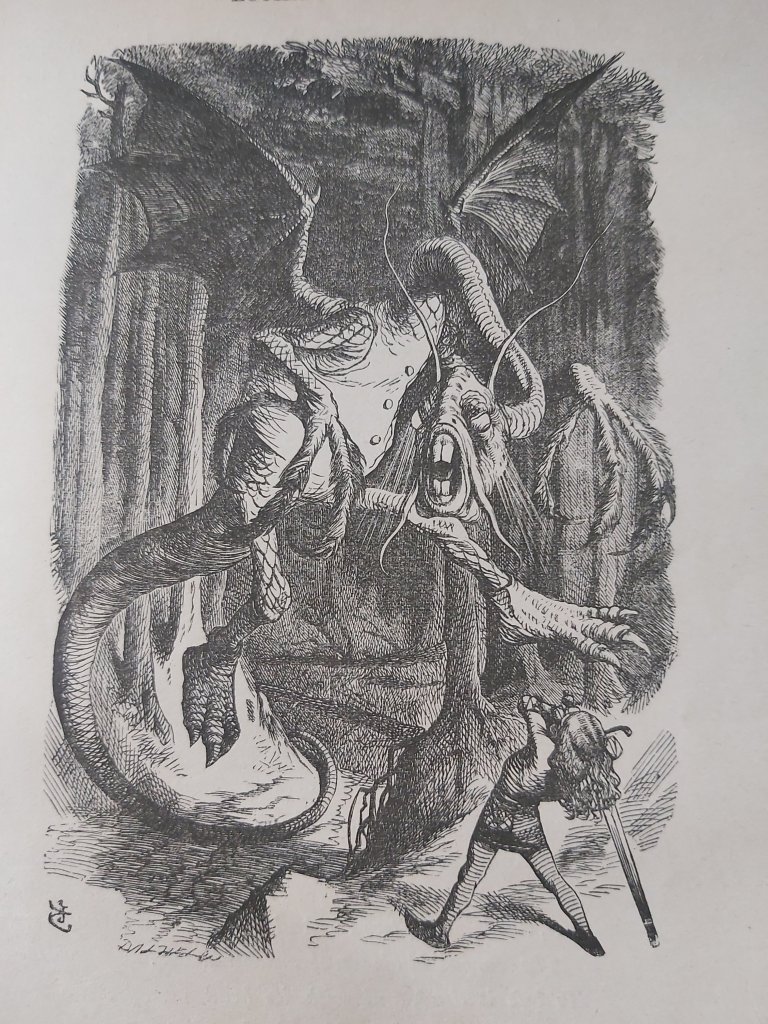
“Beware the Jabberword, my son,
   The blurb that bites, the quotes that catch!
Beware the Cov-Cover words; and shun
   The Celebrity Endorsnatch!”

His vorpal debit card in hand
   Went forth the Boy to quest his book,
“Something new,” quoth he, “From a small indie,
   In a real Shop of Books shall I look.”

As down the High Street he didst brood,
   The Jabberword, with deals aflame,
Scrolled through the Amazonian wood,
   Discounting as it came!

One, two! Three, four! A box set! More!
   His card filled up his online shelf;
Once dumped at his door, not one, he swore
   Selected by himself:

” I bought this turd from the Jabberword!”
  

  “Yes, more for less, son, not all bad!
Bargain prices, eh? Caballoo! Caballay!”

  “So it’s bitten us both? How sad…”


‘Twas brillig, and the slithy tomes
   Did pulse and glisten on their screens; While unseen books in need of homes…

Remained the stuff of dreams.


Vee Walker (Author of an unseen book or two)

Please consider shopping at your local bookshop. They’re knowledgeable, friendly people who are not driven by an algorithm based on your browsing history.

If you’re too busy, or live too far from a real bookshop to visit, try the wonder that is http://www.uk.bookshop.org. It’ll send you (or your friends/family) a book but channel the benefit through a local bookshop.

Genius. We can slay the Jabberword. #GiveIndieBooksThisChristmas


A Black Isle tale for Halloween 🎃🎃🎃

‘They come from all over, my guests, you would be amazed. Before COVID 19, we hosted Europeans, Americans, Asians and Antipodeans. Now we welcome folk from everywhere in the UK, and occasionally beyond.

There are the youngsters with huge backpacks, grateful for a lift down from the bus stop on wet days; the elderly couples in rickety old cars (one so dilapidated it was impounded by the Police during their stay); the nervous drivers at the wheel of a shiny hire car who inch in through our narrow gates, breath held.

I have an especially soft spot for the bikers, who roar up our tiny road to dismount like fearsome ninja turtles, peeling off leathers to reveal their frail humanity beneath.

Some guests barely stop to put down a suitcase before sprinting down to Chanonry Point, returning elated or crestfallen, dependent on whether or not the Dolphin Gods have been kind.

Oh, I know running an AirBnB is not for everyone, but I enjoy it. Such a simple transaction, after all, isn’t it? I offer them a clean, quiet, comfortable bed, a hearty breakfast and my extensive knowledge of the Black Isle and Northern Highlands. In return, complete strangers fund my writing time, to the tune of £60 or so a night.

Over the years some guests become regulars: folk with local family who like to keep independent; others who are set in their ways and always come at the same time of year. It’s good to see them.

Mostly.

Clive and Manpreet have come several times now, and I am sure they will be back. On the first occasion they stayed, Clive somehow tracked me down by phone and negotiated direct – and hard – for his two-week stay. I was in two minds, as some of the questions he asked me in advance were unusual to say the least. Oh, but he and his partner had often stayed in the Black Isle before, he said, rattling off a reassuring string of locations and mutual acquaintances. After ten minutes of this I gave in and agreed to host them. It was a late autumn booking too, when guests are much scarcer: and they were bikers and bikers are my favourites.

They arrived that Hallowe’en afternoon astride a throaty Harley Davidson which purred to a standstill in our driveway. I frowned at our resident pair of herring gulls on the chimney, daring them to conduct an aerial bombardment at that precise moment. The birds exchanged glances and sniggered. Later, later.

The first man (broad, hard and muscular, 30ish, dark-eyed and thin-lipped) removed his helmet to reveal a mop of black hair tied back into a pony-tail and a small tattoo of a skull on his neck. Clive. Manpreet, his partner, who was tall, anxious and slender, dismounted after him, careful only to smile and introduce himself once Clive had done so. I am not here to judge any of my guests on their appearance or behaviour, so welcomed them both warmly and showed them into our guest quarters, The Chanonry Bolthole.

I should explain at this point that I bought my house from an elderly friend back in 2003 and extended it when I inherited a small legacy from my mother a few years later. We now live in the new wing ourselves and our guests occupy the old wing. There has been a lockable door in between ever since one oddball wandered into our kitchen uninvited, to conduct a midnight raid on the fridge.

As usual I had arranged their breakfast requirements the night before, but when I knocked on the adjoining door from our own quarters that first morning at the agreed time, there was no reply. I knocked again. Was that a groan? In the end a voice replied and so I opened the door with my usual enquiry: slept well? Anything you need?

Clive loomed into the Bolthole hall from the Meadow Room. I noticed shadows under his eyes. Manpreet, standing behind him, shivered, although the day was quite warm. The pile of steaming hot oatmeal pancakes on the tray cheered them up a bit and afterwards they assured me that they had enjoyed their breakfast. A long journey and a lovers’ tiff, probably, I thought. Guests often arrive tired, wound up and fractious. A few days in the Black Isle would soon sort them out. I smiled and asked them, as I ask everyone, what their plans were for the day.

Rather to my surprise, these did not include a dolphin-spotting visit to Chanonry Point. Instead Clive began to list local burial grounds he wanted to visit: Beauly, Urquhart, Old Cullicudden, Kirkmichael, Cromarty. Manpreet, earning a glower from Clive, added the Clootie Well, an ancient healing spring not far from Munlochy, festooned with the rags of the ailing. When I told them my funny story about hanging underwear in the trees there before giving birth, they both nodded, unsmiling and earnest, as though taking serious note.

Oh dear.

As the visit wore on, Clive and Manpreet tended to leave early and return at dusk, speaking very little. I had the feeling that both were avoiding me as much as possible and biting their tongues in my presence. Still curious about why they were staying with us rather than at any of the previous bed and breakfasts they had occupied in the area, I grasped the nettle and asked them about it one morning during their second week.

Manpreet piped up, timidly, ‘Well, you see, it’s the atmosphere…’

Clive looked at him, then at me, and clearly made a choice to continue. ‘Yeah. That one in North Kessock. Remember? Huge. Modern. Amazing view of the bridge. Bloke who let it wouldn’t even cross the threshold himself. Gave us the key and ran. Slept like a dog every night there.’

Manpreet nodded agreement.

Right.

Now Clive had begun, there was no stopping him. ‘You know the Hail Caledonia B’n’B in Munlochy? Beautiful garden, lovely old couple – but the house! Something had happened there. Something they weren’t saying. You just mark my words.’

Right.

On and on he went. Noises at night in Culbokie. Fleeting shadows in Cromarty. A dark figure at a manse near the ancient distillery at Ferintosh. You name the accommodation, they had experienced something there.

I decided to try to lighten the mood. ‘Well, no chance of anything like that happening here, Clive. No-one has ever died in this house. It was only built in the 1970s, you see, and I knew the first owner. And she died in the local nursing home in Rosemarkie, bless her, not here. A sweet old lady.’

Big mistake. Manpreet looked like he was about to speak but Clive, rebuffed, silenced him with another look and they left for the day. Ach well, too bad.

Later in the week, I found them looking at a display copy of Major Tom’s War. Most guests buy one. Not Clive and Manpreet. Instead Clive announced that he had always wanted to write a book himself.

‘Oh, how interesting,’ I responded, as brightly as I could manage. ‘What kind of book?’

Manpreet bit his lip and looked away. ‘A book about me,’ said Clive, as though I should have known. ‘All about my tormented childhood.’

Oh Lord. I really didn’t want to ask which aspect of his childhood had been tormented. I responded with a lame well, how interesting again and side-stepped into their breakfast choices for the following day.

I saw Manpreet in the garden alone the next morning. He had clearly been detailed to clean the seagull poo off the Harley while the culprits overhead snickered and mocked him. ‘Clive having a lie-in?’ I asked, glad of the opportunity to speak to the quiet one alone.

Manpreet nodded, with a glance at the Bolthole window. ‘Yes. He had a very bad night. He’s really… really sensitive, you know?’

Right. Sensitive was not the first word I would have chosen to describe Manpreet’s slightly sinister other half.

‘It’s the sofa, you see…’ he began, before a movement behind the blind sent him scurrying back inside.

Why on earth was Clive sleeping on the sofa when the Bolthole has two bedrooms and two comfortable beds?

I spoke to my husband about it all that night and was told, firmly, that I always get far too involved in my visitors’ lives and should just ignore it. ‘They’re a couple of oddballs, that’s all. They can sleep on the roof with the gulls for all I care so long as they pay their way.’

Right.

On the last morning of that first visit, Clive, his eyes gleaming, asked me about the execution of the Brahan Seer, a local prophet. I told them the grisly story and offered them a quick free tour of Fortrose Cathedral. They were particularly interested in the post-Reformation graves, which display grisly memento mori of skulls and crossbones.

Must be that Harley influence, I thought.

As we left, I pointed out a missing railing where local kids can get in and out after the gates are locked. Useful for retrieving lost footballs kicked over the wall or for a quick fumble behind one of the cathedral yews, I said. Never thought anything more of it.

It was only after they had left us that stories emerged of candle stubs on some of the cathedral tombstones and what might have been a pentangle traced in the grit outside the Chapterhouse. No proof that it was them, of course; but they had seemed in rather a hurry to leave that morning, all the while assuring me that they would be back. Same weeks next year, Vee. Hallowe’en. Mates’ rates, yeah?

In spite of this, a year is a long time. I was not expecting to see them again. It had been a long, hard season and I had decided to block the Bolthole bookings and close up early. If I am honest, perhaps Clive and Manpreet were at the back of my mind when I made the decision, too.

I was working in the garden when I heard the familiar sound of the Harley turn the corner – oh no, surely not, it couldn’t be! – but it was. Clive and Manpreet, who clearly believed they had made a firm booking 12 months before. All I could do was greet them warmly and show them in, thanking my lucky stars the Bolthole was unoccupied.

This time they came and went rather more: extending their disturbing graveyard forays, perhaps. Some days I did not see them from dawn until dusk. I decided against saying anything about the cathedral incident. Probably just a coincidence, or so I hoped.

After a week or so, however, there were reports of lights being seen in the cathedral grounds at night again. I did not want to upset my neighbours, so I kept quiet.

‘OK, Vee. It’s been great,’ said Clive as they prepared to depart at the end of the fortnight. ‘We’ll be back. Same time next year, mates’ rates, yeah? But listen. I need to tell you something. Does an old lady mean anything to you?’

Here we go.

‘An old lady?’

‘Yeah. In a pink shawl.’

‘You see,’ added Manpreet, with a quivering glance at Clive. ‘We only sensed her last time but this time we keep seeing her, too.

‘Yeah. She sits on the old sofa in the Bolthole…’

My late mother’s Chesterfield.

‘…always glaring at us like we’re in her space,’ Clive added, with grim emphasis.

I tried to head him off at the pass and said I couldn’t remember either my mother or the old friend from whom I had bought the house wearing a pink shawl (not strictly true, but I wasn’t going to admit it).

Clive, his eyes bulging, then brought his face down level with my own.

I felt cold.

‘That old sofa,’ he hissed. ‘It’s got a presence, see? I can tell. I can always tell. You need to get a priest in. D’ye hear me?’

Crikey!

‘Yes, yes. I suppose I could ask nice Father Malcolm from up the hill to pop down.’ Over my dead body.

‘Tell him three knocks. He’ll understand. And whatever you do, don’t try to communicate with it.’

It?

Manpreet nodded fervently in agreement. Then, assuring me they would see me the same time next year, they mounted their Harley and were gone.

I stood and looked at the empty road for some time after they had vanished, hoping I would never see them again, but no such luck. Three knocks? What the hell did Clive mean?

At that point a herring-gull with a sense of humour dropped a hermit crab on the roof. Down it rolled, rat-tat-tat, into the gutter. Three knocks. It would have seemed much louder in the room beneath.

I laughed but still felt unsettled. Don’t try to communicate with it.

We’ll see.

I walked back into the Bolthole and rested a hand on the flowery upholstery of my mother’s sofa. ‘Hello? Mum?’

All I could hear in response to my whisper was the taunting cry of the seagull pair cavorting on the roof. I sensed… nothing. Not sensitive enough, clearly. And surely any faint echo of my mother or the elderly friend from whom I had bought the house would still be a she, not an it? I felt aggrieved on behalf of these two saintly ladies. If there is a presence in my happy home, I can only believe it is there by choice.

More to the point, if I invite Father Mal in to exorcise mum’s old sofa, he might also forever banish Clive and Manpreet. Until they realise that the campervan which wrote off their Harley on the journey home also killed them both, who am I to spoil their annual holiday?

They come from all over, my guests. You would be amazed.’

🎃🎃🎃🎃

Although this short story has its roots in a few strange AirBnB experiences over the years, the characters apart from myself are entirely fictional.

Vee Walker is an award-winning author (and AirBnB Superhost) who lives and works on the Black Isle in the Scottish Highlands. You can find The Chanonry Bolthole on Facebook as well as AirBnB and follow Vee on Twitter @veewalkerwrites.

You can also buy Vee’s prizewinning WWI novel, Major Tom’s War, from any good bookseller or direct from her publisher, www.kashihouse.com (paperback and e-reader editions now available). A Kashi House discount of 10% applies to any purchase during the Armistice period from 1st – 12th November: quote SALE10 at checkout).

Copyright: Vee Walker 2021 – All Rights Reserved

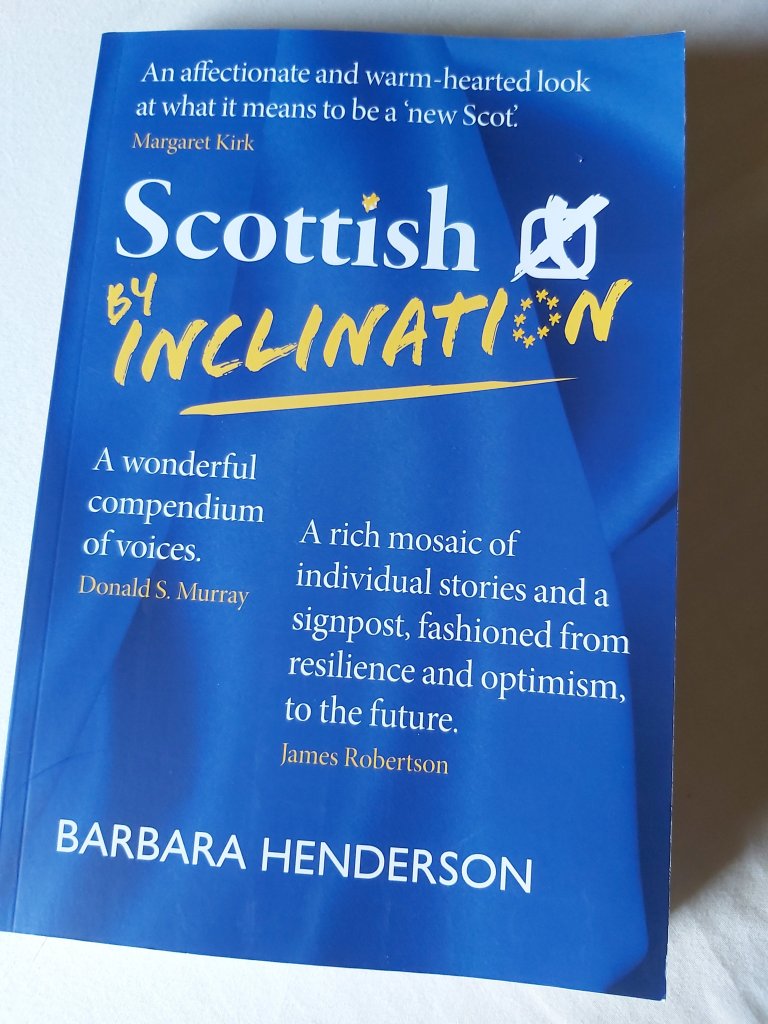
Review: Scottish by Inclination – Barbara Henderson

I must start by coming clean: I had been slightly avoiding reading Barbara Henderson’s book on New Scots (will explain why in a moment). Then when our paths recently crossed at a ceilidh in Badenoch and Barbara produced a fistful of them, I thought that perhaps this time it was meant to be.

Why the initial hesitation? Well, the explanation is both personal and political. The double tragedy of the Independence referendum and Brexit votes have weighed heavily on my heart and mind in recent times. I sat in bed sobbing on waking to the Brexit bombshell and will carry that scar for the rest of my days. Like Barbara, I studied at Edinburgh University, but Modern Languages rather than English (and like Barbara I met my husband there). I have lived in France, thought Europe was forever and still identify as European. That terrible morning I felt like my whole world had been dismantled in the name of democracy following a corrupt political campaign.

I therefore thought – quite wrongly as it turns out – that Scottish by Inclination might turn out to be one long wail of grief for a lost Europe – and I wasn’t sure I could take it. While much regret is expressed within its pages there is also however great resilience, adaptability and optimism. I finished the read feeling more positive about Scotland’s future than I had anticipated, precisely because this extraordinary range of European interviewees are part of Scotland’s future.

The greatest (and best) surprise – and it is a surprise, as there is no hint of this on the cover, which is a shame – is that this book is not just an account of choosing to become Scottish, but a modest autobiography of its remarkable Scots-German author. Every individual account is prefaced by a chronological episode in Barbara’s eventful life to date. I found myself enjoying these just as much, if not more, than the other accounts of ‘becoming Scottish’ within it.

I myself am Scots through my mother’s inclination and now by self-identification: my schooling was Scottish from the age of six but I was born in England. It was the era of ‘It’s Scotland’s Oil’ and growing hostility towards all things English. I was bullied in my first primary school for having a posh name and English accent, and like many in this book I became something of a chameleon to survive: I made sure my name and my accent changed at my next primary and I brought my Scots family roots to the fore. Being English then was far worse than being European! There is no English interviewee within Scottish by Inclination: there could have been, as many English people now identify as Scots, and the journey to acceptance back then for English settlers in the late 1960s was much the same.

The word most people summon to describe the Inverness-based author, Barbara Henderson, is energy. She has shedloads of vivacious energy and a blessedly sunny personality with it: a prolific author, she teaches, has a column in a local paper and also juggles a busy community and family life, not least in helping to found Ness Book Festival.

Scottish by Inclination is Barbara’s first work of non-fiction aimed at an adult audience. It began as a pitch to a publisher to collate different accounts from Europeans who choose to live and work here. It was the publisher who (quite rightly) encouraged Barbara to use her own experience as the backbone to the narrative.

I have many German friends who live elsewhere in Europe and the term Vergangenheitsbewältigung – facing up to one’s past – was familiar to me. All German citizens have an unavoidable and unenviable historio-political back story as the defeated instigators of two world wars. Barbara grew up during an era where German history lessons enforced a study of the Third Reich. This aversion therapy caused many of my German friends to move abroad in a conscious attempt to slough off some of their German identity.

With Barbara’s account however I felt she was running towards an alternative destiny rather than running away from her German identity. She has become a true Scot, giving so much to those around her: her family, her pupils, her readers, her community. How ignominious then that anyone who does this with such warmth and generosity of spirit should be forced to apply for ‘settled status’, as though all this giving counts for nothing.

The same is the case for all Barbara’s interviewees, who are people of all ages and of almost every possible European nationality. All have been forced to register to stay in Scotland as part of Great Britain, irrespective of the value of their roles or the depth of their roots here. They expresss anger and resignation and humour and, yes, grief – Portuguese artist WG Saraband describes how on the morning of the result, even though he had expected Leave to win, he ‘felt like he had been punched in the stomach at someone’s funeral.’

The contribution to Scottish society of this selection of interviewees is breathtaking: the fields of academia, science, teaching, medicine, engineering, entrepreneurship, art, craft and music are all represented in these pages. These courageous people who have at one point in their lives chosen to combine their birth nationality with a future as a New Scot come both from Western and Eastern European Countries. All emphasise how welcome they feel in Scotland, albeit not necessarily within the United Kingdom.

Their presence here enriches all our lives. As Scotland looks to its own future, the comment from politician Christian Allard sums up the note of optimism on which this remarkable book ends: ‘It’s not where we came from that’s important, it’s where we are going together.’ Everyone should read this book, and then pass it on to any New Scot who looks in need of reassurance.

I hope Barbara continues her writing for adults with another non-fiction work, or even a novel for an adult audience. We need more of her smiling literary talents as we march onwards into a brave new future for our nation.

Review: Cardinal Sin by Brian Devlin

First, a wee bit of context, important in any review of a controversial book such as this one. The author describes himself as a ‘collapsed’ Catholic one point and although I am not Catholic, that has resonance for me in terms of my own beliefs. Brian Devlin is an acquaintance, respected in my community as part of the team which helped to establish Black Isle Cares. I already knew of his whistleblowing at NHS Highland – I was bullied myself in a hierarchical workplace many years ago, so I followed his story with interest – but I knew nothing about his earlier life.

Cardinal Sin – a cracking title, isn’t it!  And accompanied by a lurid crimson cover reminiscent of Colleen McCulloch’s The Thorn Birds. Designed, quite rightly, to encourage readers to pick up the book. This is however non-fiction and more about a man sinned against within the Roman Catholic Church than the sinner himself hinted at on the cover.

The term ‘whistleblower’ is not mentioned on the cover of Cardinal Sin but is defined there as one who ‘challenges power abuse’. It hails from the early days of the police, when a whistle was blown to alert others to a crime having been committed. It has a very visual/audible quality, tied up with decency and earnest, plodding Dixons of Dock Green. Modern whistleblowing is rather different. Some view it as a force for good; others – generally those who are the subjects of the whistleblowing or the institutions whose reputations are felt to be undermined by it – consider it the ultimate betrayal of trust.

I had not realised until I read this remarkable and highly readable book that Brian Devlin has something of a whistleblowing pedigree. He is clearly conscious of the way in which a whistleblowing mindset can lead from one working world – that of the Roman Catholic Church – into another – NHS Highland. Whistleblowing is traumatic and can affect mental and physical well-being for the rest of one’s career, and life, as Devlin knows to his cost.

The book is divided into two sections, the first following (more-or-less chronologically) the author’s life from boyhood. This has some very funny and tender descriptions of unwanted adolescent sexual awakening in his fervently Catholic parental home – readers may never quite see Valerie Singleton in the same light again!

An innocent and understandable desire to please his parents leads a clever, sensitive and fragile young man to Drygrange, a seminary for would-be Catholic priests.  A kind of religious Hogwarts, this was a world apart. It was peopled by teachers ranging from the black-cloaked and grimly orthodox – ‘they sat in the freezing chapel like ravens, and swished along the corridors as they went about their business’ – to the informal, kindly and charismatic. One of the latter, an oh-so-cool priest nicknamed K.O.B., the college’s Spiritual Director, seems such a contrast to the more formal ‘old guard’. Soon the young trainee priest and many of his peers come to look up to Keith O’ Brien as an inspiring role model.

What follows is a sequence of events recognisable to anyone with modern hindsight as a process of grooming, but this was a more innocent time when the infallibility of a Pope and all those who served him was a given. After increasingly blatant attempts to control Devlin’s actions and views, O’Brien then makes a clumsy pass at the author. The young and vulnerable student’s response to this is an instinctive one of self-protection; his spiritual and emotional trust have been betrayed by a man with terrifying power over his future in the priesthood. Devlin finds himself questioning everything he has believed in, up to and including the existence of a God who could allow this to take place. At this time, however, like others abused by O’Brien, Devlin says nothing, does nothing. This man is his spiritual director. Who would he tell? Although his fledgling vocation is in tatters, he proceeds to the priesthood, only to find that the increasingly powerful O’Brien becomes archbishop of his St Andrews and Edinburgh diocese. Devlin begins to contemplate somehow escaping it all.

It is only once an accusation is levelled at O’Brien by another student that Brian Devlin and others find the courage to come forward to ‘name and shame’ him, as the tabloids would have it. At first the Church attempts to close ranks and ignore the matter, but the scandal, doggedly pursued by journalist Catherine Devenney fails to fizzle out and risks bringing the might of the Church of Rome to its knees. High-level sexual abuse within the Church certainly seems to have had a bearing on the shock resignation of Joseph Ratzinger, the arch-conservative German Pope Benedict XVI.

We are told little of O’Brien himself (abusers have often themselves been abused) but his arrogance continues beyond his removal from office. Retired and sidelined rather than entirely disgraced, he writes an open letter asking for forgiveness from those he has ‘offended’; a mild choice of words (doubtless fine-tuned by Vatican lawyers) which must smart in the wounds of all those who came forward to accuse him. ‘Offence’ implies that it was a matter of choice on the part of the victim and therefore subtly shifts some of the blame for the crime on to the accuser.

For me, it was the second part of the book which was the more interesting of the two and I was sorry it was not quite as long as the first: I would have liked to hear other views about the potential for reform within the Church. Those who worship as Christians but who consider themselves to have no connection to Roman Catholicism would do well to remember that abuse can happen anywhere, and that the roots of all Christianity today still lie in Rome: Fortrose Cathedral was Roman Catholic for 300 years, from its foundation in 1260 to the Scottish Reformation in 1560. Christianity may have fragmented post-Reformation, and attendance at church may be declining overall, but the Roman Catholic Church is still a mighty force in the world.

In this second part, Devlin explores how – and if – the Roman Catholic Church, a church he clearly still loves even if he does disagree with its more lurid teachings, can move forward and heal itself. Most church congregations are, by definition, conservative: reform – change of any kind – is usually unwelcome. It is clear however that without reform over attitudes towards gender, sexuality, and the priesthood there will always be a risk of sexual abuse within its ranks. The Roman Catholic Church is lagging far behind other churches (and also society in general) in its lack of willingness to reform over issues such as allowing the ordination of married or female priests. Celibacy deprives priests of humanity. Reform relies on ‘old men who promise not to have sex’ to change the rules of the Church to allow greater freedoms among those who will succeed them, and that is a difficult process which will require immense grace. Tradition and ritual are part of Catholicism and change comes but slowly.

Devlin makes a particularly interesting point regarding the involvement of laity (ordinary congregation members) in worship. A pragmatic blurring of boundaries is permitted in other Christian churches where priests may be in increasingly short supply. The Roman Catholic Church has always rejected lay involvement in priestly duties, which the author argues, convincingly, is simply rooted in a desire to retain power and control over its flock. Using unnecessary honorific titles such as Father, Your Grace and even Holy Father can further alienate those who follow the path of priesthood from those they serve, with disastrous consequences for both the priest and his flock. Priests are just ordinary men, or ordinary women, who are called to serve God, and that includes the Pope.

In theory at least, without the intervention of Devlin and the other whistleblowers, the successor to Joseph Ratzinger could have been Keith O’Brien, at which point he really could have done ‘whatever he liked’: a chilling prospect. Instead Pope Francis, seen as a moderniser, initiated a full investigation into the abuses carried out by ‘K.O.B’. His envoy, a canon lawyer named Msgr Charles Scicluna, finally came to interview the author (I much enjoyed the description of the meal Mrs Devlin prepared for this grand visitation). Just as their difficult encounter ends, Scicluna makes a kindly-meant comment about the existence of God. It is poignant that God seems to have become swept aside in the labyrinthine, secret hierarchy and ritual of the Catholic Church.

While statements about the whistleblowers from the Church make great use of the word ‘courage’, it is clear that in certain quarters they are still regarded as traitors, and emotional support for those like the author who have left the priesthood as a result of abuse has been non-existent.

The most powerful line in this book for me, the one which could lance the festering boil at the heart of this and many other abuse-related scandals, reads as follows: ‘the celibate, single sex priesthood needs to be dismantled.’

Amen to that.

Cardinal Sin by Brian Devlin is published in paperback by Columba Books. The author will be signing copies at the Nigg Book Fair on Saturday 25th September at Nigg Community Hall.

Vee Walker is the author of the WWI novel Major Tom’s War, now out in paperback from http://www.kashihouse.com.


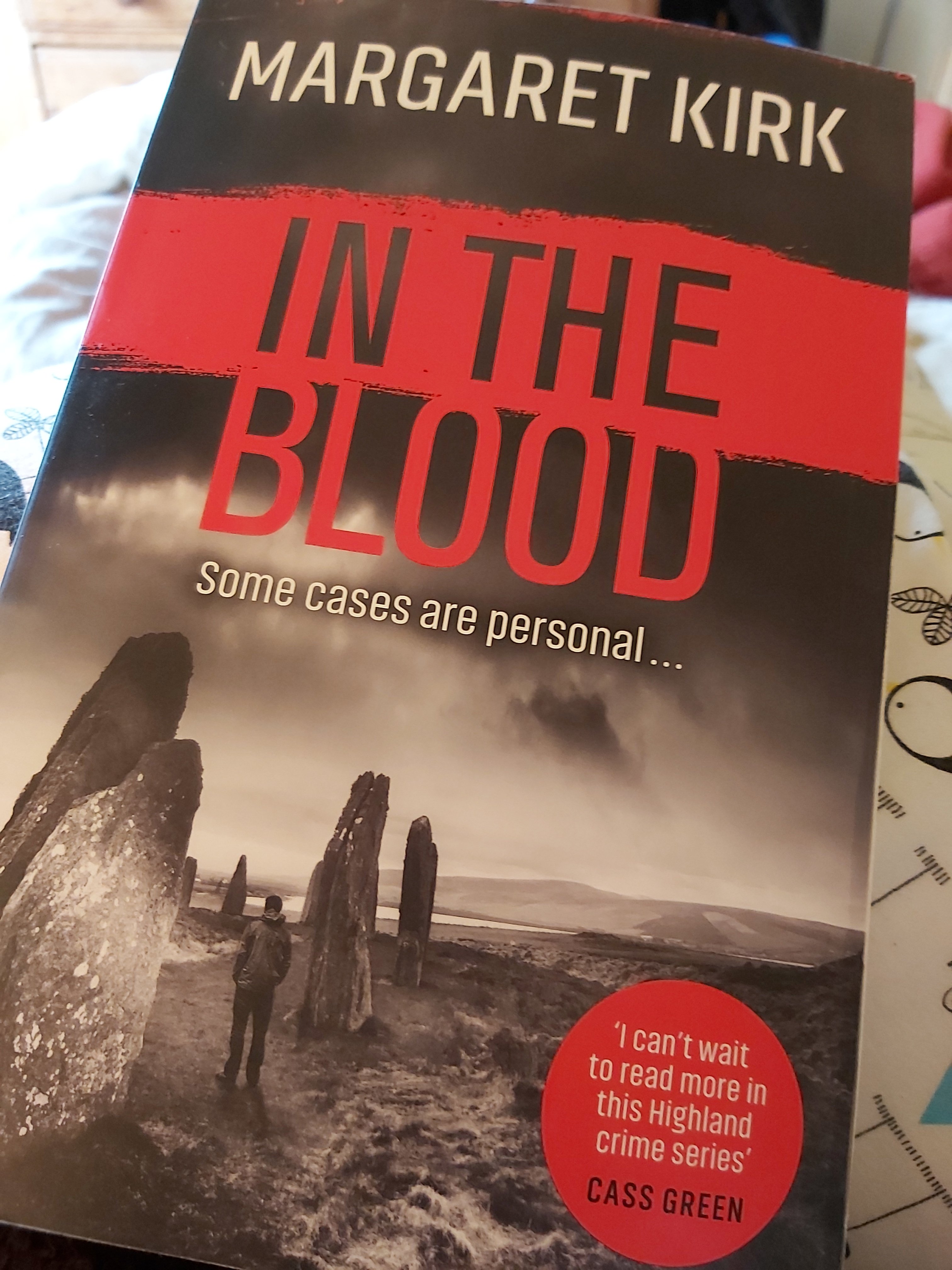
Review: In the Blood by Margaret Kirk

Shorter version already published on the Radio 2 Book Club group on Facebook.

I have a confession to make. No, I haven’t hidden a body anywhere! It’s just that (hand on heart) I am not usually a huge fan of murder mysteries. There, I’ve said it. If I read them at all they are usually ones set in historic periods. I am rather more inclined to the likes of Brother Cadfael (remember Ellis Peters?) than John Rebus, I suppose. During Lockdown I found myself avoiding dramatised versions too (not watched a single episode of Line of Duty) – reasoning, with half-baked logic, that life was already quite grim enough without inventing someone fictional in order to murder them.

For this Highlands-based series, however, I have to make an exception. I stumbled across the first, Shadow Man, a few years back and surprised myself by enjoying it, so much so that I looked out for the next, What Lies Buried. It was even better in my view. In the Blood is the third in the series. Can you read it without reading the previous two first? Of course you can, but I am willing to bet you’ll want to backtrack and fill in the gaps afterwards.

The reason for this guilty pleasure is personified in Lukas Mahler, Margaret Kirk’s enigmatic and convincing ‘leading man’ (much of Kirk’s writing shouts screenplay – this is crying out to become a TV adaptation). There has been considerable discussion about political correctness in detective fiction recently – some of the hard-drinking, disgruntled dinosaurs who have been around for years are aging with their authors and struggling, unrealistically, with the red tape of modern policing.

Mahler is very different – a modern detective who both kicks against and understands the system within which he works. He has a complex back story which is only being revealed by cunning degrees. A traumatic childhood. A foreign connection. A disturbed mother. And – something so many of us can relate to – migraine when under stress. Which he is, of course. Constantly. Some of it the job. Some of it, undoubtedly, self-inflicted.

In the Blood sees Lukas facing up to the death of someone he admired, someone who inspired him. The victim has died – truly horribly – in a remote corner of Orkney. He quite simply should not have been there. The reason he is forms the backbone of a plot rich in local detail ranging from drug-dealing to botany (straight back to Brother Cadfael’s herb garden for a moment), folklore and the occult. There is the tantalising addition of a hanging storyline involving Lukas’ love interest, Anna, and the echoes of how they met, plus a plethora of Orcadian and Highland characters (I have an especially soft spot for Fergie and his highly dodgy motor).

This is a landscape I am fortunate already to know, love and dwell in, but if you have never explored the Highlands and Orkney this excellent murder mystery could well be the trigger for the holiday of a lifetime.

Highly recommended.

For visually impaired readers, this large paperback features a dramatic red and black cover with a distant seascape and standing stones – possibly the Ring of Brodgar on Orkney.

In the Blood is published by Orion Books priced £14.99 and is also now available as an ebook.

Review: Of Stone and Sky by Merryn Glover

I aim never to ruin a book for future readers through review spoilers but with a book of this complexity and depth that may prove a challenge, so be warned…

A cover the colours of a Highland autumn…

Equally challenging, I suspect, will be the bookshop head-scratching over which shelf to put this on (I have a soft spot for genre-busting fiction but booksellers prefer their wares to be more easily categorised).  Here in the Highlands, readers will find it displayed under local author, of course.

Elsewhere in the UK, if placed on the fiction shelf, the fans of landscape writers such as Rob MacFarlane may miss it and they would love the generous descriptions of Strathspey, as much a character within this book as the well-crafted family which carries the narrative. It is a mysterious read too – but will it sit entirely comfortably on the mystery table? And to place it in the murder mystery corner would be over-presumptuous, for it is that elusive hanging storyline, with its string of clues found, which forms the backbone of the book.

In my view, bookshop proprietors, the solution would be a small table of its own, bang opposite the entrance.

Nor is this a novel about farming, or families, or friendship, or even faith per se, although Of Stone and Sky draws on all these themes. It is certainly a book which explores love, both the love of people for one another – brothers, youngsters, couples – and love of the place in which they live, to the point of obsession, to the point of madness. And the borderline between madness and sainthood can run very thin.

Through the midst of all this messy, gritty rural Highland reality strides a shepherd, a good one: he says scarcely a word and yet his presence – and subsequent absence – is at the heart of this novel. An elegaic note for a whole hill-farming way of life is sounded here and yet the leaving off of possessions, the passing on of a shepherd’s crook feels somehow spiritually uplifting and hopeful. A strange and potent combination.

The word which surfaces and resurfaces as I reflect on this read is real. I know this place too. I have worked within it. I do not just see its landscape but, to some degree anyway, I feel it. To me Of Stone and Sky now seems less like a story I have read than one which I have been told at intervals, perhaps by an unlikely yet appealingly teetotal publican, leaning across the bar of some battered Highland pub in Strathspey or Badenoch (that’s bade to rhyme with spade not bad with sad, incidentally). To anyone who raises an eyebrow at the appealing and unorthodox ‘otherly’ priest-pagan who figures prominently within the plot, I would counter with the story of a real one: a priest who decided his faith would be better served by starting a printing press in a deprived city area, who has helped many local folk overcome their addiction through employment.

If you prefer your Highland fiction to be of the skin-deep Fifty-Shades-of-Tartan variety, this probably isn’t the book for you. It is no light read. Of Stone and Sky is set in the real Highlands, where folk have always struggled against the elements and adversity to survive; where farming (and hill sheep farming in particular) is no longer financially viable without subsidy; where the hands of the rich and powerful have grasped the great estates since the eighteenth century. The owners nowadays are often wealthy and shadowy absentees – and yet they too have their place in the story and should be seen for who and what they are, not as menacing outsiders. They too can heft to place as the generations start to forge more meaningful connections.

The book’s poetic title (reminiscent in more ways than one of Tolkein’s allegory Of Tree and Leaf) suggests a book about wild places and that is the stage on which Merryn Glover places a generation of compelling characters, some more hefted to place than others, to act out their lives. I like my characters flawed and here there are flaws aplenty: a kind of reverse Cain and Abel relationship, star-crossed lovers, physical disfigurement; tragic people, damaged people, broken people – all bound together by the stones and sky which both define and envelop them. And they all feel so real to me now that I could reach out and hold their hand – or in a couple of cases, slap them, as appropriate.

This is a book to which I will return: so few people write about the realities of life here. The highest Highlands is no easy nor ordinary place to live, a sanctuary to many but a prison to some. Which view you take depends not just on wealth (although these days every penny helps) but also on whether or not you ‘hear it in the deep heart’s core’.

A compelling and unusual read which explores the world which is to be found between the visions of the Highlands as heaven and as hell – and I highly recommend it.

Of Stone and Sky by Merryn Glover is published in hardback by Birlinn, cover price £16.99.

Double digging…

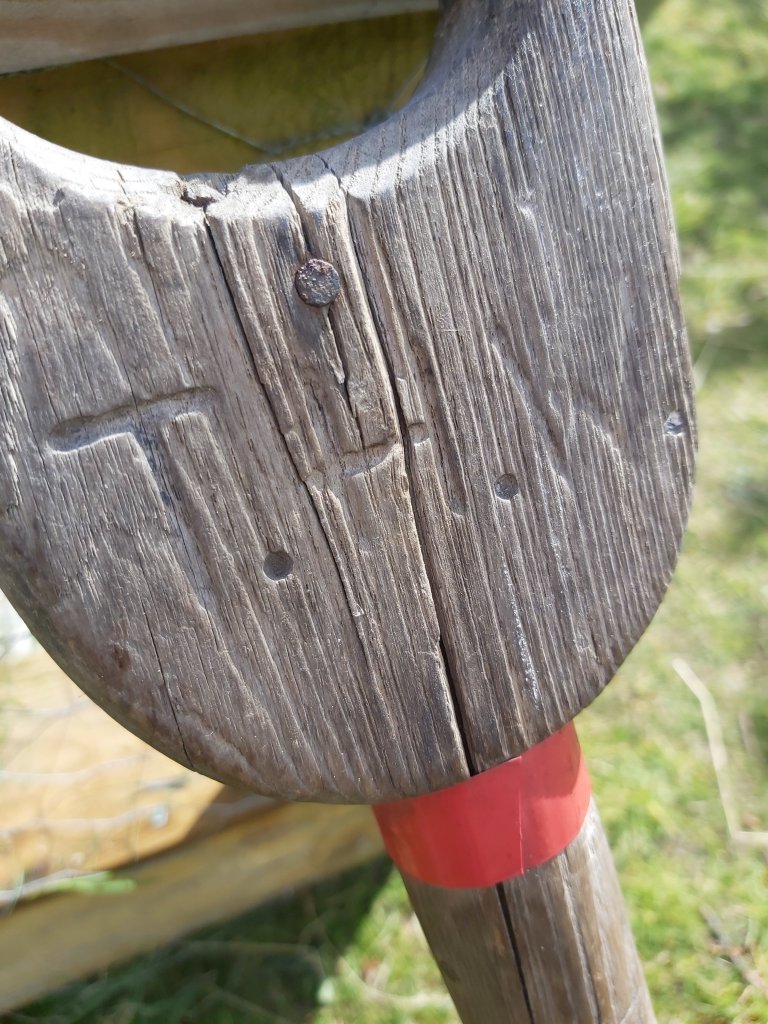
This battered little fork hangs on the wall of my toolshed in perpetuity, its tines now so worn as to render it almost useless. I would never part with it: as with so many of my unlikely family treasures, there is story or two attached.

This is the garden fork with which my mother prised a new vegetable plot out of a raw field of twitch (couch-grass) at Drumcudden, the house she built in Cullicudden on the north side of the Black Isle, which was to became my childhood home. She levered so many boulders out of the thin soil that a small cairn rose in one corner of the garden to mystify future archaologists. Every time the fork struck another sullen lump of glacial quartz or granite (rounded and pounded by the river of ice which flowed from Ben Wyvis to Rosemarkie 13,000 years ago) it wore away the steel tines, just a fraction more. Mum said the sound of it, the feel of it, made her heart quail and her spine jangle – but she was, in this, as she was in all things, indomitable. Her garden kept us fed with delicious fruit and vegetables (and sprouts) all year round.

In retirement Mum moved to Fortrose and the fork went too. Her garden was smaller and less challenging so she took on the restoration of a dowdy area of rough ground on a new roundabout at Chanonry Point. With the help of a team of local people over several years, she planted wild bushes and flowers and grasses, creating a haven for wildlife; she found her fork could easily vanish into the undergrowth, so she added a circle of red insulation tape to the handle to make it more visible.

Then one day the fork toppled over and its handle split. She bound that up with black insulation tape – insulation tape always her go-to mend material. Why not just replace the handle? She was frugal, of course, but it goes deeper. For the same reason that I cannot take the fork to the Smiddy to be re-tined, she could not reheft it either. This wasn’t ever just her fork; so it is doubly not just mine.

As readers of Major Tom’s War will know, Tom, my mum’s father, returned to England from Germany some months after the end of the Great War. His wife Evie had already secured them modest rented accommodation on a farm in Burmington near Shipston-on-Stour (where both my aunt Libba and my mother Numpy were born in 1920 and 1922). It was at Burmington Cottage that Tom was finally, after an absurdly long wait, re-promoted to Major.

Five years of warfare had taken their toll on Tom; he was not yet fit enough (mentally or physically) to continue working as a solicitor. Instead he became a farmhand, operating a mechanical steam plough. Perhaps that is when he acquired this small fork – not too heavy, a tool he could handle without his damaged lungs struggling for breath. He has routed his initials, T.H.W., deep into the handle, perhaps to avoid confusion with those of others working on the land.

Eventually Tom recovered enough to take up a country solicitor’s practice in Manningtree, Essex. He and Evie bought a burned-out shell of a mediaeval house called Abbot’s Manor in Lawford. Restoring it must have been cathartic after the devastation Tom had witnessed in villages and towns in France. Together Evie and Tom made a garden, planting an espaliered Doyenne du Comice pear against one wall. The fruits were plump and green-golden, speckled with russet. Against another wall nodded the fat and floppy egg-yolk heads of an old rose named Climbing Lady Hillingdon. Doubtless Tom’s fork wore down its tines a little more in planting those.

Thirty years later, my mother left my father, in the bitter winter of 1968. She drove north through blizzards in an old blue Austin A40 which leaked oil the whole way to be reunited with her sister at her home at Drynie Mains on the Black Isle. Bobby, our feckless Dalmation and myself slithered on the beltless back seat, squeezed between an assortment of Mum’s most precious possessions: the family portraits and photograph albums (though she left one propping open the door of the marital home she fled), a silver teapot, some porcelain and this garden fork.

My turn now to have planted a Doyenne du Comice pear, a Climbing Lady Hillingdon rose and to add another, an old black-red French rose named Guinée, a gift from my own beloved sister. I think of it as Harnam Singh’s rose, the rose which represents all the Indian troops alongside whom Tom served: valiant and dutiful warriors, but also sons of farmers, who loved the countryside and who admired roses. It is a Guinée rose which graces the cover of Major Tom’s War, shedding its blood-coloured petals over the steel-grey cover.

These days I seldom use the fork, but once in a while I will take it down from its peg on a sunny day just to press it into the soil as far as it can go. It pleases me to think of its short tines being reduced still further by my own land.

My genes, precious gifts from Tom and Evie and my Mum, have taught me always to dig as deep as I can.

Happy gardening – and if you have a garden tool you also love irrationally, do share it…

Review: Islands of Abandonment by Cal Flyn

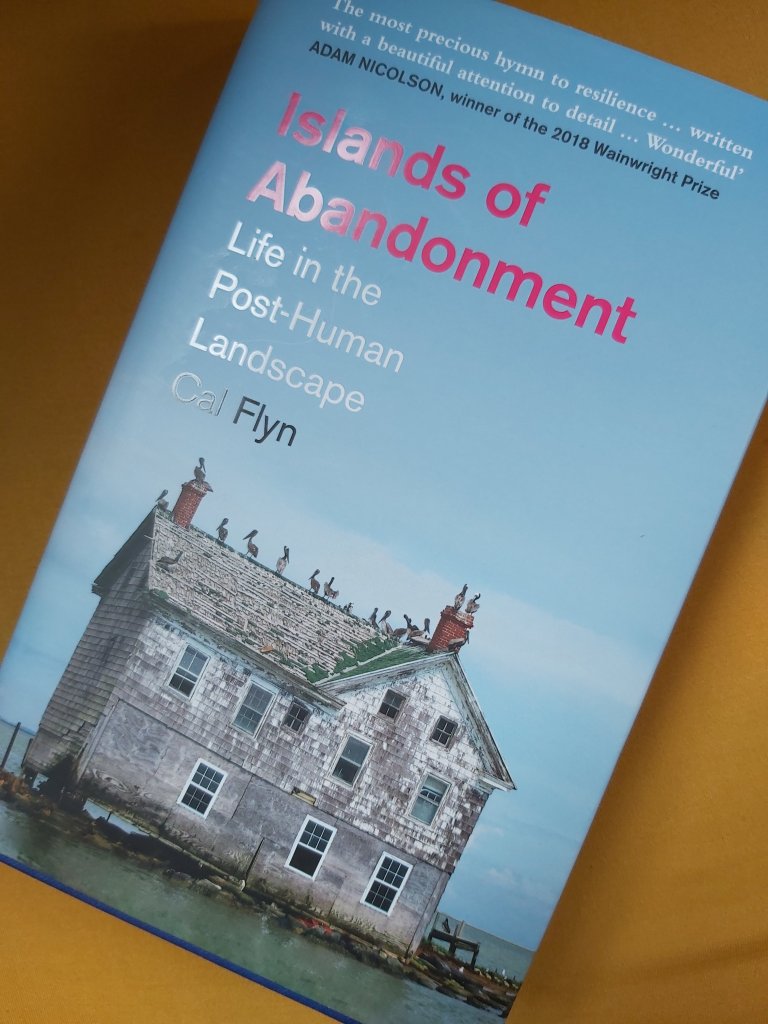
The greatest adventure story, the best thriller I have read over the last twelve months is not a work of fiction. It is this book by Cal Flyn, ‘Islands of Abandonment.’

With everyone from David Attenborough downwards warning us that the apocalypse is nigh if we human beings do not mend our polluting and over-populated ways, there is a risk that we become de-sensitised to the urgency of the message. This risk is doubled during a time of pandemic when the psychology goes ‘Look, no, sorry, can’t take any more doom! Pass me a slice of pizza and something entertaining to read, for God’s sake!’

It is essential therefore that authors like Cal Flyn come at the same subject from a fresh viewpoint and that some readers do engage with what she has to say, because it is essential reading, if frightening (her work is subtitled Life in the Post-Human Landscape).

Each chapter is an edge-of-the-seat adventure story. Alongside Cal, we crawl into dark tunnels by torchlight; we hear footsteps in the attic of the long-derelict house; we encounter a variety of ‘abandonment’ zone hosts, some more stable and trustworthy than others; we slither under the fence of a WWI woodland surrounding an area so toxic nothing has grown there since (this one had particular resonance for me, having visited the battlefields and read Lars Mytting’s ‘The Sixteen Trees of the Somme’). There as elsewhere, Flyn bends or breaks the law in pursuit of her goal – access to the unthinkable; to areas of our planet today which foretell what it may all become tomorrow.

There is a Mad Max dimension to her encounters with the often-below-the-radar human inhabitants of these strange, off-limits places. There are those who need to stay out of sight of authority for a plethora of hair-raising reasons, those who are waiting, waiting, feeding white mice for scientists who will never return; those who have become obsessed with the volcano which has robbed them of their home.

Humans are not however the main focus of ‘Islands of Abandonment’. Flyn instead shows us that our planet really does not need humanity to survive, which we may or may not find comforting (I most certainly did). She argues that sometimes even well-meant human intervention is less positive than leaving Earth alone to mend itself. Nature is reclaiming even impossibly contaminated places such as Chernobyl and somehow species which live there are adapting and surviving. This does not mean they are not sick, changed, poisoned, but they are still here. Fragile humankind is however much less resilient and able to change in these circumstances, although some are trying hard to bring about that change.

This book should be read by anyone with an interest in rewilding (it is in a way a global take on Isabella Tree’s ‘Wilding’, about the Knepp Estate near London). My favourite chapter focused on the island of Swona, which you can see en route for Orkney from the mainland. Cattle were abandoned there and have defied all attempts to ‘help’ them by herding them on to boats. They are now many generations wild and have become the focus of study by scientists. Their behaviour is entirely unregulated by farming and they have become a true herd again, led by a bull who, when deposed in old age, departs to dwell in peace on an isolated area of the island, and around whom, when he sickens and dies, the whole herd gathers to pay its respects.

Enjoy your next steak…

I envy Flyn her (pre-Lockdown) travel budget if not the focus of her writing. Stand by to visit Scotland, Cyprus, Estonia, Ukraine, Detroit, New Jersey, Staten Island and California in the USA, France, Tanzania and Montserrat. Everywhere she visits has been abandoned by humanity for a variety of reasons: natural phenomena such as the eruption in Montserrat; social, military and political change; and sheer inhabitability caused by human pollution, sometimes brought about decades ago. Our human inability to think/care about beyond one’s own lifetime/benefit has already served the planet very badly.

Some scientists are already predicting the end of human society as we know it within the next decade. This is no longer the potential problem of future generations, it is our own. Flyn tells us that there is already a ‘Voluntary Extinction Movement’ – which makes more sense after reading this book than it did before. Our human future will now involve an increasing number of ‘no go’ zones due to global warming, pollution, radiation and over-population. It is a bleak prospect for us – but as Flyn shows us in this fine piece of writing, it is not so bleak for a planet which has infinite potential for reinvention.

Like Rachel Carson before her, Flyn sheds a brilliant light on the unspeakable and unthinkable future of humankind. It is a warning but not one altogether without hope. An important and beautifully written book, this is a ‘Silent Spring’ for the 21st century.

Would make an excellent book club read.

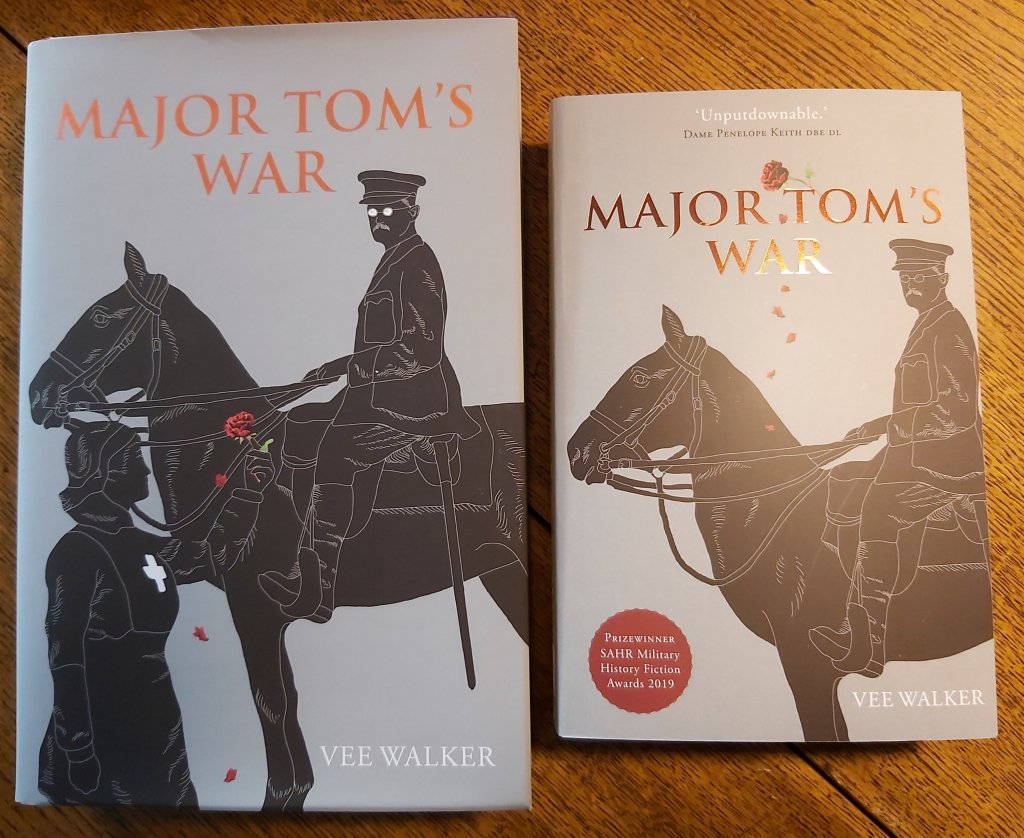
A tale of two covers…

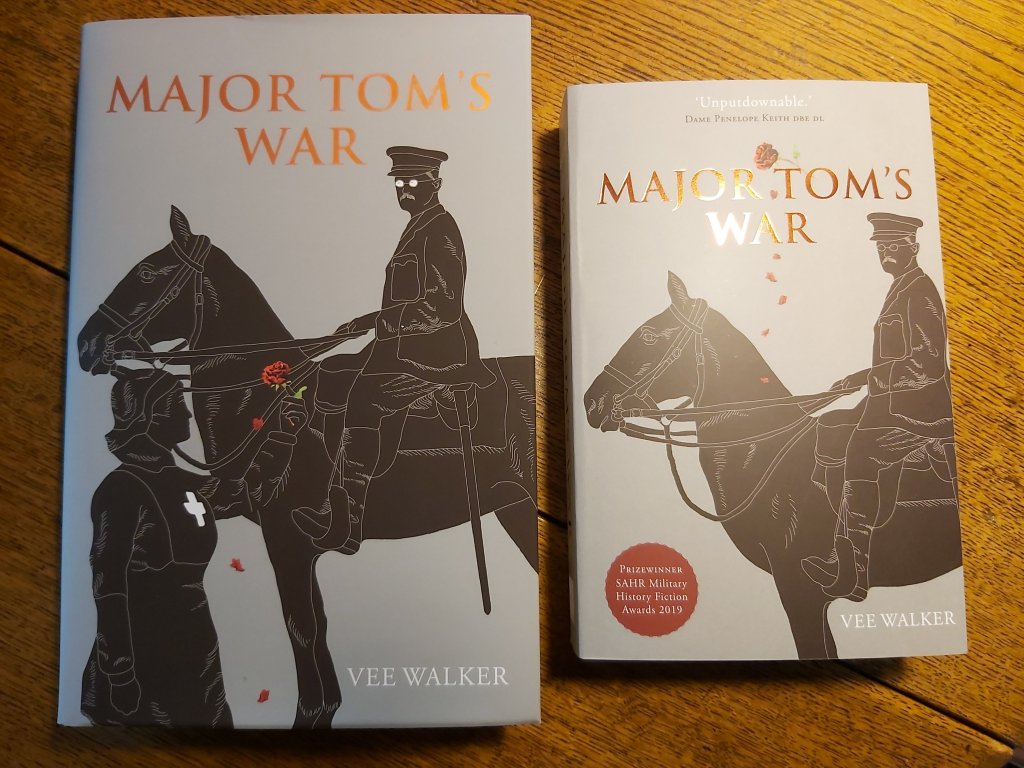
Left, the hardback cover; right, the paperback

This blog post was inspired by my Canadian cousin Cathy Brydon, who is related to me through my grandmother’s side of the family. After congratulating me on the paperback of Major Tom’s War, she asked, slightly ominously – ‘but – the cover – whatever has happened to Evie?’

What indeed. One minute my beloved grandmother is there on the hardback, clutching a rose, and the next, on the paperback edition, she has vanished.

Cover anxiety is a very real thing!

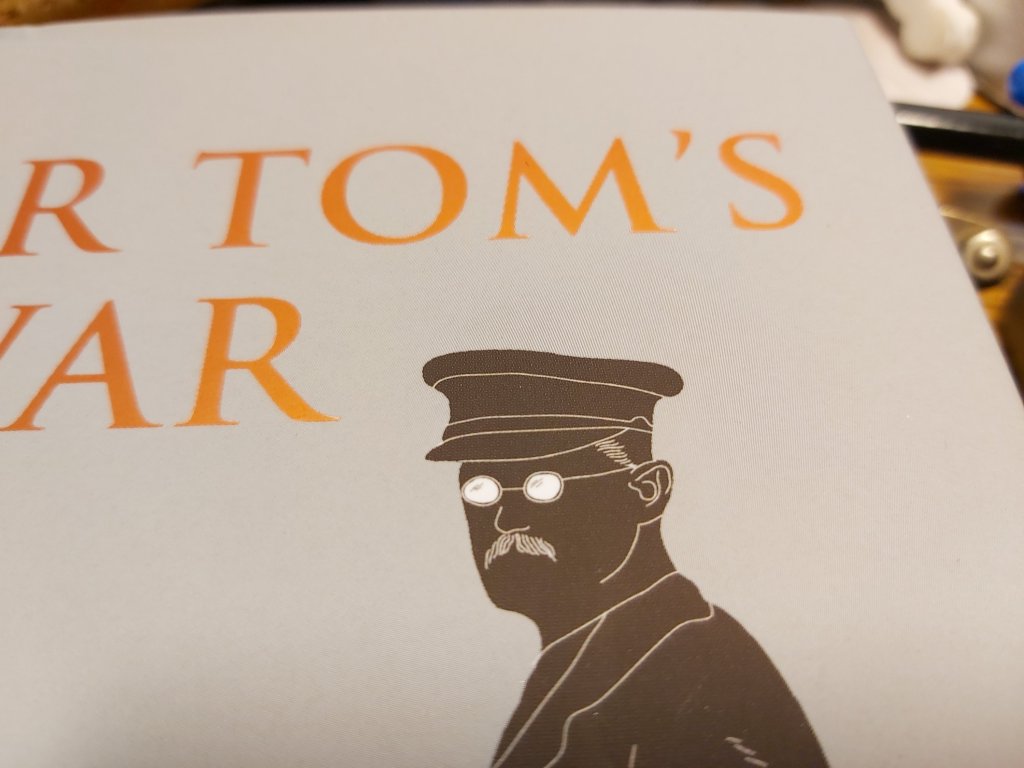
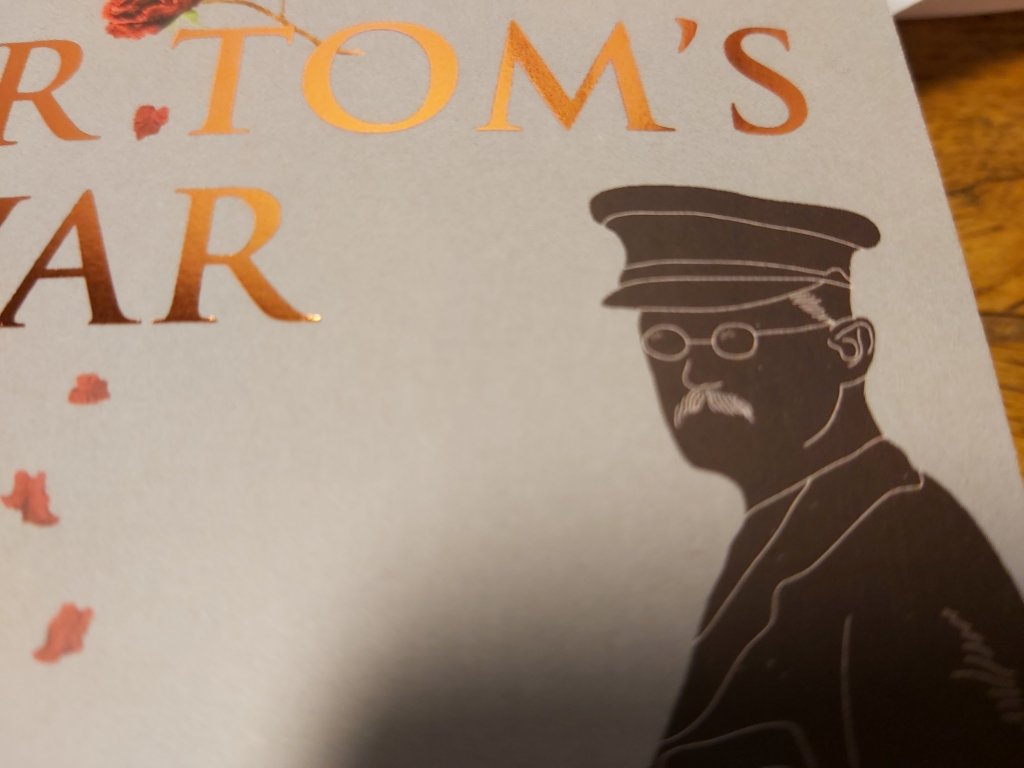
A cover exists to protect the book within, but should also to communicate the essence of the book to the reader. The original cover’s beautiful artwork is by the Canadian Sikh artist Keerat Kaur (www.keerat-kaur.com). Evie stands tall in her red cross uniform, offering a (highly symbolic) rose to Tom. He gazes down at her through rather spooky white spectacles.

We had a tight launch date for the hardback and the last editorial and cover choices had to be made at a bewildering speed. I remember seeing the final version for the first time at the book launch at the National Army Museum and it being a bit of a shock. The whole process had felt, understandably, rather rushed, and I was jittery (and authors very seldom love their covers at first, apparently).

The process of cover design had however begun months before, with a completely different concept – a bright red background with the silhouette of a horseman emerging from it, face on. It seemed oddly familar and yet I could not work out how. I posted it on the Women In the Arts Scotland Facebook Group and the answer soon came back – it looked (entirely coincidentally) very like the cover of this popular edition of Michael Morpurgo’s fabulous book War Horse.

The WIAS responses were divided in those early days on whether this similarity would be a good thing or not. Some thought the instant gut response – WWI! Cavalry! Man and horse! – was appropriate. I felt, probably a bit arrogantly, that I wanted the cover for Major Tom’s War to be unique, just like the book.

A word here about my extraordinary publishers, Kashi House (www.kashihouse.com). Their creative team had quickly come up with the initial Morpurgo-esque cover based on a photograph they had and some clever computer design. If I had just said yes to it – and I almost did – it would have saved them all time, stress and money. And yet, even though Parmjit Singh and his team were already operating beyond full stretch (setting up for their massively successful London exhibition, Empire of the Sikhs), they politely took on board everything I had said and scrapped the prototype. We started from scratch, and Parmjit commissioned Keerat to produce something far more original and memorable. Not just that, but they also added shiny copper lettering for the title – and a silky dust-jacket. Both hardback, and, now, the paperback, look – and feel – sensational.

As I mentioned above, Keerat’s initial design did not in fact have Evie on it – her figure was added in response to my feedback. Back in 2018 I had been anxious about going with Tom alone – would it alienate my female readers? Would it look like a work of non-fiction?

I have learned a lot about the process of bringing a book into existence over the past two years. I now understand that a book cover’s job is to make you want to pick it up/click on it and ideally take it home/order it, simple as that. We were trying to do a bit too much with the first edition cover – and that was my fault.

The paperback gave us the perfect chance for a rethink. No-one wanted to start from scratch, thank goodness – the hardback cover had built the foundations for the book’s identity well – but it was clear that shrinking it to fit the paperback would result in some detail being lost and would not work.

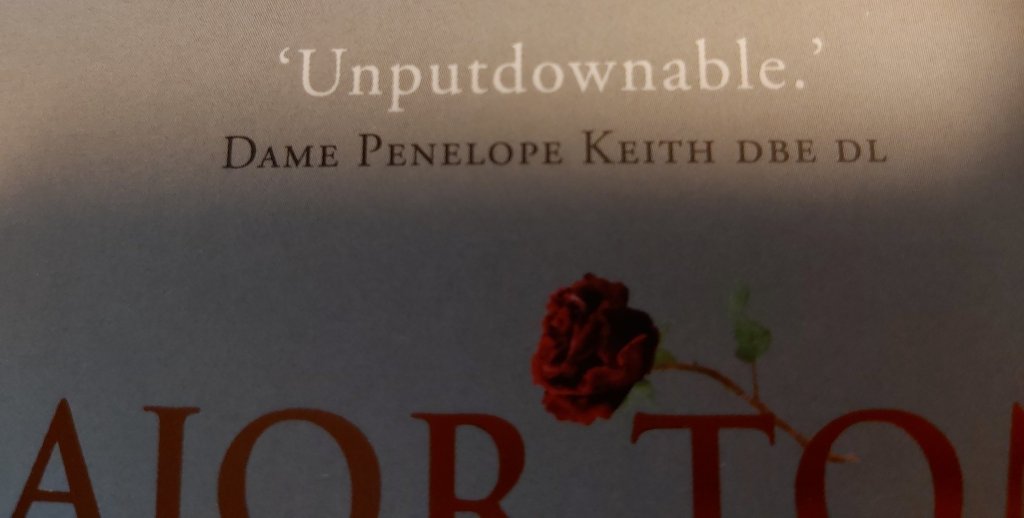
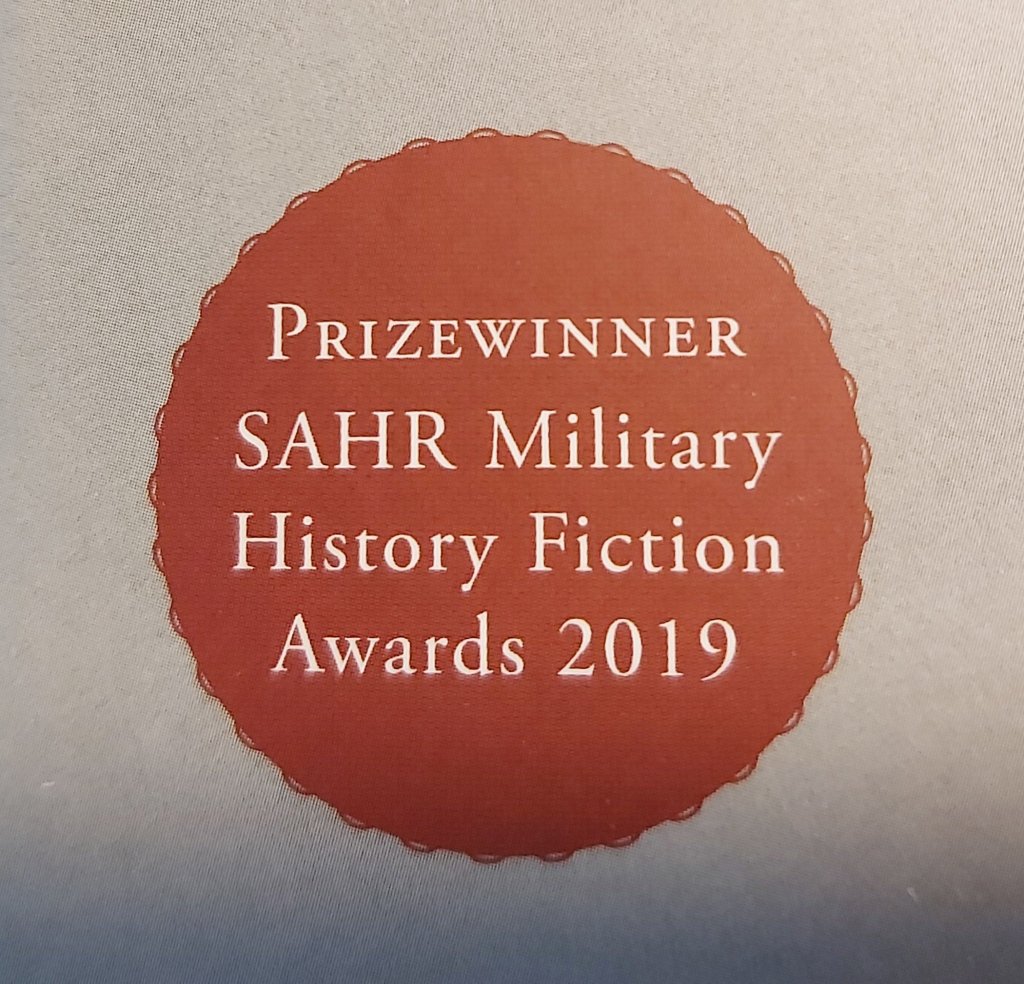
After Major Tom’s War won a prize at the SAHR Military History Fiction Awards, and several other reviewers had Said Nice Things about it, there was also the need to give space to some of those Nice Things Said on the paperback cover. Dame Penelope Keith DBE, DL wrote me a beautiful letter from which we quote just one compelling word on the front – ‘Unputdownable.’ This is also a subliminal suggestion of course – ‘please don’t put it back down – take it to the till instead!

When I realised we would have to lose Evie to make way for the Nice Things Said I thought the rose would have to go too – and that made me sad. As you will know if you have read it, roses crop up as a bit of a leitmotif in Major Tom’s War. The rose is also symbolic of the unlikely tenderness which blossomed between Tom and Evie. Designer Paul Smith (www.paulsmithdesign.com), who gave both editions their classy overall look and feel, cleverly isolated the rose and lifted it to the title above, allowing its petals to fall, and settle, on Daisy’s neck.

The single petal lying on Daisy’s neck, to me, symbolises all the horses who died or were injured in the Great War.

The beautiful SAHR prizewinner’s rosette, bottom left, matches the title colour and catches the eye – but sadly would not do so as much if set against Evie’s dark uniform.

Still pinching myself!

The spooky specs were a bit of a surprise at the book launch and were possibly the result of crossed wires between my desire to make Tom look more human and last-minute discussion with Keerat or Paul. Again views on the specs are divided: Daniel Scott at the book’s distributors, Allison & Busby, said he thought they might draw the eye and so attract sales.

Now you see them…

Others thought they were ghostly and offputting, myself included, and so Tom’s specs are less intimidating on the paperback. Who is right? Who knows?

…now you don’t.

The first paperback I lifted out of its nest of tissue paper (and stroked, crooned over and sniffed – come on, don’t we all with a new baby?) convinced me that the book is now, if not perfect, certainly as I had always imagined it. I think we have taken the right cover decisions – but of course only time – and future sales – will tell.

Enjoy the read – within whichever set of covers you have chosen. And thank you to Parmjit and Keerat and WIAS and Paul and Daniel and everyone else involved in the wild ride thus far 🙏🌹.

Major Tom’s War by Highland author Vee Walker will be out in paperback via all good booksellers from 19th November priced £9.99. It is already available as an e-reader edition and in hardback.

Vee will be signing advance copies of the paperback at Storehouse of Foulis near Dingwall from 11am to 3pm on Saturday 14 November 2020.

Remembering remembrance…

The poignant CWGC war graves of those British soldiers who died liberating the town (Bavay cemetery). They so nearly survived the war.

My earliest memory of Remembrance Sunday involves my mother at the wheel of her green Morris Traveller, a redoutable half-timbered vehicle, half car, half cupboard. We lived in Kirkhill then, it was Sunday and we were late for church in Fortrose and so she was driving faster than normal. We came round a bend and there, to our mutual horror, was the Remembrance Sunday ceremony at the war memorial at Tore. Dignified veterans scattered as we unintentionally roared through the centre of the parade at precisely 11am. Mum was so mortified she wept – but she kept her foot and head hard down for fear of being recognised as a respected local teacher. ‘Oh, what would your grandpa have thought?’ she gasped.

This was over fifty years ago now. The road layout by the church has been changed to correct the blind bend, and the church is no longer even a church. Things change. Life has moved on and yet, at this grey time of year, as autumn crumbles into the cold earth of winter, we continue to remember those who have died as a result of war.

Evie, daughters Libba and Numpy my mother, Tom

The Armistice is commemorated with even greater solemnity in France than it is here. 11th November is a national holiday. In Bavay, a small town devastated by two world wars, children lay bouquets adorned with tricolor ribbons. The difference is invasion. Channel Islands apart, the UK did not suffer the agony and humiliation of military overthrow and control by a hostile foreign power. In France they remember the fallen but also the relief of a double liberation just 26 years apart.

Tom, my mother’s father, was in Bavay for the very end of the war. Even though he was then married, the last year of WWI was the hardest of all for him: he returned from convalescence after gassing to find his Indian cavalry brothers had all been sent to Mesopotamia. He was now an Assistant Provost Marshal (a military policeman) for a division and could not accompany them. He would never see his Indian cavalry friend Amar Singh or his right hand man Arjan Singh – or any of them – ever again.

The statue of Risaldar Major Amar Singh near Takkapur in Punjab, with my poppy cross.

During the retreat from the Somme in March 1918, Tom held back men fleeing in chaos at gunpoint and tried to stem the flood of desperate refugees. These scenes remained with him as recurring nightmares to the end of his life.

When the Armistice was announced on November 11th he was one of the first to know via a signal he then copied out by hand and distributed to the maires within the area.

Talking with the pupils of Amar Singh High School

How do I know this? Back in 2018 during my Armistice Day visit to Bavay, an elderly lady knocked on the door of the Auberge de Bellevue where I was staying. She was the grand-daughter of Gaston Derome, the maire of Bavay, who wrote my grandfather the thank you letter which led me to Bavay on the first place. She handed over a cardboard box. Inside were Gaston’s diaries.

Short of time before my departure I found the entry for 11th November. This paper fluttered out at his feet – and I bent and picked up Tom’s note to Gaston giving details of how the Armistice was to be conducted.

Gaston’s war as a civilian was arguably worse than Tom’s as a soldier. Widowed just before the war, and with four young children, he was arrested, threatened with execution more than once, imprisoned and interned.

Tom rode into Bavay on 7th November and the battle to liberate the little town lasted two days. A shell exploded at Gaston’s house, narrowly avoiding both Gaston and Tom. I have stood beside the door where it happened.

Tom’s name in Gaston’s cramped handwriting – a little misspelled but no doubt about it- appears under the words le prevôt maréchal – the provost marshal

In a way the writing of Major Tom’s War has been a personal journey of commemoration. I hope the paperback will soon reach the descendants of Amar Singh and Arjan Singh in India, and, one day, once the French translation is complete, of Gaston Derome in Bavay.

Over 74,000 Indian Army soldiers died in WWI. And of the 40 million casualties worldwide, 10 million were civilians. Lest we forget.

Vee Walker’s award-winning novel Major Tom’s War can be ordered now from the publishers Kashi House (www.kashihouse.com), Waterstones and Amazon RRP £9.99.