My latest work, The Glen Nevis Rose, is an unusual collaboration with Lochaber author Ewen A. Cameron, who lives at Glen Nevis House. It began with Ewen’s fascination for a little-known local story, grew into an idea for a pamphlet (which is when I became involved) and since then has snowballed into something rather remarkable: a full colour, 90 page book which explores the life of one family in the years after Culloden, both through fiction and well-researched non-fiction.
Just over 250 years ago, Lady Mary Cameron of Glen Nevis turned her back on the self- same house where Ewen now lives, to board a mysterious vessel named the Pearl at Fort William. Former staunch Jacobite families like Mary’s had suffered badly at the hands of the victors after Culloden and many set their faces towards the New World. The Pearl was already almost filled to the gunwales with MacDonells of Glengarry. They must have offered some of the few remaining berths to their friends and neighbours, among them Mary’s family.
Mary had young children. Her old father was dying. The preparations for departure must have been emotional, complex and protracted.
Why, then, dig up a rose to take with her, of all things?
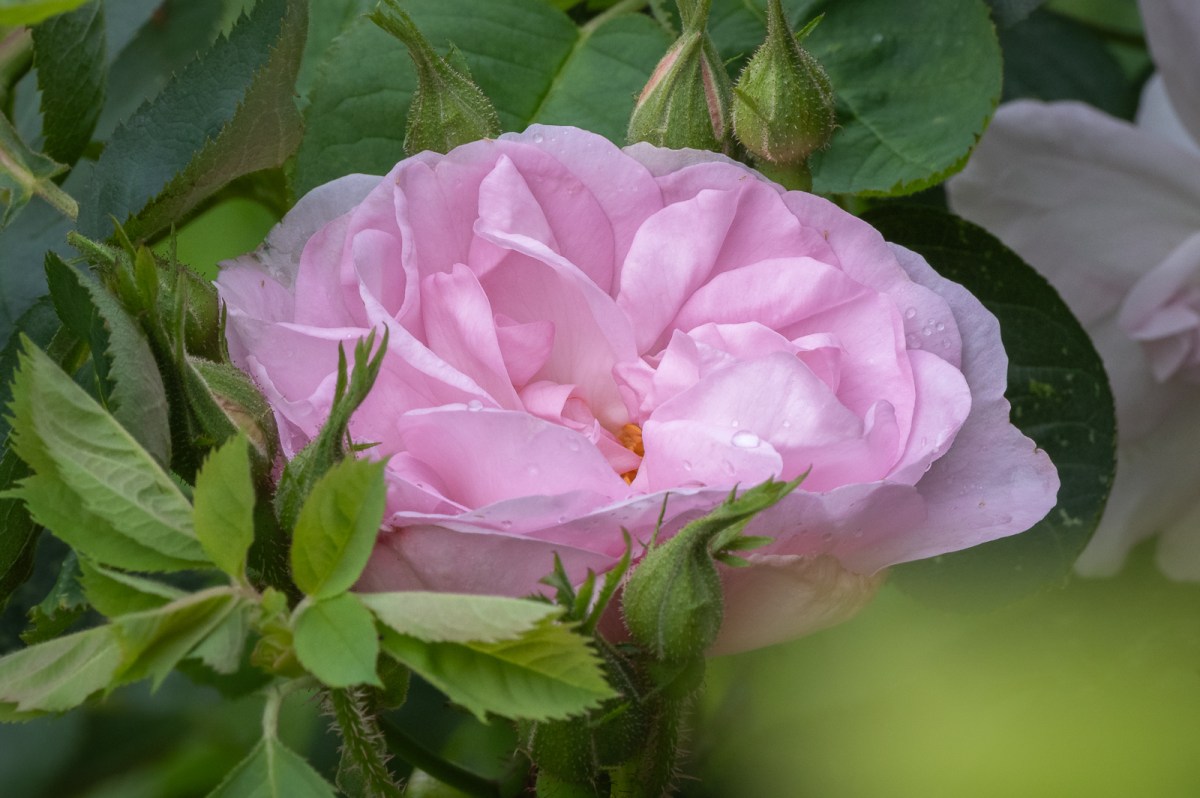
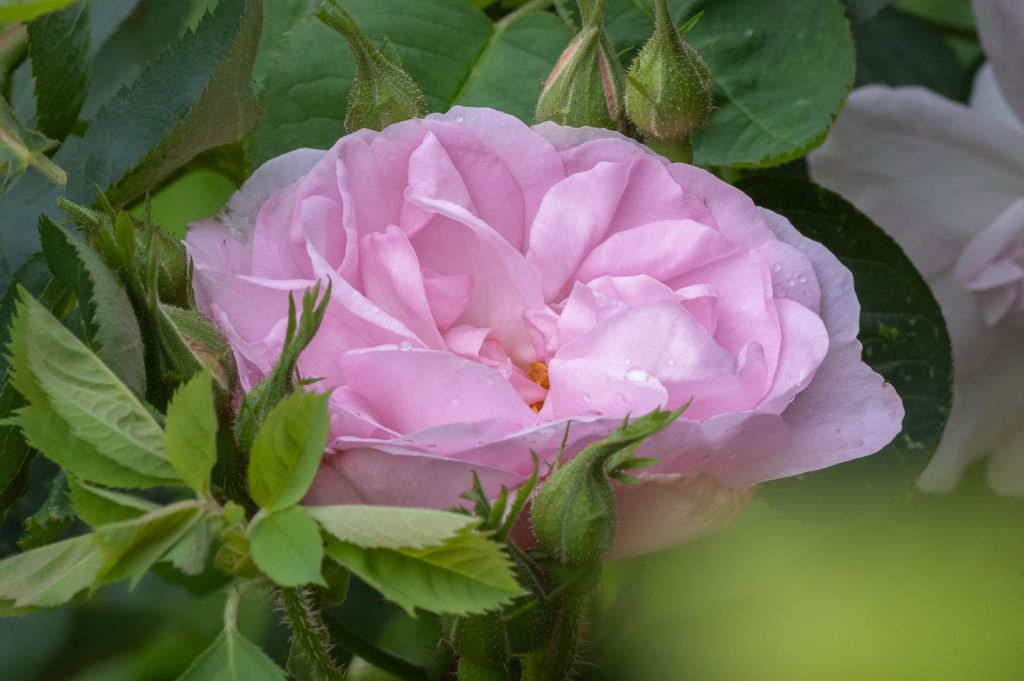
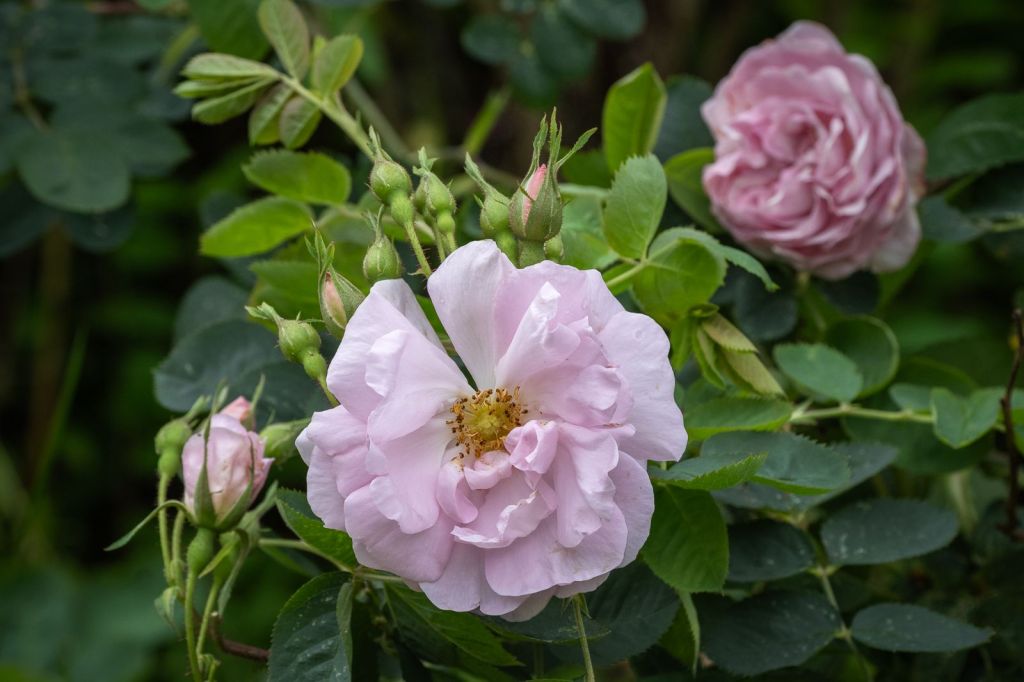
We could so easily have got it all wrong and just seen the rose – an ancient variety named Great Maiden’s Blush – as a perfumed, romantic, nostalgic gesture.
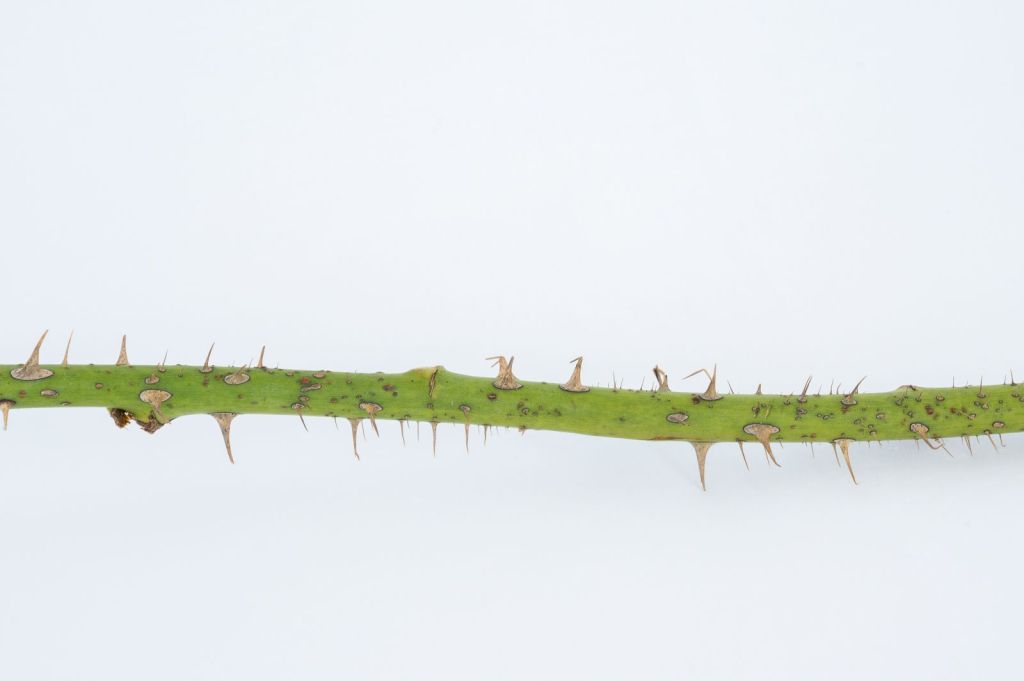
That would be to ignore its vicious thorns, and once we found out the role it is said to have played in the family’s past, we understood.
The story of the journey of the Camerons, their brood of children and the rose to America and beyond is one of love, tenacity, courage and adventure.
Our understanding of the Jacobite Rising tends to end in April 1746 at Culloden, but the aftermath of civil war echoed through the glens for decades after that, triggering the start of an epic migration of wealth and youth and talent from our shores which would later evolve into the Highland Clearances.
If you want to understand what it was like to survive Culloden and then choose to emigrate, please consider reading this book.
It is not available on Amazon and never will be. We are distributing it through smaller bookshops and outlets only at present. Feel free to get in touch and I will let you know your nearest outlet.
Signed copies can be sent by mail order worldwide, too.
I have only very occasionally ventured into writing poetry myself, usually as interpretive commissions for clients. I am more of the why-use-one-word-where-297-will-do persuasion. I do admire good poets and poetry, though, and have a sneaking adoration for the really epic stuff; the adventurous Aeneid, the transformations of Ovid’s Metamorphoses, the gore of The Lays of Ancient Rome, the glorious Highland fakery of Ossian.
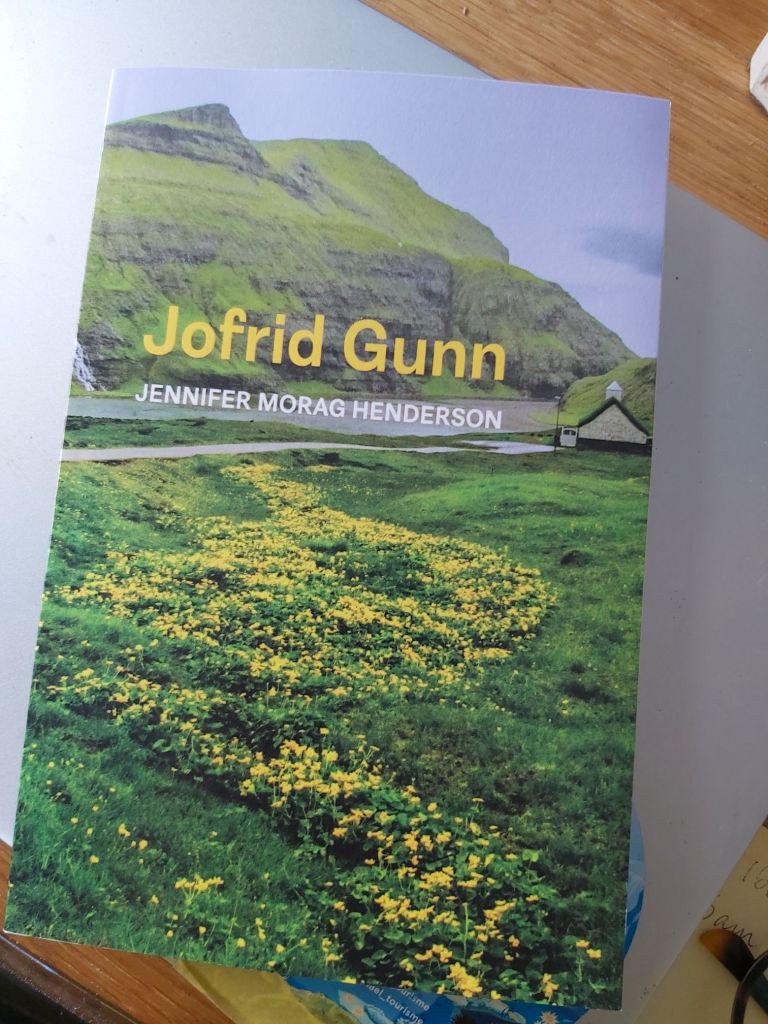
I have long enjoyed Jennifer Morag Henderson’s historical and biographical work – Daughters of the North is real edge-of-the-seat stuff – but Jofrid Gunn is a step miles out of her admirable comfort zone. I find this extraordinary book defies any normal description. It is, but is not just, a collection of poems. It is a biography of sorts. There is a direction of travel of sorts – Faroes to Highlands, Highlands to Faroes, both time and place shifting with the tides and centuries. Yes, the story of Jofrid is related through this journeying, to a degree – if not as literally as I had anticipated, but this was no disappointment. Instead, the reader experiences a kind of multi-sensory immersion in carefully patterned words. When I had finished the book and its copious notes, I felt salt-blasted, wind-blown, refreshed, and deeply sorry that the experience was over.
Jennifer has been learning Faroese to give her work increased authenticity. Has that mammoth effort paid off? Without question, yes.
This style of prose poetry is less about rhythm than the shapes and patterns of words and phrases within the text. Again, the closest comparison I can draw is with epic Celtic poetry – the Taìn bò Cùlaìgne, the Mabinogion and the brilliant imitation of these in Macpherson’s Ossian.
The patterns within Jennifer’s poetry rouse and enchant and beguile in equal measure, and soon I found myself enjoying them far too much to bother myself unduly about any analysis of their (huge variety of) themes and threads and structures. Whether Jennifer is writing as or about Jofrid or as or about herself, I was not always certain, and for me, this is a boundary pleasingly blurred.
Hard to pick out favourites. The poignant story of the violin which was played to sound like the wind, one of several prose interludes, I found deeply moving and reread several times.
The Salt and the Coal reminded me of how long the remarkable Jean Gordon had to wait for the right time and place in which to marry her true love in Daughters of the North.
I have had a similar (if less poetic) conversation than Wedding-ring Shawl – advice from a mother-in-law, all about a knitted shawl in wool fine enough to draw through a wedding ring – patterns again: an old family friend, Eva Holmes, used a special frame surrounded by tiny pin-tacks to shape and launder them, and gave me a fine shawl for my firstborn. I had not thought about that for a long time. Good, powerful poetry like this is provocative in its original sense; it calls forth voices from deep within a reader’s heart and head.
Do read this remarkable book, which is so much more than just a debut poetry collection.
This blog is prompted by a recent commercial post circulating on Facebook which gives one rather poor definition for the Black Isle’s ‘black’ nomenclature and then encourages folk to sign up for a tour with the company.
No thanks.
For those who have never visited my home turf, the Black Isle is not an island but a peninsula attached to the mainland Highlands by a narrow neck of land starting at the River Beauly and ending at the river Conon. To the north it is bounded by the Cromarty Firth, to the south the Beauly Firth and to the east the Moray Firth, opening into the North Sea. It is an area with a warmer microclimate than the mainland, resulting in fertile farmland with rich dark soil and pockets of ancient, lush and biodiverse woodland.
An-t-EileanDubh in Gaelic, there is some suggestion that Dubh, black, is just a corruption of Duthac. The Black Isle was on the popular Elgin to Tain pilgrimage route but St Duthac’s shrine was in Tain itself not at the Chanonry in Fortrose, so I find this one unconvincing.
Let’s explore some of the other reasoning (one added courtesy of Paul Johnson, thanks Paul!): 👇
The truth is no-one really knows why the Black Isle is called the Black Isle, but in this blog I will set out five explanations as told to me as a local at intervals over the past fifty or so years. They are geographical, supernatural, historical, social and natural, with some overlap between the five.
If you know of any others, please get in touch!
A contrasting foreground
The Black Isle in times past would not have been capped with today’s commercial coniferous pine forests, most of which are under 100 years old, and it was known as the Black Isle before that. The backbone, the Mulbuie, was, as the name suggests (buidhe means yellow in Gaelic), so at some point in the past it must have been a golden moorland ridge scattered with peat-moss heather and fragrant whin (gorse) bushes.
So why not the Golden Isle?
The answer is in the contrast with the startling bulk of Ben Wyvis behind and to the west of the Black Isle in winter. Travellers from the south who had slogged up the Slocht must have welcomed the sight of the dark bulk of the low-lying Black Isle (barely 1000′) across the water as they descended towards Inverness, contrasting with Ben Wyvis, our much higher (3000′ + Munro) and weather mountain. From the first frost in October to Easter and often later, ‘the Ben’ has a summit white with frost or snow. We look to Ben Wyvis to predict how the day will turn out weatherwise.
A traditional winter greeting hereabouts is ‘Snaw on the Ben’, usually said with doom-laden glee.
Or…
Black magic
The Scottish Reformation of 1560 swept away a now-forgotten Roman Catholic past. With it went carved wayside crosses like those you see on the continent and local religious tolerence of difference, of the old ways. A fearsome zeal for the new Protestant religion (which, ironically, had its roots in an English king’s lust as well as a desire to purge the Christian church of corruption) swept the Highlands like a brush fire. Standing stones were defaced and broken. Carved tombstones were reused as plainer slabs (see more on that at Kirkmichael).
Accusations of witchcraft became numerous in the 1600s, often aimed vindictively at decent, prosperous women as well as those vulnerable through deformity or madness. The outcome of any witch trial was generally a foregone conclusion, but not always.
Sir Thomas Urquhart, the eccentric genius laird of Cromarty, saved one young pair of Croms who had accused themselves of ‘consorting with demons’ – presumably in the grip of some kind of religious fervour whipped up by an enthusiastic witchfinder. Sir T had just returned from a grand tour of the continent and was having none of it. Rather than agree to ‘the cleansing fire’ he put the pair up overnight, got them merry and encouraged a couple of his servants to ‘dally’ with them. In the morning, sure enough, the accused claimed to have consorted with demons that very night. Sir T quickly saw these gullible souls married to their willing ‘demons’, the sacrament of marriage protecting them from further reprisals. Unsurprisingly the church hated Sir Thomas thereafter, and the feeling was mutual.
More about Sir Thomas Urquhart at Cromarty Courthouse!
Less fortunate was the Brahan Seer, one Coinneach ‘Odhar’ (Dun-headed Kenny) Mackenzie, a Lewis man with the second sight. He came unstuck by ‘seeing’ the husband of Isabella Countess Seaforth – the head of the politically powerful Mackenzie clan – up to no good in Paris, and unwisely sharing this insight with his wife publicly. Coinneach was accused of witchcraft and burned to death in a tar barrel (likely the ferry beacon for summoning the vessel from Ardersier) on the highest point of Chanonry Point, where a mediaeval cross base can still be seen today. Before his grim end he thoroughly and chillingly cursed the great House of Seaforth: he predicted the death of all male heirs before the last of the line himself died, and that this doomed chief would know this time had come when various other clan chiefs had a variety of gruesome disfigurements and disabilities.
Worst of all, Coinneach predicted that a ‘white-coiffed lassie from the East’ would then ‘kill her sister’. Sure enough, once all the male heirs had predeceased Francis Humberston Mackenzie, and he himself had died, his widowed daughter returned from India (and in India, white is the colour of mourning) to take up her inheritance. She was at the reins of a carriage one day when it overturned, killing her sister.
It is not uncommon still for local people to have strange presentiments, perhaps echoes of CoinneachOdhar’s ‘seeing’. It is particularly useful for avoiding Police speed traps.
From black magic to…
Black Raiders
It’s hard to shake off the image of Vikings as tall, blonde, handsome chaps with horned helmets, isn’t it (thank you, Uthred son of Uthred…) but this part of Scotland was colonised by dark haired Danes (because ‘there ain’t nuthin’ like a Daaaaane….’). Although the indigenous locals probably did not welcome these new arrivals with open arms, not all Viking settlement was about dark deeds, burning churches, rape and pillage and so forth. The canny seafarers whose ships once stole, terrifyingly, up the firth under cover of a sea-mist or haar (a fine Old Norse word) would eventually settle and embrace Christianity and intermarry and farm the land just like everyone else. Dingwall was the place of the Thing, the Viking parliament (believed to be under the monument car park near the old library building). And in the Black Isle we still have Udale bay, Old Norse for The Bay of the Yew Trees.
Black Islers who belive themselves to be true locals who do an Ancestry-type DNA test will often be surprised to find a high percentage of Scandinavian blood. Tsk. We were all incomers once!
Or…
Black smokefrom many homes
We have forgotten what it is like to warm ourselves and cook solely with open fires. For centuries people in the Black Isle burned wood and ‘moss’ or peat – turf they cut and stacked to dry up on the common land along the Mulbuie Ridge or even from along the coast. Again, travellers from the south might have seen a pall of yellow-black smoke from hundreds of hearths hanging over the Black Isle, rising from the many coastal chimneys of Redcastle, North Kessock, Kilmuir, Munlochy, Avoch, Fortrose, Rosemarkie and Cromarty.
People disposed of rubbish the same way too. Stubblefields were burned off after harvest to nourish the ground for the next crop. I have a happy memory of being allowed to play in a burning stubblefield, jumping through the quick-burning fires of waste straw in the early 1970s!
Higher up among the heather, too, a paler, more mysterious smoke would once have drifted upwards, juniper wood burned to fuel dozens of illicit whisky stills. Winters in the past were longer and harsher than they are now, and a dram of uisge-beatha helped them pass more easily. One Statistical Account relates that there were more whisky stills in the Black Isle than anywhere else in the Highlands.
The first legal distillery was licensed to the Forbes clan in Ferintosh.
Or…
Ancient Woodland
My friend Paul Johnson points out that there are still legacy Caledonian-type Granny Pines all over the Black Isle, from Mount Eagle on top all the way down to sea-level. Many are hidden either singly or in small groups in the current forestry plantations (and Gallowhill, Blackhills and also on the Rosehaugh estate to name just a few) and also in more deciduous woods such as the Beechwood at Raddery and the natural Birchwoods at Gallowhill – even in the Oakwoods at Drummonreach and Tore.
Many of the plantations and other woods are included on the Ancient Woodland Inventory for Scotland, almost all in fact. The Black Isle was once (maybe still is) home to Capercaillie and still has many of the usual pinewood residents, from Pine Martens to Crossbills. We still have the Bog Woodland Monadh Mor which is not considered part of the Caledonian Pinewood Fragments inventory for some stupid bureaucratic reason, but it should be!
Mature pines are dark green that look black from a distance. Most of the Black Isle may well have been part of the Great Wood, but it was systematically felled for timber and to clear land for farming and housing over the last 1500 years or so. Perhaps there was always a moorland ‘top’ above the trees, covered in moorland and whin, hence the ‘Mulbuie’ ridge – looking a bit like a monk’s tonsure.
From a distance, a mass of ancient woodland would look black…
So…
.. landscape, witchcraft, Vikings, whisky or ancient pines could all explain why our Isle is known as Black today.
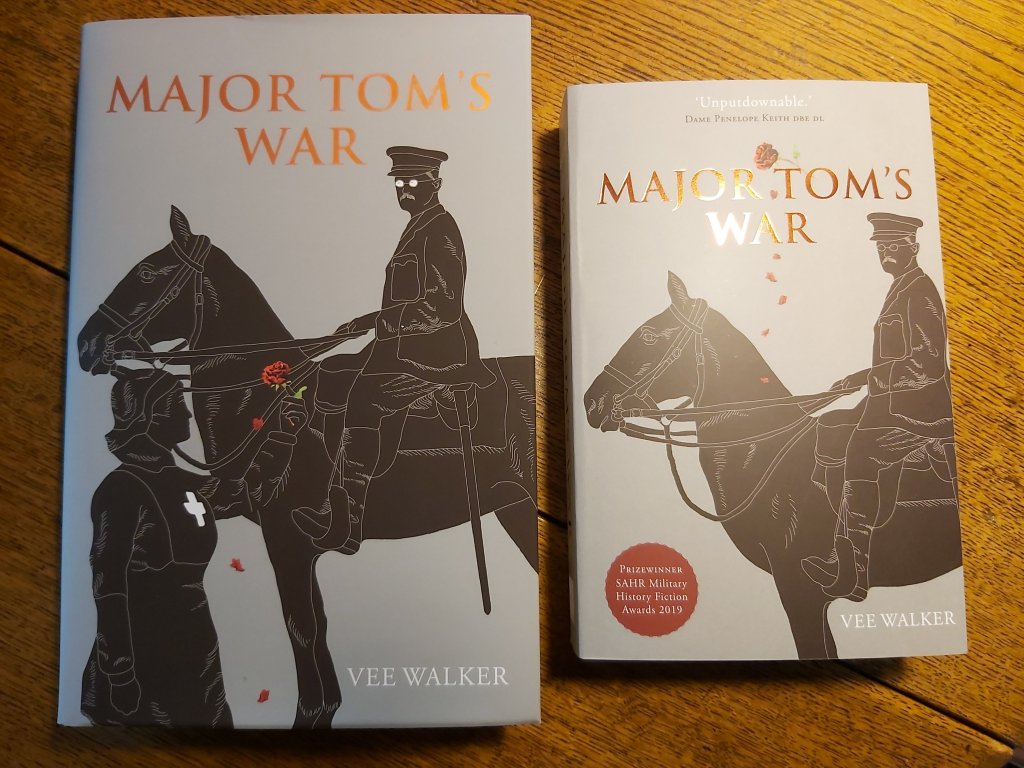
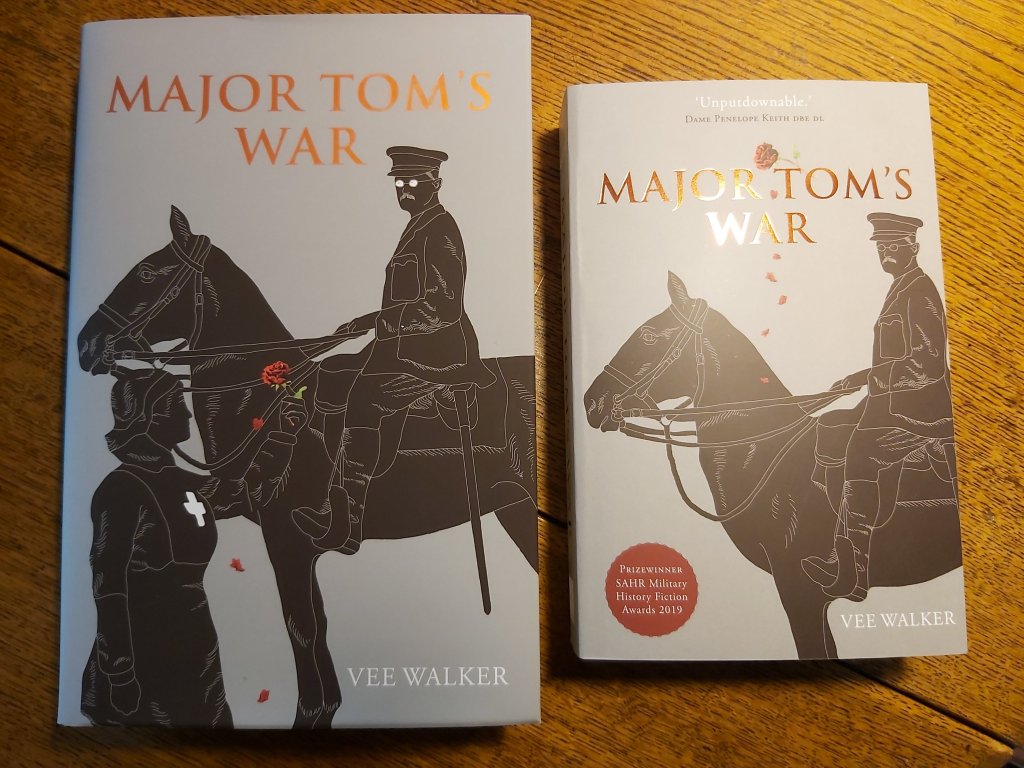
This blog post was inspired by my Canadian cousin Cathy Brydon, who is related to me through my grandmother’s side of the family. After congratulating me on the paperback of Major Tom’s War, she asked, slightly ominously – ‘but – the cover – whatever has happened to Evie?’
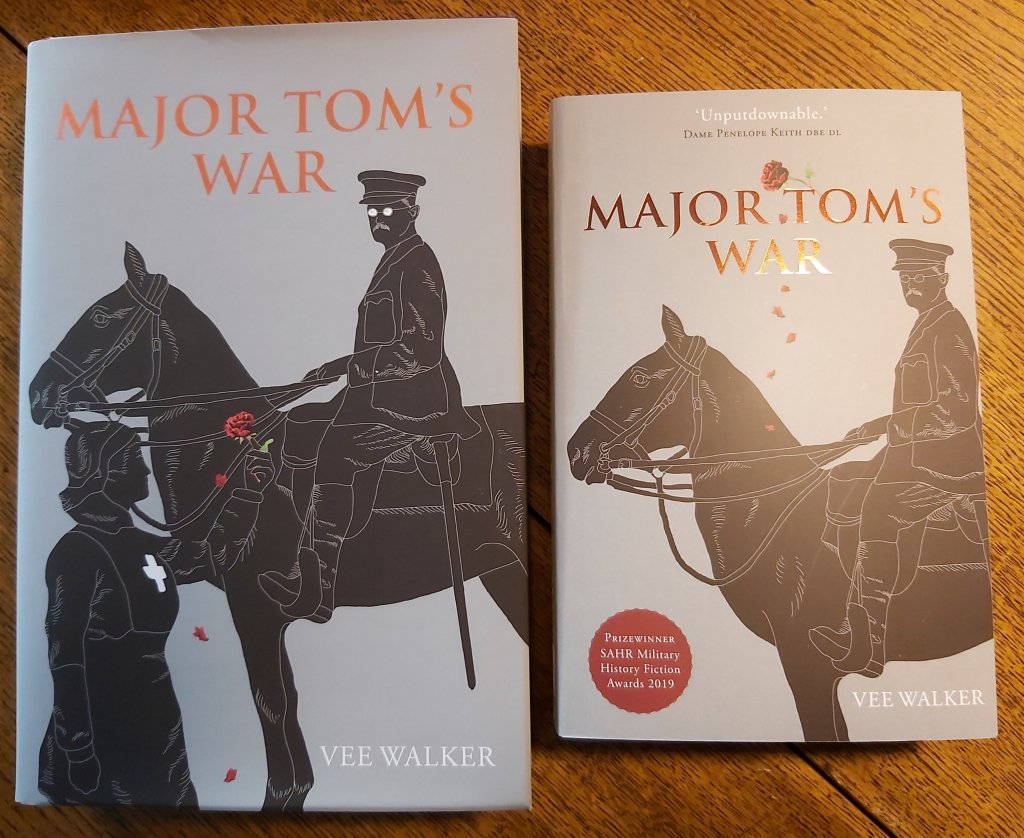
What indeed. One minute my beloved grandmother is there on the hardback, clutching a rose, and the next, on the paperback edition, she has vanished.
Cover anxiety is a very real thing!
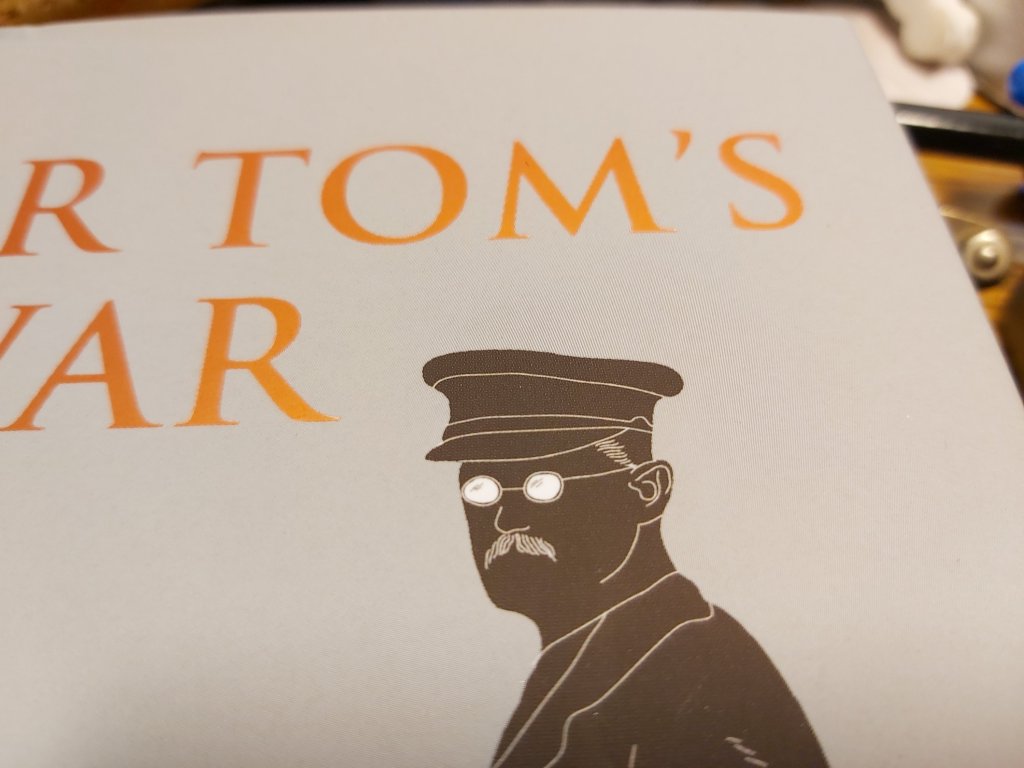
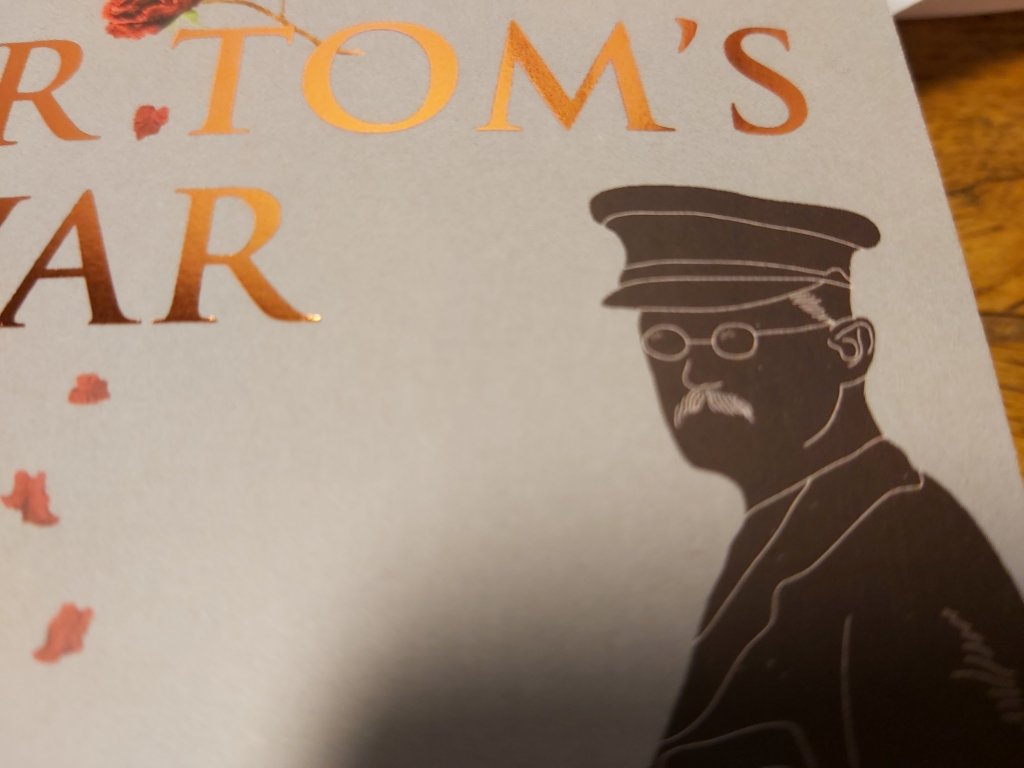
A cover exists to protect the book within, but should also to communicate the essence of the book to the reader. The original cover’s beautiful artwork is by the Canadian Sikh artist Keerat Kaur (www.keerat-kaur.com). Evie stands tall in her red cross uniform, offering a (highly symbolic) rose to Tom. He gazes down at her through rather spooky white spectacles.
We had a tight launch date for the hardback and the last editorial and cover choices had to be made at a bewildering speed. I remember seeing the final version for the first time at the book launch at the National Army Museum and it being a bit of a shock. The whole process had felt, understandably, rather rushed, and I was jittery (and authors very seldom love their covers at first, apparently).
The process of cover design had however begun months before, with a completely different concept – a bright red background with the silhouette of a horseman emerging from it, face on. It seemed oddly familar and yet I could not work out how. I posted it on the Women In the Arts Scotland Facebook Group and the answer soon came back – it looked (entirely coincidentally) very like the cover of this popular edition of Michael Morpurgo’s fabulous book War Horse.
The WIAS responses were divided in those early days on whether this similarity would be a good thing or not. Some thought the instant gut response – WWI! Cavalry! Man and horse! – was appropriate. I felt, probably a bit arrogantly, that I wanted the cover for Major Tom’s War to be unique, just like the book.
A word here about my extraordinary publishers, Kashi House (www.kashihouse.com). Their creative team had quickly come up with the initial Morpurgo-esque cover based on a photograph they had and some clever computer design. If I had just said yes to it – and I almost did – it would have saved them all time, stress and money. And yet, even though Parmjit Singh and his team were already operating beyond full stretch (setting up for their massively successful London exhibition, Empire of the Sikhs), they politely took on board everything I had said and scrapped the prototype. We started from scratch, and Parmjit commissioned Keerat to produce something far more original and memorable. Not just that, but they also added shiny copper lettering for the title – and a silky dust-jacket. Both hardback, and, now, the paperback, look – and feel – sensational.
As I mentioned above, Keerat’s initial design did not in fact have Evie on it – her figure was added in response to my feedback. Back in 2018 I had been anxious about going with Tom alone – would it alienate my female readers? Would it look like a work of non-fiction?
I have learned a lot about the process of bringing a book into existence over the past two years. I now understand that a book cover’s job is to make you want to pick it up/click on it and ideally take it home/order it, simple as that. We were trying to do a bit too much with the first edition cover – and that was my fault.
The paperback gave us the perfect chance for a rethink. No-one wanted to start from scratch, thank goodness – the hardback cover had built the foundations for the book’s identity well – but it was clear that shrinking it to fit the paperback would result in some detail being lost and would not work.
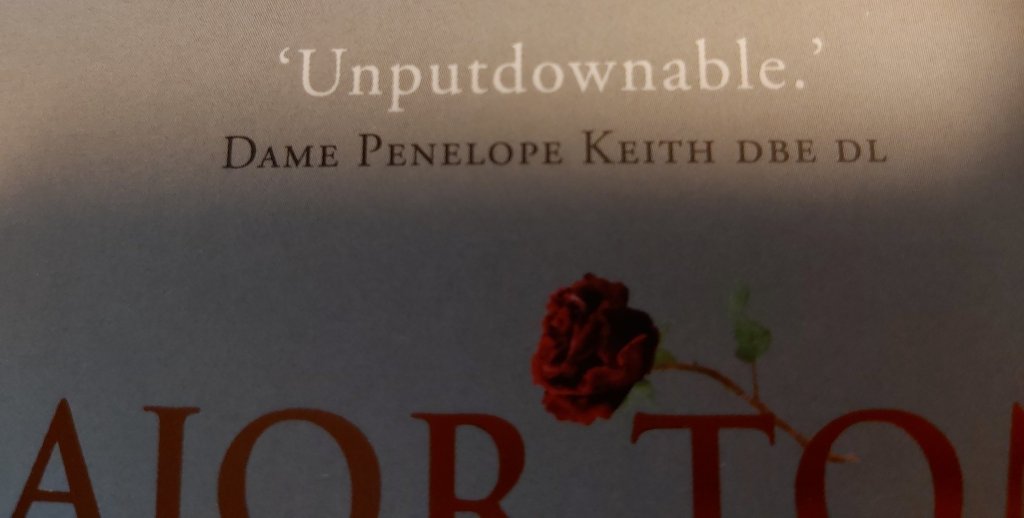
After Major Tom’s War won a prize at the SAHR Military History Fiction Awards, and several other reviewers had Said Nice Things about it, there was also the need to give space to some of those Nice Things Said on the paperback cover. Dame Penelope Keith DBE, DL wrote me a beautiful letter from which we quote just one compelling word on the front – ‘Unputdownable.’ This is also a subliminal suggestion of course – ‘please don’t put it back down – take it to the till instead!
When I realised we would have to lose Evie to make way for the Nice Things Said I thought the rose would have to go too – and that made me sad. As you will know if you have read it, roses crop up as a bit of a leitmotif in Major Tom’s War. The rose is also symbolic of the unlikely tenderness which blossomed between Tom and Evie. Designer Paul Smith (www.paulsmithdesign.com), who gave both editions their classy overall look and feel, cleverly isolated the rose and lifted it to the title above, allowing its petals to fall, and settle, on Daisy’s neck.
The single petal lying on Daisy’s neck, to me, symbolises all the horses who died or were injured in the Great War.
The beautiful SAHR prizewinner’s rosette, bottom left, matches the title colour and catches the eye – but sadly would not do so as much if set against Evie’s dark uniform.
Still pinching myself!
The spooky specs were a bit of a surprise at the book launch and were possibly the result of crossed wires between my desire to make Tom look more human and last-minute discussion with Keerat or Paul. Again views on the specs are divided: Daniel Scott at the book’s distributors, Allison & Busby, said he thought they might draw the eye and so attract sales.
Now you see them…
Others thought they were ghostly and offputting, myself included, and so Tom’s specs are less intimidating on the paperback. Who is right? Who knows?
…now you don’t.
The first paperback I lifted out of its nest of tissue paper (and stroked, crooned over and sniffed – come on, don’t we all with a new baby?) convinced me that the book is now, if not perfect, certainly as I had always imagined it. I think we have taken the right cover decisions – but of course only time – and future sales – will tell.
Enjoy the read – within whichever set of covers you have chosen. And thank you to Parmjit and Keerat and WIAS and Paul and Daniel and everyone else involved in the wild ride thus far 🙏🌹.
Major Tom’s War by Highland author Vee Walker will be out in paperback via all good booksellers from 19th November priced £9.99. It is already available as an e-reader edition and in hardback.
Vee will be signing advance copies of the paperback at Storehouse of Foulis near Dingwall from 11am to 3pm on Saturday 14 November 2020.







 Vee Walker writes...