My latest work, The Glen Nevis Rose, is an unusual collaboration with Lochaber author Ewen A. Cameron, who lives at Glen Nevis House. It began with Ewen’s fascination for a little-known local story, grew into an idea for a pamphlet (which is when I became involved) and since then has snowballed into something rather remarkable: a full colour, 90 page book which explores the life of one family in the years after Culloden, both through fiction and well-researched non-fiction.
Just over 250 years ago, Lady Mary Cameron of Glen Nevis turned her back on the self- same house where Ewen now lives, to board a mysterious vessel named the Pearl at Fort William. Former staunch Jacobite families like Mary’s had suffered badly at the hands of the victors after Culloden and many set their faces towards the New World. The Pearl was already almost filled to the gunwales with MacDonells of Glengarry. They must have offered some of the few remaining berths to their friends and neighbours, among them Mary’s family.
Mary had young children. Her old father was dying. The preparations for departure must have been emotional, complex and protracted.
Why, then, dig up a rose to take with her, of all things?
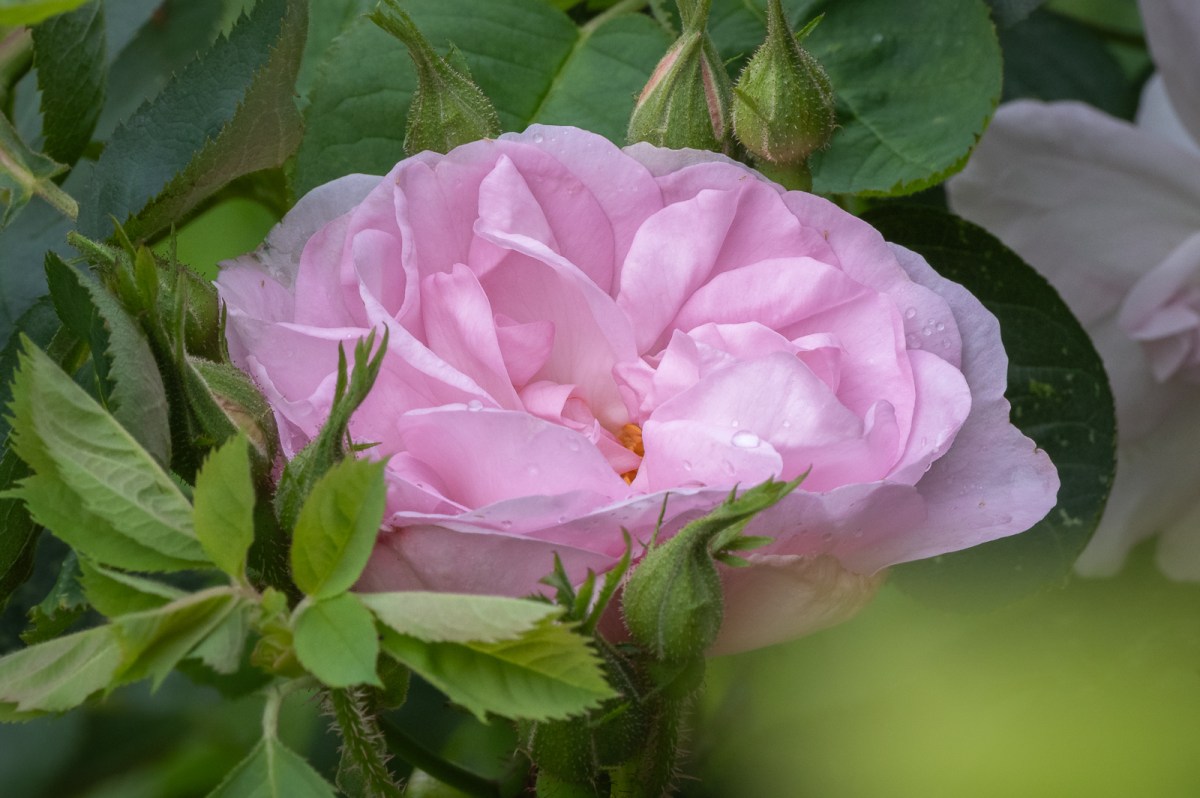
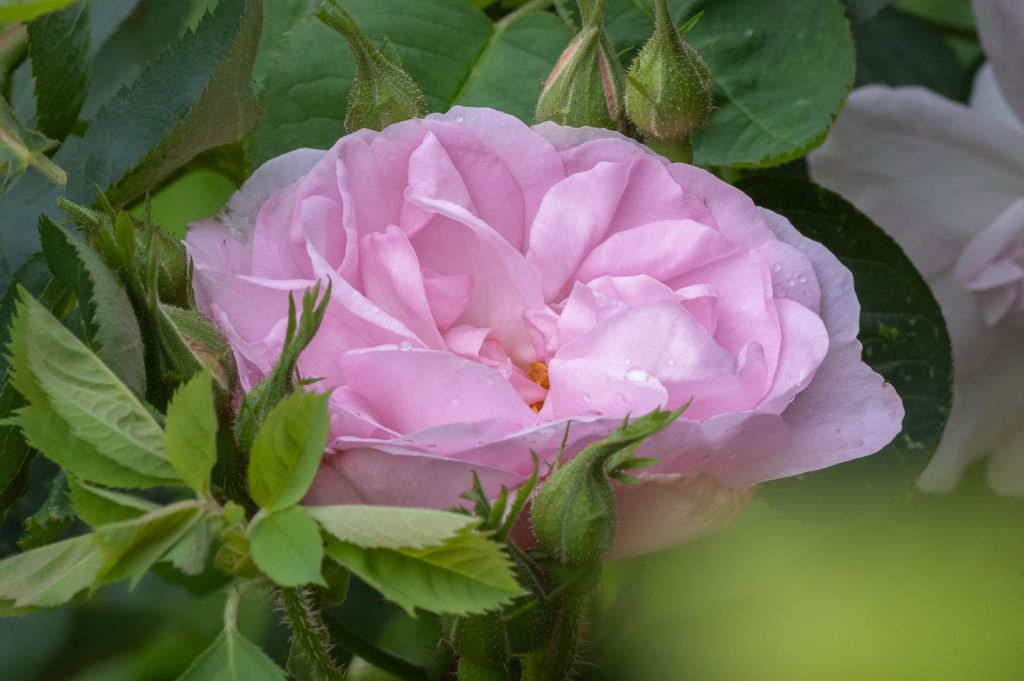
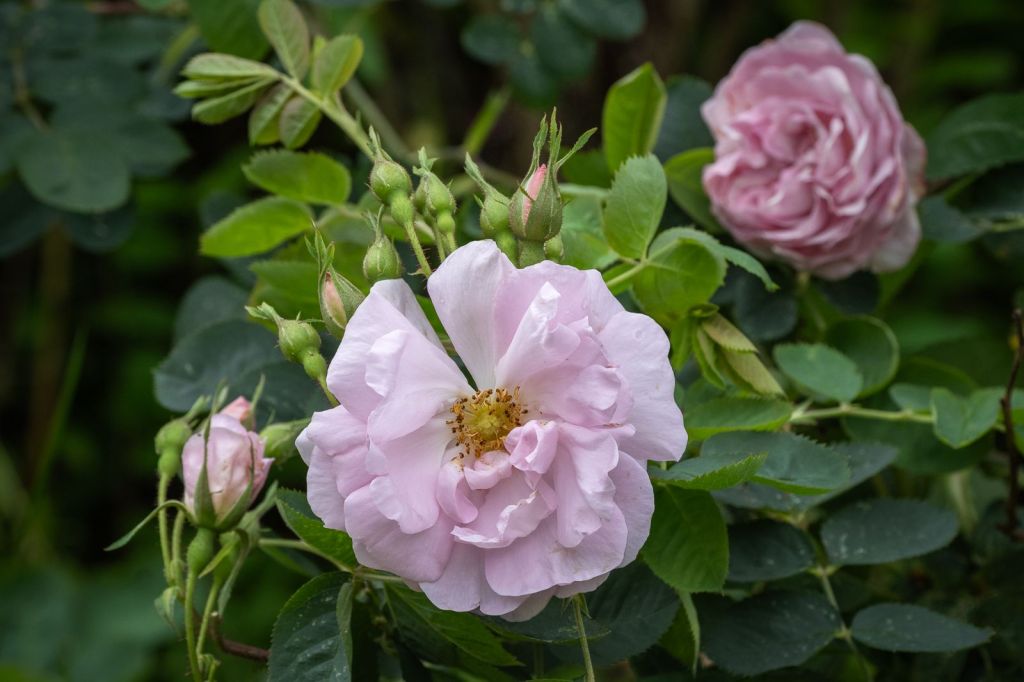
We could so easily have got it all wrong and just seen the rose – an ancient variety named Great Maiden’s Blush – as a perfumed, romantic, nostalgic gesture.
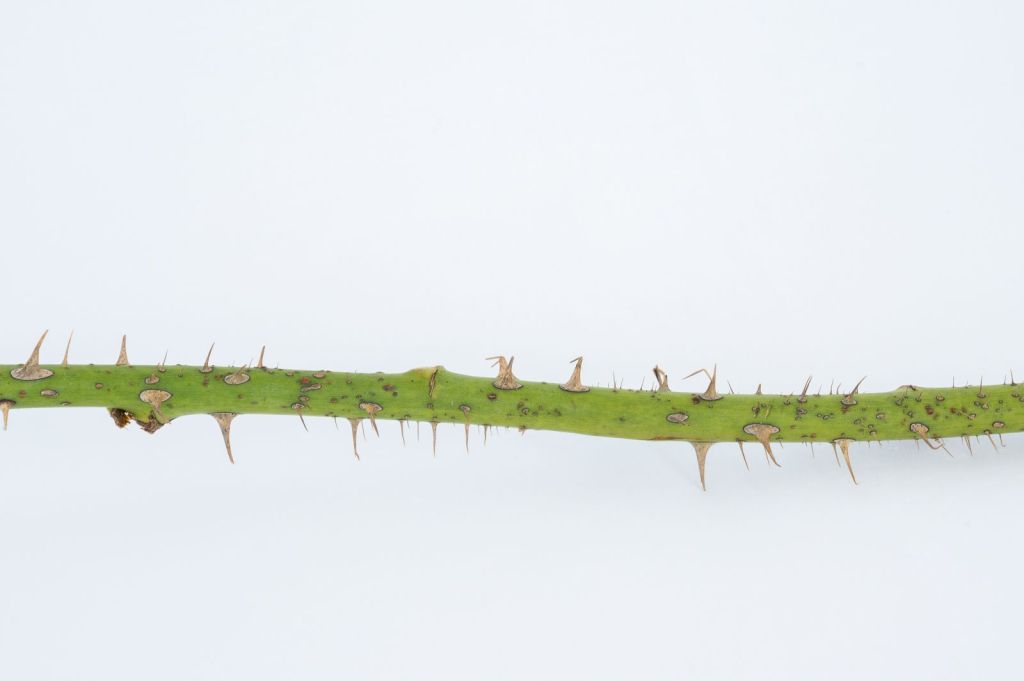
That would be to ignore its vicious thorns, and once we found out the role it is said to have played in the family’s past, we understood.
The story of the journey of the Camerons, their brood of children and the rose to America and beyond is one of love, tenacity, courage and adventure.
Our understanding of the Jacobite Rising tends to end in April 1746 at Culloden, but the aftermath of civil war echoed through the glens for decades after that, triggering the start of an epic migration of wealth and youth and talent from our shores which would later evolve into the Highland Clearances.
If you want to understand what it was like to survive Culloden and then choose to emigrate, please consider reading this book.
It is not available on Amazon and never will be. We are distributing it through smaller bookshops and outlets only at present. Feel free to get in touch and I will let you know your nearest outlet.
Signed copies can be sent by mail order worldwide, too.
For many of us who were ten years old in the early 1970s, our darkest repressed memories of cruelty and mutilation, if not actual murder, have been stirred up by the phenomenon that is the Barbie movie.
I had always hated traditional dolls, especially their slow, sinister eye-closing when tilted backwards. When (at the Bogroy Inn aged about six) I was told to hold a baby doll and sing a lullaby, I dropped it on its head. People laughed, but it was an act of protest, not an accident.
Golden Slumbers kiss my ***.
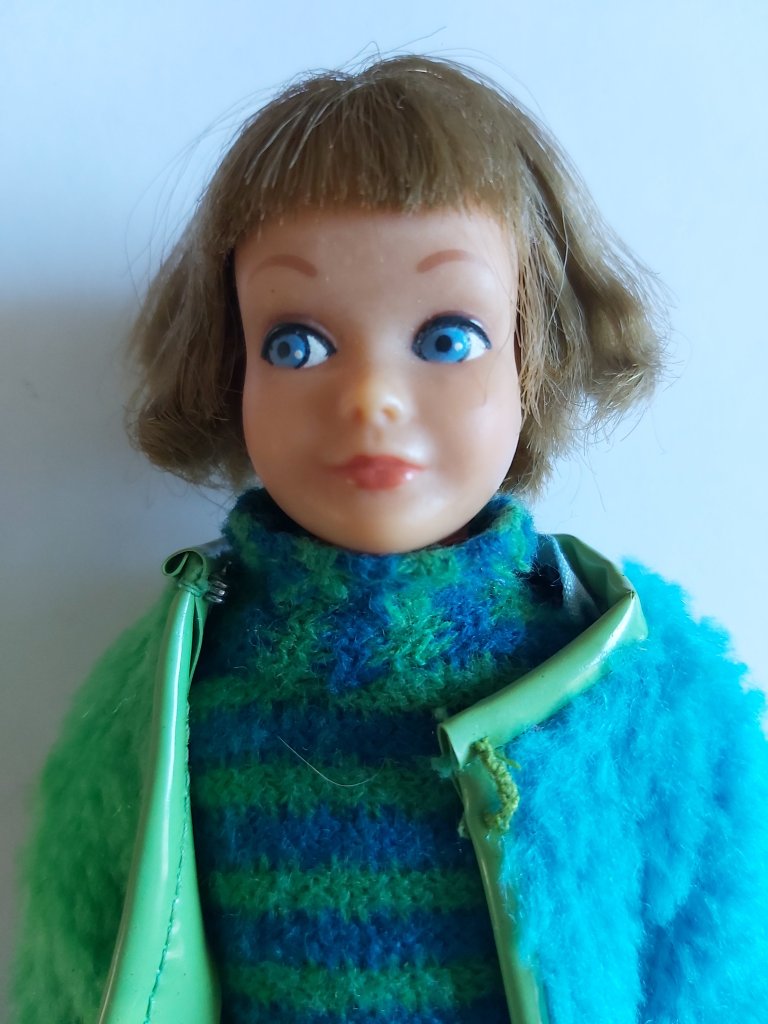
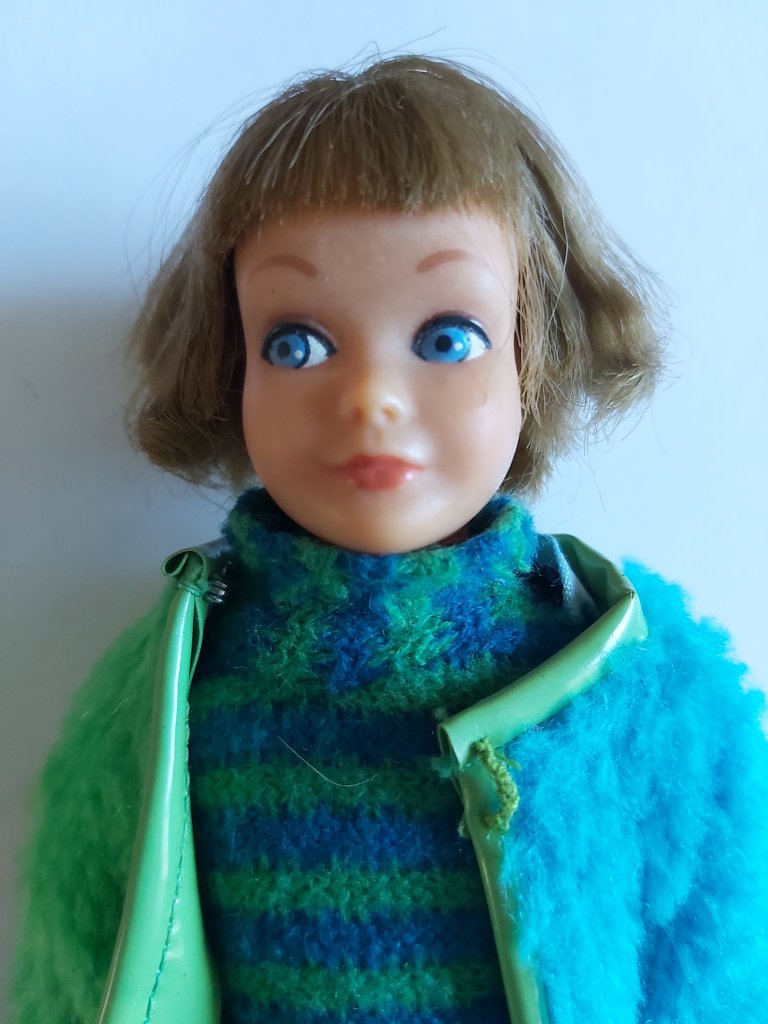
Sindy was still too much of a fat-head for me and so I shunned her: but when my eyes met those of Skipper across a crowded toyshop, I knew she had to be mine.
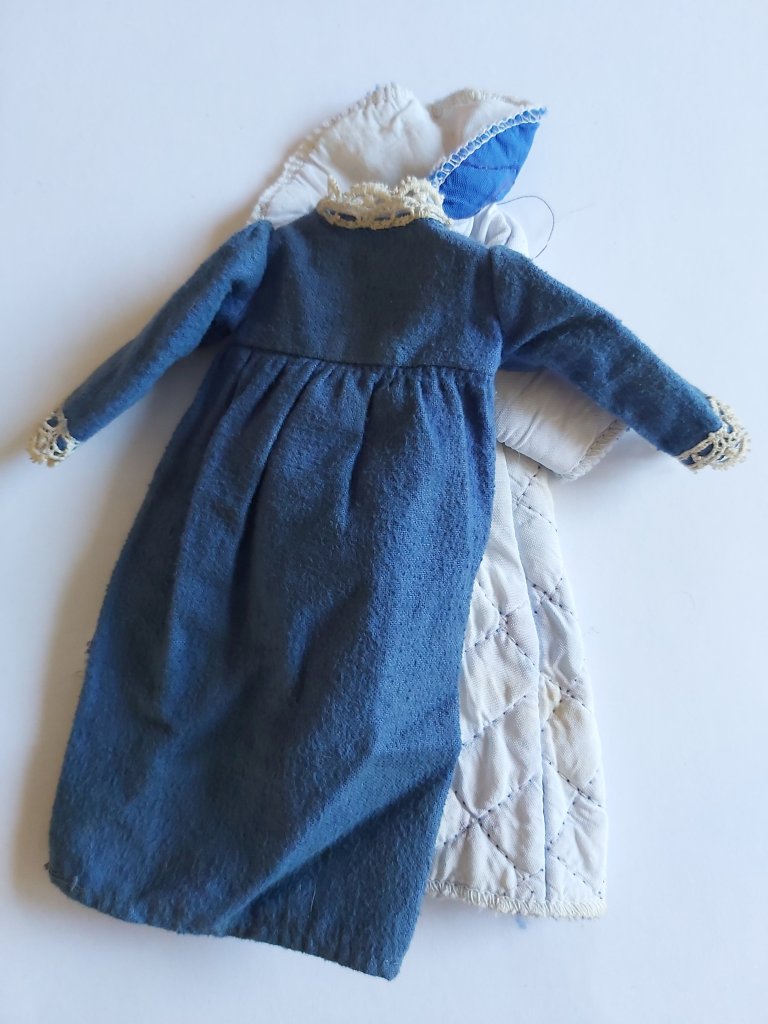
Marketed as ‘Barbie’s kid sister’, Skipper was like me: mouse brown hair, flat chested and flat-footed; something of a relief after her long-legged, wasp-waisted, pointy-boobed and arch-footed blondie big sister. Also like me, Skipper wore a dull blue flannelette nighty with lacy bits at the neck and cuffs, plus a sensible quilted dressing-gown for the Highland winter.
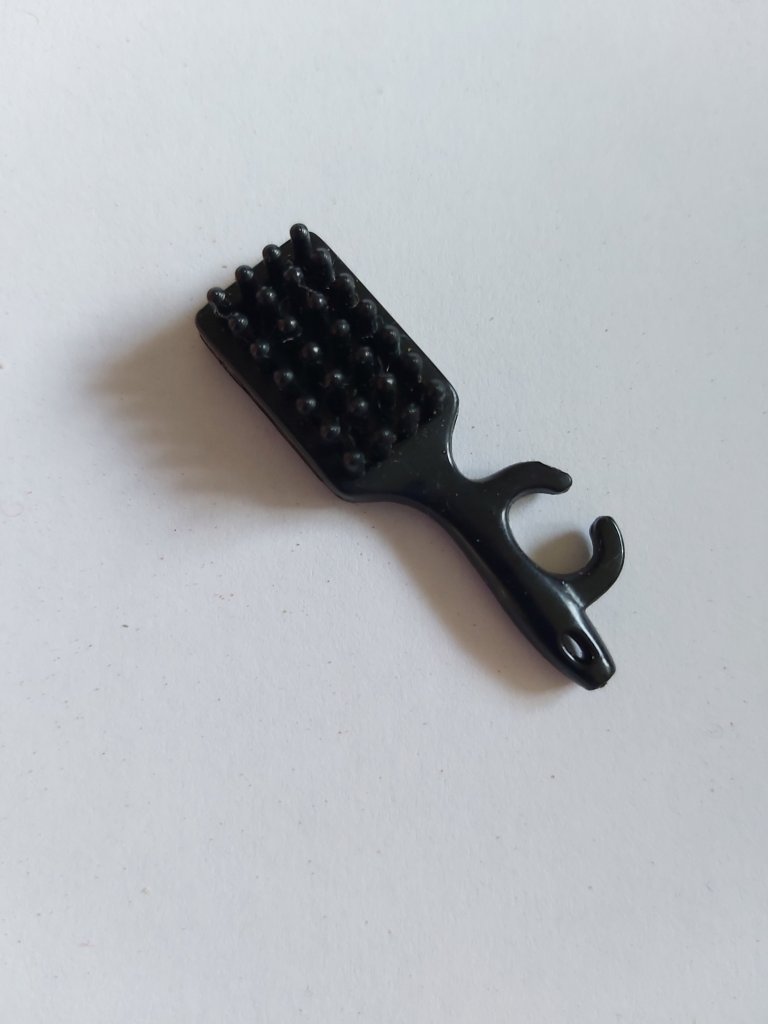
At first she had long hair, which I forgave her, but like all those early Barbie locks it seemed to have strayed from the Oppenheimer movie set, radioactively charged. Eventually all their hairstyles became crackling mushroom clouds of static fuzz. I quietly swiped Mum’s nail scissors to deal with that and soon Skipper, like me, had short curly hair, the shorn evidence stuffed down the back of the sofa. It was at that moment of personalisation that she became unique and mine, so all my Barbies followed the same trend.
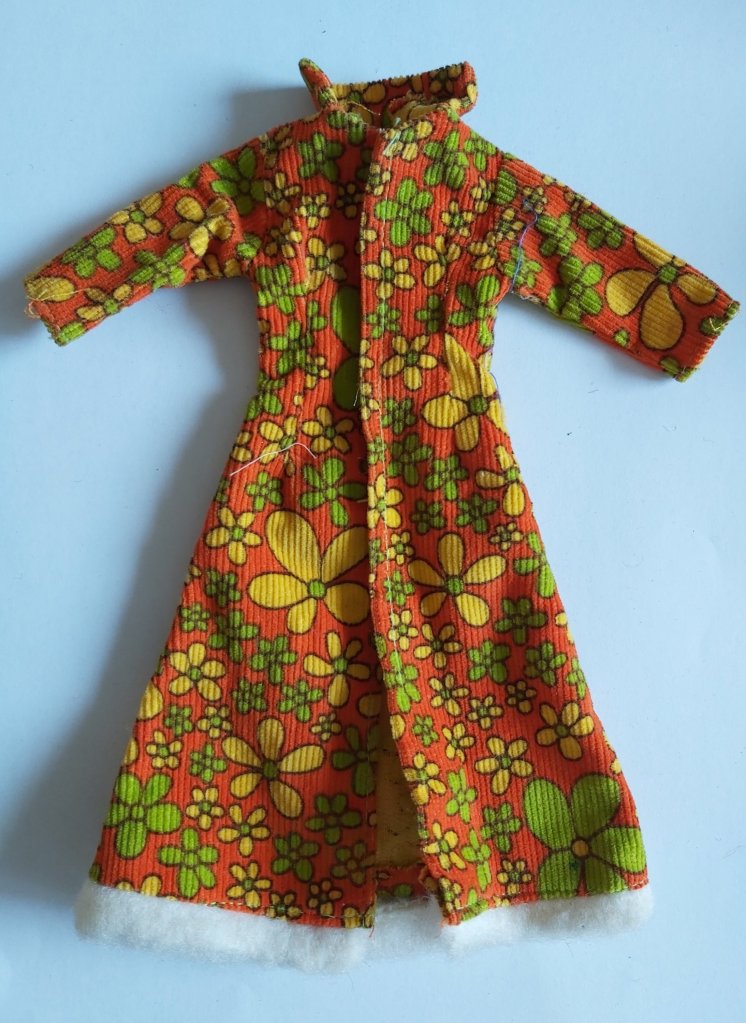
The only thing I disliked about Barbie and Skipper et al were their ridiculous names. This was a serious friendship and I knew they could not possibly like their ‘box names’. They might wear gold and silver lamé bathing costumes and Flower Power maxi coats but they weren’t American to me. They were born – or unboxed, rather – in Scotland.
It never occurred to me that Barbie was short for Barbara (and in any case the only real Barbara I knew used to torture me behind the school shed). Mum suggested I should just rename them, but that didn’t seem respectful. These weren’t gormless baby dolls after all. They were sentient, real. And they had been sold in a box with their name on, whether they liked it or not.
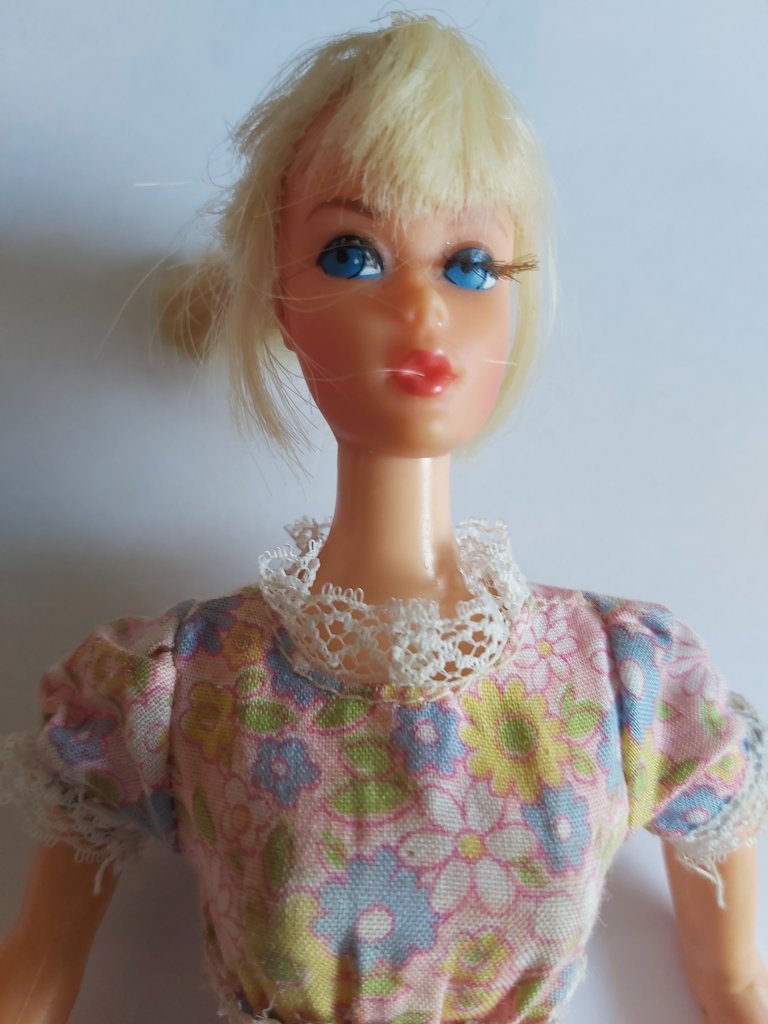
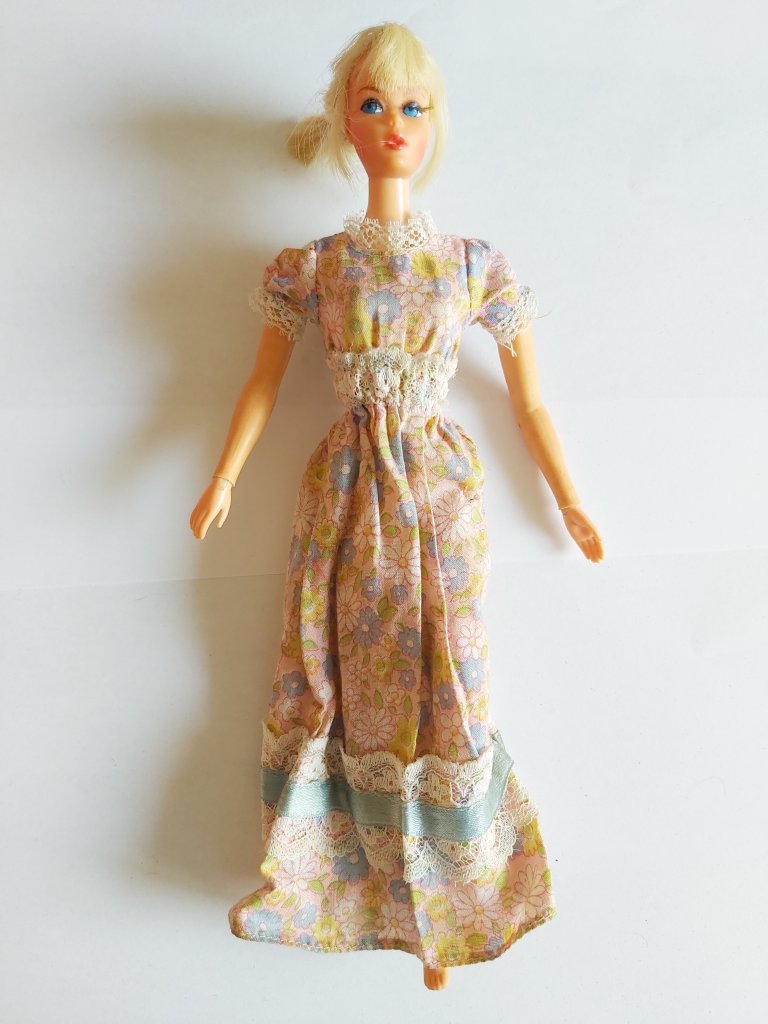
And so they became my eternally-nameless companions, whom I thought of collectively as ‘Them’. I had, at one point, about seven of the Them, of whom just two (my short-haired mouse-brown Skipper and a shorn blonde Barbie, the latter still wearing the Most Beautiful Dress In The World) survive today.
At Peak Barbiedom there were two Skippers and four Barbies: some had knees that bent with an arthritic succession of clicks; some, rubbery arms that bent like they were hefting a pint until they broke at the shoulder through overuse to dangle uselessly at their sides; some, like the Barbie I kept, had a daintily angled head turn.
I truly loved Them. They were my only utterly dependable friends. I have kept two of Them for over fifty years, through over seven house moves.
How could I not, given the secret we share?
All looked sideways. None made eye contact. Nor did I. So He should surely have suspected something. There was only ever the one Ken, and he didn’t last long.
He wasn’t really a Ken, either. That was the thing. He was either a ‘Big Jim’ or a ‘Mark Strong’, I can’t remember which it said on the box (Mark Strong was I suspect the meeker British branding of Big Jim. Perhaps the latter would grow up to wear a bow tie and direct the British Museum, although he would need to ease up on the testosterone to manage such a transformation).
The real Ken was originally intended for boys to play with, not girls, but boys turned out to be ‘brand-resistant’, as some ashen-faced marketeer at Mattel probably pointed out in front of a chart showing his bombing sales figures.
Then Ken was launched in the UK as ‘Barbie’s boyfriend’, and every girl in Primary 7 at Inchmore School wanted him. At ten we were beginning to be curious about, if not actually interested in, boys. Our paths didn’t cross much with the real thing. They even had a separate shelter in the swampy school playground, just in case they contaminated us. No, none of the scowling, grubby, football-obsessed boys of Inchmore looked at all like the marketing pictures of Ken.
What wisdom might Barbie’s tall, handsome and mysterious new boyfriend impart? I had to know.
Mum bought my compliance for a trip to the dentist in Inverness (up the echoey stairs beside the station for a painful encounter with Mr Robertson or Mr Allan) with the promise of a Ken. Alas, once in the toyshop (Melvens? Pentangle?) we found they were clean out of Kens. I was more than a bit wobbly-lipped. I had had a jag and a filling and everything and not made a fuss, after all, and a deal was a deal. We only went to Inverness on the ferry a few times a year. A wasted trip was not to be countenanced.
Moreover, I had told my friends Jennifer, Wilma, Yvonne et al that I was going to get a Ken, so a Ken I jolly well had to have.
Then the kind lady said, ‘Ah, but these have just come in.’ She placed a plastic box on the counter. ‘Still Mattel, see?’ She pointed to the branding on the front.
‘Perfect,’ said Mum, lunging for him before I could really look. She hurriedly paid and handed the box over to me in the car with obvious relief. ‘See? Just the same. A Karate Ken.’ I tried to look enthusiastic, but I really wasn’t so sure. What I could see of ‘Karate Ken’ below his cheesy grin did not looked particularly enticing. And his name Wasn’t On The Box.
Would They take to him?
Kens and Barbies (I can’t quite say dolls – they were never dolls to me) were always held in place in their boxes by plastic-coated wires which it took a lifetime to undo. My ten-year-old self used to mutter ‘nearly there’ to reassure them as the fiddly process of release was brought about: I associated this with an awakening of sentience. But Ken/Mark/Jim or whoever he was looked positively delighted to be so confined and equally delighted to be released. I did not yet know or use the word vacuous but there it was in person.
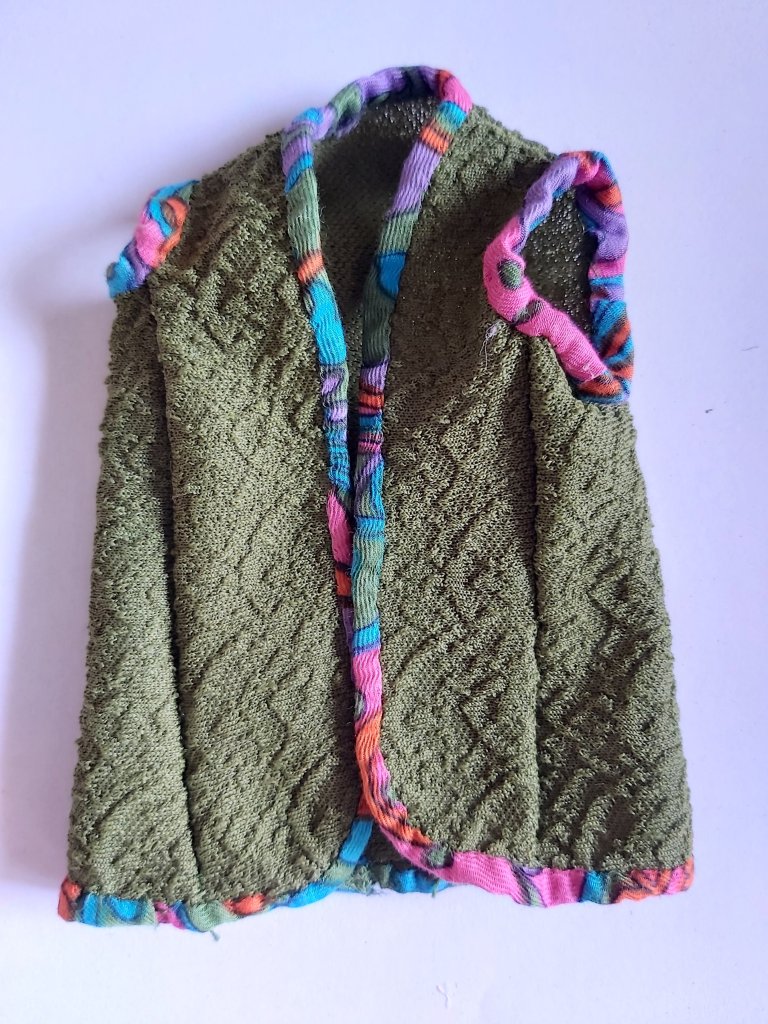
He was wearing a white karate outfit surrounded by other manly karate accessories attached to the backing card with nylon threads as tough as cheesewire. It was never about the clothes for me, though. It was always a struggle to dress any of them in the garments they came with, the sleeves were so fiddly. Perhaps that is why so many shoebox outfits have survived in good nick for fifty-odd years.
I undressed him on the back seat of the car only to find that his rigid plastic hair was not the only thing welded on. So were his underpants. This was disappointing for some disturbing reason I could not yet pinpoint. His neck was bull-like and his head fitted over it, not on to it, so a hard seam showed. It looked rather as though he had been guillotined, then had his head stuck back on, but there was nothing of the suave French aristocrat about ‘Ken’. He was covered in very large, very rubbery muscles, had bizarrely articulated knees and a right arm that karate-chopped when you pressed a round panel in his back.
He was, to put it simply, gross.
Once home I wondered how I was going to introduce him to the massed ranks of my fun-loving tomboy Skippers and more glamorous and refined Barbies. I needn’t have worried. They took one look at him and my bedroom rocked with cruel laughter, for I had not spotted one last appalling detail in the car. This ‘fake Ken’ was for some mad Mattel reason made to a slightly smaller scale from the others. The Barbies were way taller than he was, and that wasn’t just because Barbie was strutting about on her impossible heels. I mean, everyone knew girls couldn’t ever ‘go with’ boys shorter than they were, for goodness sake! I could see They all hated him on sight.
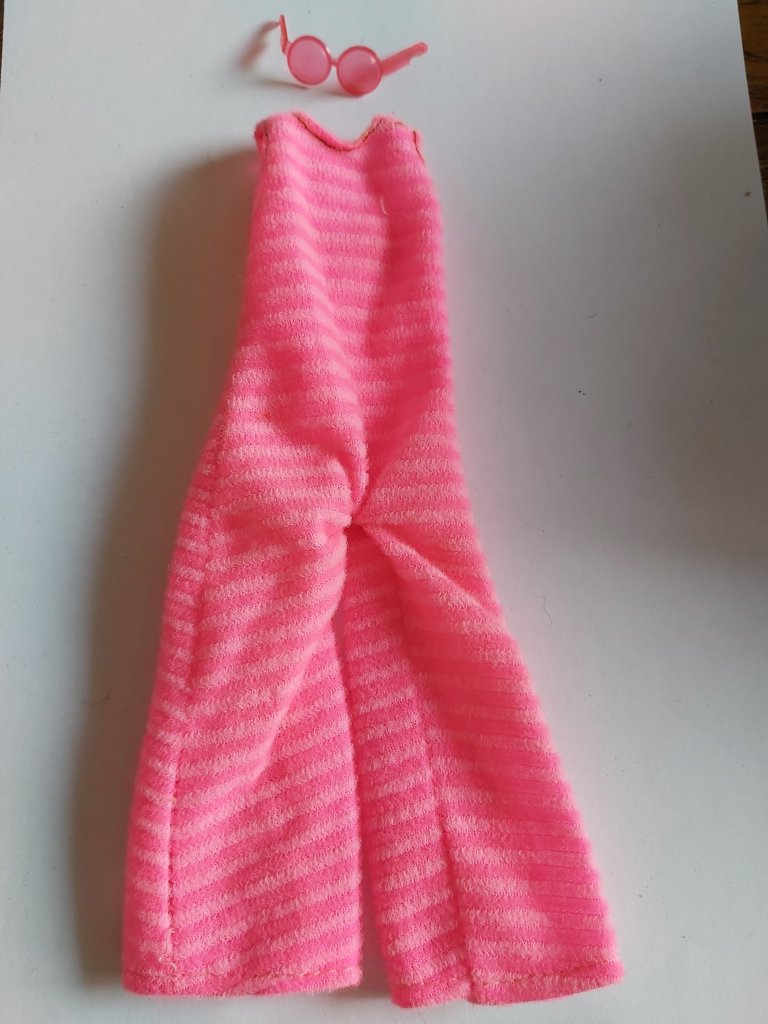
Once Mum and I had started to watch Colditz, one of the meaner Barbies (who always wore the pink striped jumpsuit) pointed out that if I raised Ken’s arm above his head, then pressed the panel in his back, he gave a very creditable Nazi salute.
And that was the most interesting thing ‘Ken’ ever did. Almost.
I did take him to school once in the early days. Sharon (who had perfect hair and at least two real Kens) said, ‘That’s not a Ken.’
‘He is though!’ I blustered, knowing it was a lie.
‘No he’s not. He’s too short. And look, he’s all funny and lumpy. Yuck.’
I couldn’t really argue with that. I thought he was yuck too. ‘Ken’ was relegated to the bottom of my schoolbag. At home They began to pinch his dumbbells and try on his Karate gear, which fitted them rather better than it had him.
‘Ken’ lay abandoned in one corner of my toybox, his legs splayed at a vulgar angle. It was then that the plotting began in earnest. He might have cost my poor Mum hard-earned cash, but he was not one of Us. He had to go.
Our first attempt at permanent disposal was when I attached a home-made parachute to the naked-except-for-his-plastic-underpants ‘Ken’ with Sellotape and threw him up over the roof of our house. To my disappointment he failed to tumble down the chimney to become a writhing mass of hot plastic on the embers or to be snatched by a passing bird of prey. No, he made it right over the tiles, landing in an apple tree, from which my suspicious Mum disentangled his slowly spinning, still grinning form. When interrogated They – and I – said nothing.
Our final Wicker Ken moment came when Mum called us back down to the car. I looked at Them and They looked at me. We knew then without a word spoken that ‘Ken’ wasn’t coming home.
The final, fateful day of cold-blooded execution took place during a summer treat outing to a favourite burn referred to only as ‘up Strathconon,’ near a mighty bridge where sometimes we would swim. We loved to explore this burn. They would clamber up and up it, build dens in the heather, taking refreshing dips in the rockpools or sunbathing on the garnet-speckled granite outcrops wearing cool shades. Meanwhile Ken or Jim or Mark or whatever his bl**dy name was would just lie there, ape-like, in his plastic underpants, grinning at the sky.
As we walked back down the burn to Mum’s Morris Traveller, ‘Ken’, his arm still fixed in a Nazi salute, began to dive into the water just upstream of the many waterfalls en route. We would watch him plunge over and downwards into the depths, before bobbing to the surface with that repugnant smirk. Then, at the highest, deepest waterfall, We took him by one leg and threw him in a spiralling arc high into the air. The setting sun caught his face and I will swear to this day that there was the faintest tremor about his perky lips as he smacked the smooth, peaty water above the falls. The Barbies sniggered. We caught a flash of his red plastic underpants as he shot over the edge to plunge down, down, down into the darkly frothing water below.
He never came up again.
I looked at Them. They stared back in mute defiance. I gave a desultory poke about in the pool below the falls with a broken stick, just so I could say I had looked, but Mum was calling again. Collective feminism personified, we turned as one our backs on that smug plastic interloper – and condemned ‘Ken’ forever to his watery grave.
Perhaps someone else found and rescued him. Perhaps he is still down there somewhere, bravely leering through the slime. And although over the years I have returned to the same picnic spot up Strathconon many times, it is never, ever, without a tiny, thrilling, shiver of guilt.
Did you have a Barbie, a Skipper or a Ken? Feel free to share this post if so…
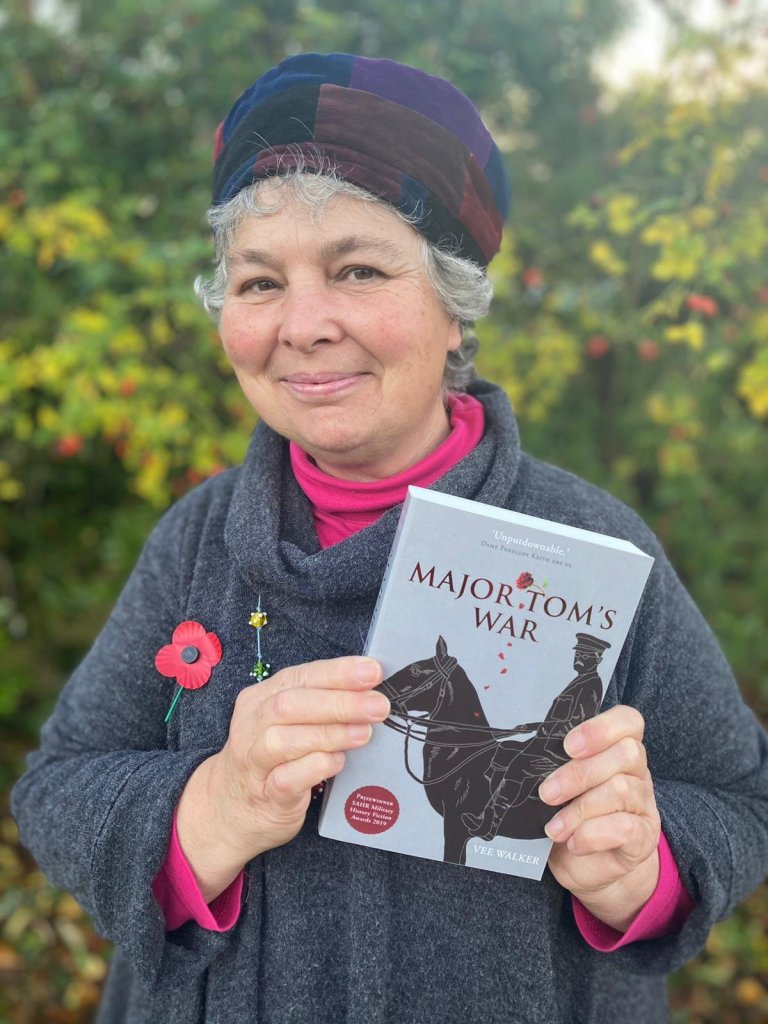
Vee Walker is an author and editor based in the Scottish Highlands. Her prizewinning archived-based novel of WWI, Major Tom’s War (an adventurous love story) is available in paperback and ereader editions from Kashi House 👇.
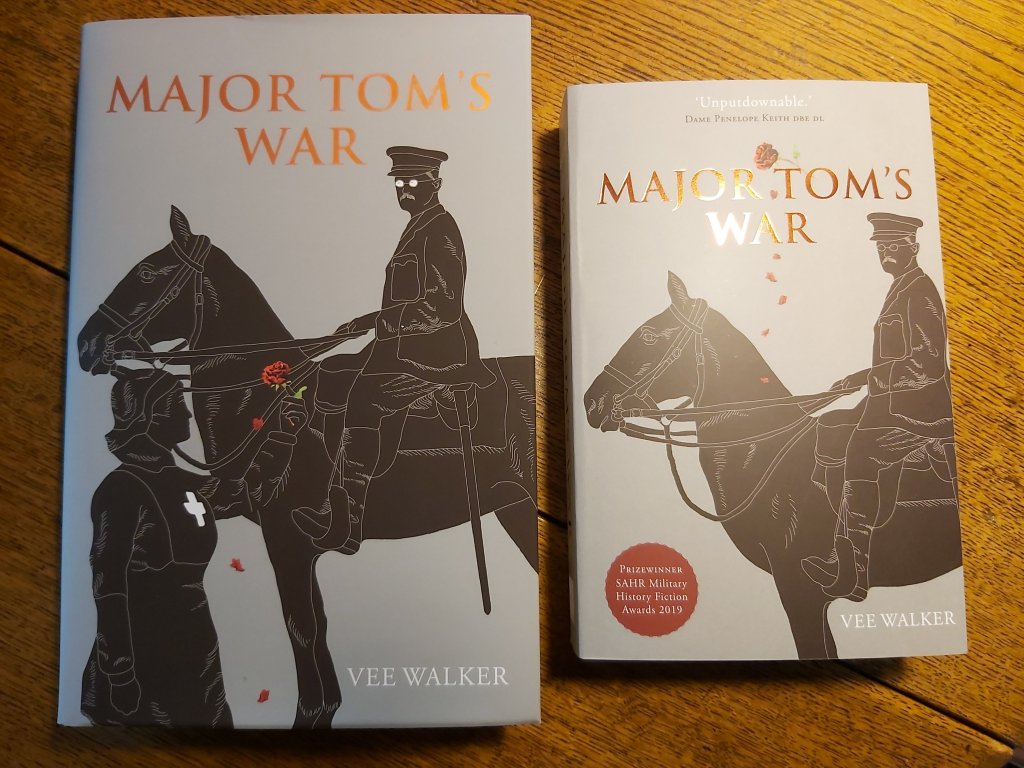
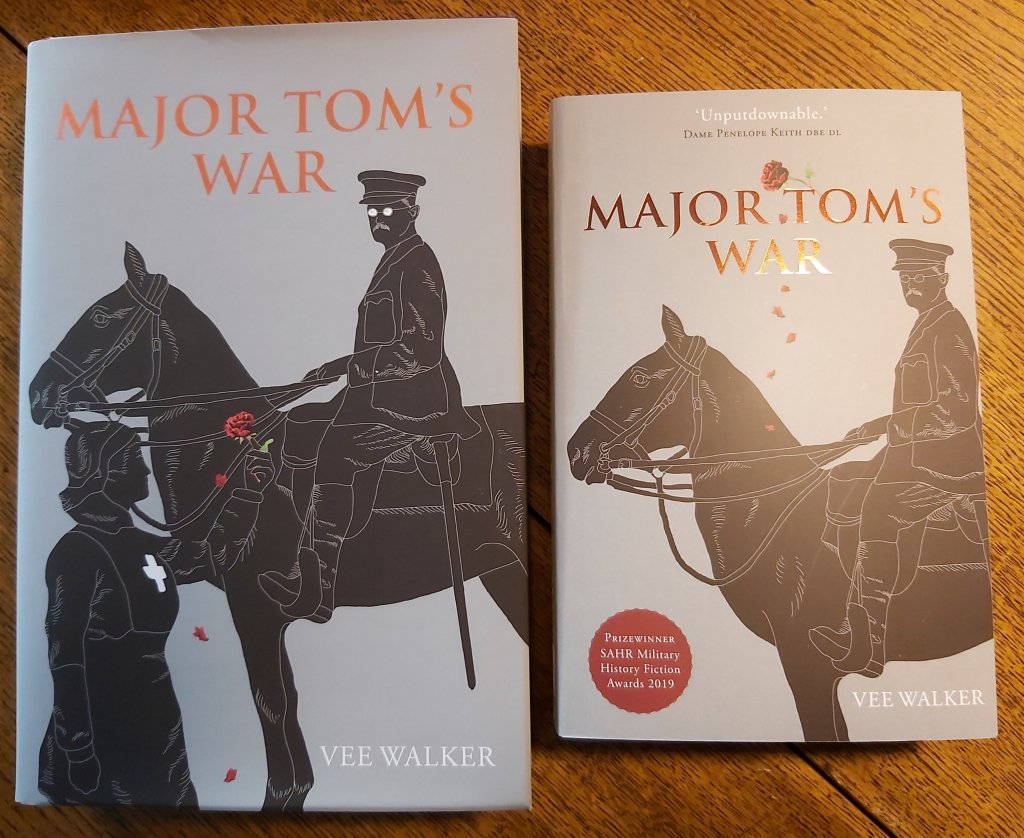
This blog post was inspired by my Canadian cousin Cathy Brydon, who is related to me through my grandmother’s side of the family. After congratulating me on the paperback of Major Tom’s War, she asked, slightly ominously – ‘but – the cover – whatever has happened to Evie?’
What indeed. One minute my beloved grandmother is there on the hardback, clutching a rose, and the next, on the paperback edition, she has vanished.
Cover anxiety is a very real thing!
A cover exists to protect the book within, but should also to communicate the essence of the book to the reader. The original cover’s beautiful artwork is by the Canadian Sikh artist Keerat Kaur (www.keerat-kaur.com). Evie stands tall in her red cross uniform, offering a (highly symbolic) rose to Tom. He gazes down at her through rather spooky white spectacles.
We had a tight launch date for the hardback and the last editorial and cover choices had to be made at a bewildering speed. I remember seeing the final version for the first time at the book launch at the National Army Museum and it being a bit of a shock. The whole process had felt, understandably, rather rushed, and I was jittery (and authors very seldom love their covers at first, apparently).
The process of cover design had however begun months before, with a completely different concept – a bright red background with the silhouette of a horseman emerging from it, face on. It seemed oddly familar and yet I could not work out how. I posted it on the Women In the Arts Scotland Facebook Group and the answer soon came back – it looked (entirely coincidentally) very like the cover of this popular edition of Michael Morpurgo’s fabulous book War Horse.
The WIAS responses were divided in those early days on whether this similarity would be a good thing or not. Some thought the instant gut response – WWI! Cavalry! Man and horse! – was appropriate. I felt, probably a bit arrogantly, that I wanted the cover for Major Tom’s War to be unique, just like the book.
A word here about my extraordinary publishers, Kashi House (www.kashihouse.com). Their creative team had quickly come up with the initial Morpurgo-esque cover based on a photograph they had and some clever computer design. If I had just said yes to it – and I almost did – it would have saved them all time, stress and money. And yet, even though Parmjit Singh and his team were already operating beyond full stretch (setting up for their massively successful London exhibition, Empire of the Sikhs), they politely took on board everything I had said and scrapped the prototype. We started from scratch, and Parmjit commissioned Keerat to produce something far more original and memorable. Not just that, but they also added shiny copper lettering for the title – and a silky dust-jacket. Both hardback, and, now, the paperback, look – and feel – sensational.
As I mentioned above, Keerat’s initial design did not in fact have Evie on it – her figure was added in response to my feedback. Back in 2018 I had been anxious about going with Tom alone – would it alienate my female readers? Would it look like a work of non-fiction?
I have learned a lot about the process of bringing a book into existence over the past two years. I now understand that a book cover’s job is to make you want to pick it up/click on it and ideally take it home/order it, simple as that. We were trying to do a bit too much with the first edition cover – and that was my fault.
The paperback gave us the perfect chance for a rethink. No-one wanted to start from scratch, thank goodness – the hardback cover had built the foundations for the book’s identity well – but it was clear that shrinking it to fit the paperback would result in some detail being lost and would not work.
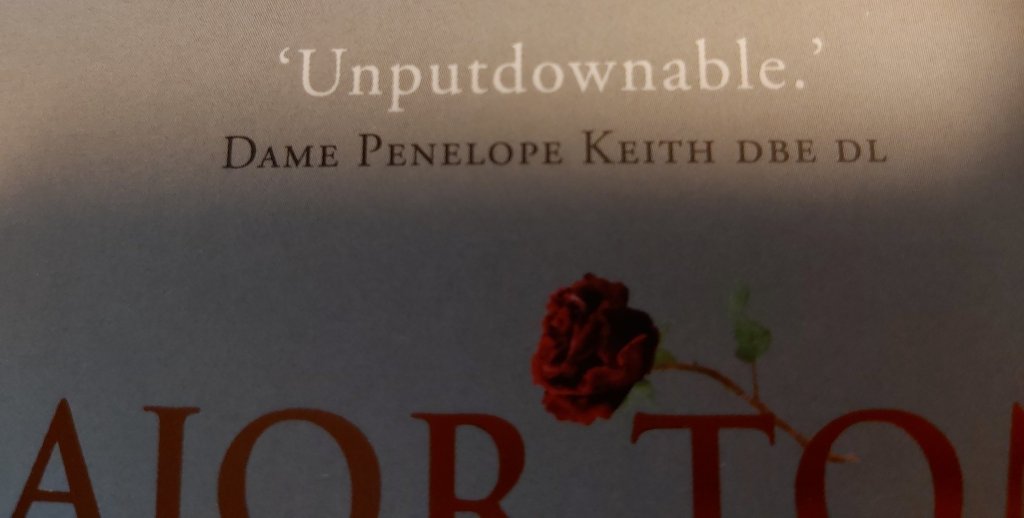
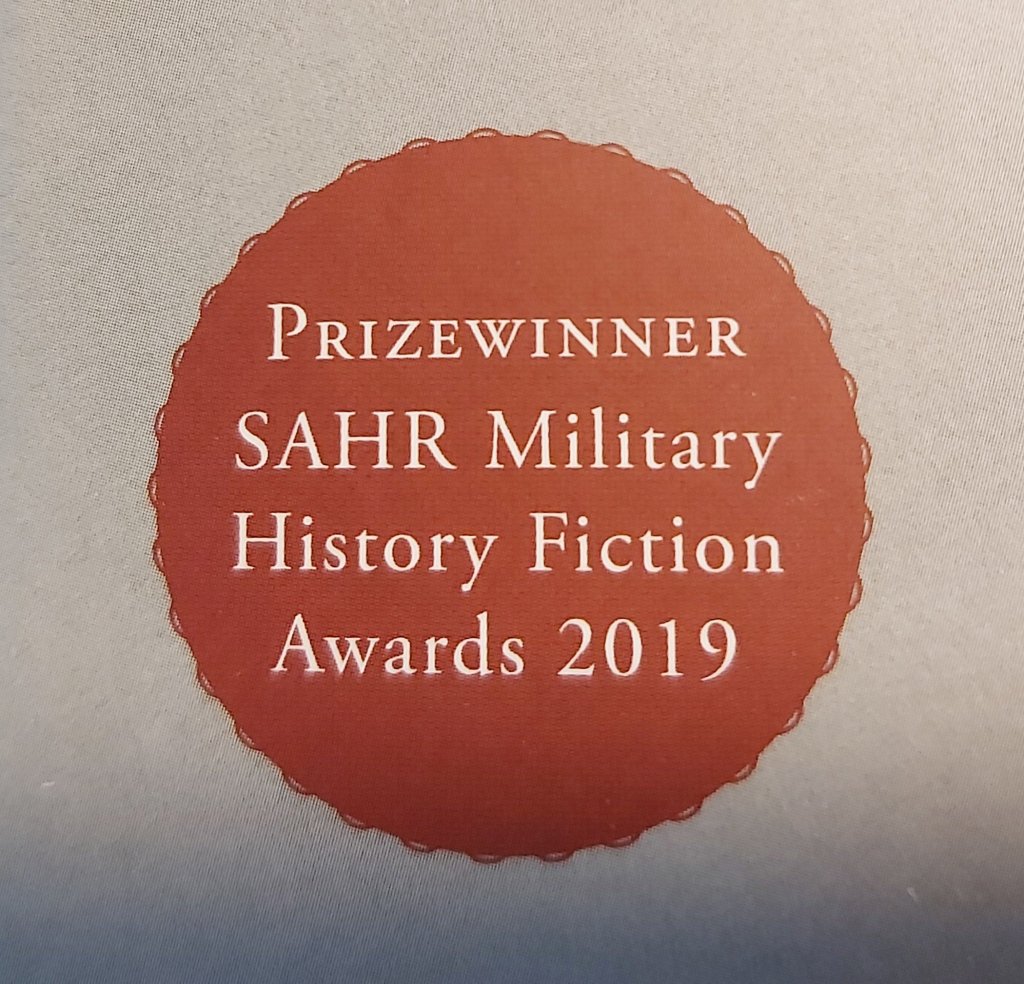
After Major Tom’s War won a prize at the SAHR Military History Fiction Awards, and several other reviewers had Said Nice Things about it, there was also the need to give space to some of those Nice Things Said on the paperback cover. Dame Penelope Keith DBE, DL wrote me a beautiful letter from which we quote just one compelling word on the front – ‘Unputdownable.’ This is also a subliminal suggestion of course – ‘please don’t put it back down – take it to the till instead!
When I realised we would have to lose Evie to make way for the Nice Things Said I thought the rose would have to go too – and that made me sad. As you will know if you have read it, roses crop up as a bit of a leitmotif in Major Tom’s War. The rose is also symbolic of the unlikely tenderness which blossomed between Tom and Evie. Designer Paul Smith (www.paulsmithdesign.com), who gave both editions their classy overall look and feel, cleverly isolated the rose and lifted it to the title above, allowing its petals to fall, and settle, on Daisy’s neck.
The single petal lying on Daisy’s neck, to me, symbolises all the horses who died or were injured in the Great War.
The beautiful SAHR prizewinner’s rosette, bottom left, matches the title colour and catches the eye – but sadly would not do so as much if set against Evie’s dark uniform.
Still pinching myself!
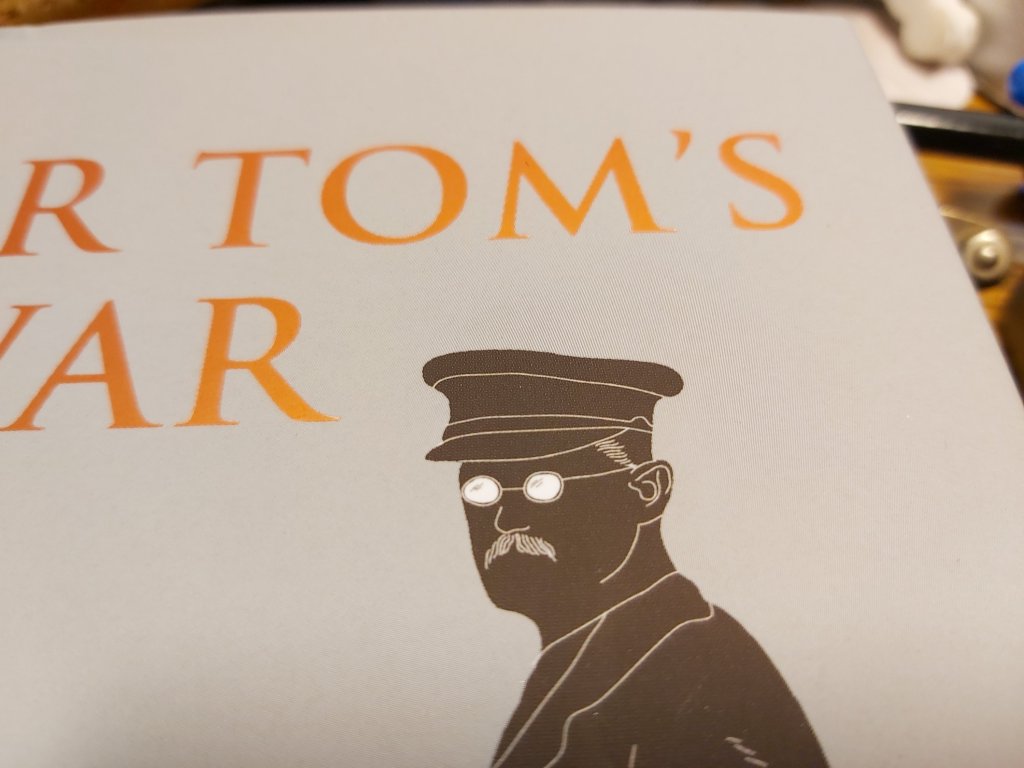
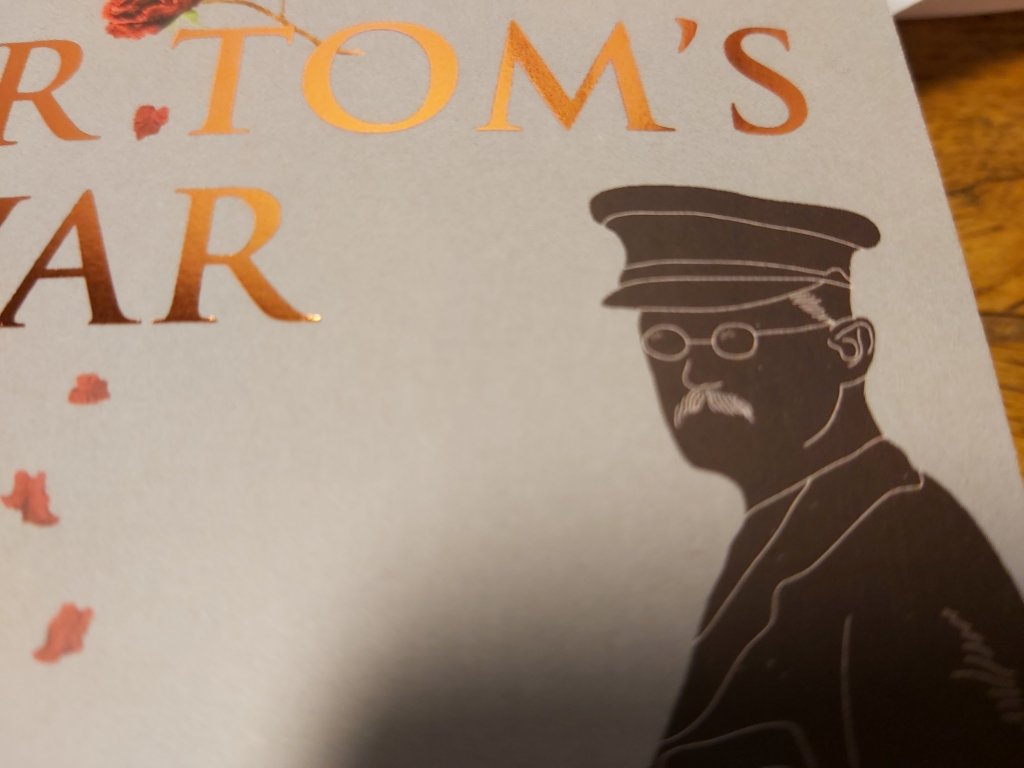
The spooky specs were a bit of a surprise at the book launch and were possibly the result of crossed wires between my desire to make Tom look more human and last-minute discussion with Keerat or Paul. Again views on the specs are divided: Daniel Scott at the book’s distributors, Allison & Busby, said he thought they might draw the eye and so attract sales.
Now you see them…
Others thought they were ghostly and offputting, myself included, and so Tom’s specs are less intimidating on the paperback. Who is right? Who knows?
…now you don’t.
The first paperback I lifted out of its nest of tissue paper (and stroked, crooned over and sniffed – come on, don’t we all with a new baby?) convinced me that the book is now, if not perfect, certainly as I had always imagined it. I think we have taken the right cover decisions – but of course only time – and future sales – will tell.
Enjoy the read – within whichever set of covers you have chosen. And thank you to Parmjit and Keerat and WIAS and Paul and Daniel and everyone else involved in the wild ride thus far 🙏🌹.
Major Tom’s War by Highland author Vee Walker will be out in paperback via all good booksellers from 19th November priced £9.99. It is already available as an e-reader edition and in hardback.
Vee will be signing advance copies of the paperback at Storehouse of Foulis near Dingwall from 11am to 3pm on Saturday 14 November 2020.
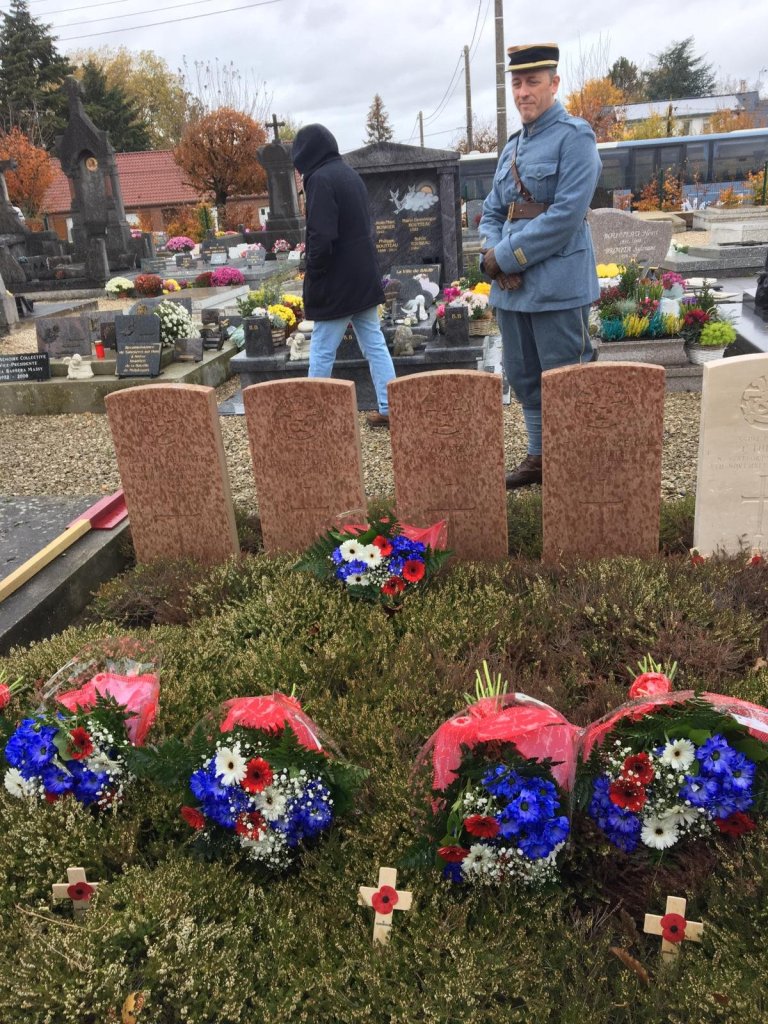
The poignant CWGC war graves of those British soldiers who died liberating the town (Bavay cemetery). They so nearly survived the war.
My earliest memory of Remembrance Sunday involves my mother at the wheel of her green Morris Traveller, a redoutable half-timbered vehicle, half car, half cupboard. We lived in Kirkhill then, it was Sunday and we were late for church in Fortrose and so she was driving faster than normal. We came round a bend and there, to our mutual horror, was the Remembrance Sunday ceremony at the war memorial at Tore. Dignified veterans scattered as we unintentionally roared through the centre of the parade at precisely 11am. Mum was so mortified she wept – but she kept her foot and head hard down for fear of being recognised as a respected local teacher. ‘Oh, what would your grandpa have thought?’ she gasped.
This was over fifty years ago now. The road layout by the church has been changed to correct the blind bend, and the church is no longer even a church. Things change. Life has moved on and yet, at this grey time of year, as autumn crumbles into the cold earth of winter, we continue to remember those who have died as a result of war.
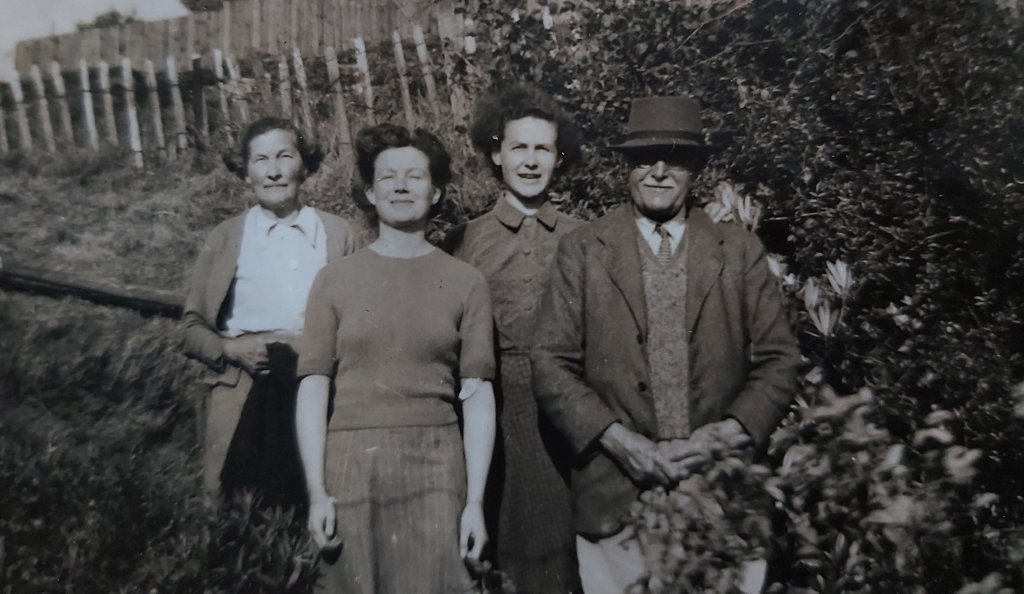
Evie, daughters Libba and Numpy my mother, Tom
The Armistice is commemorated with even greater solemnity in France than it is here. 11th November is a national holiday. In Bavay, a small town devastated by two world wars, children lay bouquets adorned with tricolor ribbons. The difference is invasion. Channel Islands apart, the UK did not suffer the agony and humiliation of military overthrow and control by a hostile foreign power. In France they remember the fallen but also the relief of a double liberation just 26 years apart.
Tom, my mother’s father, was in Bavay for the very end of the war. Even though he was then married, the last year of WWI was the hardest of all for him: he returned from convalescence after gassing to find his Indian cavalry brothers had all been sent to Mesopotamia. He was now an Assistant Provost Marshal (a military policeman) for a division and could not accompany them. He would never see his Indian cavalry friend Amar Singh or his right hand man Arjan Singh – or any of them – ever again.
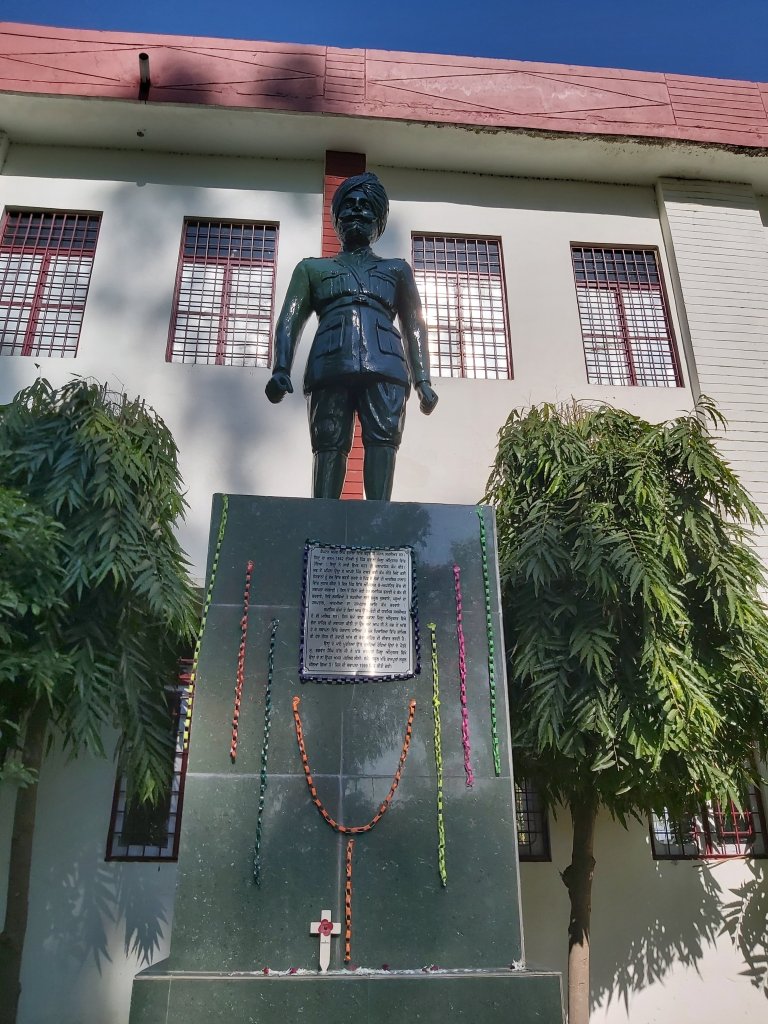
The statue of Risaldar Major Amar Singh near Takkapur in Punjab, with my poppy cross.
During the retreat from the Somme in March 1918, Tom held back men fleeing in chaos at gunpoint and tried to stem the flood of desperate refugees. These scenes remained with him as recurring nightmares to the end of his life.
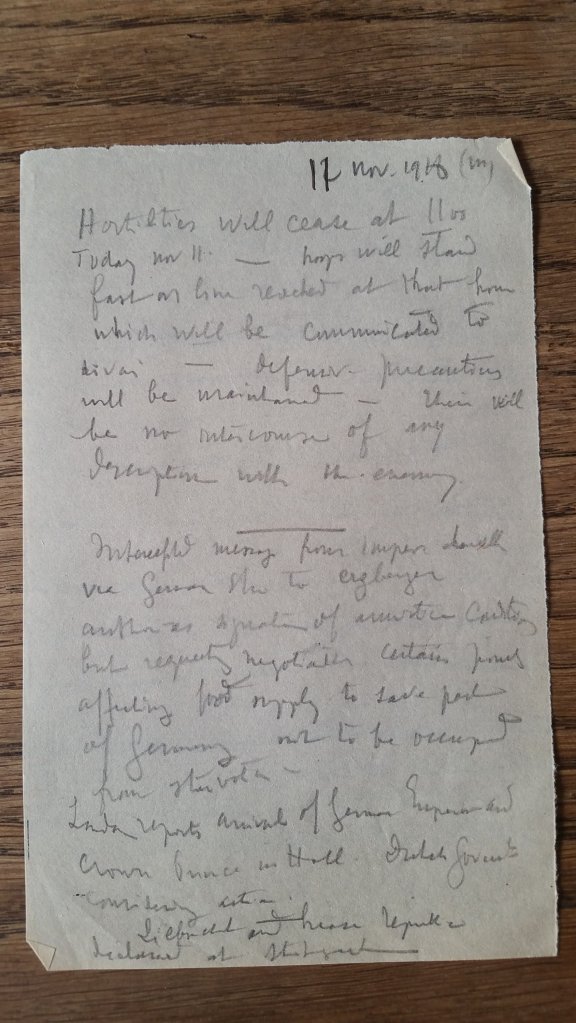
When the Armistice was announced on November 11th he was one of the first to know via a signal he then copied out by hand and distributed to the maires within the area.
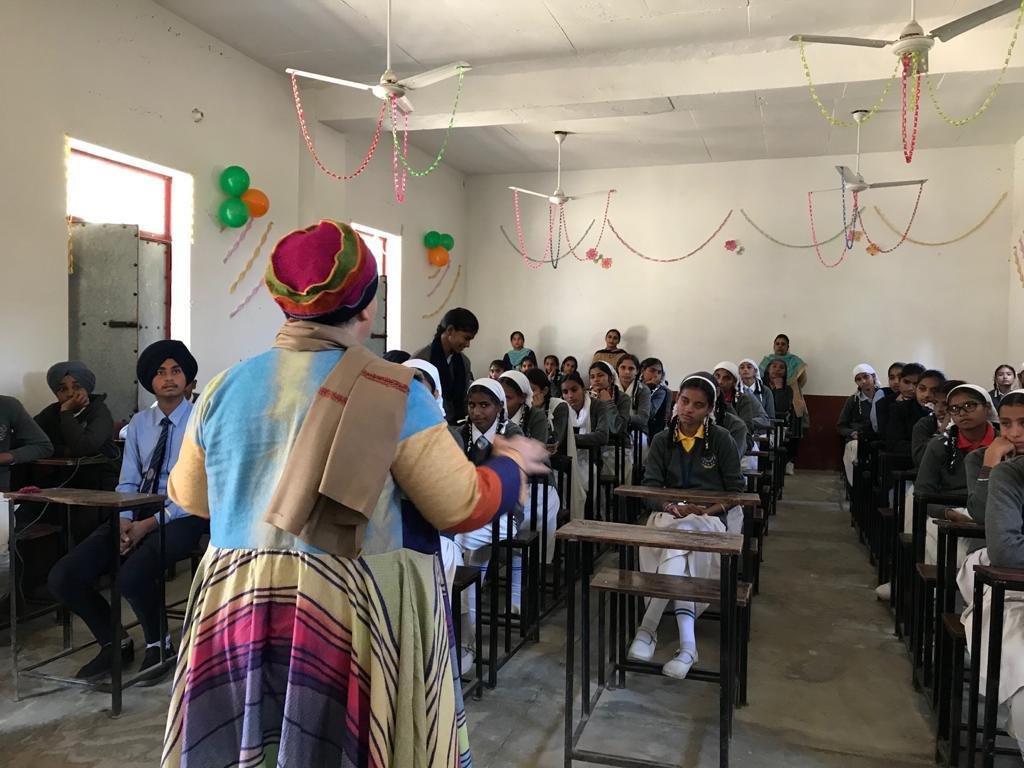
Talking with the pupils of Amar Singh High School
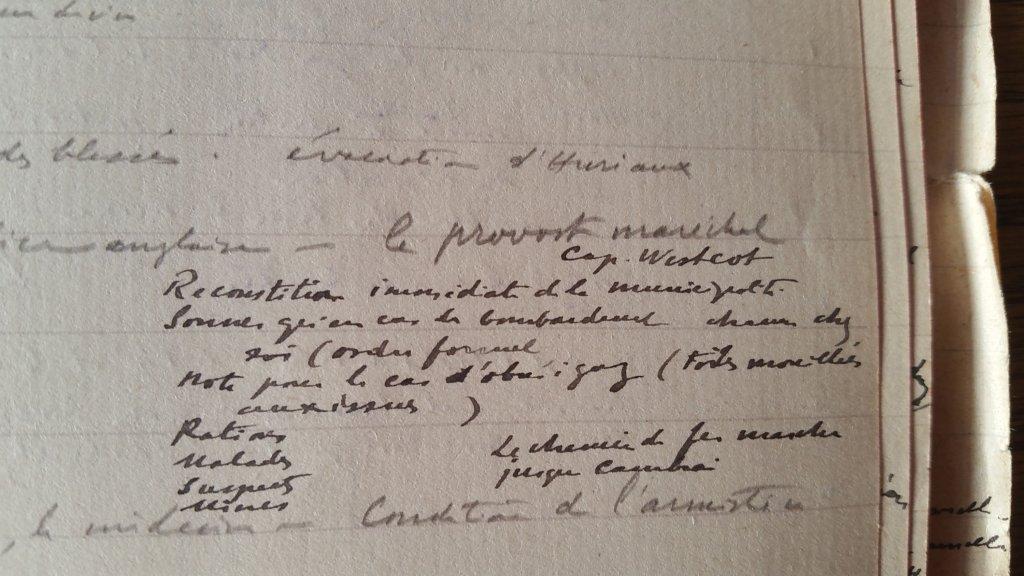
How do I know this? Back in 2018 during my Armistice Day visit to Bavay, an elderly lady knocked on the door of the Auberge de Bellevue where I was staying. She was the grand-daughter of Gaston Derome, the maire of Bavay, who wrote my grandfather the thank you letter which led me to Bavay on the first place. She handed over a cardboard box. Inside were Gaston’s diaries.
Short of time before my departure I found the entry for 11th November. This paper fluttered out at his feet – and I bent and picked up Tom’s note to Gaston giving details of how the Armistice was to be conducted.
Gaston’s war as a civilian was arguably worse than Tom’s as a soldier. Widowed just before the war, and with four young children, he was arrested, threatened with execution more than once, imprisoned and interned.
Tom rode into Bavay on 7th November and the battle to liberate the little town lasted two days. A shell exploded at Gaston’s house, narrowly avoiding both Gaston and Tom. I have stood beside the door where it happened.
Tom’s name in Gaston’s cramped handwriting – a little misspelled but no doubt about it- appears under the words le prevôt maréchal – the provost marshal
In a way the writing of MajorTom’sWar has been a personal journey of commemoration. I hope the paperback will soon reach the descendants of Amar Singh and Arjan Singh in India, and, one day, once the French translation is complete, of Gaston Derome in Bavay.
Over 74,000 Indian Army soldiers died in WWI. And of the 40 million casualties worldwide, 10 million were civilians. Lest we forget.
Vee Walker’s award-winning novel Major Tom’s War can be ordered now from the publishers Kashi House (www.kashihouse.com), Waterstones and Amazon RRP £9.99.







 Vee Walker writes...